
Cybersecurity News in Asia

RECENT STORIES:

SEGA moves faster with flow-based network monitoring
Report: more than half of APAC organizations experienced AI-related in...
Democratization of celebrity deepfake scams hits major social platform...
Taoping Reports Fiscal Year 2025 Results
Fake CAPTCHAs observed sending dozens of IRSF texts since 2020: case s...
Recent breach exposes supply chain risks via OAuth and secrets misclas...
LOGIN REGISTER
CybersecAsia
  • Features
    • Featured

      How AI is supercharging insider threats

      How AI is supercharging insider threats

      Wednesday, April 15, 2026, 12:29 PM Asia/Singapore | Features
    • Featured

      Q-Day is coming. Are you ready?

      Q-Day is coming. Are you ready?

      Tuesday, April 14, 2026, 12:40 PM Asia/Singapore | Features
    • Featured

      How lean defence teams turn endpoint insights into measurable risk reduction

      How lean defence teams turn endpoint insights into measurable risk reduction

      Monday, April 13, 2026, 3:15 PM Asia/Singapore | Features
  • Opinions
  • Tips
  • Whitepapers
  • Awards 2026
  • Directory
  • E-Learning

Select Page

Features

Fighting AI with AI in banking and finance

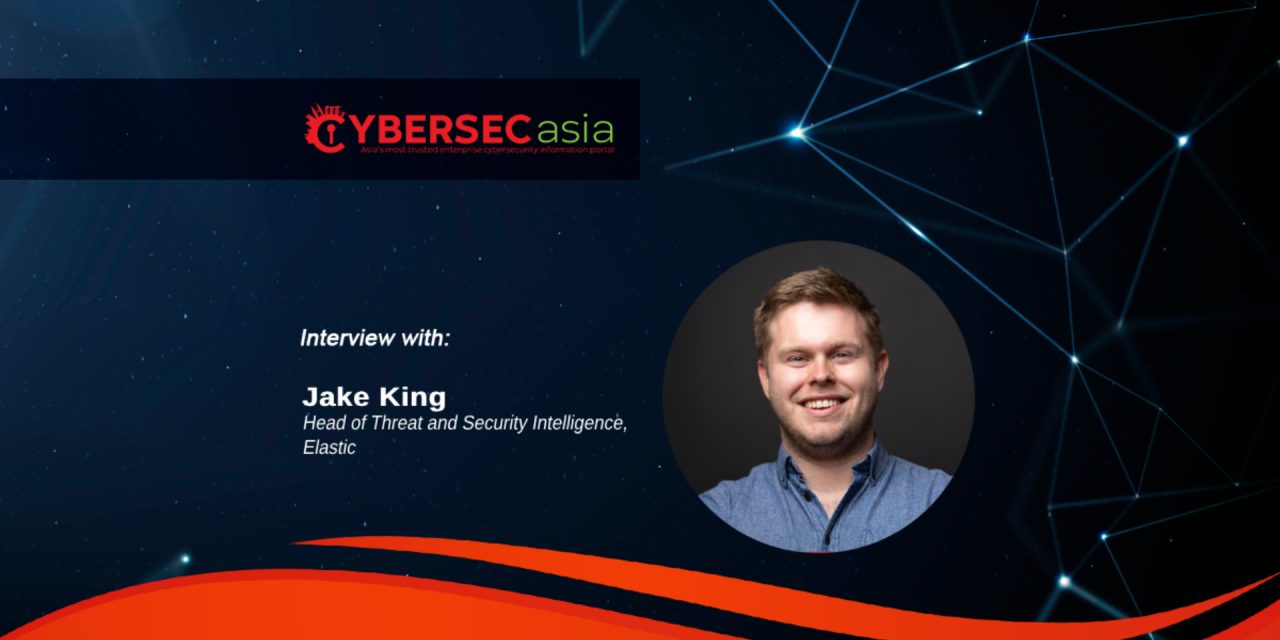
By Victor Ng | Tuesday, August 27, 2024, 4:21 PM Asia/Singapore

Fighting AI with AI in banking and finance

JK: LLMs can learn from historical cases to differentiate between normal and suspicious patterns, improving accuracy compared to traditional methods. 

The FSI sector is beset by large numbers of transactions, intricate networks, and heightened regulatory oversight. Leveraging LLMs to automate significant portions of the Anti-Money Laundering (AML) and Know Your Customer (KYC) procedures can help banks reduce false positive alerts and enhance automated decision-making alongside traditional security controls and measures.

LLMs offer promising advancements for AI-driven AML compliance and threat analysis. These capabilities are incorporated into transaction monitoring, alert triage, and continuous customer due diligence processes within AML frameworks.

For example, Elastic’s Attack Discovery capabilities utilize the Search AI platform to filter and determine which alert details the LLM should assess. By querying the detailed context available in Elastic Security alerts using Elastic’s search AI capabilities, the system extracts the most pertinent data for the LLM. It then instructs the LLM to identify and prioritize potential attacks based on variables such as host and user risk scores, asset criticality scores, alert severities, descriptions, and reasons for the alerts.

The integration of LLM capabilities into existing AML frameworks and their ability to work with current systems like SIEM (Security Information and Event Management) ensure that they enhance current security operations without the need for complete system overhauls. As with any AI system, the effectiveness of LLMs hinges on the quality and fairness of their training data to avoid missing genuine threats or generating false positives, and this must be closely monitored and managed by those who need to trust model outputs.

How should banks ensure the secure integration of LLMs with existing security information and event management (SIEM) systems within their SOC?

JK: Since LLMs rely heavily on data, banks must prioritize data security during their integration. Data segregation is crucial to minimize the risk of compromise and the potential misuse of data. Having robust access controls in place also helps protect the data used for training LLMs. Furthermore, anonymization techniques should be employed to shield sensitive customer information while still facilitating effective training. This should be layered on with continuous performance monitoring to ensure the outputs of the LLM are functioning.

Elastic’s approach differentiates itself by leveraging Retrieval-Augmented Generation (RAG) instead of traditional fine-tuning techniques. RAG offers several advantages that address the limitations regarding bias and explainability.

Firstly, RAG utilizes pre-trained datasets and retrieves information relevant to the prompt from a vast knowledge base that can contain organization-specific data sources. This reduces reliance on potentially biased training data, making the generated responses less susceptible to inheriting biases.

Secondly, RAG’s retrieval process allows for greater transparency into the rationale behind its outputs. By surfacing the most relevant passages from the knowledge base, analysts can understand the reasoning behind the LLM’s response and make more informed decisions.

For instance, imagine an analyst investigating a suspicious login attempt. With RAG-powered Attack Discovery, the analyst could not only see the flagged event but also retrieve relevant internal security advisories and information from the knowledge base. This transparency will empower defenders to understand the context behind the alert, make more informed decisions about its severity, and respond accordingly. This is especially crucial as Security Operations Centers transition to a more fast-paced operational mode.

Given the dynamic nature of the security landscape, regular security assessments of both the SIEM systems and the integrated LLMs are essential. These assessments are crucial for identifying and addressing any vulnerabilities that could potentially be exploited.

By adhering to these practices, banks can ensure a secure integration of LLMs within their existing SIEM frameworks, thereby enhancing the overall security posture of their SOC and bolstering their ability to detect and respond to financial threats.

What would the future of LLMs be in FSI cybersecurity?

JK: With the safety, compliance and transparency requirements in place, LLMs can significantly enhance banking operations securely. This alignment is critical because financial institutions operate under strict regulatory standards that demand predictable, transparent, and reliable AI outputs.

Banks can unlock the full potential of LLMs for security investigations and automated remediation for data-driven decision support. LLMs can ingest vast amounts of data, uncovering patterns and relationships that might be missed by traditional methods. This enhanced understanding will inform security decisions and potential automated remediation actions. LLMs can be trained to explain their reasoning, ensuring transparency and compliance with regulations like the GDPR, which demands clear accountability for automated decisions. They can also leverage capabilities such as RAG to provide context-specific information in decision-making.

Collaboration among financial services professionals, regulators, and policymakers will also play a pivotal role in shaping the integration of LLMs into banking security. Through collective efforts, the industry can establish best practices and standards that ensure the safe and effective use of this technology for widespread adoption.


Pages: 1 2

Share:

PreviousDeveloper of new info/crypto-stealer malware commits a security lapse
NextOvercoming the ‘identity crisis’ in digital banking

Related Posts

Beware of imitation ChatGPT android apps in the wild

Beware of imitation ChatGPT android apps in the wild

Friday, June 23, 2023

The five commandments of 5G security

The five commandments of 5G security

Thursday, June 11, 2020

Five key steps to future-proof your cloud security strategy

Five key steps to future-proof your cloud security strategy

Tuesday, November 3, 2020

How India is learning from Israel’s lead in cybersecurity and tech development

How India is learning from Israel’s lead in cybersecurity and tech development

Thursday, February 25, 2021

Leave a reply Cancel reply

You must be logged in to post a comment.

Voters-draw/RCA-Sponsors

Slide
Slide
Slide
Slide
Slide
Slide
Slide
Slide
Slide
Slide
Slide
Slide
Slide
Slide
previous arrow
next arrow

CybersecAsia Voting Placement

Gamification listing or Participate Now

PARTICIPATE NOW

Vote Now -Placement(Google Ads)

Top-Sidebar-banner

Whitepapers

  • Closing the Gap in Email Security:How To Stop The 7 Most SinisterAI-Powered Phishing Threats

    Closing the Gap in Email Security:How To Stop The 7 Most SinisterAI-Powered Phishing Threats

    Insider threats continue to be a major cybersecurity risk in 2024. Explore more insights on …Download Whitepaper
  • 2024 Insider Threat Report: Trends, Challenges, and Solutions

    2024 Insider Threat Report: Trends, Challenges, and Solutions

    Insider threats continue to be a major cybersecurity risk in 2024. Explore more insights on …Download Whitepaper
  • AI-Powered Cyber Ops: Redefining Cloud Security for 2025

    AI-Powered Cyber Ops: Redefining Cloud Security for 2025

    The future of cybersecurity is a perfect storm: AI-driven attacks, cloud expansion, and the convergence …Download Whitepaper
  • Data Management in the Age of Cloud and AI

    Data Management in the Age of Cloud and AI

    In today’s Asia Pacific business environment, organizations are leaning on hybrid multi-cloud infrastructures and advanced …Download Whitepaper

Middle-sidebar-banner

Case Studies

  • Cyber protection for medical clinics in Singapore

    Cyber protection for medical clinics in Singapore

    As Singapore’s healthcare sector becomes increasingly digital and interconnected, clinics are facing heightened cyber risks, …Read more
  • India’s WazirX strengthens governance and digital asset security

    India’s WazirX strengthens governance and digital asset security

    Revamping its custody infrastructure using multi‑party computation tools has improved operational resilience and institutional‑grade safeguardsRead more
  • Bangladesh LGED modernizes communication while addressing data security concerns

    Bangladesh LGED modernizes communication while addressing data security concerns

    To meet emerging data localization/privacy regulations, the government engineering agency deploys a secure, unified digital …Read more
  • What AI worries keep members of the Association of Certified Fraud Examiners sleepless?

    What AI worries keep members of the Association of Certified Fraud Examiners sleepless?

    This case study examines how many anti-fraud professionals reported feeling underprepared to counter rising AI-driven …Read more

Bottom sidebar

Other News

  • Taoping Reports Fiscal Year 2025 Results

    Thursday, April 30, 2026
    Strategic Transformation Drives Platform Expansion, …Read More »
  • DESILO Launches World’s First Fully Homomorphic Encryption Library Integrating 5th-Generation FHE Scheme ‘GL’, Accelerating the Era of Private AI

    Tuesday, April 28, 2026
    SEOUL, South Korea, April 28, …Read More »
  • Tencent Cloud Cube Sandbox Goes Fully Open-Source, with Five Major Breakthroughs Enabling Large-Scale Agent Deployment

    Thursday, April 23, 2026
    Tencent Cloud’s Cube Sandbox goes …Read More »
  • Sparrow to Demonstrate AI-Driven Security and SBOM Management at Black Hat Asia 2026

    Wednesday, April 22, 2026
    SINGAPORE, April 21, 2026 /PRNewswire/ …Read More »
  • Relativity to Establish Singapore Entity, Expanding APAC Footprint

    Wednesday, April 22, 2026
    News Summary:  Relativity plans to …Read More »
  • Our Brands
  • DigiconAsia
  • MartechAsia
  • Home
  • About Us
  • Contact Us
  • Sitemap
  • Privacy & Cookies
  • Terms of Use
  • Advertising & Reprint Policy
  • Media Kit
  • Subscribe
  • Manage Subscriptions
  • Newsletter

Copyright © 2026 CybersecAsia All Rights Reserved.