Cybersecurity News in Asia

RECENT STORIES:

SEGA moves faster with flow-based network monitoring
Holiday e-shopping demands test retailers’ security, data systems, and...
Autonomous AI agents accelerate cyberattacks,  Canadian, Italian and S...
Ensuring security without a security team
Cross-bank data sharing exposes suspected fraudulent payment networks ...
Ensign InfoSecurity partners with HPE to help enterprises deploy AI wi...
LOGIN REGISTER
CybersecAsia
  • Features
    • Featured

      Will your AI agents always do only what you want them to?

      Will your AI agents always do only what you want them to?

      Thursday, November 19, 2026, 10:09 AM Asia/Singapore | Features
    • Featured

      Curbing S E Asia’s tsunami of gaming scams and payment fraud

      Curbing S E Asia’s tsunami of gaming scams and payment fraud

      Wednesday, November 18, 2026, 12:24 PM Asia/Singapore | Features, Newsletter
    • Featured

      From VPNs to zero-trust access

      From VPNs to zero-trust access

      Tuesday, November 17, 2026, 1:00 PM Asia/Singapore | Features, Newsletter, Sponsored
  • Opinions
  • Tips
  • Whitepapers
  • AWARDS 2026
  • Directory
  • E-Learning

Select Page

News

Is password-stealer malware still a corporate concern?

By CybersecAsia editors | Monday, May 25, 2026, 1:52 PM Asia/Singapore

Is password-stealer malware still a corporate concern?

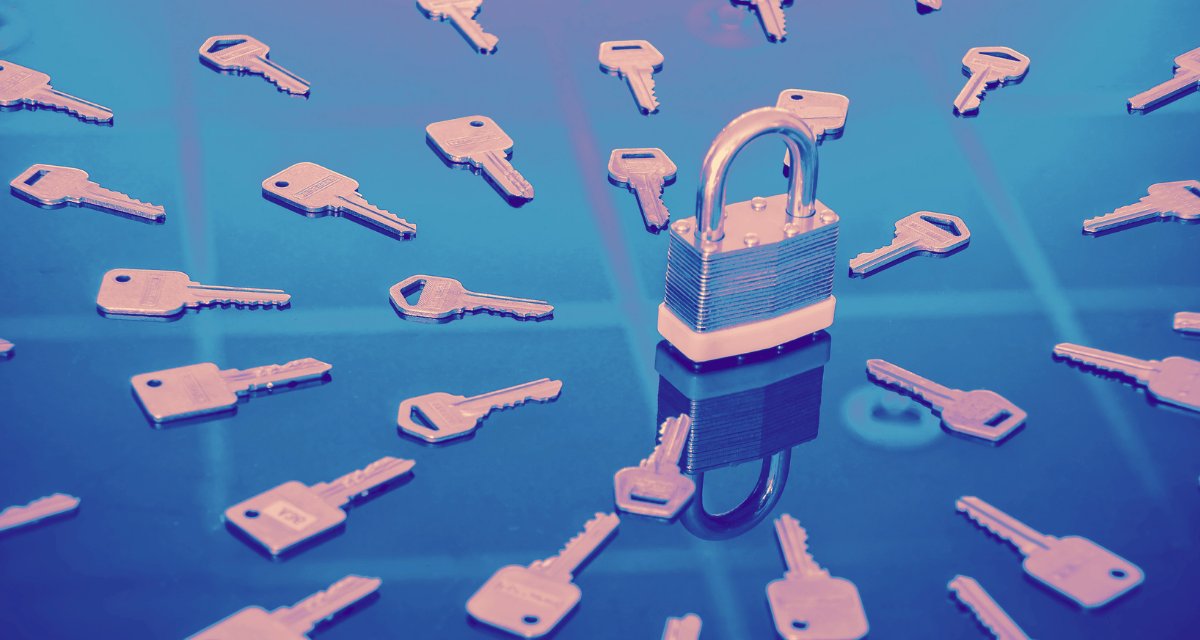
Until phishing‑resistant, passwordless authentication becomes a mainstay, organizations will remain more vulnerable to credential‑theft‑driven attacks.

A cybersecurity firm has detected an increase in password-stealer detections in its South-east Asia customer base for 2025, compared to its 2024 metrics. Its products had detected and blocked more than one million password‑stealer incidents in corporate networks across the region in 2025, up about 18% from 2024.

Password stealers are a category of malware that harvest stored credentials from browsers, apps, and system caches, including website logins and sometimes cryptocurrency‑related data. In theory, such stolen credentials can be used for financial theft, identity abuse, extortion, or to pivot into other systems.

By country, the highest year‑on‑year increases in Kaspersky’s data were in the Philippines (41%), Malaysia (33%), Singapore (25%), Vietnam (21%), and Indonesia (7%), while the firm’s Thailand market recorded a 21% decline*. The values are not normalized by market size or number of protected endpoints, so the percentages may reflect changes in Kaspersky’s own customer‑coverage footprint rather than a view of the entire region’s threat landscape.

Kaspersky has also cited a separate 2026 survey of about 193m leaked passwords, in which an estimated 45% could be cracked within a minute using common brute‑force and dictionary techniques, while about 23% resisted cracking for more than a year. That study focused on password strength in general, not on the specific SEA‑based incidents counted in the password‑stealer telemetry.

According to the firm’s Managing Director (Asia Pacific), Adrian Hia, the most effective approach to eliminate password theft risks is by “adopting password managers that generate and securely store truly random credentials, alongside enforcing strong access policies such as multi-factor authentication, regular credential audits, and least-privilege access. Training employees and embedding cybersecurity-as-a-culture policies and behavior in companies is also paramount.”

Editor’s note: Even for organizations that have moved beyond passwords or adopted phishing‑resistant authentication, the real challenge lies ahead: anticipating how attackers will weaponize AI‑driven social‑engineering, deepfake‑based verification bypasses, and automated credential‑spray campaigns at scale. Some best practices can be found at the Identity Defined Security Alliance website.

*Cited as an outlier in the firm’s report, without any further details

Share:

PreviousLRQA Calls for Stronger AI Governance and Cyber Resilience Frameworks at CyberSecMY 2026
NextRansomware Attacks on Automotive and Smart Mobility More Than Doubled in 2025, According to New Research by Upstream Security

Related Posts

Cross-bank data sharing exposes suspected fraudulent payment networks in Singapore

Cross-bank data sharing exposes suspected fraudulent payment networks in Singapore

Thursday, November 26, 2026

Remote-working is driving dramatic change in financial services

Remote-working is driving dramatic change in financial services

Wednesday, May 27, 2020

Telco customer data is highly-prized: no room for sloppy cybersecurity!

Telco customer data is highly-prized: no room for sloppy cybersecurity!

Tuesday, March 2, 2021

A smart contract that was not so smart after all

A smart contract that was not so smart after all

Tuesday, February 21, 2023

Leave a reply Cancel reply

You must be logged in to post a comment.

Voters-draw/RCA-Sponsors

Slide
Slide
Slide
Slide
Slide
Slide
Slide
Slide
Slide
Slide
Slide
Slide
Slide
Slide
Slide
Slide
Slide
Slide
Slide
previous arrow
next arrow

CybersecAsia Voting Placement

Gamification listing or Participate Now

LEARN MORE

Vote Now -Placement(Google Ads)

Top-Sidebar-banner

Whitepapers

  • Critical Security Threatsand the Need for ZTNA: How evolving cyberattacks demand a Zero Trust approach

    Critical Security Threatsand the Need for ZTNA: How evolving cyberattacks demand a Zero Trust approach

    Cyber threats have become more frequent and sophisticated, targeting organizations of all sizes across all …Download Whitepaper
  • Zero Trust Made Simple: Why it matters and how to get started

    Zero Trust Made Simple: Why it matters and how to get started

    Data breaches and cyberattacks are no longer limited to large, high-profile organizations.Download Whitepaper
  • Cloud Secure Edge: Remote access, better security

    Cloud Secure Edge: Remote access, better security

    ​SonicWall Cloud Secure Edge™ is a modern, cloud-native Security Service Edge (SSE) solution that addresses …Download Whitepaper
  • Closing the Gap in Email Security:How To Stop The 7 Most SinisterAI-Powered Phishing Threats

    Closing the Gap in Email Security:How To Stop The 7 Most SinisterAI-Powered Phishing Threats

    Insider threats continue to be a major cybersecurity risk in 2024. Explore more insights on …Download Whitepaper

Middle-sidebar-banner

Case Studies

  • FOMO Pay expands cross-border compliance infrastructure amid rising fraud risks

    FOMO Pay expands cross-border compliance infrastructure amid rising fraud risks

    To unify onboarding and ongoing reviews the payment firm adds identity, liveness, business-ownership, sanctions screening …Read more
  • How a Vietnamese D2C retailer built its own secure digital infrastructure

    How a Vietnamese D2C retailer built its own secure digital infrastructure

    Would your organization build your own digital infrastructure – including AI governance and cybersecurity – …Read more
  • Cyber protection for medical clinics in Singapore

    Cyber protection for medical clinics in Singapore

    As Singapore’s healthcare sector becomes increasingly digital and interconnected, clinics are facing heightened cyber risks, …Read more
  • India’s WazirX strengthens governance and digital asset security

    India’s WazirX strengthens governance and digital asset security

    Revamping its custody infrastructure using multi‑party computation tools has improved operational resilience and institutional‑grade safeguardsRead more

Bottom sidebar

Other News

  • Ensign InfoSecurity partners with HPE to help enterprises deploy AI with greater control and security

    Thursday, November 26, 2026
    The collaboration brings together Ensign’s …Read More »
  • AUTOCRYPT to Showcase Security Solutions for the Physical AI Era at CES 2027

    Wednesday, November 25, 2026
    SEOUL, South Korea, Nov. 25, …Read More »
  • Blackpanda and Immersive Collaborate to Train Asia’s Cyber In-Extremis Force

    Wednesday, November 25, 2026
    Every Blackpanda incident responder will …Read More »
  • Cohesity Joins OpenAI Daybreak Defense Network to Strengthen Product Security

    Tuesday, November 24, 2026
    Cohesity plans to use OpenAI …Read More »
  • GovWare 2026 closes with a clear focus on securing AI that can act

    Thursday, November 19, 2026
    Across the conference and exhibition, …Read More »
  • Our Brands
  • DigiconAsia
  • MartechAsia
  • Home
  • About Us
  • Contact Us
  • Sitemap
  • Privacy & Cookies
  • Terms of Use
  • Advertising & Reprint Policy
  • Media Kit
  • Subscribe
  • Manage Subscriptions
  • Newsletter

Copyright © 2026 CybersecAsia All Rights Reserved.