
Cybersecurity News in Asia

RECENT STORIES:

SEGA moves faster with flow-based network monitoring
Global Tech Shift: Tune Talk Launches World’s First Network-Enfo...
Asia’s AI security race demands unified, responsible deployment fragme...
International cyber operation disrupts malware infrastructure linked t...
DJI Enterprise Advances Industry with New Framework for Dock as First ...
Multi-supply-chain breach disclosed, involving customer design and per...
LOGIN REGISTER
CybersecAsia
  • Features
    • Featured

      S E Asia governments targeted by cyber-espionage group

      S E Asia governments targeted by cyber-espionage group

      Tuesday, June 23, 2026, 8:00 AM Asia/Singapore | Features
    • Featured

      Rethinking network and infrastructure design for resilience

      Rethinking network and infrastructure design for resilience

      Thursday, June 18, 2026, 2:17 PM Asia/Singapore | Features
    • Featured

      Bringing cybercriminals to justice in APAC

      Bringing cybercriminals to justice in APAC

      Thursday, June 11, 2026, 10:30 AM Asia/Singapore | Features
  • Opinions
  • Tips
  • Whitepapers
  • AWARDS 2026
  • Directory
  • E-Learning

Select Page

Case StudyFeatures

How a Vietnamese D2C retailer built its own secure digital infrastructure

By Victor Ng | Monday, May 18, 2026, 2:21 PM Asia/Singapore

How a Vietnamese D2C retailer built its own secure digital infrastructure

Would your organization build your own digital infrastructure – including AI governance and cybersecurity – all on your own?

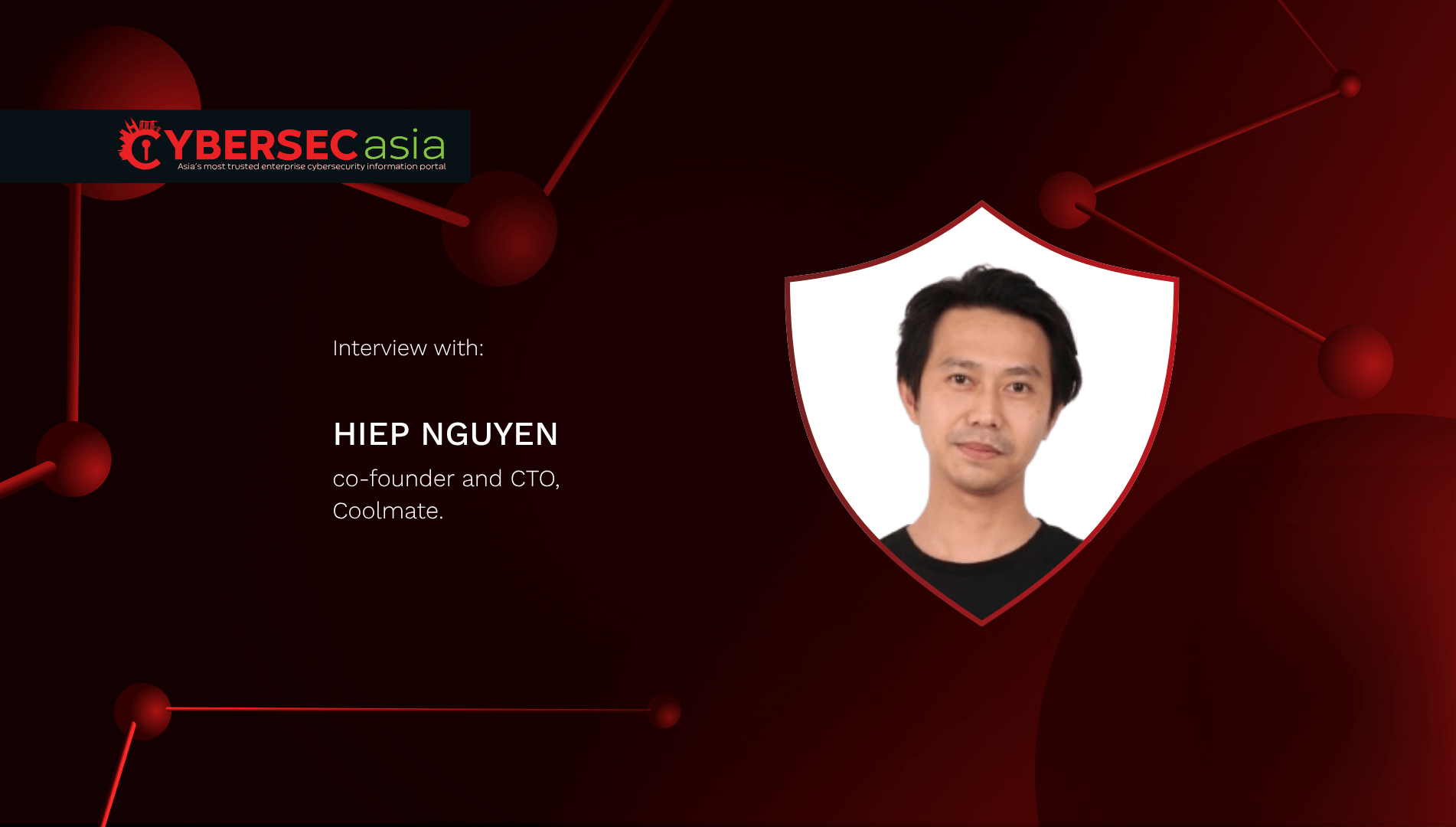
Coolmate, a rapidly growing Vietnamese direct-to-consumer (D2C) apparel brand, has quietly built much of its digital infrastructure inhouse as it scaled across multiple e-commerce marketplaces and, more recently, into offline retail.

Rather than relying entirely on off-the-shelf platforms, the company developed its own e-commerce stack and internal ERP to manage inventory, sales and operational data across channels. We find out why and how from Hiep Nguyen, co-founder and CTO, Coolmate.

Why did Coolmate choose to develop its own e-commerce stack and internal ERP to manage inventory, sales and operational data across channels, rather than deploying an off-the-shelf solution?

Nguyen: At Coolmate, we see technology and data not simply as support functions, but as a core part of how we build efficiency, trust and customer experience at scale.

From the outset, our business model has been direct-to-consumer. As we began scaling across multiple digital channels, we quickly realized that most off-the-shelf e-commerce solutions were not designed to support the operational complexity of managing multiple marketplaces while maintaining tight control over inventory, costs and customer experience.

Building our own e-commerce platform and internal ERP allowed us to take full ownership of our operational backbone. Today, this centralized system manages inventory, sales and customer data across our website and marketplaces such as Tiki, Lazada, Shopee and TikTok. It enables us to synchronize stock in real time, prevent overselling or overstocking, and maintain a consistent customer experience across channels.

Developing our own stack has also given us the flexibility to scale and adapt quickly. When we expanded into physical retail in 2026, for example, we were able to integrate our new stores into the existing system within just a month, without disrupting operations.

Ultimately, owning our technology infrastructure gives us the agility to innovate while ensuring that the data and insights underpinning our business remain secure, structured and actionable as we continue to grow.

What are the challenges and advantages of building a proprietary in-house digital retail infrastructure?
Nguyen: Building a proprietary in house digital retail infrastructure comes with both challenges and advantages. On the challenge side, it requires significant investment in time and resources to design, develop and to maintain as the system handles everything from inventory and sales across multiple channels to customer management and reporting. It also demands technical expertise and careful planning to ensure reliability and security, particularly when handling sensitive data such as customer information and financial metrics.

The advantages, however, are substantial. Having our own system gives us full control and flexibility to tailor the platform to our exact business needs. It allows us to integrate online and offline operations seamlessly, manage inventory in real time, and respond quickly to changing market demands.

This centralized approach also supports data driven decision making, giving us insights that would be difficult to capture with off the shelf solutions. Ultimately, it enables us to scale efficiently while maintaining high standards of quality and service for our customers.

How do you handle AI and cybersecurity in the business, especially when managing sensitive customer and commercial data and applying AI across media production, software development and analytics?

Nguyen: At Coolmate, we take both AI and cybersecurity very seriously, particularly because we handle sensitive customer and commercial data.

On the cybersecurity side, our internal systems, including the CRM for our website and our ERP, run on physical on-premises servers rather than cloud services.

This allows us to control access tightly and manage software and protocols internally, while our external partner handles the physical security, firewalls and hardware. We also conduct yearly cybersecurity audits and red team testing to identify any vulnerabilities and strengthen our systems accordingly.

Customer data from marketplaces is not accessible to us, so we only manage data from our own channels. This data is kept in a separate database with access restricted to a very small number of system administrators. Sensitive information such as phone numbers or emails is hidden from staff, and all access is logged, so any abnormal activity can be identified and addressed.

Regarding AI, we apply it where it can add the most value. In media production, it helps in graphic design and video production; in software development, it allows our lean tech team to code and release features faster; and in analytics, it assists staff in scanning data and generating insights. AI has also been very useful in helping with product design.

Access to AI involving sensitive data is restricted to leaders who have been trained by our internal team, ensuring that the information is handled securely. Overall, by combining strong cybersecurity practices with careful and targeted use of AI, we can innovate, improve efficiency, and protect both our data and our customers.

Share:

PreviousZero day vulnerability in Exchange Server enables browser-based JavaScript attacks
NextSU Group Launches Expanded AI Security Offering to Meet Surging Global Demand

Related Posts

Entrusting security to strangers is safer than you think

Entrusting security to strangers is safer than you think

Monday, September 2, 2019

Cafs: a guiding light for securing Australia’s charity sector

Cafs: a guiding light for securing Australia’s charity sector

Monday, December 4, 2023

Have Windows 10 and Office 365 breached GDPR?

Have Windows 10 and Office 365 breached GDPR?

Thursday, October 24, 2019

FIDO2 for the financial sector: pros and cons

FIDO2 for the financial sector: pros and cons

Tuesday, August 29, 2023

Leave a reply Cancel reply

You must be logged in to post a comment.

Voters-draw/RCA-Sponsors

Slide
Slide
Slide
Slide
Slide
Slide
Slide
Slide
Slide
Slide
Slide
Slide
Slide
Slide
previous arrow
next arrow

CybersecAsia Voting Placement

Gamification listing or Participate Now

PARTICIPATE NOW

Vote Now -Placement(Google Ads)

Top-Sidebar-banner

Whitepapers

  • Closing the Gap in Email Security:How To Stop The 7 Most SinisterAI-Powered Phishing Threats

    Closing the Gap in Email Security:How To Stop The 7 Most SinisterAI-Powered Phishing Threats

    Insider threats continue to be a major cybersecurity risk in 2024. Explore more insights on …Download Whitepaper
  • 2024 Insider Threat Report: Trends, Challenges, and Solutions

    2024 Insider Threat Report: Trends, Challenges, and Solutions

    Insider threats continue to be a major cybersecurity risk in 2024. Explore more insights on …Download Whitepaper
  • AI-Powered Cyber Ops: Redefining Cloud Security for 2025

    AI-Powered Cyber Ops: Redefining Cloud Security for 2025

    The future of cybersecurity is a perfect storm: AI-driven attacks, cloud expansion, and the convergence …Download Whitepaper
  • Data Management in the Age of Cloud and AI

    Data Management in the Age of Cloud and AI

    In today’s Asia Pacific business environment, organizations are leaning on hybrid multi-cloud infrastructures and advanced …Download Whitepaper

Middle-sidebar-banner

Case Studies

  • How a Vietnamese D2C retailer built its own secure digital infrastructure

    How a Vietnamese D2C retailer built its own secure digital infrastructure

    Would your organization build your own digital infrastructure – including AI governance and cybersecurity – …Read more
  • Cyber protection for medical clinics in Singapore

    Cyber protection for medical clinics in Singapore

    As Singapore’s healthcare sector becomes increasingly digital and interconnected, clinics are facing heightened cyber risks, …Read more
  • India’s WazirX strengthens governance and digital asset security

    India’s WazirX strengthens governance and digital asset security

    Revamping its custody infrastructure using multi‑party computation tools has improved operational resilience and institutional‑grade safeguardsRead more
  • Bangladesh LGED modernizes communication while addressing data security concerns

    Bangladesh LGED modernizes communication while addressing data security concerns

    To meet emerging data localization/privacy regulations, the government engineering agency deploys a secure, unified digital …Read more

Bottom sidebar

Other News

  • Global Tech Shift: Tune Talk Launches World’s First Network-Enforced Child Safety Mobile Plan, Bypassing App-Level Limitations

    Saturday, June 27, 2026
    PETALING JAYA, Malaysia, June 26, …Read More »
  • DJI Enterprise Advances Industry with New Framework for Dock as First Responder (DFR) Deployments

    Thursday, June 25, 2026
    New White Paper Outlines Best …Read More »
  • At VivaTech 2026, Taiwan-Based MaiAgent Says Enterprises Should Stop Building RAG and AI Agent Systems From Scratch

    Friday, June 19, 2026
    TAIPEI and PARIS, June 19, …Read More »
  • How large-scale AI drives the evolution of video encoding to intelligent understanding

    Thursday, June 18, 2026
    HANGZHOU, China, June 18, 2026 …Read More »
  • Crisis24 Opens Global Maritime Operations Center in Manila to Power Intelligence, Consulting and Crisis Response Services

    Thursday, June 18, 2026
    New 24/7 operations center anchors …Read More »
  • Our Brands
  • DigiconAsia
  • MartechAsia
  • Home
  • About Us
  • Contact Us
  • Sitemap
  • Privacy & Cookies
  • Terms of Use
  • Advertising & Reprint Policy
  • Media Kit
  • Subscribe
  • Manage Subscriptions
  • Newsletter

Copyright © 2026 CybersecAsia All Rights Reserved.