Cybersecurity News in Asia

RECENT STORIES:

SEGA moves faster with flow-based network monitoring
When skyrocketing data flows erode traditional security boundaries, da...
EU age-verification app exposed as vulnerable within minutes after lau...
Akuvox X910 Claims Red Dot Award 2026: the World’s First AI-powe...
Exein establishes APAC headquarters and Taipei office
DNS‑record analysis shows uneven DMARC enforcement among FIFA World Cu...
LOGIN REGISTER
CybersecAsia
  • Features
    • Featured

      How AI is supercharging insider threats

      How AI is supercharging insider threats

      Wednesday, April 15, 2026, 12:29 PM Asia/Singapore | Features
    • Featured

      Q-Day is coming. Are you ready?

      Q-Day is coming. Are you ready?

      Tuesday, April 14, 2026, 12:40 PM Asia/Singapore | Features
    • Featured

      How lean defence teams turn endpoint insights into measurable risk reduction

      How lean defence teams turn endpoint insights into measurable risk reduction

      Monday, April 13, 2026, 3:15 PM Asia/Singapore | Features
  • Opinions
  • Tips
  • Whitepapers
  • Awards 2025
  • Directory
  • E-Learning

Select Page

Features

What do you do when you encounter Savvy Seahorse or Muddling Meerkat?

By Victor Ng | Monday, August 19, 2024, 5:50 PM Asia/Singapore

What do you do when you encounter Savvy Seahorse or Muddling Meerkat?

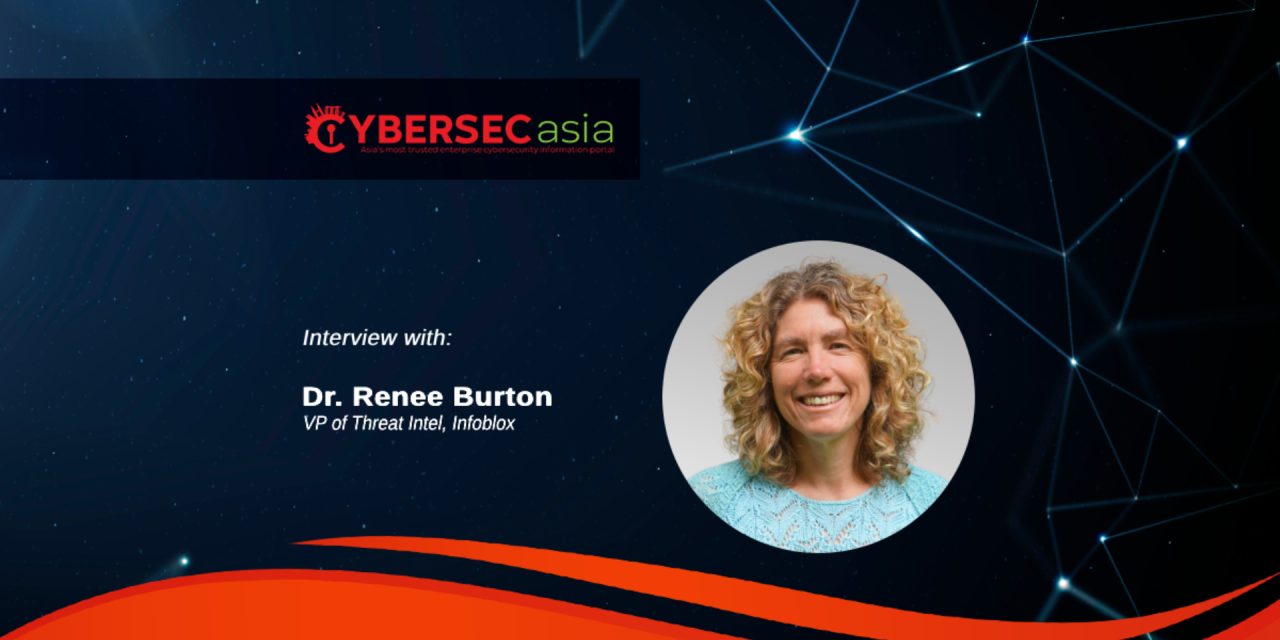
Dr Burton: Their expertise and understanding of DNS make their activities hard to track and counter. These actors use advanced techniques such as DNS manipulation, traffic distribution systems, lookalike domains, registered domain generation algorithms, and more to evade detection.  These techniques demonstrate their sophistication and the challenges faced by security professionals in detecting and countering their activities. Their operations are also complex and require a deep understanding of the DNS to detect and mitigate.

Who is responsible for ensuring that these threats are promptly mitigated, and what are some immediate steps organizations can take to secure their networks against these actors?

Dr Burton: The responsibility of mitigating threats falls primarily on the security teams. They are the backbone of any organization’s defense. However, everyone within an organization can contribute to this effort. From the individual employee refraining from clicking on suspicious links, to the networking teams ensuring they have all the necessary information the SecOps team needs, each action plays a part in the larger security framework.

One of the key challenges that organizations face here is the lack of communication between networking and security professionals. Breaking down those silos and supporting collaboration and information sharing is essential for better security.

It is important to raise awareness about the central role of DNS in both the success of a threat actor and their defeat. By understanding this part of our digital world better, organizations can turn a potential attack vector into a powerful weapon against cyber threats. In terms of actions to take this means understanding DNS Detection and Response (DNSDR) as an integral part of the security stack and implementing it is a crucial step. This is because DNSDR monitors DNS traffic for threats that often remain hidden from traditional detection and response systems. This allows for a more comprehensive view of the threat landscape and enables timely and effective responses to potential attacks.

Given the current trends in DNS attacks and cybercrime, what do you foresee in the evolution of cyberthreats, and how might these impact global internet security in the future?

Dr Burton: It is clear that the evolution of cyberthreats is dynamic. Threat actors are smart and highly motivated to succeed. As technology advances, so do they. This includes technology like AI, but it also means that as more assets move into the virtual world, these assets become potential targets for attacks.

Regardless of how sophisticated actors become – regardless of the use of fake pictures and AI-supported content – they still need to use DNS to communicate and deliver their attacks.

One of the key areas why bad actors thrive is the lack of communication between networking and security professionals and the lack of knowledge about DNS. Therefore, education and breaking down silos are key to improving our defenses.

What are the future plans for the threat detection operations at Infoblox Threat Intel?

Dr Burton: DNS is notoriously tricky to interpret and hunt from, but our deep understanding and unique access give us a high-powered scope to zero in on cyberthreats. By analyzing over 70 billion DNS events daily, we can detect 60% of threats before a DNS query and enrich our threat intelligence database with approximately 4 million new indicators each month.

Our future plans are rooted in our core strengths and commitments. We will continue to harness our specialized DNS expertise to stay ahead of threat actors, identifying threats that others might miss. We are dedicated to sharing our research findings with the broader cybersecurity community, contributing valuable insights to collective defense efforts.

As we navigate the evolving cybersecurity landscape, we strive to maintain our leadership position by staying at the forefront of trends and developments, ensuring our threat detection operations remain cutting-edge and effective.


Pages: 1 2

Share:

PreviousMaking sense of the EU AI Act of August 2024
NextGroup-IB and SecurityHQ Announce Global Partnership to Strengthen Cybersecurity and Enhance SOC Capabilities

Related Posts

India’s EV ambitions constrained by data security and infrastructural challenges

India’s EV ambitions constrained by data security and infrastructural challenges

Tuesday, September 28, 2021

Of hacktivists, cyber-complacency and things that lurk in a tumultuous world

Of hacktivists, cyber-complacency and things that lurk in a tumultuous world

Thursday, August 29, 2024

Wi-Fi catastrophe: WeWork needs a serious rework

Wi-Fi catastrophe: WeWork needs a serious rework

Thursday, September 26, 2019

Will continual big-tech layoffs give threat actors a leg up?

Will continual big-tech layoffs give threat actors a leg up?

Wednesday, August 23, 2023

Leave a reply Cancel reply

You must be logged in to post a comment.

Voters-draw/RCA-Sponsors

Slide
Slide
Slide
Slide
Slide
Slide
Slide
Slide
Slide
Slide
Slide
Slide
Slide
Slide
previous arrow
next arrow

CybersecAsia Voting Placement

Gamification listing or Participate Now

PARTICIPATE NOW

Vote Now -Placement(Google Ads)

Top-Sidebar-banner

Whitepapers

  • Closing the Gap in Email Security:How To Stop The 7 Most SinisterAI-Powered Phishing Threats

    Closing the Gap in Email Security:How To Stop The 7 Most SinisterAI-Powered Phishing Threats

    Insider threats continue to be a major cybersecurity risk in 2024. Explore more insights on …Download Whitepaper
  • 2024 Insider Threat Report: Trends, Challenges, and Solutions

    2024 Insider Threat Report: Trends, Challenges, and Solutions

    Insider threats continue to be a major cybersecurity risk in 2024. Explore more insights on …Download Whitepaper
  • AI-Powered Cyber Ops: Redefining Cloud Security for 2025

    AI-Powered Cyber Ops: Redefining Cloud Security for 2025

    The future of cybersecurity is a perfect storm: AI-driven attacks, cloud expansion, and the convergence …Download Whitepaper
  • Data Management in the Age of Cloud and AI

    Data Management in the Age of Cloud and AI

    In today’s Asia Pacific business environment, organizations are leaning on hybrid multi-cloud infrastructures and advanced …Download Whitepaper

Middle-sidebar-banner

Case Studies

  • Cyber protection for medical clinics in Singapore

    Cyber protection for medical clinics in Singapore

    As Singapore’s healthcare sector becomes increasingly digital and interconnected, clinics are facing heightened cyber risks, …Read more
  • India’s WazirX strengthens governance and digital asset security

    India’s WazirX strengthens governance and digital asset security

    Revamping its custody infrastructure using multi‑party computation tools has improved operational resilience and institutional‑grade safeguardsRead more
  • Bangladesh LGED modernizes communication while addressing data security concerns

    Bangladesh LGED modernizes communication while addressing data security concerns

    To meet emerging data localization/privacy regulations, the government engineering agency deploys a secure, unified digital …Read more
  • What AI worries keep members of the Association of Certified Fraud Examiners sleepless?

    What AI worries keep members of the Association of Certified Fraud Examiners sleepless?

    This case study examines how many anti-fraud professionals reported feeling underprepared to counter rising AI-driven …Read more

Bottom sidebar

Other News

  • Akuvox X910 Claims Red Dot Award 2026: the World’s First AI-powered Parcel Detection Smart Intercom Revolutionizes Luxury Home Access

    Saturday, April 18, 2026
    XIAMEN, China, April 17, 2026 …Read More »
  • Exein establishes APAC headquarters and Taipei office

    Saturday, April 18, 2026
    Partnering with Taiwan’s ecosystem to …Read More »
  • Tsingke Unveils ‘Zero-Contact’ Gene Synthesis to Safeguard Core Genetic Sequences

    Wednesday, April 15, 2026
    BEIJING, April 15, 2026 /PRNewswire/ …Read More »
  • NEC Asia Pacific to Showcase Trusted Public Safety and Digital Identity Innovations at Milipol TechX 2026

    Wednesday, April 15, 2026
    SINGAPORE, April 14, 2026 /PRNewswire/ …Read More »
  • Sprinto Expands to Australia with New Data Center to Power Localized, Audit-Ready Compliance

    Wednesday, April 15, 2026
    Sprinto combines local infrastructure with …Read More »
  • Our Brands
  • DigiconAsia
  • MartechAsia
  • Home
  • About Us
  • Contact Us
  • Sitemap
  • Privacy & Cookies
  • Terms of Use
  • Advertising & Reprint Policy
  • Media Kit
  • Subscribe
  • Manage Subscriptions
  • Newsletter

Copyright © 2026 CybersecAsia All Rights Reserved.