Shadow AI is creating a new insider risk as employees use GenAI tools without security teams’ visibility, making real-time discovery, access controls and clear AI policies essential for APAC enterprises.
Generative AI has moved into the enterprise faster than any technology we’ve seen in the last decade or so, especially in networking and security.
Employees today open ChatGPT, Copilot, or a dozen other GenAI tools in a browser tab and pasting in customer data, source code, contracts, and strategy decks, often without IT team’s knowledge.
That is Shadow AI, and unlike most insider threats, there’s no malicious intent behind it. These are well-meaning employees trying to get their jobs done faster, using tools that are outside the visibility of the security team.

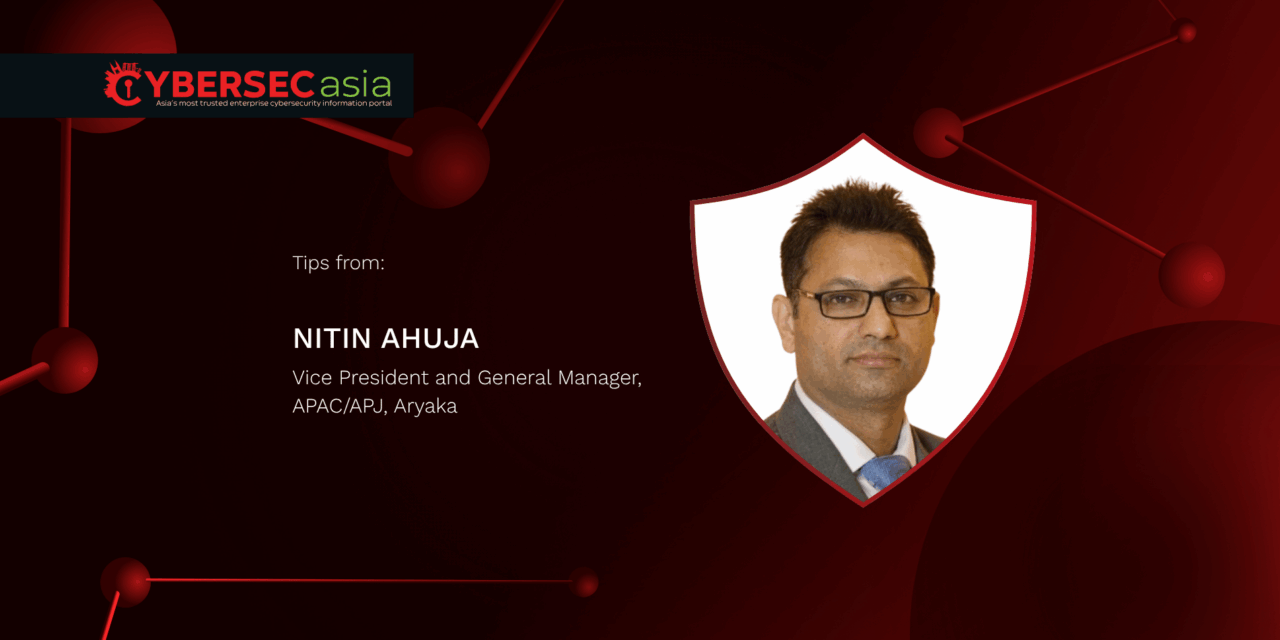
Nitin Ahuja, Vice President and General Manager, APAC and APJ, Aryaka
The blind spot is structural
Security teams have spent years building controls around applications, endpoints, and data flows. GenAI breaks all three assumptions. A single prompt can carry a snippet of source code, a client’s financial model, or an unreleased product spec straight out of the door. And because the network monitoring tools are tuned to catch bulk transfers, these small, high value exchanges slip through easily. The volume is tiny; the value is enormous. And it’s all happening over encrypted, legitimate-looking web traffic that looks no different from any other SaaS session.
At the same time, enterprises across APAC are racing to deploy their own AI agents, faster than governance frameworks can keep pace. It compounds the problem with AI usage on one side and the ungoverned AI deployment on the other. Both point back to the same root cause. Security architecture that was built that was never built to see or control this kind of traffic.
That’s why the Shadow AI conversation cannot be separated from the remote access conversation. Most of this risk surfaces at the edge, where a remote or hybrid employee connects to the internet and to their applications. If your access architecture is still a VPN that tunnels traffic and trusts the device on the other end, you have no way to distinguish a sanctioned SaaS session from an employee pasting a client contract into an unapproved AI tool. Visibility and policy enforcement need to live into the access layer itself.
The cost of staying blind
The repercussions aren’t hypothetical. A single pasted prompt can put client data into a thirdparty model’s training pipeline, breaching the confidentiality clauses in enterprise contracts and, in regulated sectors, tripping data protection laws like Singapore’s PDPA or India’s DPDP Act. Source code and product specs leaked can erode the competitive advantage they were built to protect. And when a breach happens, it doesn’t show up as an obvious hack; it shows up as a compliance audit, a client questioning why their data appeared somewhere it shouldn’t have, or a regulator asking questions the security team can’t answer. The damage to trust, in those moments, is often harder to repair than the data itself.
Banning GenAI outright doesn’t work. Employees find a way around the block, and the business loses out on the productivity gains everyone else is capturing. The organisations getting this right are doing three things differently:
- Real-time discovery – You can’t govern what you can’t see, so enterprises need continuous, real-time visibility into which GenAI tools employees are using.
- Access and data controls – Zero Trust principles which verify identity, check device posture, apply policy consistently, need to extend to every application a hybrid workforce touches, including the GenAI tools. That means Zero Trust access converged with inspection and data-loss prevention that covers GenAI traffic specifically.
- Policy to guide behaviour – Security teams should publish clear, simple guidance on what can and can’t go into public AI tools, and pair it with sanctioned alternatives employees can use. Restriction without an alternative just pushes the behaviour further into the shadows.
The stakes for APAC
APAC enterprises are moving fast on AI, but speed and governance don’t have to be a trade-off. Building visibility and control into how people access every application lets enterprises get ahead of Shadow AI before it turns into the compliance or data-loss incident that brings the business to a halt.
Shadow AI is really just a prompt to make sure your access and security architecture matches the world your employees are already working in. That technology exists today. What’s less certain, for many security and network leaders in this region, is whether their remote access strategy has caught up to it