
Cybersecurity News in Asia

RECENT STORIES:

SEGA moves faster with flow-based network monitoring
FBI warning: Attackers increasingly use ARTEX AI framework to automate...
Hidden software bug of July 2026 blamed for global office software out...
As Hijacked Billboards Make Headlines, CAYIN SMP Players Keep Screens ...
Agentic AI opportunities and risks for digital assets
AI agents increasingly perform consequential actions on customer-facin...
LOGIN REGISTER
CybersecAsia
  • Features
    • Featured

      Agentic AI opportunities and risks for digital assets

      Agentic AI opportunities and risks for digital assets

      Friday, November 13, 2026, 4:00 PM Asia/Singapore | Features, Newsletter
    • Featured

      The real cyberthreat frontier AI poses

      The real cyberthreat frontier AI poses

      Wednesday, November 4, 2026, 10:31 AM Asia/Singapore | Features
    • Featured

      Lessons from the Binance hack

      Lessons from the Binance hack

      Tuesday, November 3, 2026, 1:20 PM Asia/Singapore | Features, Opinions
  • Opinions
  • Tips
  • Whitepapers
  • AWARDS 2026
  • Directory
  • E-Learning

Select Page

FeaturesTips

How CISOs can set human boundaries for autonomous cybersecurity

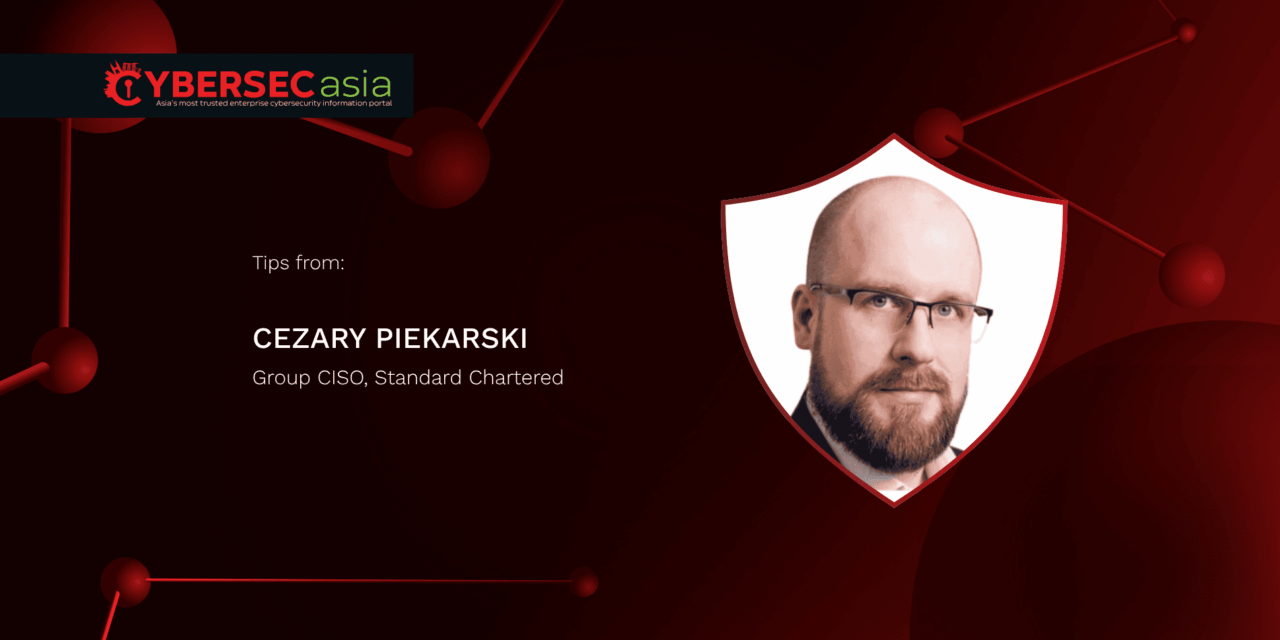
By Cezary Piekarski, Group CISO, Standard Chartered | Wednesday, October 7, 2026, 11:05 AM Asia/Singapore

How CISOs can set human boundaries for autonomous cybersecurity

AI won’t act alone; human leadership still matters. Clear escalation, testing and oversight help organizations manage consequences of machine-driven detection, triage and response.

Artificial intelligence is transforming cybersecurity at unprecedented speed. According to the World Economic Forum’s Global Cybersecurity Outlook 2026, 94% of security leaders expect AI will be the most significant driver of change in cybersecurity over the coming year. Across industries, organizations are investing heavily in AI-powered tools to improve threat detection, accelerate response times and strengthen defenses.

Whilst we’re seeing ballooning AI investment figures and increasingly sophisticated security tools deployed, breach numbers are not falling at the same pace. The disconnect is striking – WEF’s outlook also reveals that 77% of organizations are using AI for cybersecurity and yet 87% cite AI-related vulnerabilities as the fastest-growing cyber risk. A recent IBM study also found that one in four malicious security breaches were AI-enabled, representing a 56% increase from the previous year. The question is no longer whether AI will become part of cyberattacks, but how prepared organizations are to respond.

Governance in an autonomous age

This is not a case of organizations adopting too much automation. In fact, increasing threat velocity means cyber defenders will need greater levels of autonomous detection, investigation and response.

The real risk lies in deploying advanced capabilities without clear governance, accountability and oversight. Organisations must understand where autonomous systems operate, how decisions are made, and who remains accountable when those decisions have business, regulatory or client impacts.

Investigation, triage and containment actions that today require analyst intervention may increasingly occur in seconds through autonomous systems. The human role will evolve from operating the controls to defining the guardrails, managing exceptions and ensuring technology aligns with organisational risk appetite.

Where human judgement remains essential

Amidst rapid advances in artificial intelligence, there remain areas where human expertise is irreplaceable.

The first is contextual judgement. Experience, intuition and business context often enable security professionals to identify risks that automated systems may not recognize.

Second is communication. Effective cybersecurity depends on translating technical findings into business decisions. Security leaders must be able to explain emerging threats, operational risks and mitigation options in a way that drives timely action.

Most importantly, humans make ethical, reputational and strategic decisions under pressure. When organizations face complex incidents that affect customers, markets and stakeholders, there is no algorithm capable of fully weighing all the trade-offs involved. These decisions require leadership, accountability and judgement.

What good looks like in 2027

In many areas of cyber defense, AI will increasingly move beyond a supporting role and begin operating autonomously. As attackers leverage AI to increase speed and scale, defenders will need to respond in kind. The future is therefore less about keeping humans in every operational decision and more about ensuring people establish the policies, risk thresholds and governance frameworks that guide autonomous actions.

It also requires organizations to move cybersecurity beyond the technology function and embed it into daily behaviors across the business. At Standard Chartered, we embed CISOs within our businesses to strengthen risk awareness and align cybersecurity more closely with commercial objectives.

At the same time, organizations should recognize the growing convergence of cybersecurity, fraud and financial crime. Threat actors increasingly operate across these domains, making integrated defense critical. Our Fusion approach brings together intelligence sharing, detection methodologies and response frameworks to improve the speed and effectiveness of disruption efforts.

Building resilience requires continuous testing. For us, continuous resilience testing helps prepare the Bank to respond rapidly and effectively to cyber events, through exercises that challenge decision-making, coordination and communication.

Finally, organizations should invest as much in capability development as they do in technology. Cybersecurity is everyone’s responsibility, and continuous training helps employees understand the role they play in protecting the organization.

The human leadership imperative

The role of the CISO has evolved significantly. Today, effective cybersecurity leadership is as much about people as it is about technology.

The strongest security teams are built on trust and psychological safety. When employees feel comfortable reporting mistakes, raising concerns and escalating issues early, organizations become more resilient. Small problems are addressed before they become major incidents.

CISOs must increasingly engage with boards and executive leadership teams. Translating cyber and AI-driven risks into clear business implications is now a core skill.

AI will increasingly detect threats, investigate incidents and execute response actions at a speed far beyond human capability. Yet even in a highly autonomous future, organizations will remain accountable for the decisions their systems make. The defining challenge for cybersecurity leaders is therefore not whether to automate, but how to ensure autonomous systems operate within clear risk, governance and ethical boundaries.

The future of cybersecurity is not human versus machine. It is autonomous technology guided by human leadership.


Share:

PreviousSecuring the agentic enterprise – at machine speed
NextThe “Awareness Gap” in Australian enterprise security

Related Posts

Out with the password: multifactor authentication is in

Out with the password: multifactor authentication is in

Wednesday, June 2, 2021

Pandemic-related threats to watch out for in S E Asia and India

Pandemic-related threats to watch out for in S E Asia and India

Friday, December 18, 2020

White paper details taxonomy of deepfake threats targeting the financial services industry

White paper details taxonomy of deepfake threats targeting the financial services industry

Wednesday, October 30, 2024

New APAC coalition forms to promote public-private tech resilience against cybercrime

New APAC coalition forms to promote public-private tech resilience against cybercrime

Wednesday, June 2, 2021

Leave a reply Cancel reply

You must be logged in to post a comment.

Voters-draw/RCA-Sponsors

Slide
Slide
Slide
Slide
Slide
Slide
Slide
Slide
Slide
Slide
Slide
Slide
Slide
Slide
Slide
Slide
Slide
Slide
Slide
previous arrow
next arrow

CybersecAsia Voting Placement

Gamification listing or Participate Now

LEARN MORE

Vote Now -Placement(Google Ads)

Top-Sidebar-banner

Whitepapers

  • Critical Security Threatsand the Need for ZTNA: How evolving cyberattacks demand a Zero Trust approach

    Critical Security Threatsand the Need for ZTNA: How evolving cyberattacks demand a Zero Trust approach

    Cyber threats have become more frequent and sophisticated, targeting organizations of all sizes across all …Download Whitepaper
  • Zero Trust Made Simple: Why it matters and how to get started

    Zero Trust Made Simple: Why it matters and how to get started

    Data breaches and cyberattacks are no longer limited to large, high-profile organizations.Download Whitepaper
  • Cloud Secure Edge: Remote access, better security

    Cloud Secure Edge: Remote access, better security

    ​SonicWall Cloud Secure Edge™ is a modern, cloud-native Security Service Edge (SSE) solution that addresses …Download Whitepaper
  • Closing the Gap in Email Security:How To Stop The 7 Most SinisterAI-Powered Phishing Threats

    Closing the Gap in Email Security:How To Stop The 7 Most SinisterAI-Powered Phishing Threats

    Insider threats continue to be a major cybersecurity risk in 2024. Explore more insights on …Download Whitepaper

Middle-sidebar-banner

Case Studies

  • FOMO Pay expands cross-border compliance infrastructure amid rising fraud risks

    FOMO Pay expands cross-border compliance infrastructure amid rising fraud risks

    To unify onboarding and ongoing reviews the payment firm adds identity, liveness, business-ownership, sanctions screening …Read more
  • How a Vietnamese D2C retailer built its own secure digital infrastructure

    How a Vietnamese D2C retailer built its own secure digital infrastructure

    Would your organization build your own digital infrastructure – including AI governance and cybersecurity – …Read more
  • Cyber protection for medical clinics in Singapore

    Cyber protection for medical clinics in Singapore

    As Singapore’s healthcare sector becomes increasingly digital and interconnected, clinics are facing heightened cyber risks, …Read more
  • India’s WazirX strengthens governance and digital asset security

    India’s WazirX strengthens governance and digital asset security

    Revamping its custody infrastructure using multi‑party computation tools has improved operational resilience and institutional‑grade safeguardsRead more

Bottom sidebar

Other News

  • As Hijacked Billboards Make Headlines, CAYIN SMP Players Keep Screens in Owners’ Hands

    Monday, November 16, 2026
    After a run of hijacked …Read More »
  • Cohesity Expands Cyber Resilience and AI Data Capabilities for Microsoft Environments

    Friday, November 13, 2026
    Recent innovations strengthen data security …Read More »
  • Cequence Security and KPMG Collaborate on Joint Report Examining how Organisations can Govern and Secure Agentic AI

    Wednesday, November 11, 2026
    New Cequence data in the …Read More »
  • AJCCA Advances Trusted Cybersecurity at 3rd Annual Conference in Bangkok, Honors ACRA 2026 Awardees and Expands Regional Partnerships

    Tuesday, November 10, 2026
    Conference addresses emerging challenges in …Read More »
  • China Resources Longdation’s Aethereal Cybersecurity and GCSA Jointly Establish the Centre for AI and Cybersecurity Research

    Friday, November 6, 2026
    HONG KONG, Nov. 6, 2026 …Read More »
  • Our Brands
  • DigiconAsia
  • MartechAsia
  • Home
  • About Us
  • Contact Us
  • Sitemap
  • Privacy & Cookies
  • Terms of Use
  • Advertising & Reprint Policy
  • Media Kit
  • Subscribe
  • Manage Subscriptions
  • Newsletter

Copyright © 2026 CybersecAsia All Rights Reserved.