


Cybersecurity News in Asia

RECENT STORIES:

SEGA moves faster with flow-based network monitoring
How the financial services sector struggles with AI maturity despite d...
Digital Identity Co. Modernizes Thailand Immigration Bureau Services w...
VIVOTEK VORTEX Powers AI Cloud Security in Denmark’s Kongens Ege...
DJI Releases Findings of the Most Comprehensive Independent Security A...
Ransomware activity stays high, new threat groups emerge
LOGIN REGISTER
CybersecAsia
  • Features
    • Featured

      Hidden trade-offs behind enterprise AI ambitions

      Hidden trade-offs behind enterprise AI ambitions

      Tuesday, May 26, 2026, 10:16 AM Asia/Singapore | Features
    • Featured

      Is secure issuance a solved problem, or is the debate more complex?

      Is secure issuance a solved problem, or is the debate more complex?

      Thursday, May 21, 2026, 3:11 PM Asia/Singapore | Features
    • Featured

      Cyber risk, fraud, and CX: Why banks can’t treat them separately anymore

      Cyber risk, fraud, and CX: Why banks can’t treat them separately anymore

      Wednesday, May 20, 2026, 9:34 AM Asia/Singapore | Features
  • Opinions
  • Tips
  • Whitepapers
  • AWARDS 2026
  • Directory
  • E-Learning

Select Page

Tips

The dangers of viral AI-generated photos

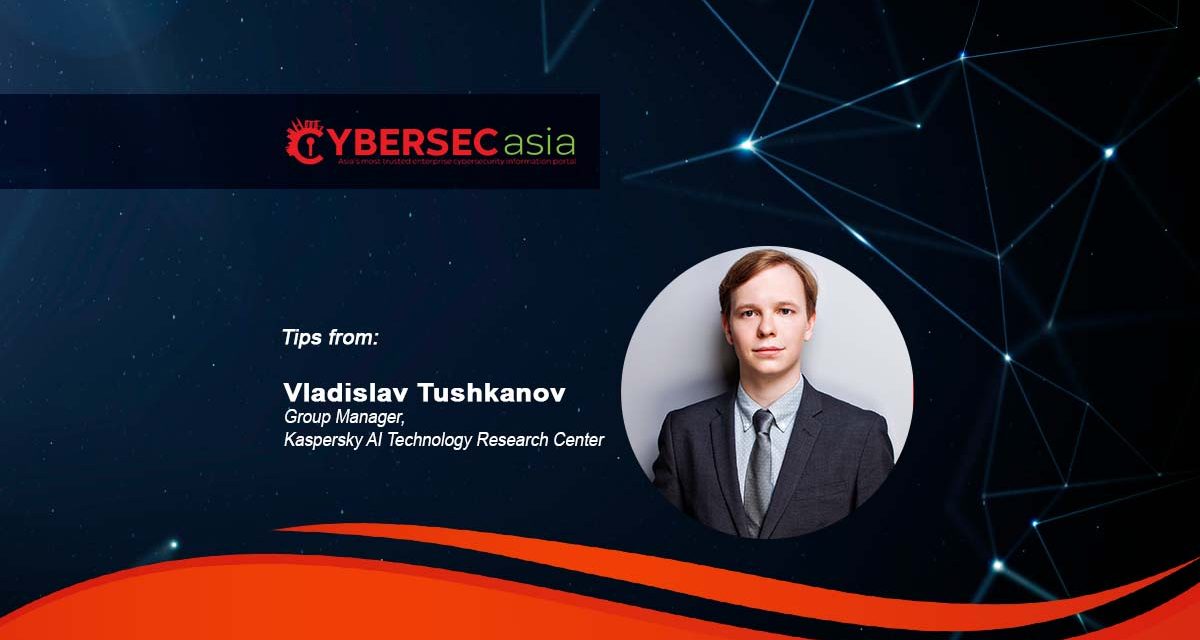
By Vladislav Tushkanov, Group Manager, Kaspersky AI Technology Research Center | Thursday, April 3, 2025, 8:20 PM Asia/Singapore

The dangers of viral AI-generated photos

ChatGPT’s latest image generator has captured the interest of multiple users worldwide with its ability to generate personal photos into Studio Ghibli-style images. However, users may overlook its potential cybersecurity risks.

Style transfer – applying a stylistic filter to a picture – is a decades-old technology, but with multimodal vision-language models, such as GPT-4o by OpenAI, it has made a big comeback, sparking a renewed interest. And ever since these style transfer apps, such as Prisma or Vinci, became popular as mobile apps with processing happening in the cloud using large neural networks, the privacy debate has been ongoing.

Conversational assistants, such as ChatGPT, due to a chat format, may give a false sense of confidentiality which we expect from private correspondence. However, using them for both work and recreational purposes, such as creating stylized portraits, is no different from using any other online service. The way they process data, and what their operators can do with the inputs that the users provide, is usually stated in their privacy policies.

While most established companies ensure the safety and security of the data they collect and store, it does not mean that the protection is bulletproof. Due to technical issues or malicious activity, data can leak and become public or appear for sale at specialized underground websites. Moreover, the account that is used to access the service can be breached if the credential or user device is compromised. 

According to Kaspersky Digital Footprint intelligence experts, there are numerous posts on the dark web and hacker forums offering stolen user accounts for AI services for sale, possibly containing the history of private conversations with the chatbot.

Photos, especially portraits, are sensitive data, because they provide some information about the user that can be used by cybercriminals, for instance, to impersonate them on social media. However, photos on their own can barely be used to commit fraud – various fraudulent schemes require much more various information about the victim, such as personal information, documents etc. 

Using chatbots to discuss personal matters, such as finance or health, can give cybercriminals more leverage for potential schemes, such as spear-phishing.

What you can do to be safe

To protect themselves, users should combine standard security practices with a bit of common sense. AI service accounts should be protected with strong unique passwords and, where possible, with two-factor authentication. Use a comprehensive security solution, including a password manager, to protect your devices and safeguard your accounts. Prefer established services over various proxy offerings to lower the number of parties that process your data.

Always treat a chatbot as a random stranger on the internet. Never discuss personal matters or share confidential details — both yours or your friends and relatives, especially without their consent. 

Be wary of potential phishing websites harvesting credentials and spreading malware — our findings show that cybercriminals use the hype around AI to capitalize on it. More tech-savvy users can opt to use local (on-device) large language and multimodal models to process sensitive data.


Share:

PreviousBuilding the future, one Web3 security breach at a time
NextCloud vulnerability exploitation: a wake-up call for security teams amid rising automation?

Related Posts

Does formal measurement of security culture lead to improvements in cybersecurity?

Does formal measurement of security culture lead to improvements in cybersecurity?

Friday, May 20, 2022

The Ukrainian-Russian conflict is polarizing cyberspace

The Ukrainian-Russian conflict is polarizing cyberspace

Thursday, March 3, 2022

Ten 2025 cyber predictions hinging on major 2024 cyber incidents          

Ten 2025 cyber predictions hinging on major 2024 cyber incidents          

Friday, January 3, 2025

Advanced persistent threat actors behind Sunburst attack may be back as Tomiris

Advanced persistent threat actors behind Sunburst attack may be back as Tomiris

Friday, October 1, 2021

Leave a reply Cancel reply

You must be logged in to post a comment.

Voters-draw/RCA-Sponsors

Slide
Slide
Slide
Slide
Slide
Slide
Slide
Slide
Slide
Slide
Slide
Slide
Slide
Slide
previous arrow
next arrow

CybersecAsia Voting Placement

Gamification listing or Participate Now

PARTICIPATE NOW

Vote Now -Placement(Google Ads)

Top-Sidebar-banner

Whitepapers

  • Closing the Gap in Email Security:How To Stop The 7 Most SinisterAI-Powered Phishing Threats

    Closing the Gap in Email Security:How To Stop The 7 Most SinisterAI-Powered Phishing Threats

    Insider threats continue to be a major cybersecurity risk in 2024. Explore more insights on …Download Whitepaper
  • 2024 Insider Threat Report: Trends, Challenges, and Solutions

    2024 Insider Threat Report: Trends, Challenges, and Solutions

    Insider threats continue to be a major cybersecurity risk in 2024. Explore more insights on …Download Whitepaper
  • AI-Powered Cyber Ops: Redefining Cloud Security for 2025

    AI-Powered Cyber Ops: Redefining Cloud Security for 2025

    The future of cybersecurity is a perfect storm: AI-driven attacks, cloud expansion, and the convergence …Download Whitepaper
  • Data Management in the Age of Cloud and AI

    Data Management in the Age of Cloud and AI

    In today’s Asia Pacific business environment, organizations are leaning on hybrid multi-cloud infrastructures and advanced …Download Whitepaper

Middle-sidebar-banner

Case Studies

  • How a Vietnamese D2C retailer built its own secure digital infrastructure

    How a Vietnamese D2C retailer built its own secure digital infrastructure

    Would your organization build your own digital infrastructure – including AI governance and cybersecurity – …Read more
  • Cyber protection for medical clinics in Singapore

    Cyber protection for medical clinics in Singapore

    As Singapore’s healthcare sector becomes increasingly digital and interconnected, clinics are facing heightened cyber risks, …Read more
  • India’s WazirX strengthens governance and digital asset security

    India’s WazirX strengthens governance and digital asset security

    Revamping its custody infrastructure using multi‑party computation tools has improved operational resilience and institutional‑grade safeguardsRead more
  • Bangladesh LGED modernizes communication while addressing data security concerns

    Bangladesh LGED modernizes communication while addressing data security concerns

    To meet emerging data localization/privacy regulations, the government engineering agency deploys a secure, unified digital …Read more

Bottom sidebar

Other News

  • Digital Identity Co. Modernizes Thailand Immigration Bureau Services with AWS

    Friday, May 29, 2026
    Mobile app enables travelers to …Read More »
  • VIVOTEK VORTEX Powers AI Cloud Security in Denmark’s Kongens Ege Mixed-Use Development

    Thursday, May 28, 2026
    TAIPEI, May 28, 2026 /PRNewswire/ …Read More »
  • DJI Releases Findings of the Most Comprehensive Independent Security Assessment of Its Drone Systems to Date

    Thursday, May 28, 2026
    Zero Critical, High, or Medium-Risk …Read More »
  • AUTOCRYPT Achieves WebTrust Accreditation for V2X PKI Infrastructure

    Tuesday, May 26, 2026
    SEOUL, South Korea, May 26, …Read More »
  • CPRO, a Leader in the Physical AI Security Industry, to be Publicly Listed on a U.S. National Securities Exchange Through Business Combination with Lakeshore Acquisition III Corp.

    Tuesday, May 26, 2026
    CPRO is a fast-growing physical …Read More »
  • Our Brands
  • DigiconAsia
  • MartechAsia
  • Home
  • About Us
  • Contact Us
  • Sitemap
  • Privacy & Cookies
  • Terms of Use
  • Advertising & Reprint Policy
  • Media Kit
  • Subscribe
  • Manage Subscriptions
  • Newsletter

Copyright © 2026 CybersecAsia All Rights Reserved.