
Cybersecurity News in Asia

RECENT STORIES:

SEGA moves faster with flow-based network monitoring
Akuvox X910 Claims Red Dot Award 2026: the World’s First AI-powe...
Exein establishes APAC headquarters and Taipei office
DNS‑record analysis shows uneven DMARC enforcement among FIFA World Cu...
Highlights of Asia’s 2026 premier integrated security event
Study: Cyber resilience in APAC foundational but not future-ready
LOGIN REGISTER
CybersecAsia
  • Features
    • Featured

      How AI is supercharging insider threats

      How AI is supercharging insider threats

      Wednesday, April 15, 2026, 12:29 PM Asia/Singapore | Features
    • Featured

      Q-Day is coming. Are you ready?

      Q-Day is coming. Are you ready?

      Tuesday, April 14, 2026, 12:40 PM Asia/Singapore | Features
    • Featured

      How lean defence teams turn endpoint insights into measurable risk reduction

      How lean defence teams turn endpoint insights into measurable risk reduction

      Monday, April 13, 2026, 3:15 PM Asia/Singapore | Features
  • Opinions
  • Tips
  • Whitepapers
  • Awards 2025
  • Directory
  • E-Learning

Select Page

News

Three critical RCE flaws could have allowed malicious takeover of AI servers

By CybersecAsia editors | Tuesday, August 5, 2025, 10:38 AM Asia/Singapore

Three critical RCE flaws could have allowed malicious takeover of AI servers

Attackers could havestolen AI models, exposed sensitive data, manipulated AI output, and used compromised servers to launch deeper network attacks.

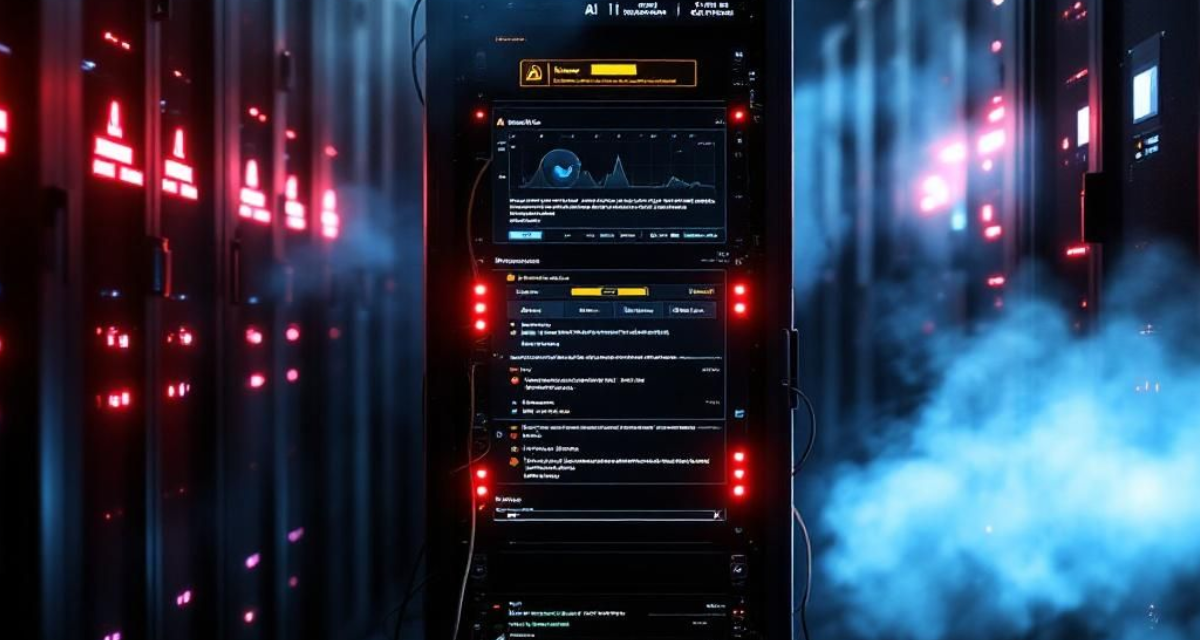
A critical chain of vulnerabilities has been discovered in NVIDIA’s Triton Inference Server, a widely used open-source platform for running AI models at scale.

The flaws, located in the Python backend component of Triton, can be exploited by remote, unauthenticated attackers to take complete control of affected AI servers, enabling remote code execution.

Tracked as CVE-2025-23319  (CVSS score: 8.1), CVE-2025-23320 (CVSS score: 7.5), and CVE-2025-23334 (CVSS score: 5.9), these vulnerabilities were responsibly disclosed to NVIDIA in May 2025. NVIDIA responded quickly and addressed the issues in version 25.07, released on 4 August, 2025.

Mode of attack
The attack starts by triggering a verbose error message through a specially-crafted large request, which leaks the internal shared memory region name used by the Python back end’s Inter-Process Communication (IPC). This key internal information, which should have remained private, would have then been exploited via legitimate application programming interface (API) calls to gain arbitrary read and write access to critical backend memory.

With this access, attackers can corrupt internal data structures and craft malicious IPC messages, escalating the attack to achieve remote code execution on the server. Such a compromise can lead to the theft of proprietary AI models, exposure of sensitive data processed by the models, manipulation of AI responses, and provide attackers with a foothold to pivot deeper into corporate networks.

According to the disclosure, the exploit chain leverages a flaw in the validation of Triton’s shared memory API. By registering the leaked internal key through legitimate endpoints, attackers gain read/write access to the back end’s private memory, turning standard API calls into a powerful tool for server takeover.

The security research team that disclosed the discovery of the CVEs, Wiz, have highlighted how small vulnerabilities chained together can jeopardize an entire AI infrastructure. They urge all Triton users to update immediately to the patched versions and stress the importance of defense-in-depth security strategies in AI and machine learning deployments.


Share:

PreviousSecuring trust in a digitally ambitious Singapore
NextDid law enforcement takedowns in Q2 2025 reduce ransomware attacks levels?

Related Posts

When cyberattackers apologize for unintended damage to critical infrastructure …

When cyberattackers apologize for unintended damage to critical infrastructure …

Tuesday, July 13, 2021

Leaked memo reveals AI firm’s research focus on “rogue“ or “scheming” AI models

Leaked memo reveals AI firm’s research focus on “rogue“ or “scheming” AI models

Friday, February 27, 2026

Another retrospective of 2019’s threat landscape

Another retrospective of 2019’s threat landscape

Tuesday, February 25, 2020

The big questions surrounding cloud security

The big questions surrounding cloud security

Friday, February 28, 2020

Leave a reply Cancel reply

You must be logged in to post a comment.

Voters-draw/RCA-Sponsors

Slide
Slide
Slide
Slide
Slide
Slide
Slide
Slide
Slide
Slide
Slide
Slide
Slide
Slide
previous arrow
next arrow

CybersecAsia Voting Placement

Gamification listing or Participate Now

PARTICIPATE NOW

Vote Now -Placement(Google Ads)

Top-Sidebar-banner

Whitepapers

  • Closing the Gap in Email Security:How To Stop The 7 Most SinisterAI-Powered Phishing Threats

    Closing the Gap in Email Security:How To Stop The 7 Most SinisterAI-Powered Phishing Threats

    Insider threats continue to be a major cybersecurity risk in 2024. Explore more insights on …Download Whitepaper
  • 2024 Insider Threat Report: Trends, Challenges, and Solutions

    2024 Insider Threat Report: Trends, Challenges, and Solutions

    Insider threats continue to be a major cybersecurity risk in 2024. Explore more insights on …Download Whitepaper
  • AI-Powered Cyber Ops: Redefining Cloud Security for 2025

    AI-Powered Cyber Ops: Redefining Cloud Security for 2025

    The future of cybersecurity is a perfect storm: AI-driven attacks, cloud expansion, and the convergence …Download Whitepaper
  • Data Management in the Age of Cloud and AI

    Data Management in the Age of Cloud and AI

    In today’s Asia Pacific business environment, organizations are leaning on hybrid multi-cloud infrastructures and advanced …Download Whitepaper

Middle-sidebar-banner

Case Studies

  • Cyber protection for medical clinics in Singapore

    Cyber protection for medical clinics in Singapore

    As Singapore’s healthcare sector becomes increasingly digital and interconnected, clinics are facing heightened cyber risks, …Read more
  • India’s WazirX strengthens governance and digital asset security

    India’s WazirX strengthens governance and digital asset security

    Revamping its custody infrastructure using multi‑party computation tools has improved operational resilience and institutional‑grade safeguardsRead more
  • Bangladesh LGED modernizes communication while addressing data security concerns

    Bangladesh LGED modernizes communication while addressing data security concerns

    To meet emerging data localization/privacy regulations, the government engineering agency deploys a secure, unified digital …Read more
  • What AI worries keep members of the Association of Certified Fraud Examiners sleepless?

    What AI worries keep members of the Association of Certified Fraud Examiners sleepless?

    This case study examines how many anti-fraud professionals reported feeling underprepared to counter rising AI-driven …Read more

Bottom sidebar

Other News

  • Akuvox X910 Claims Red Dot Award 2026: the World’s First AI-powered Parcel Detection Smart Intercom Revolutionizes Luxury Home Access

    Saturday, April 18, 2026
    XIAMEN, China, April 17, 2026 …Read More »
  • Exein establishes APAC headquarters and Taipei office

    Saturday, April 18, 2026
    Partnering with Taiwan’s ecosystem to …Read More »
  • Tsingke Unveils ‘Zero-Contact’ Gene Synthesis to Safeguard Core Genetic Sequences

    Wednesday, April 15, 2026
    BEIJING, April 15, 2026 /PRNewswire/ …Read More »
  • NEC Asia Pacific to Showcase Trusted Public Safety and Digital Identity Innovations at Milipol TechX 2026

    Wednesday, April 15, 2026
    SINGAPORE, April 14, 2026 /PRNewswire/ …Read More »
  • Sprinto Expands to Australia with New Data Center to Power Localized, Audit-Ready Compliance

    Wednesday, April 15, 2026
    Sprinto combines local infrastructure with …Read More »
  • Our Brands
  • DigiconAsia
  • MartechAsia
  • Home
  • About Us
  • Contact Us
  • Sitemap
  • Privacy & Cookies
  • Terms of Use
  • Advertising & Reprint Policy
  • Media Kit
  • Subscribe
  • Manage Subscriptions
  • Newsletter

Copyright © 2026 CybersecAsia All Rights Reserved.