
Cybersecurity News in Asia

RECENT STORIES:

SEGA moves faster with flow-based network monitoring
New AI supply chain threats that security teams need to manage
Deepfakes and impersonators can fool people, but they should not bypas...
FOMO Pay expands cross-border compliance infrastructure amid rising fr...
From Defence Cooperation to Shared Security: Building a Resilient Paki...
Cyber insurers and legal professionals prepare for claims over harms b...
LOGIN REGISTER
CybersecAsia
  • Features
    • Featured

      How CISOs can set human boundaries for autonomous cybersecurity

      How CISOs can set human boundaries for autonomous cybersecurity

      Wednesday, October 7, 2026, 11:05 AM Asia/Singapore | Features, Newsletter, Tips
    • Featured

      Securing the agentic enterprise – at machine speed

      Securing the agentic enterprise – at machine speed

      Tuesday, October 6, 2026, 5:00 PM Asia/Singapore | Features, Newsletter
    • Featured

      Why businesses need to treat AI agents like privileged insiders

      Why businesses need to treat AI agents like privileged insiders

      Thursday, October 1, 2026, 10:00 AM Asia/Singapore | Features, Opinions, Sponsored
  • Opinions
  • Tips
  • Whitepapers
  • AWARDS 2026
  • Directory
  • E-Learning

Select Page

News

Pegasus spyware exploits persist as iPhone users delay critical security updates

By CybersecAsia editors | Friday, January 16, 2026, 10:38 AM Asia/Singapore

Pegasus spyware exploits persist as iPhone users delay critical security updates

Attackers keep leveraging zero day WebKit flaws as slow patch adoption leaves many devices exposed to “zero click” remote compromise.

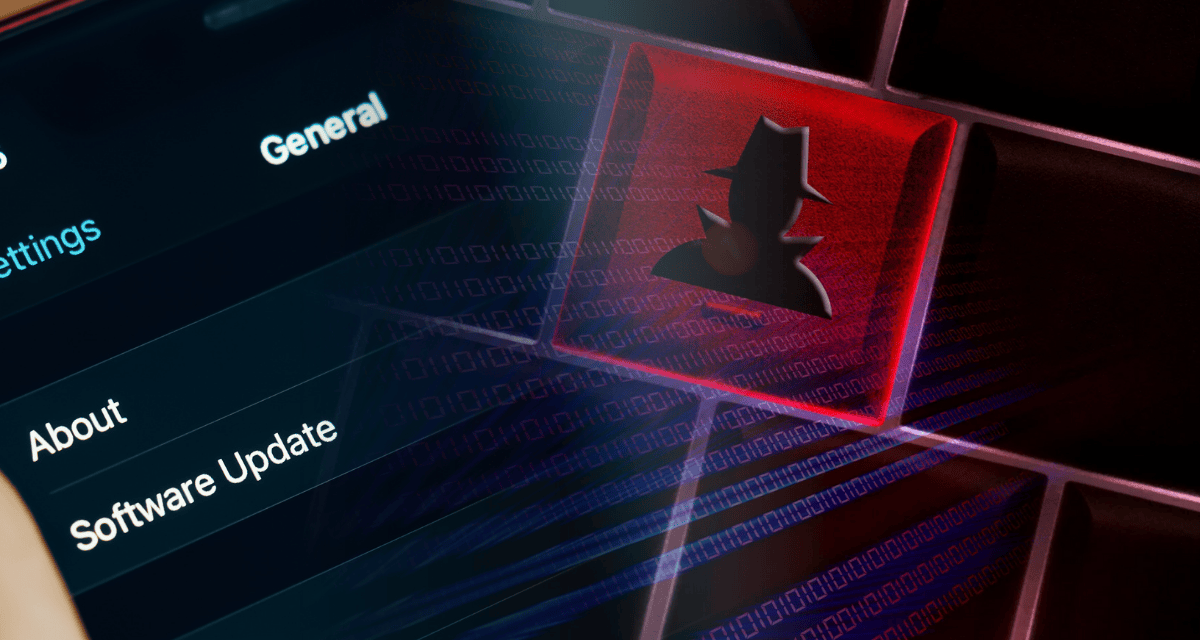
iPhone users have apparently been slow to install the latest iOS security updates after researchers linked new zero‑click exploits to a mercenary spyware, used to target high‑profile figures including politicians, journalists, and activists worldwide.

The immediate concern is a class of so‑called “zero‑click vulnerabilities” that allow attackers to compromise an iPhone without any user interaction, often through malicious content delivered via iMessage or other system components.

According to Citizen Lab, University of Toronto, multiple exploit chains are capable of silently taking over even fully patched iPhones prior to the availability of fixes, including the FORCEDENTRY flaw in 2021 that had abused Apple’s image‑processing components. In such cases, Apple had responded with out‑of‑band patches and urged users to update immediately, stressing that although these attacks target a small subset of users, the underlying bugs affect every supported device.

​In its latest Webkit Flaw warnings (CVE-2025-43529 and CVE-2025-14174), Apple has continued a pattern of sending targeted notifications to users in dozens of countries when it detects signs of “mercenary spyware” activity against their accounts, while withholding technical details (i.e., the names of the malicious actors) to avoid helping attackers. Note: WebKit serves as the browser engine behind Safari and all third-party browsers on iOS, meaning avoiding Safari alone offers no protection.

Delayed patching benefits cyber mercenaries

Independent security advisories describe the most recent bugs as critical memory‑corruption and validation flaws that allow arbitrary code execution via crafted images and PDFs, and note that the exploits appear to be in active use against selected individuals rather than the general public.

Researchers and vendors alike emphasize that once a zero‑click chain is discovered, there is often a rush by threat actors to exploit unpatched devices before updates are widely installed, making prompt installation of new iOS versions critical. Users of vulnerable devices should install the latest iOS release as soon as it becomes available, enable automatic updates, and reboot devices regularly to disrupt in‑memory exploits, even though this alone will not block sophisticated spyware.

High‑risk users such as journalists, political figures, staff of non-governmental agencies, as well as lawyers, are being urged to consider enabling Lockdown Mode, minimizing use of rich‑media messaging, and seeking independent forensic checks if they suspect targeting. While the technology firm maintains that mercenary spyware attacks remain relatively rare, its own emergency advisories and legal actions signal that such mercenary malware are now a persistent fixture of the mobile threat landscape, rather than an anomaly.

Share:

PreviousMetadata poisoning vulnerabilities exposed in popular AI python libraries
NextFour frontline cybersecurity predictions for 2026

Related Posts

As the hardest-hit region, APAC needs to watch these five cyber-threats

As the hardest-hit region, APAC needs to watch these five cyber-threats

Tuesday, January 19, 2021

Can WAF-as-a-Service protect Cloud-native applications?

Can WAF-as-a-Service protect Cloud-native applications?

Wednesday, June 30, 2021

Financial institutions in Asia need to address risk management holistically: survey

Financial institutions in Asia need to address risk management holistically: survey

Friday, February 3, 2023

DOM-based clickjacking could hack browser password manager extensions to steal data

DOM-based clickjacking could hack browser password manager extensions to steal data

Tuesday, August 26, 2025

Leave a reply Cancel reply

You must be logged in to post a comment.

Voters-draw/RCA-Sponsors

Slide
Slide
Slide
Slide
Slide
Slide
Slide
Slide
Slide
Slide
Slide
Slide
Slide
Slide
Slide
Slide
Slide
Slide
Slide
previous arrow
next arrow

CybersecAsia Voting Placement

Gamification listing or Participate Now

LEARN MORE

Vote Now -Placement(Google Ads)

Top-Sidebar-banner

Whitepapers

  • Critical Security Threatsand the Need for ZTNA: How evolving cyberattacks demand a Zero Trust approach

    Critical Security Threatsand the Need for ZTNA: How evolving cyberattacks demand a Zero Trust approach

    Cyber threats have become more frequent and sophisticated, targeting organizations of all sizes across all …Download Whitepaper
  • Zero Trust Made Simple: Why it matters and how to get started

    Zero Trust Made Simple: Why it matters and how to get started

    Data breaches and cyberattacks are no longer limited to large, high-profile organizations.Download Whitepaper
  • Cloud Secure Edge: Remote access, better security

    Cloud Secure Edge: Remote access, better security

    ​SonicWall Cloud Secure Edge™ is a modern, cloud-native Security Service Edge (SSE) solution that addresses …Download Whitepaper
  • Closing the Gap in Email Security:How To Stop The 7 Most SinisterAI-Powered Phishing Threats

    Closing the Gap in Email Security:How To Stop The 7 Most SinisterAI-Powered Phishing Threats

    Insider threats continue to be a major cybersecurity risk in 2024. Explore more insights on …Download Whitepaper

Middle-sidebar-banner

Case Studies

  • FOMO Pay expands cross-border compliance infrastructure amid rising fraud risks

    FOMO Pay expands cross-border compliance infrastructure amid rising fraud risks

    To unify onboarding and ongoing reviews the payment firm adds identity, liveness, business-ownership, sanctions screening …Read more
  • How a Vietnamese D2C retailer built its own secure digital infrastructure

    How a Vietnamese D2C retailer built its own secure digital infrastructure

    Would your organization build your own digital infrastructure – including AI governance and cybersecurity – …Read more
  • Cyber protection for medical clinics in Singapore

    Cyber protection for medical clinics in Singapore

    As Singapore’s healthcare sector becomes increasingly digital and interconnected, clinics are facing heightened cyber risks, …Read more
  • India’s WazirX strengthens governance and digital asset security

    India’s WazirX strengthens governance and digital asset security

    Revamping its custody infrastructure using multi‑party computation tools has improved operational resilience and institutional‑grade safeguardsRead more

Bottom sidebar

Other News

  • From Defence Cooperation to Shared Security: Building a Resilient Pakistan-China Partnership

    Friday, October 9, 2026
    QINGDAO, China, Oct. 9, 2026 …Read More »
  • CyberDSA Sets 19 – 21 October 2027 Return as Industry Participation Builds at Fourth Edition

    Thursday, October 8, 2026
    CyberDSA moves towards its milestone …Read More »
  • CyberLogitec Brings Tag-Free Collision Prevention to Busan New Port

    Tuesday, October 6, 2026
    Digital twin places workers and …Read More »
  • Aligning with Global Regulations: iMQ Technology’s SQ713x Secure Element Achieves SESIP and PSA Certified Level 3

    Monday, October 5, 2026
    Passes Keysight’s physical attack testing …Read More »
  • Cymulate Receives Frost & Sullivan’s 2026 Indian Competitive Strategy Leadership Recognition for Advancing Continuous Security Validation

    Monday, October 5, 2026
    The recognition highlights Cymulate’s competitive …Read More »
  • Our Brands
  • DigiconAsia
  • MartechAsia
  • Home
  • About Us
  • Contact Us
  • Sitemap
  • Privacy & Cookies
  • Terms of Use
  • Advertising & Reprint Policy
  • Media Kit
  • Subscribe
  • Manage Subscriptions
  • Newsletter

Copyright © 2026 CybersecAsia All Rights Reserved.