Cybersecurity News in Asia

RECENT STORIES:

SEGA moves faster with flow-based network monitoring
Hikvision Releases 2026 Cybersecurity White Paper, Fostering Digital T...
North Korea-linked phishing campaign targets developers through malici...
Zero-day exploit disclosed hours after massive Patch Tuesday release
Bringing cybercriminals to justice in APAC
Cyber resilience – a national security imperative
LOGIN REGISTER
CybersecAsia
  • Features
    • Featured

      Bringing cybercriminals to justice in APAC

      Bringing cybercriminals to justice in APAC

      Thursday, June 11, 2026, 10:30 AM Asia/Singapore | Features
    • Featured

      Cyber resilience – a national security imperative

      Cyber resilience – a national security imperative

      Wednesday, June 10, 2026, 3:09 PM Asia/Singapore | Features
    • Featured

      Asia Pacific’s unique cyberthreats

      Asia Pacific’s unique cyberthreats

      Monday, June 8, 2026, 5:04 PM Asia/Singapore | Features
  • Opinions
  • Tips
  • Whitepapers
  • AWARDS 2026
  • Directory
  • E-Learning

Select Page

News

Metadata poisoning vulnerabilities exposed in popular AI python libraries

By CybersecAsia editors | Thursday, January 15, 2026, 4:41 PM Asia/Singapore

Metadata poisoning vulnerabilities exposed in popular AI python libraries

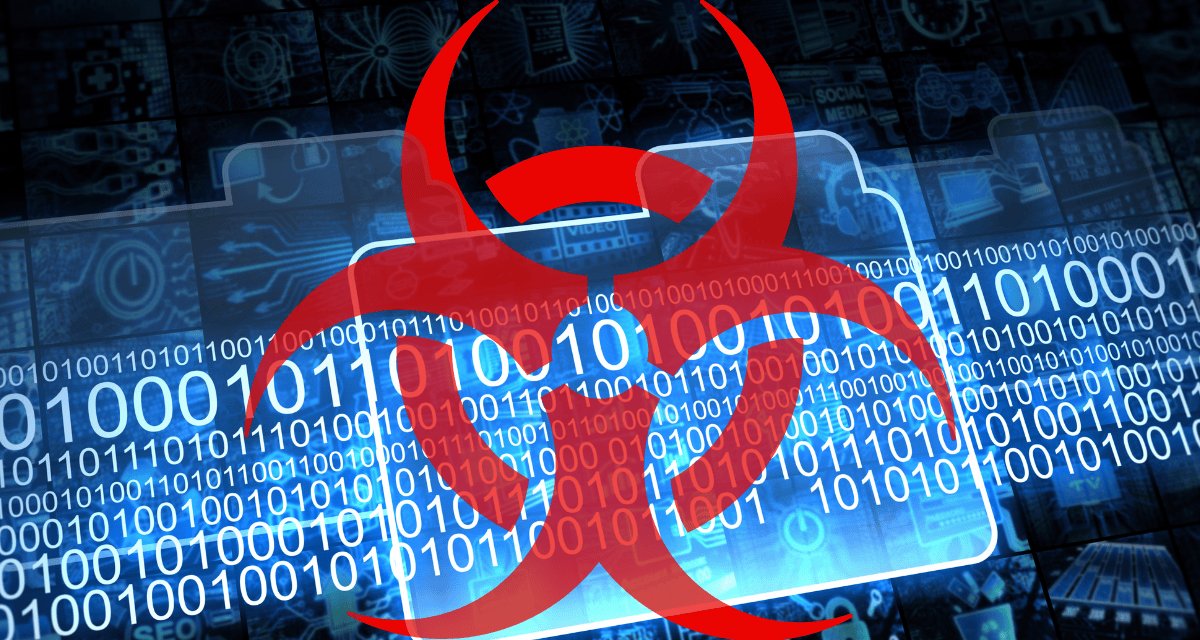
Attackers could have injected malicious payloads into model files loaded by Hydra-dependent tools, affecting millions of downloads across affected repositories.

Security researchers have identified remote code execution flaws in three widely used open-source Python libraries for AI/ML, hosted on platforms such as Hugging Face, and boasting tens of millions of combined downloads.

The issues arise from insecure handling of model metadata, enabling attackers to embed harmful payloads that activate upon file loading, though no real-world attacks appear as of late 2025.

The libraries in question: NeMo, Uni2TS, and FlexTok — rely on Hydra, a configuration tool from Meta, where the instantiate() function processes metadata without sufficient safeguards, permitting execution of arbitrary executable objects such as builtins.exec() alongside malicious strings.
Exploitation potential
Attackers could exploit the flaws by altering popular models, injecting tainted metadata to claim enhancements, then uploading variants to repositories. Hugging Face lacks prominent warnings for NeMo or safetensors formats and obscures metadata visibility, easing such threats.

Over 700 models employ NeMo’s format, Uni2TS powers Salesforce time-series models with hundreds of thousands of downloads, and FlexTok supports EPFL VILAB image-processing models with tens of thousands more; nearly 50 of more than 100 Python libraries on the platform use Hydra, expanding the risk landscape.

The Palo Alto Networks team that discovered this vulnerability had disclosed the problems to vendors starting April 2025, prompting swift responses:

  • Nvidia had assigned CVE-2025-23304 (high severity) and patched NeMo in version 2.3.2 via a safe_instantiate() function with recursive target validation and allow-listing of modules like PyTorch.
  • Salesforce had issued CVE-2026-22584 (high severity), fixed Uni2TS on July 31, 2025, with module allow-listing, and confirmed no customer data breaches.
  • Apple and EPFL VILAB had resolved FlexTok in June 2025 by shifting to YAML parsing, class allow-lists, and advisories to trust only verified sources.
  • ​Meta had enhanced Hydra documentation with RCE alerts and a basic block-list for risky functions like builtins.exec(), although it remains evadable via implicit imports and unavailable in stable releases by January 2026.

These fixes underscore urgent needs for metadata sanitization in AI pipelines, as model sharing proliferates without uniform security scrutiny.

Share:

PreviousHow AI is supercharging state-sponsored threat actors in Asia Pacific
NextPegasus spyware exploits persist as iPhone users delay critical security updates

Related Posts

Security postures need to be aligned with infrastructural changes

Security postures need to be aligned with infrastructural changes

Friday, June 24, 2022

Fixing the Zoom ‘Vanity Clause’

Fixing the Zoom ‘Vanity Clause’

Friday, July 17, 2020

Another year like 2021, but worse: data protection/management trends 2022

Another year like 2021, but worse: data protection/management trends 2022

Tuesday, December 28, 2021

US$1.6bn crypto heist shocks industry, sparks security debate

US$1.6bn crypto heist shocks industry, sparks security debate

Tuesday, February 25, 2025

Leave a reply Cancel reply

You must be logged in to post a comment.

Voters-draw/RCA-Sponsors

Slide
Slide
Slide
Slide
Slide
Slide
Slide
Slide
Slide
Slide
Slide
Slide
Slide
Slide
previous arrow
next arrow

CybersecAsia Voting Placement

Gamification listing or Participate Now

PARTICIPATE NOW

Vote Now -Placement(Google Ads)

Top-Sidebar-banner

Whitepapers

  • Closing the Gap in Email Security:How To Stop The 7 Most SinisterAI-Powered Phishing Threats

    Closing the Gap in Email Security:How To Stop The 7 Most SinisterAI-Powered Phishing Threats

    Insider threats continue to be a major cybersecurity risk in 2024. Explore more insights on …Download Whitepaper
  • 2024 Insider Threat Report: Trends, Challenges, and Solutions

    2024 Insider Threat Report: Trends, Challenges, and Solutions

    Insider threats continue to be a major cybersecurity risk in 2024. Explore more insights on …Download Whitepaper
  • AI-Powered Cyber Ops: Redefining Cloud Security for 2025

    AI-Powered Cyber Ops: Redefining Cloud Security for 2025

    The future of cybersecurity is a perfect storm: AI-driven attacks, cloud expansion, and the convergence …Download Whitepaper
  • Data Management in the Age of Cloud and AI

    Data Management in the Age of Cloud and AI

    In today’s Asia Pacific business environment, organizations are leaning on hybrid multi-cloud infrastructures and advanced …Download Whitepaper

Middle-sidebar-banner

Case Studies

  • How a Vietnamese D2C retailer built its own secure digital infrastructure

    How a Vietnamese D2C retailer built its own secure digital infrastructure

    Would your organization build your own digital infrastructure – including AI governance and cybersecurity – …Read more
  • Cyber protection for medical clinics in Singapore

    Cyber protection for medical clinics in Singapore

    As Singapore’s healthcare sector becomes increasingly digital and interconnected, clinics are facing heightened cyber risks, …Read more
  • India’s WazirX strengthens governance and digital asset security

    India’s WazirX strengthens governance and digital asset security

    Revamping its custody infrastructure using multi‑party computation tools has improved operational resilience and institutional‑grade safeguardsRead more
  • Bangladesh LGED modernizes communication while addressing data security concerns

    Bangladesh LGED modernizes communication while addressing data security concerns

    To meet emerging data localization/privacy regulations, the government engineering agency deploys a secure, unified digital …Read more

Bottom sidebar

Other News

  • Hikvision Releases 2026 Cybersecurity White Paper, Fostering Digital Trust in the AIoT Era

    Friday, June 12, 2026
    HANGZHOU, China, June 12, 2026 …Read More »
  • Cohesity Gains Access to Anthropic’s Claude Mythos Preview Through Project Glasswing

    Tuesday, June 9, 2026
    Strengthening the Cohesity Data Cloud …Read More »
  • Cohesity Gains Access to Anthropic’s Claude Mythos Preview Through Project Glasswing

    Tuesday, June 9, 2026
    Strengthening the Cohesity Data Cloud …Read More »
  • Uhale Adopts Quokka’s Q-mast to Strengthen Application Security Testing

    Tuesday, June 9, 2026
    Integration of automated security testing …Read More »
  • Uhale Adopts Quokka’s Q-mast to Strengthen Application Security Testing

    Tuesday, June 9, 2026
    Integration of automated security testing …Read More »
  • Our Brands
  • DigiconAsia
  • MartechAsia
  • Home
  • About Us
  • Contact Us
  • Sitemap
  • Privacy & Cookies
  • Terms of Use
  • Advertising & Reprint Policy
  • Media Kit
  • Subscribe
  • Manage Subscriptions
  • Newsletter

Copyright © 2026 CybersecAsia All Rights Reserved.