
Cybersecurity News in Asia

RECENT STORIES:

SEGA moves faster with flow-based network monitoring
Global Tech Shift: Tune Talk Launches World’s First Network-Enfo...
Asia’s AI security race demands unified, responsible deployment fragme...
International cyber operation disrupts malware infrastructure linked t...
DJI Enterprise Advances Industry with New Framework for Dock as First ...
Multi-supply-chain breach disclosed, involving customer design and per...
LOGIN REGISTER
CybersecAsia
  • Features
    • Featured

      S E Asia governments targeted by cyber-espionage group

      S E Asia governments targeted by cyber-espionage group

      Tuesday, June 23, 2026, 8:00 AM Asia/Singapore | Features
    • Featured

      Rethinking network and infrastructure design for resilience

      Rethinking network and infrastructure design for resilience

      Thursday, June 18, 2026, 2:17 PM Asia/Singapore | Features
    • Featured

      Bringing cybercriminals to justice in APAC

      Bringing cybercriminals to justice in APAC

      Thursday, June 11, 2026, 10:30 AM Asia/Singapore | Features
  • Opinions
  • Tips
  • Whitepapers
  • AWARDS 2026
  • Directory
  • E-Learning

Select Page

Features

How AI is supercharging state-sponsored threat actors in Asia Pacific

By Victor Ng | Wednesday, January 14, 2026, 4:06 PM Asia/Singapore

How AI is supercharging state-sponsored threat actors in Asia Pacific

State-sponsored actors from multiple countries continue to misuse generative AI tools to enhance all stages of their operations.

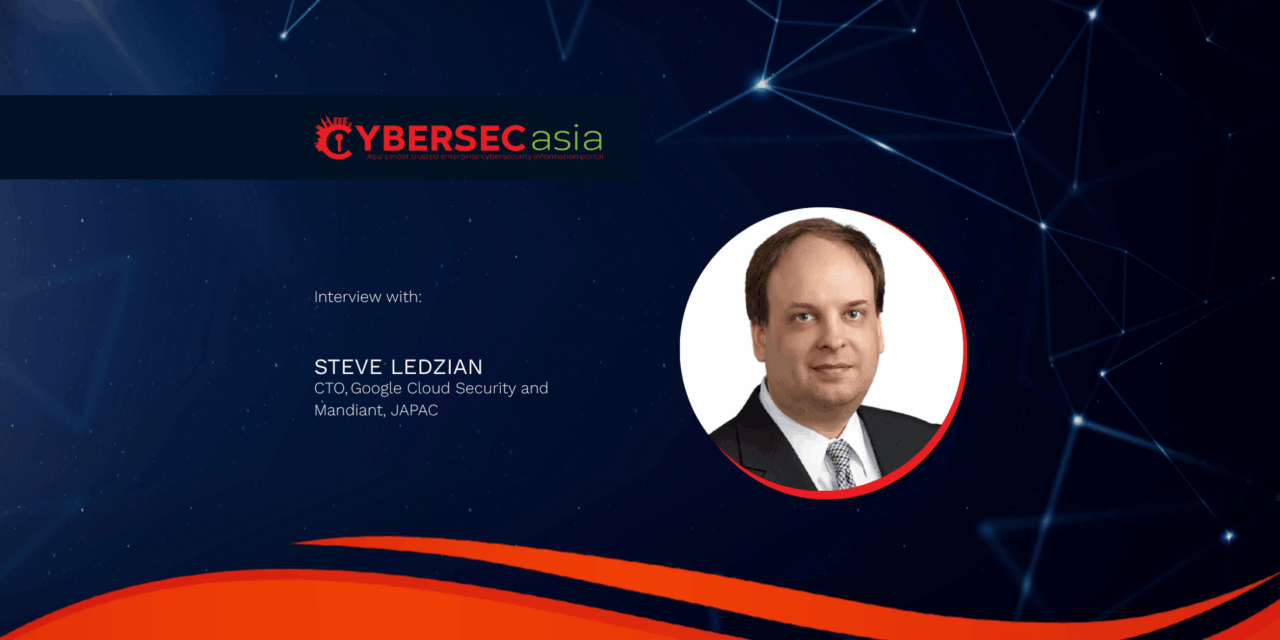
In this interview, Steve Ledzian, CTO, Google Cloud Security and Mandiant, JAPAC, shared findings from Google’s Threat Intelligence Group (GTIG) on the use of generative AI by threat actors in the region.

We zoomed in on the state of state-sponsored hacking groups in the region weaponizing AI in the various stages of their operations, and how cyber-defenders can mitigate for resiliency.

How are state-sponsored hacking groups weaponizing generative AI?

Ledzian: In January 2025, GTIG published a blog “Adversarial Misuse of Generative AI” providing a detailed analysis of the ways they saw threat actors attempting to interact with Google’s Gemini for malicious purposes.

At the time, most of the activity GTIG observed was around attackers finding productivity gains as attackers had not yet developed novel capabilities using AI.

Just short of a year later (November 2025), GTIG released a second blog “GTIG AI Threat Tracker: Advances in Threat Actor Usage of AI Tools” detailing how threat actors had advanced over the last 11 months. In this blog, GTIG identified a shift that occurred within the last year: adversaries were no longer leveraging AI just for productivity gains, they were deploying novel AI-enabled malware in active operations.

This marked a new operational phase of AI abuse, involving tools that dynamically alter behavior mid-execution.

In addition to threat actors attempting to misuse Gemini, GTIG observed AI tools being sold in underground forums which are providing capabilities such as deepfake and image generation, malware development, phishing, research and reconnaissance, technical support and code generation, and vulnerability exploitation.

In Asia Pacific, how is generative AI supercharging every stage of the attack lifecycle, and across language borders?

Ledzian: In both the January and November blogs, GTIG reported observing threat actors using AI across all stages of the attack lifecycle.  These stages include reconnaissance, initial compromise, establishing a foothold, escalating privileges, moving laterally, maintaining presence and completing the mission. 

In 2025, GTIG observed state-sponsored actors from multiple countries continue to misuse generative AI tools to enhance all stages of their operations, from reconnaissance and phishing lure creation to command and control development and data exfiltration. 

Phishing lures are a particularly interesting use case as many organizations train their staff to look out for spelling or grammatical errors as a tip off that an email may be inauthentic and possibly from a non-native speaker in a distant land trying to scam the recipient.  This changes though as attackers move to leverage AI as generative AI can be used to build beautifully articulate messages in any language.

How are attackers evading safety and security filters in the AI-versus-AI cybersecurity race?

Ledzian: Like humans, generative AI can be susceptible to social engineering.  If a threat actor asks AI to help find vulnerabilities on a compromised system, AI’s guardrails and security filters will likely kick in and deny the request. 

However, if a student participating in a capture-the-flag (CTF) exercise, a gamified cybersecurity competition to enhance skills and techniques, asks the exact same question in the context of getting help in a CTF exercise, this could be an absolutely benign request. 

This nuance in AI use highlights critical differentiators in benign vs. misuse of AI that we continue to analyze to balance Gemini functionality with both usability and security as goals.

What can cyber-defenders do to mitigate the weaponization of AI and to ensure resiliency for their organizations?

Ledzian: AI workloads are susceptible to specific types of attacks and need to be protected accordingly. In March 2025, Google announced AI Protection to help organizations keep their AI workloads secure. 

Google first spoke publicly about its own internal AI red team back in 2023. For governance, Google has also introduced its Secure AI Framework (SAIF) which is freely available, offers a Risk Self-Assessment and has recently been updated to include coverage for Agentic AI.

Aside from protecting their own AI workloads, organizations need to defend themselves against AI-powered attacks. This is best done with AI-powered defenses. Google announced “The dawn of agentic AI in security operations” in April 2025.

Take the Google Security Operations solution, a cloud-native SaaS solution, as an example. It is used to power organizations and Security Operations Centers (SOCs) with agentic capabilities. This will allow cyber-defenders to accomplish what they have never been able to accomplish before, namely the automation of alert triage and investigation at scale, among other capabilities. 

The agentic SOC will run semi-autonomously providing cyber-defenders the bandwidth they need to counter an ever set of evolving AI-based threats from attackers.

Share:

PreviousCyber fraud tops ransomware in WEF cybersecurity outlook
NextMetadata poisoning vulnerabilities exposed in popular AI python libraries

Related Posts

A life of cybercrime: an inside story

A life of cybercrime: an inside story

Thursday, March 19, 2020

Think MFA secures your account? Think again

Think MFA secures your account? Think again

Tuesday, October 24, 2023

Safeguarding against deepfake threats in social media

Safeguarding against deepfake threats in social media

Friday, July 12, 2024

Passwords: tips for today, predictions for tomorrow

Passwords: tips for today, predictions for tomorrow

Wednesday, May 5, 2021

Leave a reply Cancel reply

You must be logged in to post a comment.

Voters-draw/RCA-Sponsors

Slide
Slide
Slide
Slide
Slide
Slide
Slide
Slide
Slide
Slide
Slide
Slide
Slide
Slide
previous arrow
next arrow

CybersecAsia Voting Placement

Gamification listing or Participate Now

PARTICIPATE NOW

Vote Now -Placement(Google Ads)

Top-Sidebar-banner

Whitepapers

  • Closing the Gap in Email Security:How To Stop The 7 Most SinisterAI-Powered Phishing Threats

    Closing the Gap in Email Security:How To Stop The 7 Most SinisterAI-Powered Phishing Threats

    Insider threats continue to be a major cybersecurity risk in 2024. Explore more insights on …Download Whitepaper
  • 2024 Insider Threat Report: Trends, Challenges, and Solutions

    2024 Insider Threat Report: Trends, Challenges, and Solutions

    Insider threats continue to be a major cybersecurity risk in 2024. Explore more insights on …Download Whitepaper
  • AI-Powered Cyber Ops: Redefining Cloud Security for 2025

    AI-Powered Cyber Ops: Redefining Cloud Security for 2025

    The future of cybersecurity is a perfect storm: AI-driven attacks, cloud expansion, and the convergence …Download Whitepaper
  • Data Management in the Age of Cloud and AI

    Data Management in the Age of Cloud and AI

    In today’s Asia Pacific business environment, organizations are leaning on hybrid multi-cloud infrastructures and advanced …Download Whitepaper

Middle-sidebar-banner

Case Studies

  • How a Vietnamese D2C retailer built its own secure digital infrastructure

    How a Vietnamese D2C retailer built its own secure digital infrastructure

    Would your organization build your own digital infrastructure – including AI governance and cybersecurity – …Read more
  • Cyber protection for medical clinics in Singapore

    Cyber protection for medical clinics in Singapore

    As Singapore’s healthcare sector becomes increasingly digital and interconnected, clinics are facing heightened cyber risks, …Read more
  • India’s WazirX strengthens governance and digital asset security

    India’s WazirX strengthens governance and digital asset security

    Revamping its custody infrastructure using multi‑party computation tools has improved operational resilience and institutional‑grade safeguardsRead more
  • Bangladesh LGED modernizes communication while addressing data security concerns

    Bangladesh LGED modernizes communication while addressing data security concerns

    To meet emerging data localization/privacy regulations, the government engineering agency deploys a secure, unified digital …Read more

Bottom sidebar

Other News

  • Global Tech Shift: Tune Talk Launches World’s First Network-Enforced Child Safety Mobile Plan, Bypassing App-Level Limitations

    Saturday, June 27, 2026
    PETALING JAYA, Malaysia, June 26, …Read More »
  • DJI Enterprise Advances Industry with New Framework for Dock as First Responder (DFR) Deployments

    Thursday, June 25, 2026
    New White Paper Outlines Best …Read More »
  • At VivaTech 2026, Taiwan-Based MaiAgent Says Enterprises Should Stop Building RAG and AI Agent Systems From Scratch

    Friday, June 19, 2026
    TAIPEI and PARIS, June 19, …Read More »
  • How large-scale AI drives the evolution of video encoding to intelligent understanding

    Thursday, June 18, 2026
    HANGZHOU, China, June 18, 2026 …Read More »
  • Crisis24 Opens Global Maritime Operations Center in Manila to Power Intelligence, Consulting and Crisis Response Services

    Thursday, June 18, 2026
    New 24/7 operations center anchors …Read More »
  • Our Brands
  • DigiconAsia
  • MartechAsia
  • Home
  • About Us
  • Contact Us
  • Sitemap
  • Privacy & Cookies
  • Terms of Use
  • Advertising & Reprint Policy
  • Media Kit
  • Subscribe
  • Manage Subscriptions
  • Newsletter

Copyright © 2026 CybersecAsia All Rights Reserved.