

The digital infrastructure for smart cities have become critical for governments, businesses and citizens in their day-to-day activities. What happens when something breaks down?
Governments, business enterprises, utilities, and financial services are all dependent on critical infrastructure keeping up and running to ensure life goes on as normal. And smart infrastructure has become even more critical for smart cities to function properly.
It doesn’t have to be a catastrophic natural disaster, power-grid breakdown, infrastructure system failure or denial of service attack to disrupt work and business in a smart city.
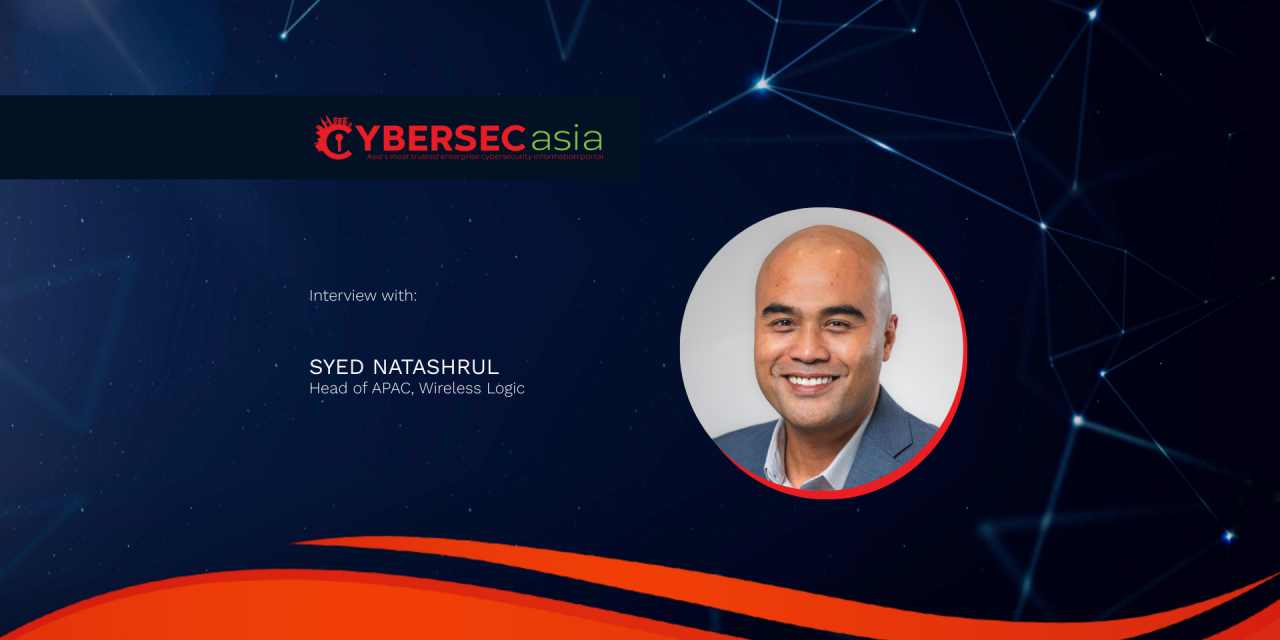
We discussed this issue – and more – with Syed Natashrul, Head of APAC, Wireless Logic:
Recently, more than 380,000 travelers experienced delays at Malaysia’s immigration checkpoints when upwards of 200 autogates went offline, creating long queues and system bottlenecks. What lessons can organizations in Asia Pacific learn from such an incident?
Syed Natashrul (SN): From EV chargers and water meters to building sensors and border gates, smart systems are becoming the invisible backbone of daily life. But when these systems go offline, even for a moment, the disruption is felt instantly, in missed connections, stalled services, and growing public frustration.
The recent breakdown at Malaysia’s immigration checkpoints is a reminder that digital systems, no matter how advanced, are only as strong as their weakest link. For organizations across Asia Pacific, the key takeaway is the need to design systems that not only operate efficiently during peak loads, but are also equipped to fail gracefully.
That includes implementing fallback mechanisms, network redundancy, and smart failover protocols that maintain continuity even when part of the system encounters issues. It’s not possible to prevent every failure, but the goal is to make sure that when something does go wrong, systems can recover quickly with minimal disruption.
What is the true benchmark for digital infrastructure performance, and why? Speed, resilience or something else?
SN: Speed may be the most visible marker of digital performance, but in reality resilience is what keeps systems running when it matters most. In IoT environments, resilience goes further than
maintaining uptime, but also about maintaining continuity through disruption. That means having fallback options, multi-network access, real-time monitoring, and local recovery mechanisms that allow operations to continue even when the unexpected happens.
True resilience goes beyond visibility or reactive alerts. It’s about designing infrastructure that continues to function during a failure, not just after. This requires robust connectivity enabling technologies such as eSIM or multi-IMSI capabilities, so that devices can reroute connections, shift into low-power mode, or store critical data until connectivity is restored.
True resilience goes beyond visibility or reactive alerts. It’s about designing infrastructure that continues to function during a failure, not just after. This requires robust connectivity enabling technologies such as eSIM or multi-IMSI capabilities, so that devices can reroute connections, shift into low-power mode, or store critical data until connectivity is restored.
SN: In IoT environments, resilience means designing for disruption from the start. Whether it’s a power outage, network failure, cyberattack or equipment fault, smart systems must continue operating — or recover swiftly — without compromising performance or safety.
That starts with understanding where failure can happen: at the device, the network, the software layer, or the cloud. To mitigate risk, resilience must be embedded end-to-end.
Power and network failures are common, but avoidable. Choosing the right connectivity technology is critical. Cellular often holds up better in emergencies than fixed-line or Wi-Fi, thanks to built-in redundancies. Multi-network SIMs (e.g., eSIM or multi-IMSI) ensure automatic failover between carriers, while backup power sources keep devices running when infrastructure falters.
Electro-mechanical breakdowns, from physical damage to natural disasters, require rapid recovery. Systems should include defined recovery objectives, redundant infrastructure, and decentralized processing to maintain continuity when central systems go down.
Cyberattacks can cripple operations and reputations. That’s why at Wireless Logic, we advocate a Zero Trust architecture, robust IAM, encryption, and automated patch management as standard. Our IoT Security Framework provides a multi-layered approach to secure everything from the SIM to the cloud.
Inadequate maintenance remains one of the most overlooked risks. Real-time monitoring, predictive analytics, and automated alerts are key to preventing small issues from becoming critical failures. Systems that support remote updates can further reduce manual intervention and downtime.
Ultimately, resilience isn’t just about having the right technology, but about having a reliable partner who will support you every step of the way, from design to day-to-day operations. At Wireless Logic, our platforms provide not just access, but insight. It offers visibility across the entire network stack, empowering businesses to detect issues early, respond fast, and recover smarter.
Where should organizations in the region start when building robust digital ecosystems? What are the key elements?
SN: Building a robust digital ecosystem starts with a shift in mindset — from viewing connectivity as a utility to treating it as a strategic enabler. Organizations should begin with a comprehensive audit of their infrastructure: What are the single points of failure? How critical is each system’s uptime? What are the current failover protocols?
Systems must be designed with redundancy in mind, combining cellular, Wi-Fi, and satellite networks, supported by multi-network connectivity enabled through eSIMs or multi-IMSI SIMs, to ensure seamless failover and uninterrupted service.
Visibility across the full network stack is equally critical. Real-time insights into device, SIM, and cloud performance allow businesses to detect issues early, act fast, and maintain control when it matters most.
Additionally, security must be built in from the ground up, through encrypted communications, strict access controls, and automated response mechanisms that contain threats before they escalate.
Given the region’s regulatory and infrastructure diversity, organizations also need localized recovery strategies. That means working with partners who understand the terrain and can tailor provisioning, compliance, and diagnostics accordingly.
At Wireless Logic, we help organizations embed these capabilities from day one — so their digital infrastructure isn’t just connected, but prepared, protected, and built to endure.