
Enterprise security teams are exceptional at finding vulnerabilities. The challenge is knowing which ones actually matter.
An attacker does not see a spreadsheet of vulnerabilities ranked from critical to low – they see possible ways in. An exposed cloud workload might lead to an identity with excessive privileges while a seemingly mundane misconfiguration could provide access to a business-critical system. Weaknesses that appear manageable on their own can become far more dangerous when connected
Vulnerability prioritisation is becoming harder to manage as AI finds its way into more parts of the enterprise.
Companies are deploying AI applications and agents, connecting them to corporate data, APIs, cloud services and business systems, sometimes with permissions to act autonomously. All of this creates new relationships across an already complicated technology environment. Security teams therefore have more relationships and potential attack paths to understand.
Traditional vulnerability management remains essential. Organisations still need to find software flaws and address them through patch management and other remediation measures. But vulnerability discovery is only one part of understanding whether an organisation is exposed to attack.

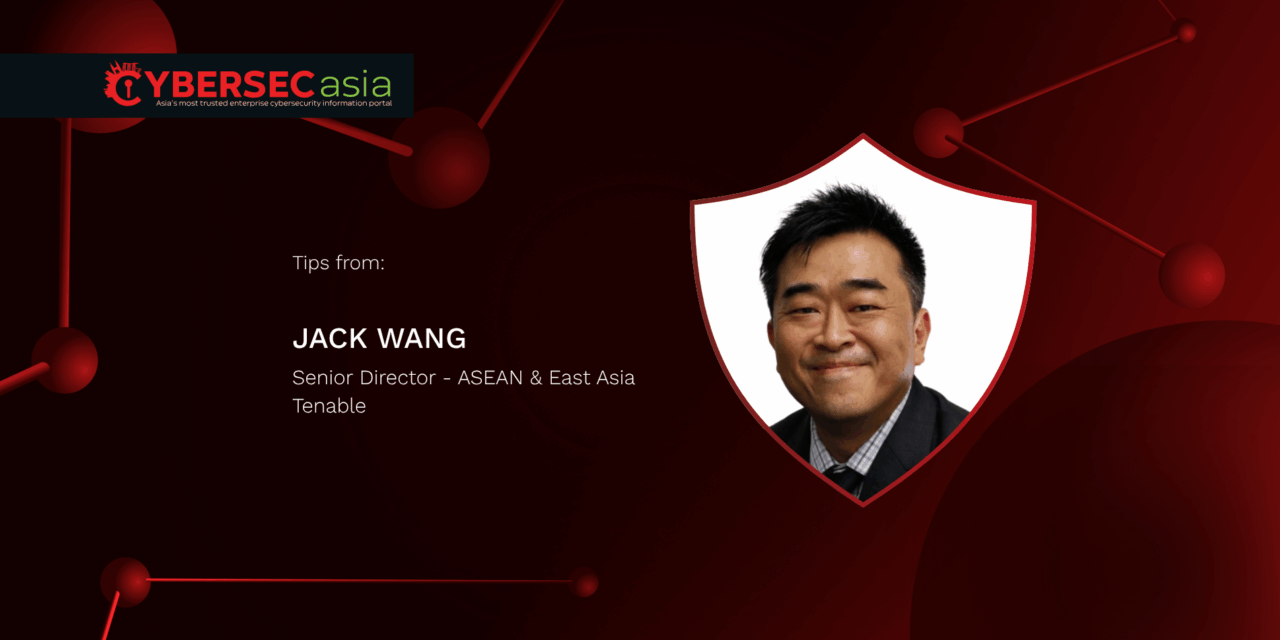
Jack Wang, Senior Director – ASEAN & East Asia, Tenable
When everything is critical, nothing is
One of the biggest challenges facing security teams is volume.
Large organisations may be dealing with thousands of vulnerabilities across cloud environments, endpoints, applications, operational technology and other infrastructure. Remediating everything immediately is impossible.
Severity scores help, but a severe vulnerability is not necessarily one that poses the greatest risk. A critical vulnerability on an isolated internal server may be less urgent than a lower-rated vulnerability on an internet-facing system connected to an overprivileged identity with access to sensitive data.
Therefore, security teams need more than a vulnerability score. They need to know whether the asset is exposed, how it connects to the rest of the environment, whether an attacker can exploit it and what they could reach next.
This is the gap Continuous Threat Exposure Management (CTEM) addresses.
AI is adding another layer of complexity
AI systems depend on connections. An enterprise AI application might need access to internal databases, cloud services and business applications while an autonomous agent may require permissions to execute actions rather than simply retrieve information.
Those connections can introduce exposure in places security teams have not had to consider previously, especially when adoption moves faster than governance. Business teams can deploy AI tools quickly, sometimes without security teams having a complete picture of what has been introduced, what data those systems can access or which permissions they have been granted.
This cannot be solved simply by scanning for more vulnerabilities. Organisations need to understand how vulnerabilities, identities, configurations, assets and security controls interact.
A vulnerability that looks relatively benign in isolation may become far more significant if it sits along a viable route to a critical system.
The Continuous Threat Exposure Management Difference
CTEM gives security teams a way to view that broader picture.
It brings together context that has traditionally sat in different parts of the security environment to determine which exposures present the greatest risk.
For example, knowing that a server contains a vulnerability is useful. Knowing that it is internet-facing, connected to an account with excessive privileges and provides a route into a critical cloud workload gives the security team something far more actionable.
This changes how vulnerability remediation is prioritised.
Rather than working through an ever-growing queue largely according to technical severity, security teams can focus first on exposures that give an attacker a realistic path to critical systems or data.
That matters because cybersecurity teams have finite resources. Finding another thousand vulnerabilities has limited value if the organisation still cannot determine which ten deserve immediate attention.
Making Continuous Threat Exposure Management work in practice
For organisations moving towards CTEM, the starting point is understanding what matters most to the business.
Security teams need to identify their critical assets and processes, then map the routes through which they could be reached. Identities, cloud configurations, internet-facing systems and the effectiveness of existing controls all need to form part of the picture.
This approach also aligns with global regulatory expectations that enterprises understand their critical assets, manage cyber risk and maintain robust security controls. Singapore’s Cybersecurity Code of Practice for Critical Information Infrastructure, for example, emphasises risk assessment, auditing and threat modelling, while Thailand’s Cybersecurity Act establishes a risk-based framework for strengthening cyber resilience. CTEM supports these objectives by continuously identifying exposures, prioritising risk and validating whether controls are working as intended.
Prioritisation should consider whether an exposure can realistically be exploited and the potential impact if it can be.
In addition, organisations must check whether the remediation has actually worked. Closing a ticket shows that an action was completed. It does not necessarily mean an attack path has disappeared. Another weakness, permission or configuration may still provide an alternative route.
That is why the “continuous” part of CTEM matters. Enterprise environments do not stand still. Cloud workloads are created and removed, permissions change, applications are updated and AI introduces new connections. A security assessment that was accurate several months ago may no longer reflect how an organisation can be attacked today.
Vulnerability counts and remediation numbers still have value, but organisations today need a clearer view of whether that work is translating into lower risk. Ultimately, the measure that matters is whether an attacker has fewer viable ways to reach the organisation’s critical systems and data.
CTEM helps security teams answer that question.