

Cybersecurity News in Asia

RECENT STORIES:

SEGA moves faster with flow-based network monitoring
From frontier policy to boardroom action: how enterprises should gover...
Dealing with agentic AI governance and resilience challenges
How can APAC enterprises face AI governance questions deftly? Key ques...
China-linked cyber espionage group shifts focus to another brand of ro...
Cohesity Delivers New Managed Clean Room Capability to Enhance HCLTech...
LOGIN REGISTER
CybersecAsia
  • Features
    • Featured

      Dealing with agentic AI governance and resilience challenges

      Dealing with agentic AI governance and resilience challenges

      Thursday, September 3, 2026, 11:51 AM Asia/Singapore | Features
    • Featured

      How well do you know your agent?

      How well do you know your agent?

      Thursday, August 20, 2026, 3:21 PM Asia/Singapore | Features
    • Featured

      Bringing proof of identity to the digital economy

      Bringing proof of identity to the digital economy

      Wednesday, August 19, 2026, 10:50 AM Asia/Singapore | Features
  • Opinions
  • Tips
  • Whitepapers
  • AWARDS 2026
  • Directory
  • E-Learning

Select Page

Tips

From frontier policy to boardroom action: how enterprises should govern AI

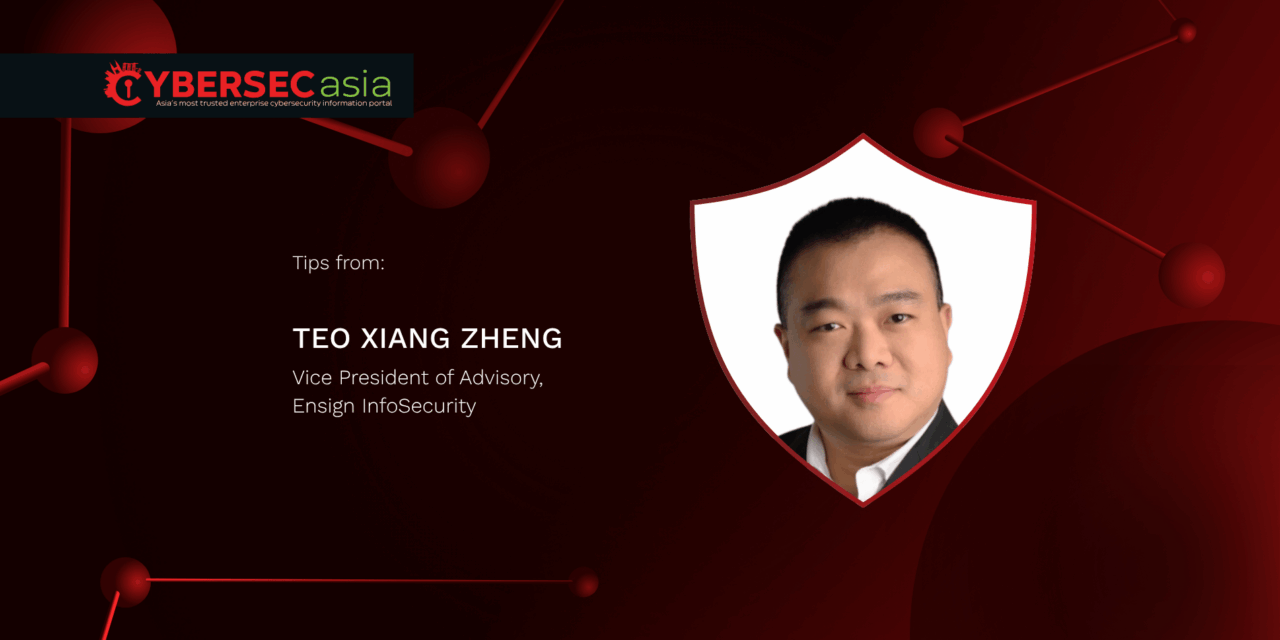
By Teo Xiang Zheng, Vice President of Advisory, Ensign InfoSecurity | Thursday, September 3, 2026, 2:37 PM Asia/Singapore

From frontier policy to boardroom action: how enterprises should govern AI

Enterprises need adaptive defenses, identity controls and tested recovery to withstand faster, more autonomous AI-driven attacks

The trajectory of AI has shifted at a rapid pace from simple predictive algorithms to autonomous, agentic models. We are no longer just dealing with automation. Instead, we are dealing with systems capable of independent reasoning, multi-step planning, and real-time execution with limited human prompting.

This paradigm shift has raised alarm bells across governments, businesses, and within the boardrooms of AI labs themselves.

Consequently, on 14 July 2026, Google DeepMind CEO Demis Hassabis proposed a bold intervention: the creation of a US-based public-private Frontier AI Standards Body. The proposed framework would mandate a voluntary 30-day pre-release review window for any premier, frontier-class models to check for catastrophic risks, such as autonomous cyber warfare capabilities or biological threats.

The signal is that the AI industry has reached an inflection point where scientists can now effectively “make sand think”: that is, we are no longer merely programming sand-based processors with rigid, step-by-step instructions. Through deep learning and massive neural networks, scientists have made these chips capable of dynamically learning, adapting, predicting patterns, and executing complex reasoning.

It is a well-intentioned framework. However, fresh intelligence from global cybersecurity vendors and governments underscores just how fast AI-powered threat actors can unleash havoc.

A fragmented world rushes to cope

One key issue is that threat actors are weaponising speed: frontier and agentic models are narrowing the window between vulnerability discovery and full-scale exploitation, allowing attackers to compromise networks before a patch can even be compiled. This scales both the velocity of mass exploitation and the evasiveness of malware across modern supply chains.

So, while the Frontier AI Standards Body’s 30-day quarantine rule is thoughtful and well-intentioned, international coordination is increasingly fraught. In a fragmented, politically divided, and highly uncertain geopolitical landscape, global consensus is elusive.

Even if the US formalises a pre-release assessment regime for frontier models deployed in its market, other jurisdictions may adopt different standards, timelines, and thresholds, creating uneven incentives across the global AI industry.

Rather than trying to force a hyper-competitive industry to hit the brakes for a month, a more agile alternative could be focusing on absolute risk transparency, calibrated version by version in real time: announced on the same day as Hassabis’ proposal, the White House’s Gold Eagle initiative showed the other side of the equation: using frontier AI to help government and industry identify, prioritise and remediate software vulnerabilities faster.

Together, the two proposals capture the dual challenge of security for AI and AI for security. However, neither should replace enterprise responsibility for how AI is deployed, what it may access and what it is authorised to do.

Institutionalising AI safety

Globally, the International AI Safety Report, led by AI pioneer Yoshua Bengio and an international panel of over 100 experts, is building a shared baseline to evaluate AI risks.

Building on the report, governments can be guided on evaluating research funding priorities, deeper research opportunities and initiating deeper collaboration with other governments, researchers, and industry.

Internationally, the UN Global Dialogue on AI Governance and US Center for AI Standards and Innovation have a mission of ensuring that safety guardrails reflect the priorities of all nations, rather than being dictated solely by tech superpowers.

Regionally, governments are putting teeth into reference frameworks via specialised agencies, to directly audit frontier labs, vetting models for public safety and national security risks.

AI safety: Enterprises can chip in

While the debate over pre-release buffers rages at the macro level, enterprises need to survive the micro-level reality: in facing AI-powered cyber assaults on a daily basis, and faced with an immediate, machine-speed threat, how should corporate leaders respond? Organisations can no longer rely on static defenses. They need to immediately pivot toward an adaptive “immune-system” model of cyber resilience:

  • Deploy autonomous AI defenses: To counter the volume and velocity of machine-driven attacks, enterprises must fight fire with fire. Deploying AI-driven security solutions allows for continuous behavioral analysis and automated containment, mitigating threats instantly while prioritizing only the most critical anomalies for human intervention.
  • Enforce zero-trust architecture: AI threats exploit vulnerabilities en masse across complex digital supply chains, often targeting integration fault lines. Enterprises need to relentlessly monitor data flows and enforce strict, identity-oriented access controls and validate human and non-human identities alike.
  • Assume compromised and validate resilience: Corporate postures must shift from a defensive mindset to a resilient one. The priority is no longer just keeping attackers out, but on being able to rapidly rebuild to normalcy post-incident. This capability must be continuously validated through rigorous, AI-enabled exercises — to ensure teams have the confidence and capacity to recover under pressure.

While regulators debate buffers and borders, the world has realized it cannot cage what has already been integrated into the global Internet infrastructure. The genie is not only out of the bottle, but also mutating in the wild, adapting in real time, and rewriting the rules of engagement.

For the modern enterprise, AI safety will not be found in a government-mandated pause, but in the speed, agility, and resilience of their own digital immune systems.

Share:

PreviousDealing with agentic AI governance and resilience challenges

Related Posts

Here are updated safety tips for a better online shopping experience

Here are updated safety tips for a better online shopping experience

Monday, November 11, 2024

What data-driven organizations need today and in the future

What data-driven organizations need today and in the future

Friday, June 14, 2024

Beware of Cloud sprawl and four other risks of cloud deployment

Beware of Cloud sprawl and four other risks of cloud deployment

Tuesday, November 2, 2021

Has your digital device been crypto-jacked? Know the signs and precautions

Has your digital device been crypto-jacked? Know the signs and precautions

Wednesday, September 4, 2024

Leave a reply Cancel reply

You must be logged in to post a comment.

Voters-draw/RCA-Sponsors

Slide
Slide
Slide
Slide
Slide
Slide
Slide
Slide
Slide
Slide
Slide
Slide
Slide
Slide
Slide
Slide
Slide
Slide
Slide
previous arrow
next arrow

CybersecAsia Voting Placement

Gamification listing or Participate Now

PARTICIPATE NOW

Vote Now -Placement(Google Ads)

Top-Sidebar-banner

Whitepapers

  • Critical Security Threatsand the Need for ZTNA: How evolving cyberattacks demand a Zero Trust approach

    Critical Security Threatsand the Need for ZTNA: How evolving cyberattacks demand a Zero Trust approach

    Cyber threats have become more frequent and sophisticated, targeting organizations of all sizes across all …Download Whitepaper
  • Zero Trust Made Simple: Why it matters and how to get started

    Zero Trust Made Simple: Why it matters and how to get started

    Data breaches and cyberattacks are no longer limited to large, high-profile organizations.Download Whitepaper
  • Cloud Secure Edge: Remote access, better security

    Cloud Secure Edge: Remote access, better security

    ​SonicWall Cloud Secure Edge™ is a modern, cloud-native Security Service Edge (SSE) solution that addresses …Download Whitepaper
  • Closing the Gap in Email Security:How To Stop The 7 Most SinisterAI-Powered Phishing Threats

    Closing the Gap in Email Security:How To Stop The 7 Most SinisterAI-Powered Phishing Threats

    Insider threats continue to be a major cybersecurity risk in 2024. Explore more insights on …Download Whitepaper

Middle-sidebar-banner

Case Studies

  • How a Vietnamese D2C retailer built its own secure digital infrastructure

    How a Vietnamese D2C retailer built its own secure digital infrastructure

    Would your organization build your own digital infrastructure – including AI governance and cybersecurity – …Read more
  • Cyber protection for medical clinics in Singapore

    Cyber protection for medical clinics in Singapore

    As Singapore’s healthcare sector becomes increasingly digital and interconnected, clinics are facing heightened cyber risks, …Read more
  • India’s WazirX strengthens governance and digital asset security

    India’s WazirX strengthens governance and digital asset security

    Revamping its custody infrastructure using multi‑party computation tools has improved operational resilience and institutional‑grade safeguardsRead more
  • Bangladesh LGED modernizes communication while addressing data security concerns

    Bangladesh LGED modernizes communication while addressing data security concerns

    To meet emerging data localization/privacy regulations, the government engineering agency deploys a secure, unified digital …Read more

Bottom sidebar

Other News

  • Cohesity Delivers New Managed Clean Room Capability to Enhance HCLTech VaultNXT

    Wednesday, September 2, 2026
    Cohesity Clean Room solution and …Read More »
  • Visa Launches Enhanced A2A Protect Innovations to Help Financial Institutions Stop Fraud Before Money Leaves Accounts

    Wednesday, September 2, 2026
    New unified fraud score is …Read More »
  • Malaysia’s Cybersecurity Leaders to Convene at the 34th Edition Cyber Security Summit Malaysia 2026

    Tuesday, September 1, 2026
    Summit to Bring Together More …Read More »
  • ICAC Commissioner in Vienna to meet new UNODC Chief to foster anti-corruption strategic collaboration and unveil ICAC’s AI enforcement system “Tianma” at UNODC’s anti-graft conference

    Tuesday, September 1, 2026
    VIENNA, Sept. 1, 2026 /PRNewswire/ …Read More »
  • Visa Expands Support for its Clients and the Industry as Organisations Navigate New AI Era of Cybersecurity

    Friday, August 28, 2026
    Latest Visa Vulnerability Agentic Harness release …Read More »
  • Our Brands
  • DigiconAsia
  • MartechAsia
  • Home
  • About Us
  • Contact Us
  • Sitemap
  • Privacy & Cookies
  • Terms of Use
  • Advertising & Reprint Policy
  • Media Kit
  • Subscribe
  • Manage Subscriptions
  • Newsletter

Copyright © 2026 CybersecAsia All Rights Reserved.