Cybersecurity News in Asia

RECENT STORIES:

SEGA moves faster with flow-based network monitoring
Report: more than half of APAC organizations experienced AI-related in...
Democratization of celebrity deepfake scams hits major social platform...
Taoping Reports Fiscal Year 2025 Results
Fake CAPTCHAs observed sending dozens of IRSF texts since 2020: case s...
Recent breach exposes supply chain risks via OAuth and secrets misclas...
LOGIN REGISTER
CybersecAsia
  • Features
    • Featured

      How AI is supercharging insider threats

      How AI is supercharging insider threats

      Wednesday, April 15, 2026, 12:29 PM Asia/Singapore | Features
    • Featured

      Q-Day is coming. Are you ready?

      Q-Day is coming. Are you ready?

      Tuesday, April 14, 2026, 12:40 PM Asia/Singapore | Features
    • Featured

      How lean defence teams turn endpoint insights into measurable risk reduction

      How lean defence teams turn endpoint insights into measurable risk reduction

      Monday, April 13, 2026, 3:15 PM Asia/Singapore | Features
  • Opinions
  • Tips
  • Whitepapers
  • Awards 2026
  • Directory
  • E-Learning

Select Page

Features

Psst… know anyone interested in selling his/her identity?

By Victor Ng | Tuesday, October 7, 2025, 10:30 AM Asia/Singapore

Psst… know anyone interested in selling his/her identity?

Maybe they are not aware of the consequences, but people are selling or renting their identities to cybercriminals. How can businesses identify these “identity mules”? 

It may sound like the plot of a bad movie, but it’s happening in real life. A growing number of people are voluntarily handing over their identities to fraudsters in exchange for money or favors. 

People driven by financial desperation, ignorance or manipulation are selling access to their personal details, allowing criminals to open accounts, launder money, evade background checks, and commit crimes that are eventually traced back to the original identity owner. 

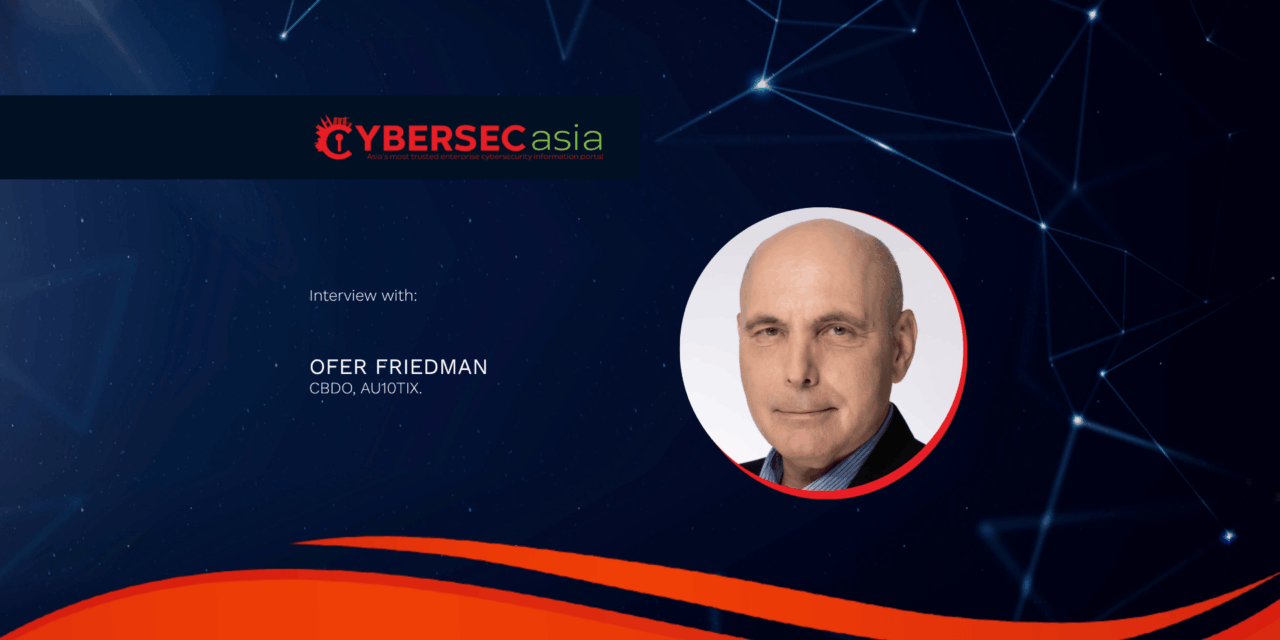
This creates all kinds of headaches for online gaming operators, banks, fintechs, retailers and other businesses. Recently, CybersecAsia.net discussed the burgeoning “identity sales and rental” market with identity fraud expert Ofer Friedman, CBDO, AU10TIX. 

How does identity selling work, and what drives people to agree to rent or sell their identities to cybercriminals?

Friedman: Familiar with the concept of mules? People who sell their identities are by definition “identity mules.” More precisely “willing identity mules”, as no mentally sound person accepts payment from a stranger in exchange for the latter’s use of the seller’s personal information without having any suspicions. 

They are accomplices. 

Renting or selling one’s identity information requires either desperation, feeling of immunity, or both. Possibly there are also “revenge identity mules” who sell someone else’s personal data without their knowledge. “Recruiters” may use dark-web marketplaces or social media to post about “quick cash” or “financial services” that promise significant returns. 

Criminals can also use encrypted messaging platforms and even create private groups to advertise their need for mules. Some of those responding may be attracted by word of mouth. It has been observed that there are even “professional” mule services out there. 

Those who respond to such solicitations are typically students, unemployed people, and individuals with addiction problems. To build trust in this anonymous environment, many bad actors have in place reputation and feedback systems, where buyers can rate sellers and their “goods.”

What are some red flags that businesses should look out for to detect rented or sold identities?

Friedman: Detecting identity mules is not that easy, as these are genuine individuals. However, there are a variety of tools that can help detect such cases before and after “account opening”. 

While the sold personal data is genuine and verifiable, account opening in regulated markets does require the use of identity documents and live biometrics. It is not enough to submit the data itself; it must be retrieved in a process that involves live capture of a government issued ID and a live selfie. 

Live captured ID documents and selfies can be checked for authenticity both directly and indirectly, which is what AU10TIX does. Post onboarding, mule accounts are typically detected via behavior: user behavior, application behavior, and device behavior. In the case of AU10TIX, cases can be AI-screened against a global database of known fraudulent submission.

Are there regulations in place, especially in Asia, to discourage this trend?

Friedman: There is no indication that this particular phenomenon of selling or renting one’s own personal data is a dominant practice. There are much easier options for fraudsters to conduct impersonation attacks en masse, at global scale. 

Regulations typically address those who need to defend against such attacks, not those who perpetrate them. Crime prevention regulations tend to be quite universal, with nuances addressing required practices and sanctions. 

While a person selling their own identity might seem like a private transaction, most data privacy and consumer protection laws around the world don’t specifically outlaw the act itself. Instead, they focus on the actions of the entities that collect, use, and sell personal data, particularly in a commercial context.

Can technology help safeguard against this emerging threat?

Friedman: Whether you like it or not, technology is imperative for any effective action against unlawful usage of personal data. Today’s technology paradigm is advocating the “minefield” concept where multiple checks and indicators are simultaneously used in order to heighten the barrier to fraud. Identity verification, biometrics, device indicators, network indicators, behavioral indicators all can serve that purpose. 

What’s nice about today’s fraud prevention technology is most of it is completely transparent to the customer, thus exerting no friction on users. Please mind that the availability of technologies and paradigms makes prevention quite effective, but not all solutions are necessarily the same — thorough research on what exactly each vendor is claiming and practicing is recommended.

Share:

PreviousWhen failure is not an option
NextResearchers prove physical attacks expose weaknesses in CPU “trusted execution environments”

Related Posts

A look back at nine months of heightened global cybercriminal turbulence

A look back at nine months of heightened global cybercriminal turbulence

Thursday, November 26, 2020

‘Temi’ robot that coulda compromised security of seniors and vulnerable users

‘Temi’ robot that coulda compromised security of seniors and vulnerable users

Tuesday, August 18, 2020

How AI can turbocharge SIEM

How AI can turbocharge SIEM

Tuesday, June 25, 2024

Observability, platformization keys to cybersecurity in the AI era

Observability, platformization keys to cybersecurity in the AI era

Thursday, August 8, 2024

Leave a reply Cancel reply

You must be logged in to post a comment.

Voters-draw/RCA-Sponsors

Slide
Slide
Slide
Slide
Slide
Slide
Slide
Slide
Slide
Slide
Slide
Slide
Slide
Slide
previous arrow
next arrow

CybersecAsia Voting Placement

Gamification listing or Participate Now

PARTICIPATE NOW

Vote Now -Placement(Google Ads)

Top-Sidebar-banner

Whitepapers

  • Closing the Gap in Email Security:How To Stop The 7 Most SinisterAI-Powered Phishing Threats

    Closing the Gap in Email Security:How To Stop The 7 Most SinisterAI-Powered Phishing Threats

    Insider threats continue to be a major cybersecurity risk in 2024. Explore more insights on …Download Whitepaper
  • 2024 Insider Threat Report: Trends, Challenges, and Solutions

    2024 Insider Threat Report: Trends, Challenges, and Solutions

    Insider threats continue to be a major cybersecurity risk in 2024. Explore more insights on …Download Whitepaper
  • AI-Powered Cyber Ops: Redefining Cloud Security for 2025

    AI-Powered Cyber Ops: Redefining Cloud Security for 2025

    The future of cybersecurity is a perfect storm: AI-driven attacks, cloud expansion, and the convergence …Download Whitepaper
  • Data Management in the Age of Cloud and AI

    Data Management in the Age of Cloud and AI

    In today’s Asia Pacific business environment, organizations are leaning on hybrid multi-cloud infrastructures and advanced …Download Whitepaper

Middle-sidebar-banner

Case Studies

  • Cyber protection for medical clinics in Singapore

    Cyber protection for medical clinics in Singapore

    As Singapore’s healthcare sector becomes increasingly digital and interconnected, clinics are facing heightened cyber risks, …Read more
  • India’s WazirX strengthens governance and digital asset security

    India’s WazirX strengthens governance and digital asset security

    Revamping its custody infrastructure using multi‑party computation tools has improved operational resilience and institutional‑grade safeguardsRead more
  • Bangladesh LGED modernizes communication while addressing data security concerns

    Bangladesh LGED modernizes communication while addressing data security concerns

    To meet emerging data localization/privacy regulations, the government engineering agency deploys a secure, unified digital …Read more
  • What AI worries keep members of the Association of Certified Fraud Examiners sleepless?

    What AI worries keep members of the Association of Certified Fraud Examiners sleepless?

    This case study examines how many anti-fraud professionals reported feeling underprepared to counter rising AI-driven …Read more

Bottom sidebar

Other News

  • Taoping Reports Fiscal Year 2025 Results

    Thursday, April 30, 2026
    Strategic Transformation Drives Platform Expansion, …Read More »
  • DESILO Launches World’s First Fully Homomorphic Encryption Library Integrating 5th-Generation FHE Scheme ‘GL’, Accelerating the Era of Private AI

    Tuesday, April 28, 2026
    SEOUL, South Korea, April 28, …Read More »
  • Tencent Cloud Cube Sandbox Goes Fully Open-Source, with Five Major Breakthroughs Enabling Large-Scale Agent Deployment

    Thursday, April 23, 2026
    Tencent Cloud’s Cube Sandbox goes …Read More »
  • Sparrow to Demonstrate AI-Driven Security and SBOM Management at Black Hat Asia 2026

    Wednesday, April 22, 2026
    SINGAPORE, April 21, 2026 /PRNewswire/ …Read More »
  • Relativity to Establish Singapore Entity, Expanding APAC Footprint

    Wednesday, April 22, 2026
    News Summary:  Relativity plans to …Read More »
  • Our Brands
  • DigiconAsia
  • MartechAsia
  • Home
  • About Us
  • Contact Us
  • Sitemap
  • Privacy & Cookies
  • Terms of Use
  • Advertising & Reprint Policy
  • Media Kit
  • Subscribe
  • Manage Subscriptions
  • Newsletter

Copyright © 2026 CybersecAsia All Rights Reserved.