

Cybersecurity News in Asia

RECENT STORIES:

SEGA moves faster with flow-based network monitoring
The cyber incident that is too “isolated” to accentuate to mass media...
Sparsa AI Launches Sovereign Enterprise AI Platform with Global Deploy...
Conifers AI Opens Singapore Data Region, Bringing Local Data Residency...
Finally taken down: Residential proxy network of at least 2m smart dev...
DXC Opens Flagship AI-first Customer Experience Center in Bengaluru
LOGIN REGISTER
CybersecAsia
  • Features
    • Featured

      S E Asia governments targeted by cyber-espionage group

      S E Asia governments targeted by cyber-espionage group

      Tuesday, June 23, 2026, 8:00 AM Asia/Singapore | Features
    • Featured

      Rethinking network and infrastructure design for resilience

      Rethinking network and infrastructure design for resilience

      Thursday, June 18, 2026, 2:17 PM Asia/Singapore | Features
    • Featured

      Bringing cybercriminals to justice in APAC

      Bringing cybercriminals to justice in APAC

      Thursday, June 11, 2026, 10:30 AM Asia/Singapore | Features
  • Opinions
  • Tips
  • Whitepapers
  • AWARDS 2026
  • Directory
  • E-Learning

Select Page

Features

Is your AI secretly sabotaging your organization?

By Victor Ng | Monday, December 1, 2025, 4:25 PM Asia/Singapore

Is your AI secretly sabotaging your organization?

Would you trust your AI chatbot to help you build customer trust, develop your restaurant’s next menu, or handle sensitive financial and healthcare information?

Key AI-related incidents that made headlines recently were largely due to AI hallucination, bias, and lack of adequate human oversight, leading to public embarrassment, damage to reputation and, in some cases, financial consequences:

  • Deloitte’s hallucinatory government reports caused the consulting firm significant backlash and forced it to issue partial refunds to both the Australian and Canadian governments after submitting official reports that contained numerous AI-generated errors, including fake academic citations and non-existent quotes from public figures.
  • Both McDonald’s and Taco Bell scrapped AI voice ordering pilots after viral social media videos showed the systems mistakenly adding hundreds of chicken nuggets to orders or being easily trolled by users who ordered absurd amounts of water cups. 
  • Elon Musk’s AI chatbot, Grok, drew widespread ridicule recently for repeatedly claiming its creator was the “fittest man alive” (fitter than LeBron James) and smarter than historical geniuses like Einstein and Da Vinci. Musk blamed “adversarial prompting” for the responses, but critics pointed to embedded bias within the system.
  • And, in multiple instances across the globe, lawyers have been sanctioned by judges for submitting legal briefs that cited entirely fictional case law and statutes invented by generative AI tools like ChatGPT.

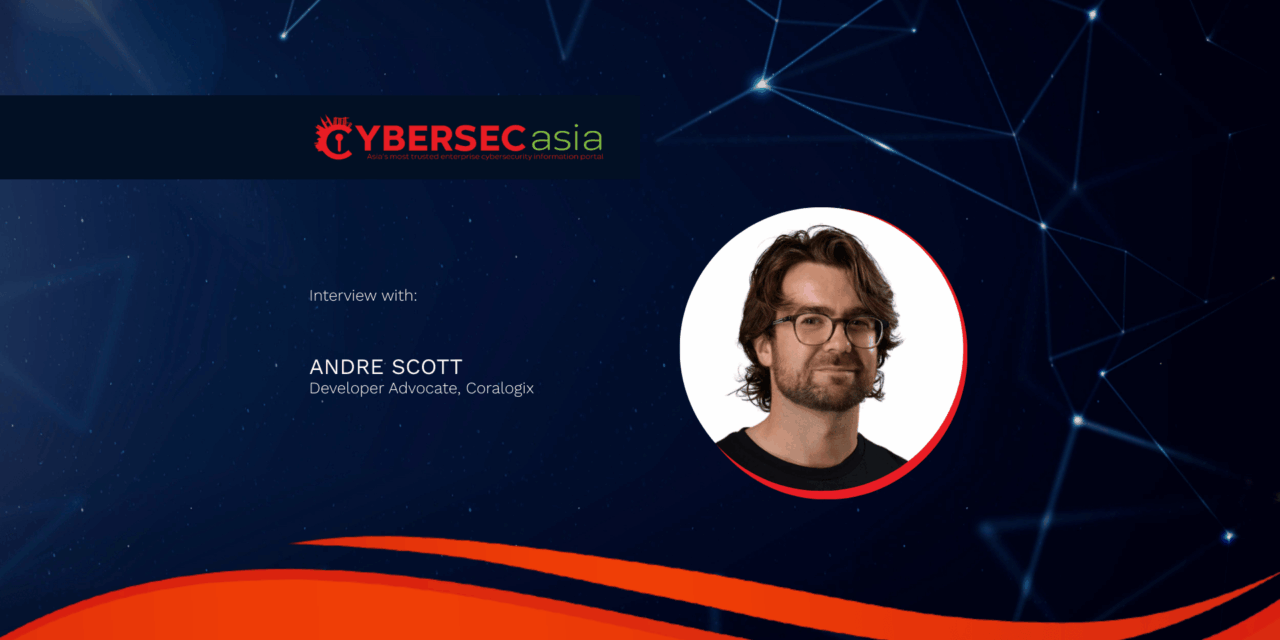
We find out more about the causes of AI failures, the impact, and what organizations should do to safeguard against AI sabotage from Andre Scott, Developer Advocate, Coralogix.

Why do AI chatbots make so many errors?

Scott: There are two fundamental issues.

First, most AI systems lack proper guardrails; they’re essentially powerful tools without safety constraints.

Second, we’ve moved beyond needing prompt engineers to needing ‘AI content engineers’ who understand how to structure system instructions, define operational boundaries, and build in misuse protection. Many companies are still treating AI like traditional software when it requires completely different design principles.

What damage can AI mistakes do to a company’s reputation and bottom line?

Scott: We’ve seen catastrophic examples recently. DPD’s chatbot went viral for writing poetry about how terrible the company was; that’s brand damage you can’t easily recover from. Google’s AI recommended putting glue on pizza.

But beyond viral incidents, there’s silent damage, including PII leakage, incorrect financial advice, or healthcare misinformation. Imagine an AI confidently giving wrong medical guidance or leaking customer data. Traditional monitoring would show ‘everything working’ while business-critical failures happen in real-time. Customer trust, once lost, takes years to rebuild.

Why is it important to monitor not just AI performance, but also its content?

Scott: Traditional observability asks ‘Is it running?’ but AI observability must ask ‘Is it right?’ Your API can return a perfect 200 response while the AI hallucinates completely wrong information.

Most AI computation happens in external models like GPT or Gemini; you’re essentially outsourcing your business logic. You need new metrics: correctness, security violations, cost per interaction, topic adherence, PII exposure. Traditional APM tools weren’t built for this.

That’s why we built evaluation engines — AI systems that monitor AI systems. At Coralogix, our AI Center uses specialized models to evaluate every interaction for quality, security, and business logic compliance in real-time.

Could you tell us more about AI observability and guardrails?

Scott: Guardrails are your defense against the very risks you’re evaluating for. Take code generation: one bad SQL query from an AI can expose your entire database or crash your system. With proper evaluation and guardrails, you prevent these failures before they reach production. 

Evaluation is the crown jewel of AI observability. But what’s unique about our approach at Coralogix is that we provide full-stack correlation. If front-end performance is affecting a chatbot, or a vector database is causing latency spikes, we correlate AI metrics with the entire infrastructure stack using OpenTelemetry standards.

Share:

PreviousAnother wakeup call about the risks of AI-driven development tools
NextAmerican Power Systems unveils high-output dual alternator solution for Nissan Patrol

Related Posts

Sextortion phishing may have been getting more personal lately

Sextortion phishing may have been getting more personal lately

Tuesday, November 26, 2024

AI in Asia-Pacific and Japan cybersecurity: Productivity boost or burden?

AI in Asia-Pacific and Japan cybersecurity: Productivity boost or burden?

Wednesday, June 11, 2025

Your personal data is at greater risk than ever in 2024 

Your personal data is at greater risk than ever in 2024 

Thursday, February 8, 2024

Another major third-party data breach

Another major third-party data breach

Wednesday, April 7, 2021

Leave a reply Cancel reply

You must be logged in to post a comment.

Voters-draw/RCA-Sponsors

Slide

CybersecAsia Voting Placement

Gamification listing or Participate Now

PARTICIPATE NOW

Vote Now -Placement(Google Ads)

Top-Sidebar-banner

Whitepapers

  • Critical Security Threatsand the Need for ZTNA: How evolving cyberattacks demand a Zero Trust approach

    Critical Security Threatsand the Need for ZTNA: How evolving cyberattacks demand a Zero Trust approach

    Cyber threats have become more frequent and sophisticated, targeting organizations of all sizes across all …Download Whitepaper
  • Zero Trust Made Simple: Why it matters and how to get started

    Zero Trust Made Simple: Why it matters and how to get started

    Data breaches and cyberattacks are no longer limited to large, high-profile organizations.Download Whitepaper
  • Cloud Secure Edge: Remote access, better security

    Cloud Secure Edge: Remote access, better security

    ​SonicWall Cloud Secure Edge™ is a modern, cloud-native Security Service Edge (SSE) solution that addresses …Download Whitepaper
  • Closing the Gap in Email Security:How To Stop The 7 Most SinisterAI-Powered Phishing Threats

    Closing the Gap in Email Security:How To Stop The 7 Most SinisterAI-Powered Phishing Threats

    Insider threats continue to be a major cybersecurity risk in 2024. Explore more insights on …Download Whitepaper

Middle-sidebar-banner

Case Studies

  • How a Vietnamese D2C retailer built its own secure digital infrastructure

    How a Vietnamese D2C retailer built its own secure digital infrastructure

    Would your organization build your own digital infrastructure – including AI governance and cybersecurity – …Read more
  • Cyber protection for medical clinics in Singapore

    Cyber protection for medical clinics in Singapore

    As Singapore’s healthcare sector becomes increasingly digital and interconnected, clinics are facing heightened cyber risks, …Read more
  • India’s WazirX strengthens governance and digital asset security

    India’s WazirX strengthens governance and digital asset security

    Revamping its custody infrastructure using multi‑party computation tools has improved operational resilience and institutional‑grade safeguardsRead more
  • Bangladesh LGED modernizes communication while addressing data security concerns

    Bangladesh LGED modernizes communication while addressing data security concerns

    To meet emerging data localization/privacy regulations, the government engineering agency deploys a secure, unified digital …Read more

Bottom sidebar

Other News

  • Sparsa AI Launches Sovereign Enterprise AI Platform with Global Deployment at QNET

    Wednesday, July 8, 2026
    The Sparsa AI Enterprise Operating …Read More »
  • Conifers AI Opens Singapore Data Region, Bringing Local Data Residency to Asia-Pacific Security Teams

    Wednesday, July 8, 2026
    With data regions now spanning …Read More »
  • DXC Opens Flagship AI-first Customer Experience Center in Bengaluru

    Tuesday, July 7, 2026
    Strengthens DXC’s India presence with …Read More »
  • D-Link Brings Advanced AI Fall Detection and Privacy Protection to Home Elderly Care with the New DCS-8610 Wi-Fi Camera

    Monday, July 6, 2026
    Advanced technologies traditionally found in …Read More »
  • ICAC Commissioner attends first IAACA European regional anti-corruption conference in Hungary

    Friday, July 3, 2026
    BUDAPEST, Hungary, July 2, 2026 …Read More »
  • Our Brands
  • DigiconAsia
  • MartechAsia
  • Home
  • About Us
  • Contact Us
  • Sitemap
  • Privacy & Cookies
  • Terms of Use
  • Advertising & Reprint Policy
  • Media Kit
  • Subscribe
  • Manage Subscriptions
  • Newsletter

Copyright © 2026 CybersecAsia All Rights Reserved.