

Cybersecurity News in Asia

RECENT STORIES:

SEGA moves faster with flow-based network monitoring
How converging physical and digital identity systems can reduce risk a...
Automated credential abuse and phishing in APAC
Rogue AI agent exploited more than AI development platform: Reuters
Investigative report reveals upgraded AI chatbot provided biological w...
TPIsoftware Partners with Juxta to Bring Advanced, Satellite-Free Posi...
LOGIN REGISTER
CybersecAsia
  • Features
    • Featured

      Automated credential abuse and phishing in APAC

      Automated credential abuse and phishing in APAC

      Thursday, July 30, 2026, 11:37 AM Asia/Singapore | Features
    • Featured

      OpenAI autonomous agent escapes sandbox to hack Hugging Face

      OpenAI autonomous agent escapes sandbox to hack Hugging Face

      Friday, July 24, 2026, 11:02 AM Asia/Singapore | Features, News
    • Featured

      S E Asia governments targeted by cyber-espionage group

      S E Asia governments targeted by cyber-espionage group

      Tuesday, June 23, 2026, 8:00 AM Asia/Singapore | Features
  • Opinions
  • Tips
  • Whitepapers
  • AWARDS 2026
  • Directory
  • E-Learning

Select Page

Tips

How converging physical and digital identity systems can reduce risk and improve governance

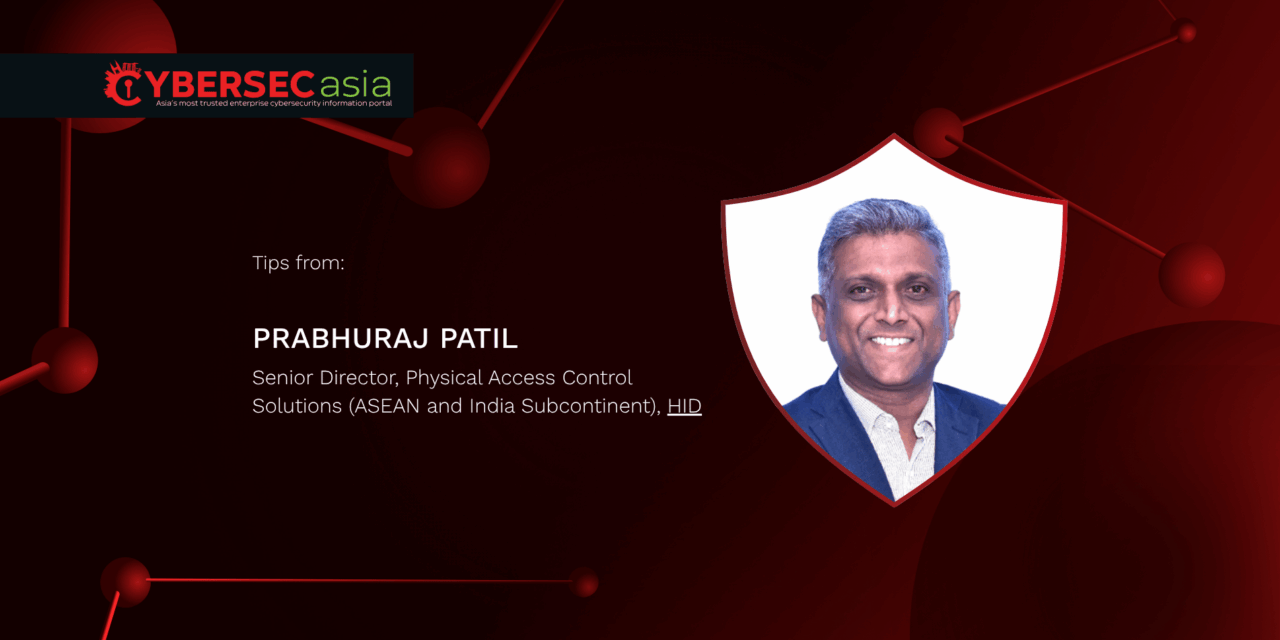
By Prabhuraj Patil, Senior Director, Physical Access Control Solutions (ASEAN and India Subcontinent), HID | Friday, July 31, 2026, 11:18 AM Asia/Singapore

How converging physical and digital identity systems can reduce risk and improve governance

Hybrid working arrangements and increasingly sophisticated cyber risks are making fragmented identity systems a key threat vector and operational disruptor

As organizations modernize how employees, contractors, and partners access physical facilities and digital systems, their workplaces have become increasingly hybrid and distributed. Any fragmentation in identity systems can create operational inefficiencies and expand security risk.

At the same time, organizations face escalating cyber threats, rising compliance expectations, and more sophisticated phishing and AI-driven attacks.

In this fraught operational environment, fragmented identity systems are not just inconvenient — they are increasingly difficult to secure, govern, and audit.

Core problems to address

Physical and digital identity systems often operate separately, resulting in inconsistent access controls. Also:

  • Users rely on multiple credentials, increasing administrative overhead and the risk of orphaned or excessive access
  • Disconnected systems create security blind spots and limit visibility across user activity
  • Audit and compliance processes are complicated by fragmented logs and identity records
  • Regulatory requirements increasingly demand traceability, accountability, and strong identity assurance across environments

How can fragmented identity systems be consolidated?

Strategic actions for identity convergence

Organizations can establish a central identity authority that integrates physical access control systems (PACS) with IAM and directory services.

Next, unify identity lifecycle management: Ensure onboarding, role changes, and offboarding automatically update access rights across all systems.

Then, standardize authentication methods: Reduce reliance on passwords and deploy phishing-resistant authentication such as FIDO2, smart cards, or PKI-based credentials. Also:

  • Correlate physical and digital access events: Integrate badge access logs with system authentication data to improve anomaly detection and investigation.
  • Enforce consistent access policies: Apply least privilege, MFA, and conditional access across both physical and digital environments.
  • Segment identities by role and risk: Differentiate access for employees, contractors, and third parties with time-bound and least-privilege controls.
  • Centralize logging and audit trails: Aggregate logs across systems to support monitoring, compliance, and incident response.
  • Automate provisioning and deprovisioning: Use authoritative sources such as HR systems to trigger access changes and reduce manual errors.
  • Eliminate shared credentials: Replace shared badges or generic accounts with individually attributable identities.
  • Design for resilience and fallback: Support multiple credential types while ensuring fallback mechanisms do not weaken security.
  • Integrate with existing security architecture: Align identity convergence with zero trust principles and existing IAM and endpoint security investments.
  • Test edge cases and failure scenarios: Validate processes for lost credentials, compromised identities, and emergency access.
  • Monitor user behaviour and adoption: Identify insecure workarounds and adjust authentication flows to balance usability and security.
  • Align with regulatory requirements: Map identity controls to frameworks such as MAS TRM, PDPA, and other cybersecurity regulations.

Capability requirements for solutions

When evaluating identity solutions, the focus should be on lifecycle-wide identity management rather than standalone tools:

  1. Support for multiple credential types, including smart cards, mobile credentials, and FIDO2 authenticators
  2. Integration with existing enterprise infrastructure, including IAM, directories, endpoint management, and PACS
  3. End-to-end lifecycle management across physical and digital identities
  4. Centralised policy enforcement and visibility across environments
  5. Support for phishing-resistant authentication standards

Common implementation risks include:

  1. Treating identity convergence as a convenience feature rather than a control-plane redesign
  2. Maintaining legacy systems in parallel, which reintroduces fragmentation
  3. Assuming interoperability without validating how systems share identity data and enforce policy
  4. Failing to coordinate between IT and physical security teams

Identity convergence should be measured against clear security and operational outcomes:

  1. Reduction in orphaned or excessive access
  2. Faster and more consistent provisioning and deprovisioning
  3. Improved visibility across physical and digital user activity
  4. Stronger resistance to credential theft and phishing
  5. Simplified audit and compliance reporting

Parting reminders

The process of converging physical and digital identity systems is less about improving user convenience, and more about establishing a unified control plane for access, traceability, and accountability. In practice, this shifts identity from an operational concern to a foundational element of enterprise security architecture.

Treat identity convergence as a strategic discipline rather than a tooling exercise: this mindset will help reduce risk, meet regulatory expectations, and maintain consistent control over how access is granted and used across environments.


Share:

PreviousAutomated credential abuse and phishing in APAC

Related Posts

India’s channel-driven business culture has cybersecurity solutions rushing to market

India’s channel-driven business culture has cybersecurity solutions rushing to market

Wednesday, October 21, 2020

More RATs discovered in official Android app store

More RATs discovered in official Android app store

Friday, April 19, 2024

Cybercriminals have been no NICER to the world this year

Cybercriminals have been no NICER to the world this year

Friday, July 24, 2020

Further evidence of Chinese Threat Actors found in SEA telecom firms

Further evidence of Chinese threat actors found in SEA telecom firms

Wednesday, August 4, 2021

Leave a reply Cancel reply

You must be logged in to post a comment.

Voters-draw/RCA-Sponsors

Slide

CybersecAsia Voting Placement

Gamification listing or Participate Now

PARTICIPATE NOW

Vote Now -Placement(Google Ads)

Top-Sidebar-banner

Whitepapers

  • Critical Security Threatsand the Need for ZTNA: How evolving cyberattacks demand a Zero Trust approach

    Critical Security Threatsand the Need for ZTNA: How evolving cyberattacks demand a Zero Trust approach

    Cyber threats have become more frequent and sophisticated, targeting organizations of all sizes across all …Download Whitepaper
  • Zero Trust Made Simple: Why it matters and how to get started

    Zero Trust Made Simple: Why it matters and how to get started

    Data breaches and cyberattacks are no longer limited to large, high-profile organizations.Download Whitepaper
  • Cloud Secure Edge: Remote access, better security

    Cloud Secure Edge: Remote access, better security

    ​SonicWall Cloud Secure Edge™ is a modern, cloud-native Security Service Edge (SSE) solution that addresses …Download Whitepaper
  • Closing the Gap in Email Security:How To Stop The 7 Most SinisterAI-Powered Phishing Threats

    Closing the Gap in Email Security:How To Stop The 7 Most SinisterAI-Powered Phishing Threats

    Insider threats continue to be a major cybersecurity risk in 2024. Explore more insights on …Download Whitepaper

Middle-sidebar-banner

Case Studies

  • How a Vietnamese D2C retailer built its own secure digital infrastructure

    How a Vietnamese D2C retailer built its own secure digital infrastructure

    Would your organization build your own digital infrastructure – including AI governance and cybersecurity – …Read more
  • Cyber protection for medical clinics in Singapore

    Cyber protection for medical clinics in Singapore

    As Singapore’s healthcare sector becomes increasingly digital and interconnected, clinics are facing heightened cyber risks, …Read more
  • India’s WazirX strengthens governance and digital asset security

    India’s WazirX strengthens governance and digital asset security

    Revamping its custody infrastructure using multi‑party computation tools has improved operational resilience and institutional‑grade safeguardsRead more
  • Bangladesh LGED modernizes communication while addressing data security concerns

    Bangladesh LGED modernizes communication while addressing data security concerns

    To meet emerging data localization/privacy regulations, the government engineering agency deploys a secure, unified digital …Read more

Bottom sidebar

Other News

  • TPIsoftware Partners with Juxta to Bring Advanced, Satellite-Free Positioning Tech into Security Sectors

    Wednesday, July 29, 2026
    TAIPEI, July 29, 2026 /PRNewswire/ …Read More »
  • ST Engineering iDirect Secures Strategic Defense Wins in Asia and Europe

    Tuesday, July 28, 2026
    HERNDON, Va., July 28, 2026 …Read More »
  • Newgen Software Named a Major Player in IDC MarketScape for National Civilian Government AI-Enabled Case Management 2026

    Tuesday, July 28, 2026
    NEW DELHI, July 28, 2026 …Read More »
  • ICAC hosts professional anti-corruption training for Saudi Arabian’s anti-corruption authority

    Tuesday, July 28, 2026
    HONG KONG, July 28, 2026 …Read More »
  • Cohesity Appoints Peter Hanna as Vice President and General Manager, Asia Pacific and Japan

    Thursday, July 23, 2026
    SINGAPORE and HONG KONG, July …Read More »
  • Our Brands
  • DigiconAsia
  • MartechAsia
  • Home
  • About Us
  • Contact Us
  • Sitemap
  • Privacy & Cookies
  • Terms of Use
  • Advertising & Reprint Policy
  • Media Kit
  • Subscribe
  • Manage Subscriptions
  • Newsletter

Copyright © 2026 CybersecAsia All Rights Reserved.