
Agentic AI is bringing about a business trend: one-person companies (OPCs). An OPC does not necessarily mean a ‘one-man show’, but refers more broadly to the fact that new digital-native and AI-native businesses tend to hire less humans whose tasks can be handled by AI, especially agentic AI.
More and more OPC startups will enter the APAC market. But their dependence on AI and digital assets comes with certain risks. With recent news about major blockchain hacks, are the opportunities worth the risks, and how could these risks be remediated?
At the Hong Kong Cyberport Venture Capital Forum 2026, I caught up with senior executives of Cyberport for some insights.
AI agents transacting on digital assets
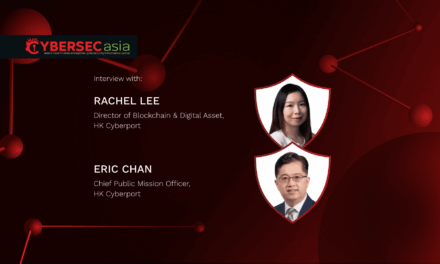
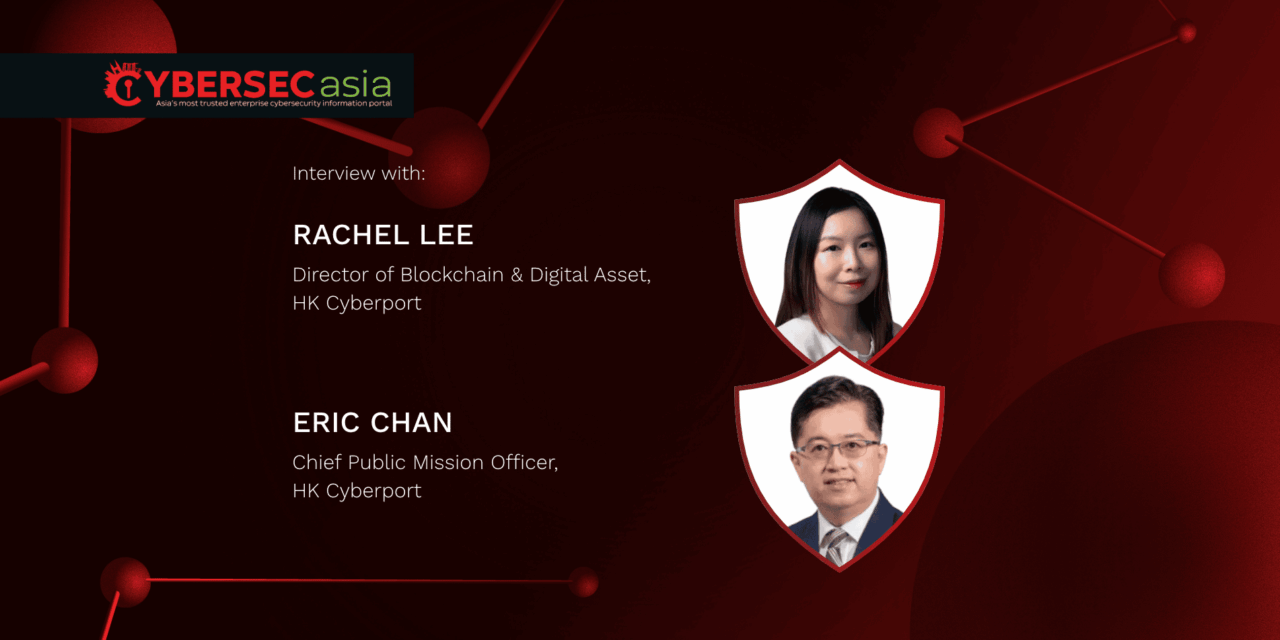
Rachel Lee, Director of Blockchain & Digital Asset, HK Cyberport, said: “Ultimately the [AI] agents could be a key driver for the use of digital assets because it’s naturally more [suited] for AI agents to be transacting on digital assets, including the use of stablecoins.”
That could support automated payments and other transactions. More broadly, Rachel said tokenization may reduce the time money or assets sit idle while awaiting settlement or redemption.
Beyond financial assets, she noted growing interest in tokenizing revenue, which could create new financing options, alongside stablecoins and tokenized deposits for payments.

Rachel Lee, Director of Blockchain & Digital Asset, HK Cyberport
She emphasized that tokenization needs to solve a real problem and attract sustained use — not just put assets on-chain: “The most important thing is the demand side: how we can actually scale it and also to have a sustainable demand for digital assets, and what sort of value it brings.”
But Rachel cautioned that adoption of agentic AI introduces new risks. Recent breaches in the news make blockchain and digital-asset security an important and ongoing concern. She said Cyberport works with blockchain security and audit firms, cybersecurity companies, government departments, and police on related activities.
Eric Chan, Chief Public Mission Officer, HK Cyberport, also sees AI projects shifting from experimentation to operational use, noting that companies are using agentic AI infrastructure for workflow restructuring and efficiency gains.
He believes that AI adoption should be accompanied by governance frameworks, ethical use, risk management, and cybersecurity guardrails. Startups at Cyberport, while they receive training and mentoring, must meet security requirements before graduating: “They have to go through our cybersecurity training and also do product vulnerability tests.”
Pointing out that Cyberport’s technology priorities follow an ABCD framework: AI, blockchain, cybersecurity, and data science, he said: “So far, with respect to cybersecurity, we have gathered 40-50 good companies from all over the world. We work with them to support our community members for product design and product rollout.”
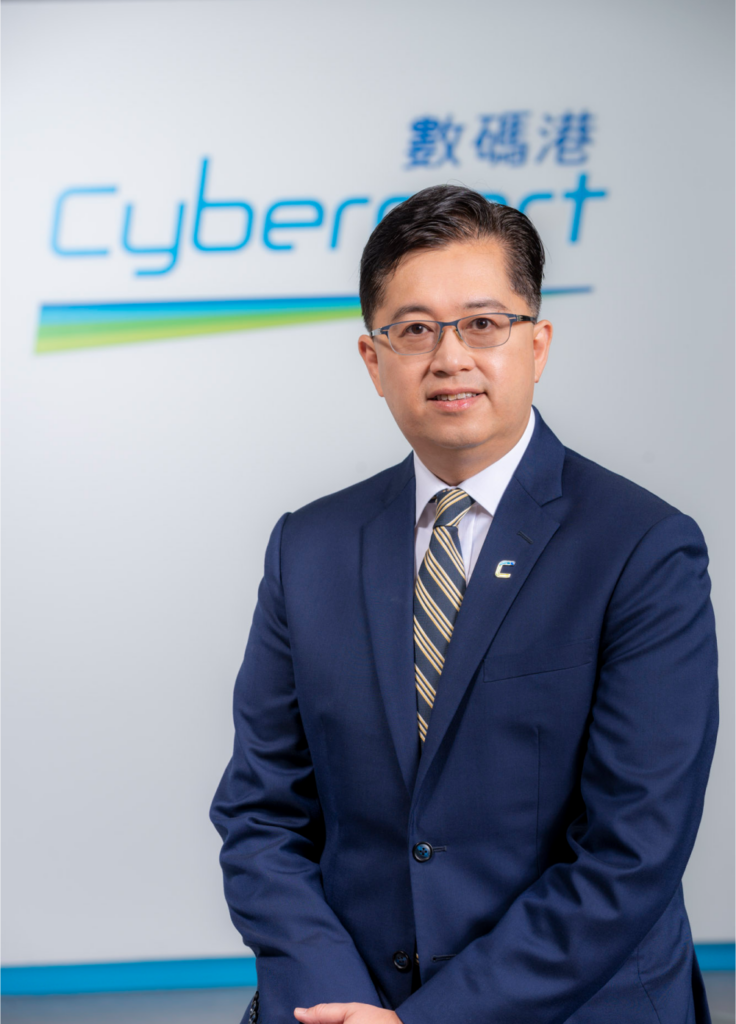
Eric Chan, Chief Public Mission Officer, HK Cyberport
Cyberport also runs gamified ‘capture the flag’ attack-and-defense exercises to build members’ awareness and technical skills.
Concurring with Lee, Chan said: “We also work very closely with authorities like the police and other cybersecurity experts to upskill the whole community here on both awareness and the actual technical skills to protect themselves against hackers and other bad actors.”
Partnering with regulators
“We have been working very closely with the policy-making Financial Services and the Treasury Bureau (FSTB), as well as the regulators under them, which are fundamentally the Hong Kong Monetary Authority (HKMA) that regulates banks, the Hong Kong Insurance Authority (IA) that regulates insurance companies, the Securities and Future Commission (SFC) that regulates securities companies, and also the Mandatory Provident Fund (MPF) that manages the trustee rights,” said Chan.
He continued: “In the past we have been running a lot of regulatory sandboxes together with support from these regulators. It’s not just technology but also supervisory tech that they are interested in, and they support us in a lot of fintech proof of concepts (POCs) with early advice to our community members on the regulatory standards.”
Cyberport works closely with regulators using sandboxes to let companies test innovative solutions in a controlled setting, with regulatory input. Chan said: “In the first batch of the digital asset and blockchain pilot projects that we supported, 50% of them are already commercialized.”
“We have supported maybe over 250 POC projects in collaboration with these regulators, and that’s a big help to in driving innovation in Hong Kong.”
Practical steps
Cyberport’s approach is to combine cybersecurity standards and regulatory oversight with practical testing, so promising AI and digital-asset solutions can be developed and deployed more safely.
Some practical steps in that direction culled from the conversation with Lee include:
- Lead with clear economic benefits. Tokenization could reduce the time money or assets sit idle while waiting for settlement or redemption, potentially improving effective yield.
- Develop use cases beyond financial-asset tokenization. Rachel pointed to tokenizing revenue as another route to new financing options and broader investor participation.
- Build payment applications. She highlighted stablecoins and tokenized deposits as areas of active discussion, and suggested AI agents could become users of programmable digital assets.
- Test applications with users and infrastructure. She described Hong Kong’s T-Connect Launchpad as supporting tokenization use cases and technical testing, alongside a new Digital Asset Pilot Subsidy Scheme.