

Cybersecurity News in Asia

RECENT STORIES:

SEGA moves faster with flow-based network monitoring
How SMEs can turn cyber “sins” into NIST-aligned best practices
How AI is supercharging insider threats
NEC Asia Pacific to Showcase Trusted Public Safety and Digital Identit...
Sprinto Expands to Australia with New Data Center to Power Localized, ...
Three strategies for closing the gap between backup and real recovery ...
LOGIN REGISTER
CybersecAsia
  • Features
    • Featured

      How AI is supercharging insider threats

      How AI is supercharging insider threats

      Wednesday, April 15, 2026, 12:29 PM Asia/Singapore | Features
    • Featured

      Q-Day is coming. Are you ready?

      Q-Day is coming. Are you ready?

      Tuesday, April 14, 2026, 12:40 PM Asia/Singapore | Features
    • Featured

      How lean defence teams turn endpoint insights into measurable risk reduction

      How lean defence teams turn endpoint insights into measurable risk reduction

      Monday, April 13, 2026, 3:15 PM Asia/Singapore | Features
  • Opinions
  • Tips
  • Whitepapers
  • Awards 2025
  • Directory
  • E-Learning

Select Page

News

Advanced fileless malware targets Philippine military using stealth techniques

By CybersecAsia editors | Monday, September 15, 2025, 4:56 PM Asia/Singapore

Advanced fileless malware targets Philippine military using stealth techniques

Researchers reveal a multi-step, in-memory attack leveraging DLL sideloading and encrypted payloads to maintain covert access.

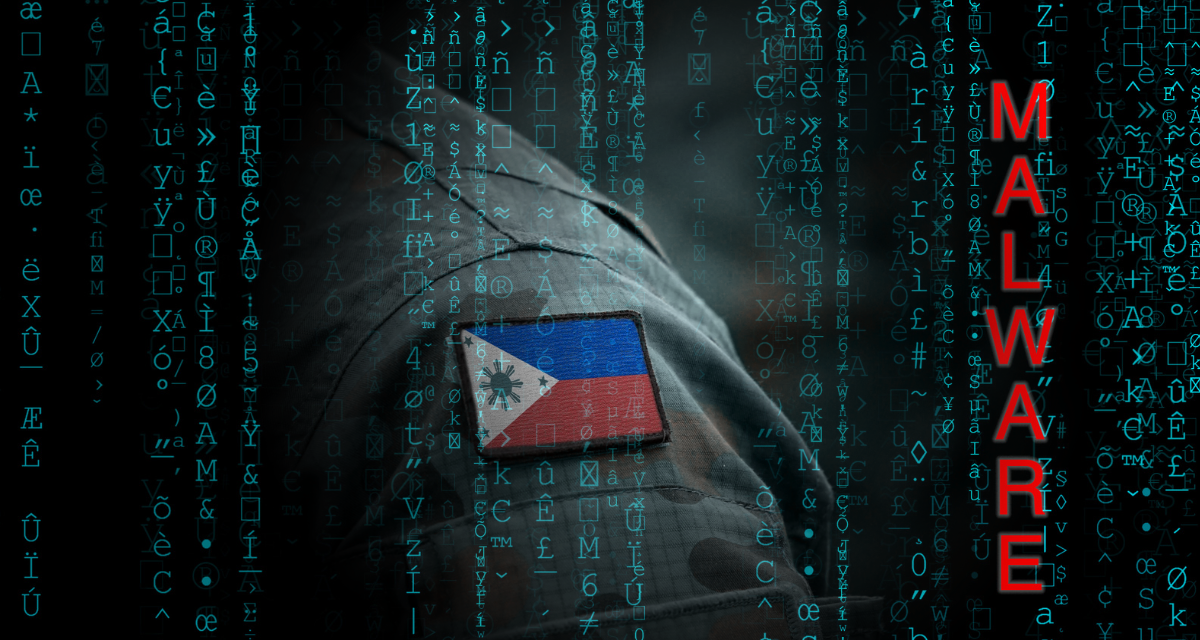
Threat researchers have uncovered a sophisticated and stealthy cyber-espionage framework used by an advanced persistent threat (APT) group targeting a Philippine military firm.

This multi-stage, fileless malware campaign leverages a combination of living-off-the-land techniques and in-memory execution to maintain persistent access, avoid detection, and perform extensive system reconnaissance and data theft.

The initial intrusion was linked to the execution of a logon batch script from a remote SMB share, deploying a legitimate Windows binary alongside a malicious dynamic link library (DLL). This DLL hijacking (or sideloading) tactic had allowed the malware to execute payloads under the guise of trusted processes, bypassing traditional file-based security mechanisms. The first-stage loader had then established a reverse shell and enabled remote command execution on compromised systems.

Technical overview and attack methodology

To maintain persistence, the attackers abused pre-existing but typically disabled Windows services, either by modifying service registry keys to point to malicious DLLs, or by replacing legitimate service binaries. These services were then configured to run with elevated privileges, granting the attackers extensive access to the system memory and processes. Also:

  • The core payload was delivered and executed entirely in memory through a novel reflective loader. This loader decrypted and injected the main backdoor into trusted processes such as the Windows Defender service or explorer.exe, facilitating stealthy control and communication with the command-and-control (C2) servers.
  • Communication with the attacker’s C2 infrastructure had employed modern secure protocols and mutual TLS authentication, utilizing attacker-owned certificates for encrypted and authenticated remote procedure calls.
  • The backdoor supports a wide array of capabilities: comprehensive system fingerprinting; file and process manipulation; privilege escalation; network resource enumeration; lateral movement; and data exfiltration. It operates with a full command set designed for long-term surveillance and control without leaving decrypted malware files on disk.
  • Secondary lightweight backdoor had been observed, which was deployed to ensure redundancy in case the primary implant had been intercepted. This auxiliary component used a legitimate binary relocated to a user-writable directory for DLL sideloading and supported encrypted communication, remote command execution, and flexible command updates.
  • To gather sensitive user input, the threat actors had injected an encrypted keylogger directly into the memory of active explorer.exe processes. This keylogger intercepted keystrokes, clipboard content, and network adapter changes, encrypting logged data in real time for covert collection.

Finally, the attackers had leveraged a proxy tool to establish internal network footholds and route commands across the compromised environment, effectively bypassing segmentation and network-level defenses. Many methods bear telltale signs of a China-linked APT, but no specific threat group has been identified.

According to Martin Zugec, Technical Solutions Director, Bitdefender, the firm disclosing its investigations, this attack suggests in general that APTs aligned with Chinese interests could be “increasing their focus on espionage campaigns against military adversaries.”

Share:

PreviousHow to wage proactive defense against evolving cyber threats with Deception-as-a-Service
NextUS senator requests FTC probe over software giant’s poor cybersecurity track record

Related Posts

AI saves Singapore academic institution from cyber-attack

AI saves Singapore academic institution from cyber-attack

Thursday, August 13, 2020

More businesses targeted by ransomware in the past year: study

More businesses targeted by ransomware in the past year: study

Monday, August 23, 2021

When AI adoption outpaces security, organizations struggle for collective safety

When AI adoption outpaces security, organizations struggle for collective safety

Thursday, March 12, 2026

Oops, your “old” personal data has been leaked. Now what?

Oops, your “old” personal data has been leaked. Now what?

Monday, April 12, 2021

Leave a reply Cancel reply

You must be logged in to post a comment.

Voters-draw/RCA-Sponsors

Slide
Slide
Slide
Slide
Slide
Slide
Slide
Slide
Slide
Slide
Slide
Slide
Slide
Slide
previous arrow
next arrow

CybersecAsia Voting Placement

Gamification listing or Participate Now

PARTICIPATE NOW

Vote Now -Placement(Google Ads)

Top-Sidebar-banner

Whitepapers

  • Closing the Gap in Email Security:How To Stop The 7 Most SinisterAI-Powered Phishing Threats

    Closing the Gap in Email Security:How To Stop The 7 Most SinisterAI-Powered Phishing Threats

    Insider threats continue to be a major cybersecurity risk in 2024. Explore more insights on …Download Whitepaper
  • 2024 Insider Threat Report: Trends, Challenges, and Solutions

    2024 Insider Threat Report: Trends, Challenges, and Solutions

    Insider threats continue to be a major cybersecurity risk in 2024. Explore more insights on …Download Whitepaper
  • AI-Powered Cyber Ops: Redefining Cloud Security for 2025

    AI-Powered Cyber Ops: Redefining Cloud Security for 2025

    The future of cybersecurity is a perfect storm: AI-driven attacks, cloud expansion, and the convergence …Download Whitepaper
  • Data Management in the Age of Cloud and AI

    Data Management in the Age of Cloud and AI

    In today’s Asia Pacific business environment, organizations are leaning on hybrid multi-cloud infrastructures and advanced …Download Whitepaper

Middle-sidebar-banner

Case Studies

  • Cyber protection for medical clinics in Singapore

    Cyber protection for medical clinics in Singapore

    As Singapore’s healthcare sector becomes increasingly digital and interconnected, clinics are facing heightened cyber risks, …Read more
  • India’s WazirX strengthens governance and digital asset security

    India’s WazirX strengthens governance and digital asset security

    Revamping its custody infrastructure using multi‑party computation tools has improved operational resilience and institutional‑grade safeguardsRead more
  • Bangladesh LGED modernizes communication while addressing data security concerns

    Bangladesh LGED modernizes communication while addressing data security concerns

    To meet emerging data localization/privacy regulations, the government engineering agency deploys a secure, unified digital …Read more
  • What AI worries keep members of the Association of Certified Fraud Examiners sleepless?

    What AI worries keep members of the Association of Certified Fraud Examiners sleepless?

    This case study examines how many anti-fraud professionals reported feeling underprepared to counter rising AI-driven …Read more

Bottom sidebar

Other News

  • NEC Asia Pacific to Showcase Trusted Public Safety and Digital Identity Innovations at Milipol TechX 2026

    Wednesday, April 15, 2026
    SINGAPORE, April 14, 2026 /PRNewswire/ …Read More »
  • Sprinto Expands to Australia with New Data Center to Power Localized, Audit-Ready Compliance

    Wednesday, April 15, 2026
    Sprinto combines local infrastructure with …Read More »
  • Hong Kong Anti-graft Watchdog: Clean Governance and Ethical Business is Key to Hong Kong’s Sustainable Business Development

    Thursday, April 9, 2026
    HONG KONG, April 9, 2026 …Read More »
  • Goodix Launches the World’s First eSE Solution Designed for AI Agents

    Thursday, April 9, 2026
    SHENZHEN, China, April 8, 2026 …Read More »
  • LRQA Amplifies Industrial and Cyber Resilience in APAC at CS4CA Summit 2026

    Thursday, April 9, 2026
    SINGAPORE, April 8, 2026 /PRNewswire/ …Read More »
  • Our Brands
  • DigiconAsia
  • MartechAsia
  • Home
  • About Us
  • Contact Us
  • Sitemap
  • Privacy & Cookies
  • Terms of Use
  • Advertising & Reprint Policy
  • Media Kit
  • Subscribe
  • Manage Subscriptions
  • Newsletter

Copyright © 2026 CybersecAsia All Rights Reserved.