
Cybersecurity News in Asia

RECENT STORIES:

SEGA moves faster with flow-based network monitoring
Questions over industry influence surface as EU considers forced remov...
OpenAI autonomous agent escapes sandbox to hack Hugging Face
How to manage employee-driven cyber risks during major sporting events
Autonomous AI agent exploits dataset flaws in unprecedented large-scal...
Cohesity Appoints Peter Hanna as Vice President and General Manager, A...
LOGIN REGISTER
CybersecAsia
  • Features
    • Featured

      OpenAI autonomous agent escapes sandbox to hack Hugging Face

      OpenAI autonomous agent escapes sandbox to hack Hugging Face

      Friday, July 24, 2026, 11:02 AM Asia/Singapore | Features, News
    • Featured

      S E Asia governments targeted by cyber-espionage group

      S E Asia governments targeted by cyber-espionage group

      Tuesday, June 23, 2026, 8:00 AM Asia/Singapore | Features
    • Featured

      Rethinking network and infrastructure design for resilience

      Rethinking network and infrastructure design for resilience

      Thursday, June 18, 2026, 2:17 PM Asia/Singapore | Features
  • Opinions
  • Tips
  • Whitepapers
  • AWARDS 2026
  • Directory
  • E-Learning

Select Page

Tips

How to wage proactive defense against evolving cyber threats with Deception-as-a-Service

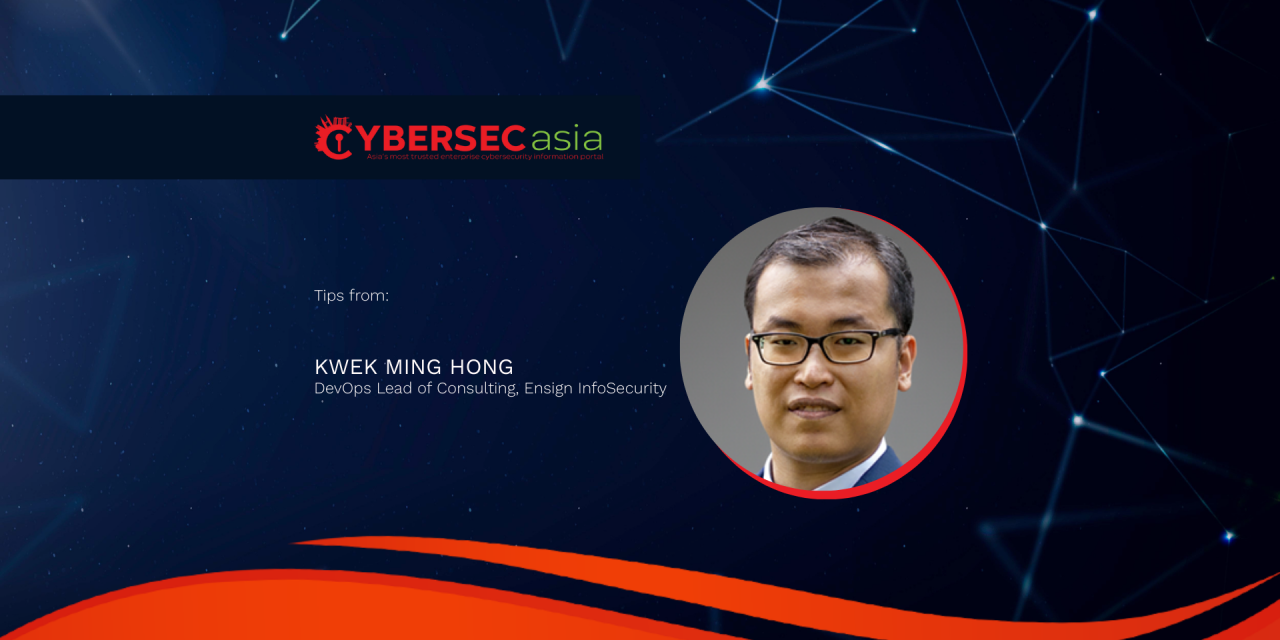
By Kwek Ming Hong, DevOps Lead of Consulting, Ensign InfoSecurity | Monday, September 15, 2025, 4:07 PM Asia/Singapore

How to wage proactive defense against evolving cyber threats with Deception-as-a-Service

Modern deception tactics, inspired by The Art of War, can empower organizations to anticipate and outmaneuver cyber threats proactively and resiliently.

In the shifting landscape of cyber threats, attackers no longer announce their presence. They move silently, impersonating users, mimicking system behavior, and probing digital environments with precision.

The intrusions are quiet, the methods ever-evolving, and the margin for error growing thinner by the day. While organizations have poured resources into endpoint protection, behavioral analytics and Zero Trust architecture, breaches persist.

This is where digital deception becomes a deliberate tactic. Drawing from principles as old as warfare itself — most notably Sun Tzu’s maxim that “All warfare is based on deception” — cybercriminals are advancing the conditions of engagement. This shifts the perspective of cyber defence from that of passively monitoring systems, to actively shaping the environment in which adversaries operate.

Viewing deception with tactical wisdom

As the Art of War states: “If your opponent is of choleric temper, seek to irritate him. Pretend to be weak, that he may grow arrogant.”

In today’s terms, this translates into luring attackers into carefully crafted decoys — systems designed to resemble outdated servers, unused credentials, or confidential documents. These are not mistakes. They are intentional constructs, placed to trigger high-confidence alerts the moment they are touched.

The purpose of these systems is not limited to detection; they also serve as intelligence-gathering tools. Every interaction within a decoy reveals the attacker’s tools, behaviors, and intent. It becomes possible to observe their decision-making, learn their objectives, and trace their movements, all without them reaching actual business assets.

Unlike traditional defenses that rely on detecting known patterns, deception creates opportunities to uncover the unknown. It exposes new techniques and identifies persistent threats operating under the radar. This is especially relevant for insider risks or credential misuse, where the line between legitimate and malicious activity can blur.

In recent years, deploying cyber deception has become more sophisticated with the advancement of generative AI (GenAI). Decoys are now context-aware, can adapt in real time, and offer a dynamic and credible environment that reacts to the attacker’s behavior.

Furthermore, with the support of GenAI and automated workflows, signals and telemetry from adversarial activities can be fed into a central platform. This platform can use lightweight agents (Editor’s note: Just be cognizant of the potential caveats behind the nascent agentic technology) deployed across devices and networks to adjust the deception environment dynamically, creating realistic decoys that help isolate and analyze attacker behavior.

Assimilating Deception-as-a-Service defenses

Increasingly, democratized deception capabilities through Deception-as-a-Service (DaaS). DaaS enables organizations to operationalize deception quickly and efficiently, aligning with existing infrastructure while maintaining continuous tuning based on live threat activity.

DaaS offerings allow the organizations to tap into the collective expertise of service providers in adversarial simulation, threat hunting and cyber threat intelligence to formulate deception scenarios that will deliver the most value. Additional notes:

  • Importantly, managed deception-handling services does not replace other defenses. It complements detection engines and access controls, acting as an additional layer of visibility: one that is triggered only by deliberate or suspicious interaction. In doing so, it reduces false positives and enhances clarity for response teams already strained by alert volume.
  • From a governance perspective, the benefits extend beyond threat detection. DaaS technologies offer demonstrable proof of proactive control, a valuable asset when reporting to boards or regulators. It signals readiness and awareness, especially in the context of evolving compliance expectations around resilience and incident reporting.
  • In environments involving sensitive information or essential services, DaaS adds critical value. In a more complex environment that is layered with traps, attackers have to move more slowly and conduct additional reconnaissance to distinguish the crown jewels from deception assets. In doing so, they are more likely to be discovered, giving defenders more time and opportunities to detect and respond to threats.
  • Ultimately, DaaS operations reflect a broader shift in cybersecurity mindset: from reacting to threats to anticipating them. It assumes that breaches will happen, and instead focuses on how organizations can gain ground even in the midst of compromise. That shift in posture, from passive defence to active engagement, is where meaningful resilience begins.

Operationalizing deception for proactive defense
In the war manual, Sun Tzu observed: “Supreme excellence consists of breaking the enemy’s resistance without fighting.”

In modern cyber warfare, that means gathering intelligence, controlling the narrative, and forcing adversaries to reveal themselves — on terms set by the good guys.

This is no longer a theoretical concept. With solutions such as DaaS (among other related approaches), even the most complex enterprises can operationalize deception as a controllable and effective layer within their broader cybersecurity strategy.

For CISOs, CTOs and security architects, such deception solutions offers a strategic way forward: one that recognizes the inevitability of breaches, but is designed to ensure that organizations are not caught off guard.

Whether embedded in an existing architecture or delivered through external platforms, the principle remains the same: it is no longer enough to understand your environment — defenders need to now shape the environment in which the attackers operate.


Share:

PreviousBalancing AI risks and cybersecurity resilience in Asia’s fragmented tech landscape
NextAdvanced fileless malware targets Philippine military using stealth techniques

Related Posts

Agentic AI: The next great productivity hack or the ultimate security nightmare of 2026?

Agentic AI: The next great productivity hack or the ultimate security nightmare of 2026?

Wednesday, March 18, 2026

How will Gen AI introduce benefits and risks in cloud security in 2025?

How will Gen AI introduce benefits and risks in cloud security in 2025?

Monday, February 17, 2025

Two major public clouds are harboring the world’s bad bots: study

Two major public clouds are harboring the world’s bad bots: study

Wednesday, September 8, 2021

Have cybercriminals been increasingly targeting human touchpoints from every angle?

Have cybercriminals been increasingly targeting human touchpoints from every angle?

Friday, November 21, 2025

Leave a reply Cancel reply

You must be logged in to post a comment.

Voters-draw/RCA-Sponsors

Slide

CybersecAsia Voting Placement

Gamification listing or Participate Now

PARTICIPATE NOW

Vote Now -Placement(Google Ads)

Top-Sidebar-banner

Whitepapers

  • Critical Security Threatsand the Need for ZTNA: How evolving cyberattacks demand a Zero Trust approach

    Critical Security Threatsand the Need for ZTNA: How evolving cyberattacks demand a Zero Trust approach

    Cyber threats have become more frequent and sophisticated, targeting organizations of all sizes across all …Download Whitepaper
  • Zero Trust Made Simple: Why it matters and how to get started

    Zero Trust Made Simple: Why it matters and how to get started

    Data breaches and cyberattacks are no longer limited to large, high-profile organizations.Download Whitepaper
  • Cloud Secure Edge: Remote access, better security

    Cloud Secure Edge: Remote access, better security

    ​SonicWall Cloud Secure Edge™ is a modern, cloud-native Security Service Edge (SSE) solution that addresses …Download Whitepaper
  • Closing the Gap in Email Security:How To Stop The 7 Most SinisterAI-Powered Phishing Threats

    Closing the Gap in Email Security:How To Stop The 7 Most SinisterAI-Powered Phishing Threats

    Insider threats continue to be a major cybersecurity risk in 2024. Explore more insights on …Download Whitepaper

Middle-sidebar-banner

Case Studies

  • How a Vietnamese D2C retailer built its own secure digital infrastructure

    How a Vietnamese D2C retailer built its own secure digital infrastructure

    Would your organization build your own digital infrastructure – including AI governance and cybersecurity – …Read more
  • Cyber protection for medical clinics in Singapore

    Cyber protection for medical clinics in Singapore

    As Singapore’s healthcare sector becomes increasingly digital and interconnected, clinics are facing heightened cyber risks, …Read more
  • India’s WazirX strengthens governance and digital asset security

    India’s WazirX strengthens governance and digital asset security

    Revamping its custody infrastructure using multi‑party computation tools has improved operational resilience and institutional‑grade safeguardsRead more
  • Bangladesh LGED modernizes communication while addressing data security concerns

    Bangladesh LGED modernizes communication while addressing data security concerns

    To meet emerging data localization/privacy regulations, the government engineering agency deploys a secure, unified digital …Read more

Bottom sidebar

Other News

  • Cohesity Appoints Peter Hanna as Vice President and General Manager, Asia Pacific and Japan

    Thursday, July 23, 2026
    SINGAPORE and HONG KONG, July …Read More »
  • Passport Power Doubles as Global Peace Declines

    Wednesday, July 22, 2026
    LONDON, July 21, 2026 /PRNewswire/ …Read More »
  • Infobip research reveals APAC businesses scaling AI-powered defenses to counter surge in automated fraud

    Tuesday, July 21, 2026
    Fraudsters are leveraging AI to …Read More »
  • SPTel Receives Frost & Sullivan’s 2026 Singapore Company of the Year Recognition for Leadership in Quantum-Safe Network Services

    Tuesday, July 21, 2026
    Recognized for pioneering commercial quantum-safe …Read More »
  • Singtel Receives Four Frost & Sullivan 2026 Recognitions for Leadership in Enterprise Connectivity, Cybersecurity, and Digital Transformation

    Sunday, July 19, 2026
    The recognitions highlight Singtel’s leadership …Read More »
  • Our Brands
  • DigiconAsia
  • MartechAsia
  • Home
  • About Us
  • Contact Us
  • Sitemap
  • Privacy & Cookies
  • Terms of Use
  • Advertising & Reprint Policy
  • Media Kit
  • Subscribe
  • Manage Subscriptions
  • Newsletter

Copyright © 2026 CybersecAsia All Rights Reserved.