
Cybersecurity News in Asia

RECENT STORIES:

SEGA moves faster with flow-based network monitoring
Hackers leverage jailbroken AI to probe OT systems in Mexican Water Br...
Which four tech brands were most exploited in phishing and social medi...
The problem with CAPTCHAs – and the password perception gap
VIVOTEK AI Solutions Enhance Efficiency at Traffic Hubs in Norway
Report: more than half of APAC organizations experienced AI-related in...
LOGIN REGISTER
CybersecAsia
  • Features
    • Featured

      The problem with CAPTCHAs – and the password perception gap

      The problem with CAPTCHAs - and the password perception gap

      Thursday, May 7, 2026, 11:14 AM Asia/Singapore | Features
    • Featured

      How AI is supercharging insider threats

      How AI is supercharging insider threats

      Wednesday, April 15, 2026, 12:29 PM Asia/Singapore | Features
    • Featured

      Q-Day is coming. Are you ready?

      Q-Day is coming. Are you ready?

      Tuesday, April 14, 2026, 12:40 PM Asia/Singapore | Features
  • Opinions
  • Tips
  • Whitepapers
  • Directory
  • E-Learning

Select Page

Features

Organizations are facing a new identity crisis

By Victor Ng | Tuesday, July 30, 2024, 1:53 PM Asia/Singapore

Organizations are facing a new identity crisis

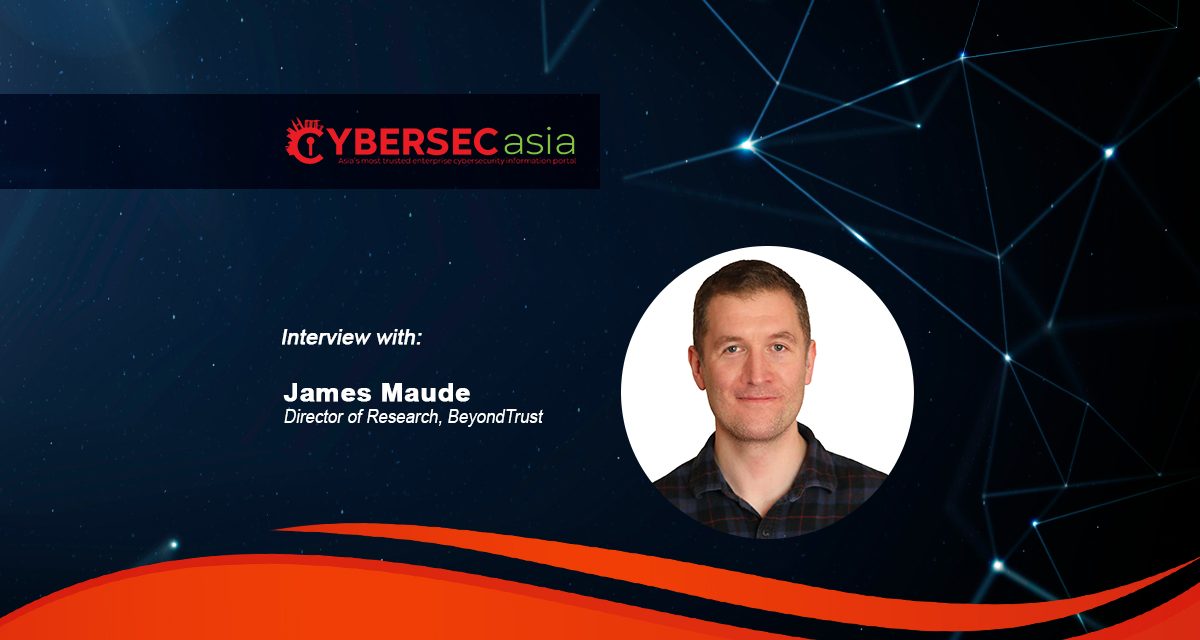
JM: The Principle of Least Privilege is the practice of restricting access rights for users, accounts, and computing processes to only those resources absolutely required to perform legitimate functions for the time needed to complete the task. It is a timeless security concept that is just as effective today as when it was first discussed over 40 years ago.

While technology and cyber-attacks continue to get more sophisticated the reality is that all attacks rely heavily on the privileges of the account, application or user that they compromise. Even in the case of zero-day exploits – where an attacker leverages a previously unknown vulnerability – minimizing the privileges associated with the system or user being targeted can vastly limit the impacts of the attack.

In modern complex IT environments it is crucial to gain visibility across an organization’s identity fabric, to uncover all the identities, accounts and privileges in order to continuously drive towards least privilege and understand the identity attack surface. IAM and security teams are in a far stronger position to defend and mitigate the risks associated with sophisticated identity-related attacks when they have this visibility and the tools in place to protect paths to privilege.

What should organizations in APAC do to provide visibility and protection in the context of identity security?

JM: Having a robust Privileged Access Management strategy is essential for organizations to mitigate cybersecurity threats. This includes both removing and securing privileges. Our reports have previously shown that historically 75% of Microsoft critical vulnerabilities can be mitigated through the removal of local admin rights and the controlling of process execution. It is equally important that credentials associated with highly privileged accounts are rotated regularly or cannot be reused. This lowers the possibility of successful password spraying attacks using credentials that have been stolen or re-used.

Identity threats cross domains and organizational silos, we are seeing greater numbers of identity-related attacks start in the cloud and then migrate to on-premise or vice-versa. This means it is critical for security teams to have a unified, cross-domain view of their identity estate, including identity providers (IdP), cloud providers, SaaS applications, etc., to identify hidden threats and indirect paths to privilege that can be leveraged by attackers.

What are some trends in cybersecurity that organizations in APAC should take note of in the second half of the year?

JM: Many of the trends we see for the remainder of 2024 are the continuation of existing trends, but with potentially greater sophistication.

Ransomware continues to be a thorn in the side of many businesses and governments across the region. In the first part of the year we saw a significant increase in ransomware attacks in the Philippines while last month it was reported that a variation on the Lockbit ransomware was being used in attacks on Philippine government systems.

Earlier this year the Cyber Security Agency of Singapore (CSA) released its annual cybersecurity health report that identified ransomware as the number one cause of cyber incidents for Singaporean businesses.

As cyber-defenders we need to remember that ransomware is not magic. It can only leverage the privileges of the user or application that launches it. That is why enforcing least privilege is so important in defending against this type of attack.

Supply chain attacks, where attackers utilize the access provided to suppliers or contractors of their actual target, to gain initial access are also continuing. It is a problem that has been called out by the likes of the Australian Prudential Regulatory Authority (APRA), the government agency overseeing the financial services sector in Australia.

We have seen across the Asia Pacific region attacks where third-party access to systems – often via VPN – have been leveraged to steal and encrypt sensitive customer data. Organizations need to implement more secure remote access solutions that again limit the privileges available to contractors and suppliers to just those needed to complete the task but can also log and help identify potential attacks.

Finally, while much has been made of AI providing greater sophistication and scale to cyber-attacks, we are also going to see a greater use of AI to help us defend against attacks and make our defenses more robust. As mentioned earlier, for example, we can already use AI to help uncover hidden threats or paths to privilege within our identity estate.


Pages: 1 2

Share:

PreviousTake-up rate for Australia’s myGov passkey protection can be better
NextThe logistics industry is always in the crosshairs of cybercriminals. Why?

Related Posts

Hackers increasingly hijacking trusted system tools, ‘Living Off the Land’ in stealth

Hackers increasingly hijacking trusted system tools, ‘Living Off the Land’ in stealth

Monday, October 14, 2024

Today’s CISO – a thankless role?

Today’s CISO – a thankless role?

Tuesday, August 23, 2022

How anyone can become a rich cybercriminal by using generative AI

How anyone can become a rich cybercriminal by using generative AI

Tuesday, July 18, 2023

Understanding data poisoning threats in AI-powered cybersecurity and business automation

Understanding data poisoning threats in AI-powered cybersecurity and business automation

Monday, July 10, 2023

Leave a reply Cancel reply

You must be logged in to post a comment.

Voters-draw/RCA-Sponsors

Slide
Slide
Slide
Slide
Slide
Slide
Slide
Slide
Slide
Slide
Slide
Slide
Slide
Slide
previous arrow
next arrow

CybersecAsia Voting Placement

Gamification listing or Participate Now

PARTICIPATE NOW

Vote Now -Placement(Google Ads)

Top-Sidebar-banner

Whitepapers

  • Closing the Gap in Email Security:How To Stop The 7 Most SinisterAI-Powered Phishing Threats

    Closing the Gap in Email Security:How To Stop The 7 Most SinisterAI-Powered Phishing Threats

    Insider threats continue to be a major cybersecurity risk in 2024. Explore more insights on …Download Whitepaper
  • 2024 Insider Threat Report: Trends, Challenges, and Solutions

    2024 Insider Threat Report: Trends, Challenges, and Solutions

    Insider threats continue to be a major cybersecurity risk in 2024. Explore more insights on …Download Whitepaper
  • AI-Powered Cyber Ops: Redefining Cloud Security for 2025

    AI-Powered Cyber Ops: Redefining Cloud Security for 2025

    The future of cybersecurity is a perfect storm: AI-driven attacks, cloud expansion, and the convergence …Download Whitepaper
  • Data Management in the Age of Cloud and AI

    Data Management in the Age of Cloud and AI

    In today’s Asia Pacific business environment, organizations are leaning on hybrid multi-cloud infrastructures and advanced …Download Whitepaper

Middle-sidebar-banner

Case Studies

  • Cyber protection for medical clinics in Singapore

    Cyber protection for medical clinics in Singapore

    As Singapore’s healthcare sector becomes increasingly digital and interconnected, clinics are facing heightened cyber risks, …Read more
  • India’s WazirX strengthens governance and digital asset security

    India’s WazirX strengthens governance and digital asset security

    Revamping its custody infrastructure using multi‑party computation tools has improved operational resilience and institutional‑grade safeguardsRead more
  • Bangladesh LGED modernizes communication while addressing data security concerns

    Bangladesh LGED modernizes communication while addressing data security concerns

    To meet emerging data localization/privacy regulations, the government engineering agency deploys a secure, unified digital …Read more
  • What AI worries keep members of the Association of Certified Fraud Examiners sleepless?

    What AI worries keep members of the Association of Certified Fraud Examiners sleepless?

    This case study examines how many anti-fraud professionals reported feeling underprepared to counter rising AI-driven …Read more

Bottom sidebar

Other News

  • VIVOTEK AI Solutions Enhance Efficiency at Traffic Hubs in Norway

    Wednesday, May 6, 2026
    TAIPEI, May 6, 2026 /PRNewswire/ …Read More »
  • Taoping Reports Fiscal Year 2025 Results

    Thursday, April 30, 2026
    Strategic Transformation Drives Platform Expansion, …Read More »
  • DESILO Launches World’s First Fully Homomorphic Encryption Library Integrating 5th-Generation FHE Scheme ‘GL’, Accelerating the Era of Private AI

    Tuesday, April 28, 2026
    SEOUL, South Korea, April 28, …Read More »
  • Tencent Cloud Cube Sandbox Goes Fully Open-Source, with Five Major Breakthroughs Enabling Large-Scale Agent Deployment

    Thursday, April 23, 2026
    Tencent Cloud’s Cube Sandbox goes …Read More »
  • Sparrow to Demonstrate AI-Driven Security and SBOM Management at Black Hat Asia 2026

    Wednesday, April 22, 2026
    SINGAPORE, April 21, 2026 /PRNewswire/ …Read More »
  • Our Brands
  • DigiconAsia
  • MartechAsia
  • Home
  • About Us
  • Contact Us
  • Sitemap
  • Privacy & Cookies
  • Terms of Use
  • Advertising & Reprint Policy
  • Media Kit
  • Subscribe
  • Manage Subscriptions
  • Newsletter

Copyright © 2026 CybersecAsia All Rights Reserved.