


Cybersecurity News in Asia

RECENT STORIES:

SEGA moves faster with flow-based network monitoring
Akuvox X910 Claims Red Dot Award 2026: the World’s First AI-powe...
Exein establishes APAC headquarters and Taipei office
DNS‑record analysis shows uneven DMARC enforcement among FIFA World Cu...
Highlights of Asia’s 2026 premier integrated security event
Study: Cyber resilience in APAC foundational but not future-ready
LOGIN REGISTER
CybersecAsia
  • Features
    • Featured

      How AI is supercharging insider threats

      How AI is supercharging insider threats

      Wednesday, April 15, 2026, 12:29 PM Asia/Singapore | Features
    • Featured

      Q-Day is coming. Are you ready?

      Q-Day is coming. Are you ready?

      Tuesday, April 14, 2026, 12:40 PM Asia/Singapore | Features
    • Featured

      How lean defence teams turn endpoint insights into measurable risk reduction

      How lean defence teams turn endpoint insights into measurable risk reduction

      Monday, April 13, 2026, 3:15 PM Asia/Singapore | Features
  • Opinions
  • Tips
  • Whitepapers
  • Awards 2025
  • Directory
  • E-Learning

Select Page

Features

Blockchain exploits highlight cross-chain security flaws

By Victor Ng | Friday, November 21, 2025, 10:30 AM Asia/Singapore

Blockchain exploits highlight cross-chain security flaws

A US$11 million blockchain exploit last month has reignited questions about how secure today’s cross-chain infrastructure really is.

In October 2025, the Garden bitcoin bridge suffered a roughly US$11 million loss after one of its solvers was compromised. These solvers essentially act as market makers for the protocol.

Attackers once again targeted weaknesses between networks, not the chains themselves, exposing how interoperability remains the blockchain industry’s most fragile layer.

A few months ago, in June 2025, Taiwanese cryptocurrency exchange BitoPro disclosed it was the victim of a calculated cyber-attack that resulted in the theft of another US$11 million in digital assets. The breach occurred on May 8 during a routine upgrade of its hot wallet infrastructure.

Then, threat actors believed to be from the Lazarus Group seized the moment and exploited the routine upgrade operation to carry out unauthorized withdrawals across multiple blockchains, including Ethereum, Solana, Polygon and Tron.

Techniques used in the May 2025 breach mirrored those seen in Lazarus-linked operations, including SWIFT system exploits and previous exchange hacks. While investigators found no evidence of insider involvement, they confirmed that the perpetrators used social engineering tactics to infect a cloud operations employee’s device with malware, exploiting hijacked AWS session tokens to bypass multi-factor authentication (MFA) and seize control of BitoPro’s cloud infrastructure.

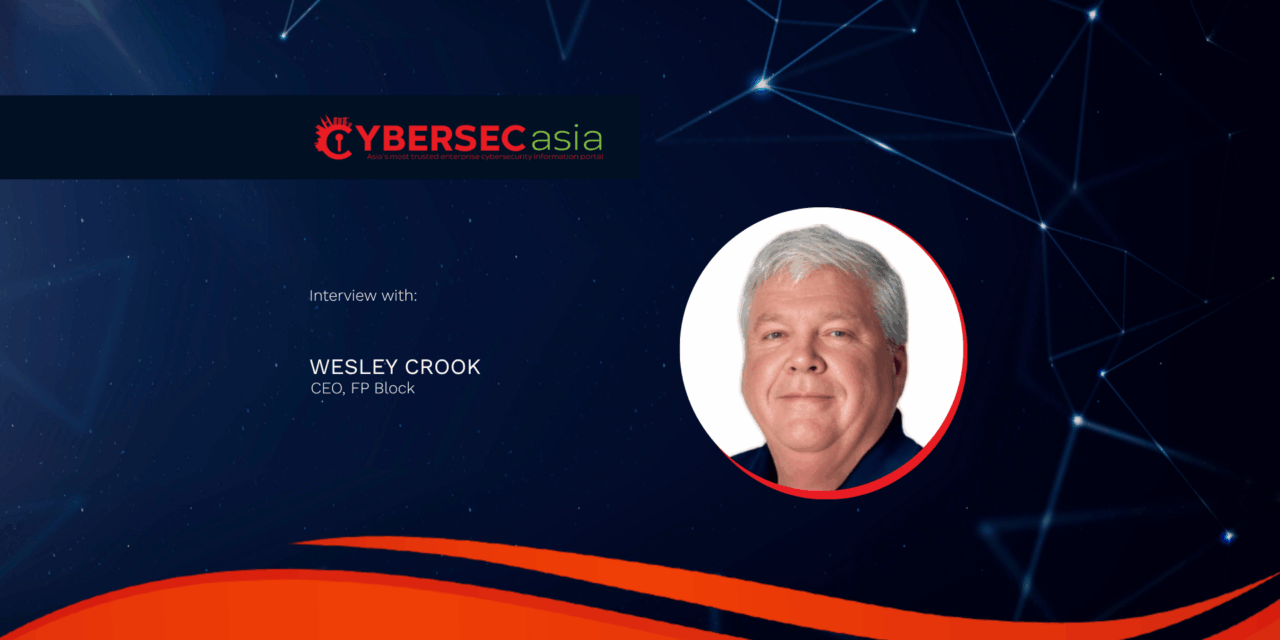
Are cross-chain or multi-chain security flaws inherent to the infrastructure? What can be done about these flaws? CybersecAsia.net finds out from Wesley Crook, CEO, FP Block…

In light of recent blockchain exploits, how secure is cross-chain infrastructure relative to other financial/banking/payments infrastructure today?

Crook: I suppose the key problem with blockchain exploits is the decentralized infrastructure that means there is often no obvious method of recourse for affected users.

With common financial and payment infrastructure like PayPal, Stripe, or SWIFT, there are available remedies for error, exploit, or fraud, but with blockchain, once something is written into code, it is irrevocable without huge disruption to the entire system.

Why do bridge exploits keep happening? What underlying design flaws do they expose?

Crook: The frequency and impact of bridge exploits have significantly reduced over the years, but I do think the proliferation of AI is going to accelerate the discovery of latent vulnerabilities in blockchain and smart contract code due to the ability for potential hackers to analyze and assess unprecedented amounts of information for weaknesses.

How can these risks and losses be mitigated?

Crook: Firstly, these risks and losses can be mitigated by leaving no stone unturned in the construction of platforms and smart contracts and committing to regularly auditing and updating their code on an ongoing basis.

Next, what blockchain app builders need is a high‑performance blockchain development framework designed to remove the traditional barriers of blockchain architecture.

Besides being able to launch production‑ready blockchain applications in days, not months, you also need a platform that offers instant integration of external data and on‑demand block production, to give you unmatched control, flexibility, and scalability by eliminating the need for rigid smart contract frameworks and unreliable shared infrastructure.

What standards are emerging to make multi-chain infrastructure audit-ready, and what do they mean for the future of blockchain and crypto?

Crook: At FP Block, we built Kolme to solve these problems, allowing founders to launch their own dedicated chains for their applications that don’t rely on external infrastructure providers — giving the power of blockchain while eliminating traditional bottlenecks for both builders and potential users.

We think this move toward a singular standard is important for blockchain and crypto to be more widely integrated into a larger suite of products.


Share:

PreviousData protection challenges in the agentic workspace
NextHave cybercriminals been increasingly targeting human touchpoints from every angle?

Related Posts

No-code agentic AI can be used for financial fraud and workflow hijacking

No-code agentic AI can be used for financial fraud and workflow hijacking

Monday, December 15, 2025

The time of legacy identity security solutions has passed

The time of legacy identity security solutions has passed

Monday, December 11, 2023

Tapping on the five pillars of the Zero Trust model

Tapping on the five pillars of the Zero Trust model

Friday, May 21, 2021

Being ready – when and where ransomware may strike next

Being ready – when and where ransomware may strike next

Tuesday, November 19, 2024

Leave a reply Cancel reply

You must be logged in to post a comment.

Voters-draw/RCA-Sponsors

Slide
Slide
Slide
Slide
Slide
Slide
Slide
Slide
Slide
Slide
Slide
Slide
Slide
Slide
previous arrow
next arrow

CybersecAsia Voting Placement

Gamification listing or Participate Now

PARTICIPATE NOW

Vote Now -Placement(Google Ads)

Top-Sidebar-banner

Whitepapers

  • Closing the Gap in Email Security:How To Stop The 7 Most SinisterAI-Powered Phishing Threats

    Closing the Gap in Email Security:How To Stop The 7 Most SinisterAI-Powered Phishing Threats

    Insider threats continue to be a major cybersecurity risk in 2024. Explore more insights on …Download Whitepaper
  • 2024 Insider Threat Report: Trends, Challenges, and Solutions

    2024 Insider Threat Report: Trends, Challenges, and Solutions

    Insider threats continue to be a major cybersecurity risk in 2024. Explore more insights on …Download Whitepaper
  • AI-Powered Cyber Ops: Redefining Cloud Security for 2025

    AI-Powered Cyber Ops: Redefining Cloud Security for 2025

    The future of cybersecurity is a perfect storm: AI-driven attacks, cloud expansion, and the convergence …Download Whitepaper
  • Data Management in the Age of Cloud and AI

    Data Management in the Age of Cloud and AI

    In today’s Asia Pacific business environment, organizations are leaning on hybrid multi-cloud infrastructures and advanced …Download Whitepaper

Middle-sidebar-banner

Case Studies

  • Cyber protection for medical clinics in Singapore

    Cyber protection for medical clinics in Singapore

    As Singapore’s healthcare sector becomes increasingly digital and interconnected, clinics are facing heightened cyber risks, …Read more
  • India’s WazirX strengthens governance and digital asset security

    India’s WazirX strengthens governance and digital asset security

    Revamping its custody infrastructure using multi‑party computation tools has improved operational resilience and institutional‑grade safeguardsRead more
  • Bangladesh LGED modernizes communication while addressing data security concerns

    Bangladesh LGED modernizes communication while addressing data security concerns

    To meet emerging data localization/privacy regulations, the government engineering agency deploys a secure, unified digital …Read more
  • What AI worries keep members of the Association of Certified Fraud Examiners sleepless?

    What AI worries keep members of the Association of Certified Fraud Examiners sleepless?

    This case study examines how many anti-fraud professionals reported feeling underprepared to counter rising AI-driven …Read more

Bottom sidebar

Other News

  • Akuvox X910 Claims Red Dot Award 2026: the World’s First AI-powered Parcel Detection Smart Intercom Revolutionizes Luxury Home Access

    Saturday, April 18, 2026
    XIAMEN, China, April 17, 2026 …Read More »
  • Exein establishes APAC headquarters and Taipei office

    Saturday, April 18, 2026
    Partnering with Taiwan’s ecosystem to …Read More »
  • Tsingke Unveils ‘Zero-Contact’ Gene Synthesis to Safeguard Core Genetic Sequences

    Wednesday, April 15, 2026
    BEIJING, April 15, 2026 /PRNewswire/ …Read More »
  • NEC Asia Pacific to Showcase Trusted Public Safety and Digital Identity Innovations at Milipol TechX 2026

    Wednesday, April 15, 2026
    SINGAPORE, April 14, 2026 /PRNewswire/ …Read More »
  • Sprinto Expands to Australia with New Data Center to Power Localized, Audit-Ready Compliance

    Wednesday, April 15, 2026
    Sprinto combines local infrastructure with …Read More »
  • Our Brands
  • DigiconAsia
  • MartechAsia
  • Home
  • About Us
  • Contact Us
  • Sitemap
  • Privacy & Cookies
  • Terms of Use
  • Advertising & Reprint Policy
  • Media Kit
  • Subscribe
  • Manage Subscriptions
  • Newsletter

Copyright © 2026 CybersecAsia All Rights Reserved.