

Cybersecurity News in Asia

RECENT STORIES:

SEGA moves faster with flow-based network monitoring
Researchers discover way to bypass CPU Spectre v2 protections to inter...
SUPCON and Certis Sign Strategic Cooperation Agreement to Advance Robo...
Gunra ransomware RaaS prompts global warning from US security authorit...
AUTOCRYPT Wins DEF CON 34 Automotive Hacking Competition, Ranking Firs...
Blackpanda Wins Frost & Sullivan APAC Incident Response Company of...
LOGIN REGISTER
CybersecAsia
  • Features
    • Featured

      Why APAC Teams Need to Stop Worshipping CVSS Scores

      Why APAC Teams Need to Stop Worshipping CVSS Scores

      Monday, August 3, 2026, 9:00 AM Asia/Singapore | Features, Newsletter, Sponsored, Tips
    • Featured

      Automated credential abuse and phishing in APAC

      Automated credential abuse and phishing in APAC

      Thursday, July 30, 2026, 11:37 AM Asia/Singapore | Features
    • Featured

      OpenAI autonomous agent escapes sandbox to hack Hugging Face

      OpenAI autonomous agent escapes sandbox to hack Hugging Face

      Friday, July 24, 2026, 11:02 AM Asia/Singapore | Features, News
  • Opinions
  • Tips
  • Whitepapers
  • AWARDS 2026
  • Directory
  • E-Learning

Select Page

Tips

Safeguarding elections amid growing cyberthreats and disinformation

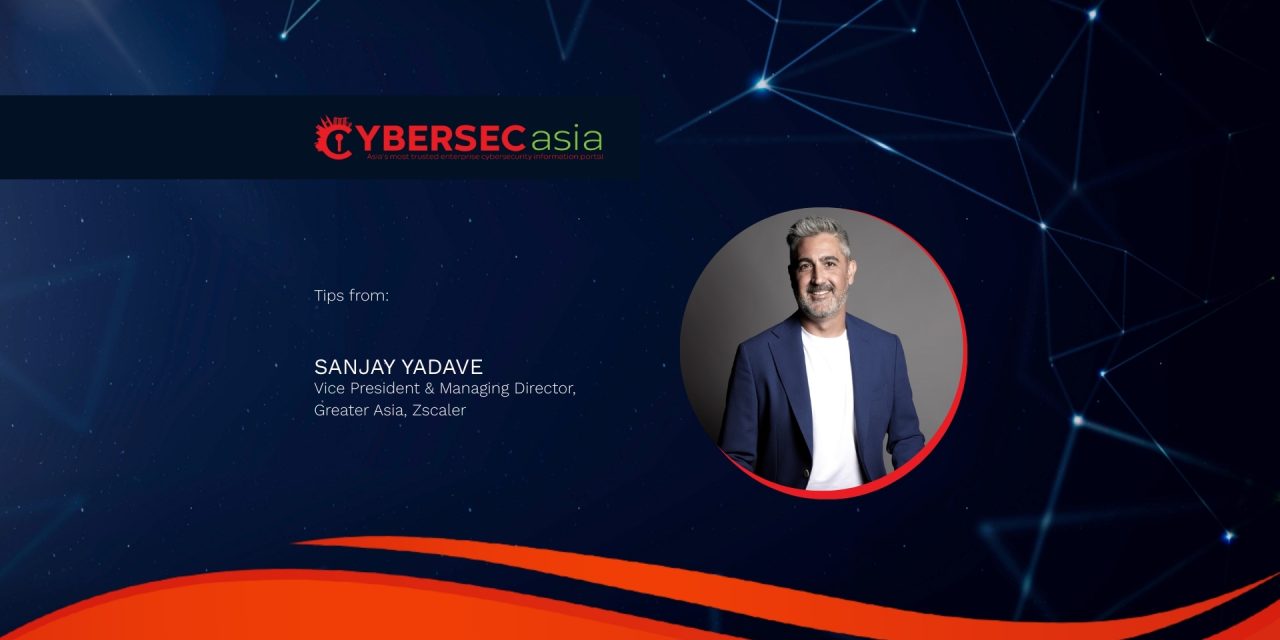
By Sanjay Yadave, Vice President & Managing Director (Greater Asia), Zscaler | Tuesday, April 22, 2025, 9:39 AM Asia/Singapore

Safeguarding elections amid growing cyberthreats and disinformation

3rd May 2025 will find Singaporeans going to the ballot boxes to vote in a new government for the digitally advanced island-state. What new threats may mark the 19th General Elections for the nation, and for elections in other economies in the region?

Singapore’s General Elections are fast approaching, marking a critical moment for the nation. As technology advances at an unprecedented pace, ensuring public trust has become increasingly complex. The resilience of electoral processes and infrastructure will now be tested against the evolving digital landscape.

India’s 2024 General Elections offered a glimpse into the future, where candidates deployed AI-generated deepfake videos to expand their reach. This raises pressing questions about the fine line between innovation and manipulation.

Singapore, as a highly digitalized economy, is not immune to these challenges. With its deep global connectivity and reliance on technology, the nation must now confront AI-driven disinformation and cyber threats head-on.

Ai-driven disinformation and deepfakes

AI is reshaping disinformation tactics, making it easier to manufacture and spread falsehoods at scale. According to Sumsub’s Identity Fraud Report 2024, Singapore saw a 240% rise in deepfake attacks, ranking second in Asia-Pacific alongside Cambodia. From altered interviews of former Prime Minister Lee Hsien Loong to the artificial “resurrection” of Indonesia’s Suharto, the rise of deepfakes threatens public perception and electoral integrity.

Recognizing this risk, Singapore banned deepfakes of political candidates in October 2024. However, disinformation is just one facet of the broader challenge—cyberattacks targeting electoral infrastructure pose an equally pressing threat.

Technology: our double-edged sword

However, the rapidly evolving nature of cyberthreats, from disinformation to infrastructure attacks, requires a more proactive approach to safeguard the integrity of the electoral process.

Now we have AI-driven threats targeting our perceptions of truth and credibility. While technology has enabled incredible progress, it has also expanded the toolkit for cybercriminals. This transforms the very rules for how elections can be disrupted. 

Besides driving disinformation, advanced hacking techniques can target infrastructure systems that underpin electoral integrity, creating public confusion and seeding doubts in result validity. The outcome is bad, regardless.

Practical defenses against today’s cyberthreats

How can Singapore fortify itself against election-related cyber-attacks? A Zero Trust security framework is a strong foundation.

This approach assumes no user, device, or connection is inherently safe, requiring continuous verification based on identity, behavior patterns, and device security. It ensures that election data is safeguarded from misconfigurations, unauthorized access, and risky user behaviors.

While deepfakes pose a challenge, AI itself is not the enemy. When leveraged correctly, AI plays a crucial role in strengthening cybersecurity. AI-driven predictive analytics can monitor suspicious behavior and detect anomalies — such as unexpected surges in traffic targeting election systems — before they escalate into full-scale attacks.

Machine learning (ML) models can also preemptively identify disinformation campaigns, helping neutralize threats before they influence public sentiment.

By integrating Zero Trust principles with AI-driven insights, Singapore can build a proactive defense against evolving cyber threats, ensuring electoral processes remain secure and credible

Reassuring trust in Singapore’s electoral process

Trust is the foundation of any democratic process. Citizens, businesses, and investors need confidence that Singapore’s electoral system is secure and resilient. The nation’s strong public-private partnerships and proximity to global cybersecurity leaders provide a crucial advantage in adopting best-in-class security practices.

As the elections draw near, Singapore has the opportunity to set a new global benchmark for election security in the digital age. By staying ahead of emerging threats and reinforcing cyber defenses, Singapore can preserve public trust and uphold the integrity of its democracy.

Share:

PreviousWhen the multi-cloud approach leads to unmanageable complexity, unify DDI
NextNopalCyber Hires New Head of Sales to Scale Impressive Growth in India

Related Posts

Recent cyber warfare phishing campaign signals potential widespread copycat attacks

Recent cyber warfare phishing campaign signals potential widespread copycat attacks

Monday, February 24, 2025

Think 3,2,1 to protect your business against ransomware

Think 3,2,1 to protect your business against ransomware

Monday, September 21, 2020

Global survey compares demographic email security awareness levels   

Global survey compares demographic email security awareness levels   

Thursday, July 11, 2024

When we know remote-working puts corporate cybersecurity at risk …

When we know remote-working puts corporate cybersecurity at risk …

Friday, August 21, 2020

Leave a reply Cancel reply

You must be logged in to post a comment.

Voters-draw/RCA-Sponsors

Slide
Slide
Slide
Slide
Slide
Slide
Slide
previous arrow
next arrow

CybersecAsia Voting Placement

Gamification listing or Participate Now

PARTICIPATE NOW

Vote Now -Placement(Google Ads)

Top-Sidebar-banner

Whitepapers

  • Critical Security Threatsand the Need for ZTNA: How evolving cyberattacks demand a Zero Trust approach

    Critical Security Threatsand the Need for ZTNA: How evolving cyberattacks demand a Zero Trust approach

    Cyber threats have become more frequent and sophisticated, targeting organizations of all sizes across all …Download Whitepaper
  • Zero Trust Made Simple: Why it matters and how to get started

    Zero Trust Made Simple: Why it matters and how to get started

    Data breaches and cyberattacks are no longer limited to large, high-profile organizations.Download Whitepaper
  • Cloud Secure Edge: Remote access, better security

    Cloud Secure Edge: Remote access, better security

    ​SonicWall Cloud Secure Edge™ is a modern, cloud-native Security Service Edge (SSE) solution that addresses …Download Whitepaper
  • Closing the Gap in Email Security:How To Stop The 7 Most SinisterAI-Powered Phishing Threats

    Closing the Gap in Email Security:How To Stop The 7 Most SinisterAI-Powered Phishing Threats

    Insider threats continue to be a major cybersecurity risk in 2024. Explore more insights on …Download Whitepaper

Middle-sidebar-banner

Case Studies

  • How a Vietnamese D2C retailer built its own secure digital infrastructure

    How a Vietnamese D2C retailer built its own secure digital infrastructure

    Would your organization build your own digital infrastructure – including AI governance and cybersecurity – …Read more
  • Cyber protection for medical clinics in Singapore

    Cyber protection for medical clinics in Singapore

    As Singapore’s healthcare sector becomes increasingly digital and interconnected, clinics are facing heightened cyber risks, …Read more
  • India’s WazirX strengthens governance and digital asset security

    India’s WazirX strengthens governance and digital asset security

    Revamping its custody infrastructure using multi‑party computation tools has improved operational resilience and institutional‑grade safeguardsRead more
  • Bangladesh LGED modernizes communication while addressing data security concerns

    Bangladesh LGED modernizes communication while addressing data security concerns

    To meet emerging data localization/privacy regulations, the government engineering agency deploys a secure, unified digital …Read more

Bottom sidebar

Other News

  • SUPCON and Certis Sign Strategic Cooperation Agreement to Advance Robotics in Security Operations

    Wednesday, August 12, 2026
    SINGAPORE, Aug. 12, 2026 /PRNewswire/ …Read More »
  • AUTOCRYPT Wins DEF CON 34 Automotive Hacking Competition, Ranking First Among 83 Teams

    Tuesday, August 11, 2026
    Claiming first championship following last …Read More »
  • Blackpanda Wins Frost & Sullivan APAC Incident Response Company of the Year for Third Straight Year

    Tuesday, August 11, 2026
    The 2026 recognition cites IR-1’s …Read More »
  • Newgen Software Recognized in The Digital Process Automation Software Landscape, Q3 2026

    Tuesday, August 11, 2026
    NOIDA, India, Aug. 10, 2026 …Read More »
  • SU Group Holdings Limited Announces Reverse Stock Split

    Tuesday, August 4, 2026
    Reverse Stock-Split to be effective …Read More »
  • Our Brands
  • DigiconAsia
  • MartechAsia
  • Home
  • About Us
  • Contact Us
  • Sitemap
  • Privacy & Cookies
  • Terms of Use
  • Advertising & Reprint Policy
  • Media Kit
  • Subscribe
  • Manage Subscriptions
  • Newsletter

Copyright © 2026 CybersecAsia All Rights Reserved.