

Online trust and identity has become a major concern for transactions and interactions online in the digital economy.
As AI makes it easier than ever to generate convincing content, identities and interactions, trust is declining online. 75% of individuals are unsure whether online content can be trusted due to the rise of AI-generated content, according to KPMG.
Against this backdrop,the next generation of World ID was revealed at the recent Lift Off event in San Francisco — a privacy-preserving proof of human system designed to help platforms, businesses, and developers verify that a real person is behind every interaction, without revealing identity.
We find out more about bringing proof of identity in the digital world from Andrew Hsu, General Manager, Singapore & Taiwan, at Tools for Humanity.
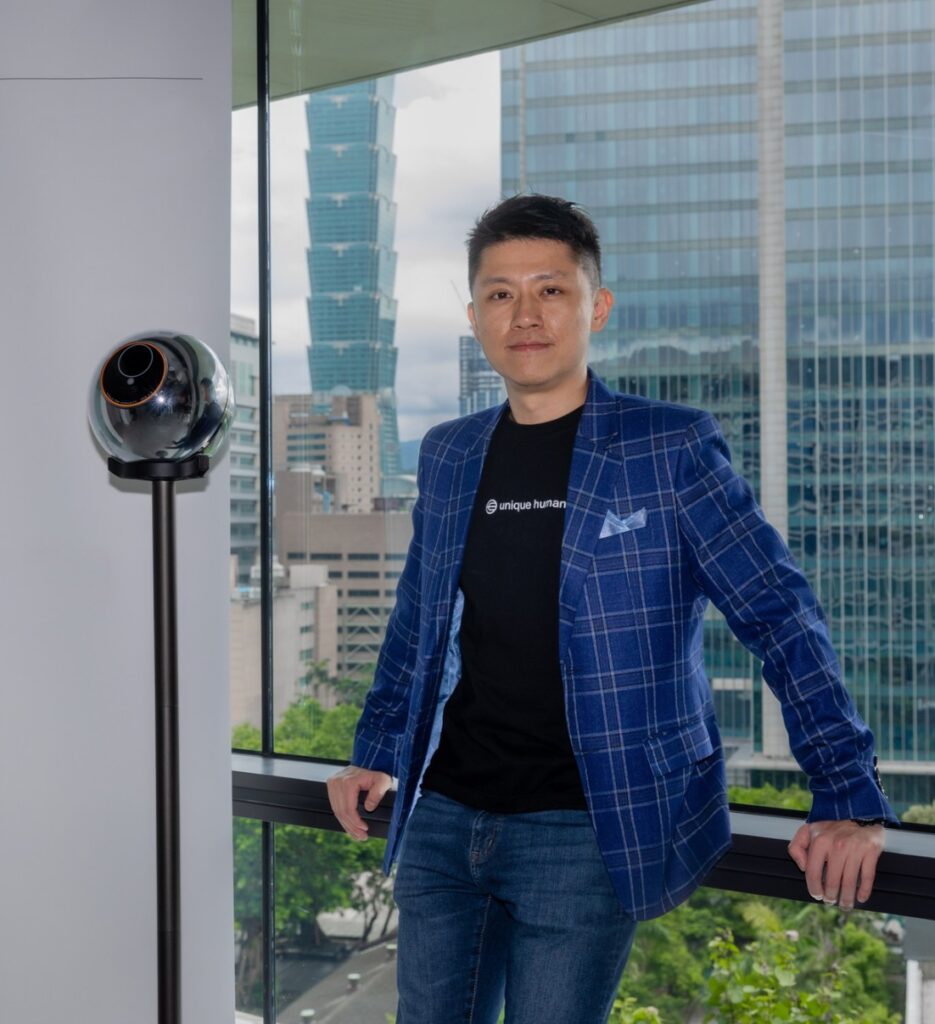
Andrew Hsu, General Manager, Singapore & Taiwan, Tools for Humanity.
Updates from the Lift Off event highlight a recurring trust issue emerging across the digital economy. Which areas of the digital economy in Asia Pacific are most impacted?
Hsu: The most significant challenge facing the digital economy today is not necessarily an AI challenge, but a trust challenge. We are entering an era where creating convincing digital identities, content, and interactions no longer requires a human at scale. That changes a fundamental assumption underpinning the internet: knowing whether the person on the other side is human.
As a result, the areas experiencing the greatest pressure are those where trust is fundamental to human participation and value creation.
These include consumer platforms, online communities, and digital marketplaces which are seeing growing challenges around fake accounts, impersonation, and inauthentic engagement. Collaboration and virtual meeting platforms are also facing increasing expectations around identity assurance as organizations seek greater confidence in who is participating in important conversations and decisions.
Enterprises are also beginning to grapple with a new challenge as AI agents become integrated into everyday workflows. The focus is now on distinguishing between human and machine activity, establishing accountability, and maintaining confidence in business processes. Organizations need stronger ways to verify human-backed actions without creating friction for users.
Ultimately, any sector that relies on authentic human interaction will be affected. It is not a challenge confined to individual industries, but a broader shift in how trust is established online. Organizations will increasingly need trusted ways to verify human participation while continuing to benefit from innovation at scale.
As AI agents take over more tasks in the enterprise workflow and supply chain, why is it important that we distinguish real humans from bots or AI‑generated identities in the age of AI, and how?
Hsu: In the AI era, businesses may increasingly need to verify not just identity, but the authenticity of participation itself. As digital interactions, engagement signals, and customer data play a growing role in business decision-making, the ability to distinguish genuine human activity from automated activity is becoming a strategic imperative
These implications extend beyond trust and safety. Organizations rely on digital signals to understand customer demand, sentiment, behavior, and intent. When those signals become distorted by automated activity, decision-making becomes less reliable, increasing the risk of fraud, manipulation, and poor business outcomes.
This is where proof of human introduces a new trust layer for the AI era. It creates a way to distinguish real human participation from automated activity at scale, enabling safer and more meaningful digital interactions. Importantly, technologies like proof of human are not designed to replace or restrict AI innovation, but to complement it by ensuring that human interactions continue to hold value in an increasingly agentic digital world.
For businesses, this can support secure onboarding, fraud prevention, platform trust and digital safety, while also improving confidence in the quality of customer insights and engagement data. Organizations that succeed in the age of AI will be those that can harness the benefits of automation while preserving authentic human participation and trust at scale.
What else should organizations do to protect themselves and their customers from fake identities and loss of trust?
Hsu: Organizations will need to move beyond a purely defensive approach to trust. For years, security efforts have focused on detecting threats and preventing malicious activity from reaching users. While that remains important, the rise of AI-generated content, deepfakes, and autonomous agents means organizations must also become better at recognizing and protecting genuine human participation.
To do this, organizations should adopt a layered approach that combines robust verification systems, fraud prevention measures, and user education with technologies that can help distinguish real humans from automated activity. This is particularly important in high-trust interactions where reputation, decision-making, or economic value are at stake.
Recent partnerships with platforms such as Tinder and Zoom illustrate how broadly this challenge is emerging. On dating platforms, users increasingly want confidence that they are interacting with the real person who is expected. In virtual meetings, organizations are looking for ways to reduce the risks posed by impersonation and deepfakes.
Looking ahead, the same challenge will become even more important as AI agents take on greater responsibility across customer service, commerce, and workplace workflows. In these environments, organizations will increasingly need ways to establish accountability and verify whether actions are being initiated by a human, an AI system, or a human-authorized AI agent. World’s AgentKit provides the infrastructure to create that chain of trust, linking agent activity back to a verified human when required.
While these use cases differ, the underlying challenge is the same: preserving trust is no longer just about keeping bad actors out. It is also about ensuring that genuine human participation remains visible, valued, and verifiable in an increasingly AI-driven digital economy.
Organisations that can strike the right balance between security, privacy, and user experience will be better positioned to build confidence with customers and navigate the challenges of the AI era.