
Cybersecurity News in Asia

RECENT STORIES:

SEGA moves faster with flow-based network monitoring
NEC Asia Pacific to Showcase Trusted Public Safety and Digital Identit...
Sprinto Expands to Australia with New Data Center to Power Localized, ...
Three strategies for closing the gap between backup and real recovery ...
CVSS 9.6 vulnerabilities in two major PDF tools exploited since late 2...
Q-Day is coming. Are you ready?
LOGIN REGISTER
CybersecAsia
  • Features
    • Featured

      Q-Day is coming. Are you ready?

      Q-Day is coming. Are you ready?

      Tuesday, April 14, 2026, 12:40 PM Asia/Singapore | Features
    • Featured

      How lean defence teams turn endpoint insights into measurable risk reduction

      How lean defence teams turn endpoint insights into measurable risk reduction

      Monday, April 13, 2026, 3:15 PM Asia/Singapore | Features
    • Featured

      Physical and digital security converge in APAC

      Physical and digital security converge in APAC

      Monday, April 6, 2026, 2:22 PM Asia/Singapore | Features
  • Opinions
  • Tips
  • Whitepapers
  • Awards 2025
  • Directory
  • E-Learning

Select Page

Tips

When the multi-cloud approach leads to unmanageable complexity, unify DDI

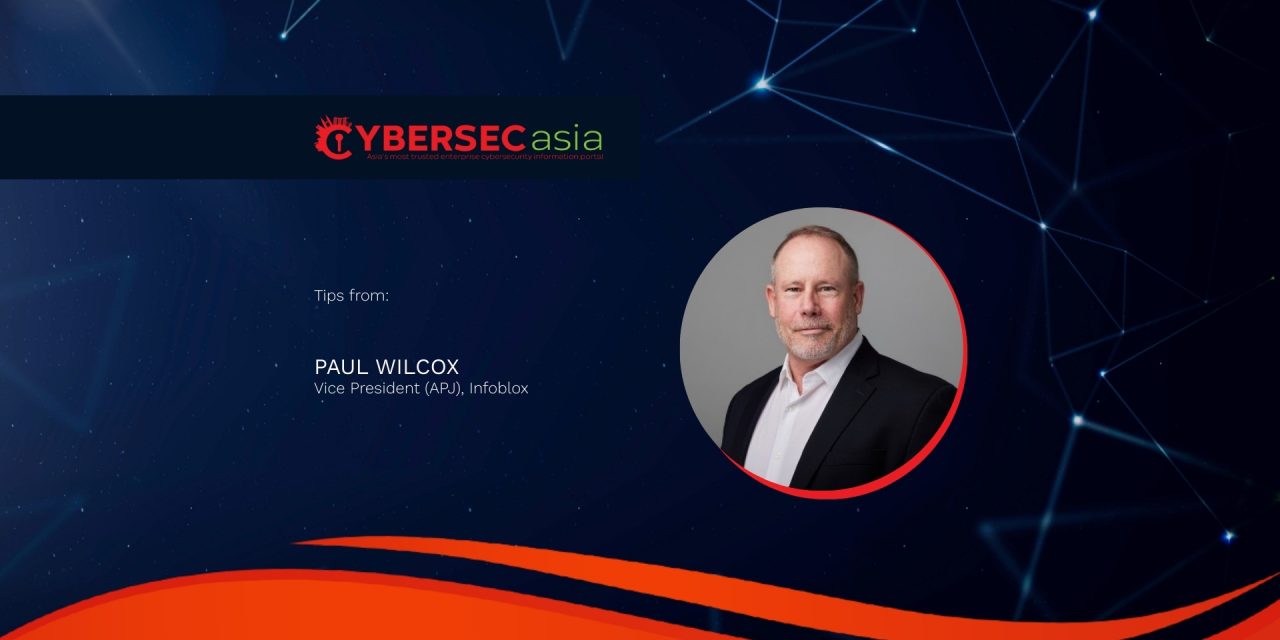
By Paul Wilcox, Vice President (APJ), Infoblox | Tuesday, April 22, 2025, 9:22 AM Asia/Singapore

When the multi-cloud approach leads to unmanageable complexity, unify DDI

Due to increasing complexities in architectures, the multi-cloud approach and the three core network services (DDI) needs to evolve in tandem.

Businesses are increasingly embracing multi-cloud environments for their flexibility, cost efficiency, and agility. Despite the benefits, multi-cloud environments can create operational silos among network (NetOps), security (SecOps), and cloud operations (CloudOps) teams.

This fragmentation in managing critical services like DNS, DHCP, and IPAM (collectively known as DDI) exposes businesses to downtime, increased costs, and security risks caused by a lack of control and visibility across the network.

The more businesses distribute their workloads, the greater the risk of silos emerging.

Multi-cloud DDI challenges

Deploying DDI across multiple cloud platforms can lead to a fragmented ecosystem, with teams juggling disparate tools and workflows. The disjointed management of essential security services, such as DNS management or the assigning and tracking of IP addresses, creates bottlenecks, slows response times, and increases the risk of errors. 

This is especially true when using DNS solutions from different vendors in a hybrid or multi-cloud setup — achieving full network visibility and control becomes nearly impossible due to varied tools and interfaces.

As such, teams may resort to time-consuming manual workarounds, which stifle productivity and heighten the risk of human error. This lack of unified control makes it challenging to identify compliance violations, performance issues, or security threats, ultimately transforming the promise of multi-cloud agility into a tangle of inefficiency and missed opportunities. 

Using a patchwork of tools and manual processes to manage critical network services can lead to fragmented control and increased vulnerability, as well as system inefficiencies. From misconfigurations in cloud architecture to outages caused by physical factors, the stakes for maintaining robust and secure multi-cloud environments have never been higher. 

These distributed systems can create a phenomenon where no single party (vendors, internal teams, or cloud providers) wants to shoulder the burden of responsibility or face potential hefty fines in case of an outage. This risk aversion paradoxically leads to operational silos among teams: the very fragmentation that multi-cloud environments were meant to eliminate altogether.

Unifying DDI across the clouds

Consider a tech firm that manually provisions critical network services for new applications — a process that could take up to six weeks, significantly delaying product launches. Without a unified view, DNS and IPAM management could stretch SecOps teams too thin, resulting in application outages that could have be avoided. During this time, competitors with more streamlined processes can release new features and applications, potentially capturing market share and revenue opportunities. 

However, firms with multi-cloud architectures that have unified DDI could reduce their provisioning time from six weeks to just 15 minutes. This improvement not only accelerates their time-to-market, but also enhances their competitive edge.

The true cost of manual provisioning is not just about delays: it is about lost sales, missed opportunities, and  reputational risks.

Digital infrastructure resilience involves a “shared responsibility” model between cloud service providers and their customers. In multi-cloud environments where the lines of responsibility can often blur, navigating the challenge of fragmentation and gaining network observability requires a unified approach to managing DDI across all of their cloud environments.

Consolidating these disparate services into a single platform eliminates silos, enhances collaboration, and improves operational efficiency. In doing so, organizations can build more resilient, efficient, and secure cloud environments that drive innovation and growth. Also, unifying DDI in multi-cloud infrastructure can enhance security and compliance in terms of threat detection and regulatory compliance.

With this strategy, organizations will be able to reap the full benefits of multi-cloud environments while enhancing resilience and cybersecurity.

Editor’s Note: Unifying DDI offers significant benefits even for organizations not invested in multi-cloud infrastructure. Also, in unifying DDI, there are several paradigms to choose from, including centralized management, automation, integration, and federated models: Readers are encouraged to explore these diverse approaches to determine what best suits their organization.
Share:

PreviousDoes strengthened identity authentication always impede good customer experience?
NextSafeguarding elections amid growing cyberthreats and disinformation

Related Posts

Zero-click vulnerability in the Apple ecosystem still a lingering concern

Zero-click vulnerability in the Apple ecosystem still a lingering concern

Tuesday, June 17, 2025

One-time passwords and push codes are not as secure as you think!

One-time passwords and push codes are not as secure as you think!

Wednesday, May 6, 2020

‘Lure and decoy’ cyber-threats exploit COVID-19

‘Lure and decoy’ cyber-threats exploit COVID-19

Monday, March 9, 2020

Backups are essential, but they are not a cybersecurity strategy on their own

Backups are essential, but they are not a cybersecurity strategy on their own

Monday, May 19, 2025

Leave a reply Cancel reply

You must be logged in to post a comment.

Voters-draw/RCA-Sponsors

Slide
Slide
Slide
Slide
Slide
Slide
Slide
Slide
Slide
Slide
Slide
Slide
Slide
Slide
previous arrow
next arrow

CybersecAsia Voting Placement

Gamification listing or Participate Now

PARTICIPATE NOW

Vote Now -Placement(Google Ads)

Top-Sidebar-banner

Whitepapers

  • Closing the Gap in Email Security:How To Stop The 7 Most SinisterAI-Powered Phishing Threats

    Closing the Gap in Email Security:How To Stop The 7 Most SinisterAI-Powered Phishing Threats

    Insider threats continue to be a major cybersecurity risk in 2024. Explore more insights on …Download Whitepaper
  • 2024 Insider Threat Report: Trends, Challenges, and Solutions

    2024 Insider Threat Report: Trends, Challenges, and Solutions

    Insider threats continue to be a major cybersecurity risk in 2024. Explore more insights on …Download Whitepaper
  • AI-Powered Cyber Ops: Redefining Cloud Security for 2025

    AI-Powered Cyber Ops: Redefining Cloud Security for 2025

    The future of cybersecurity is a perfect storm: AI-driven attacks, cloud expansion, and the convergence …Download Whitepaper
  • Data Management in the Age of Cloud and AI

    Data Management in the Age of Cloud and AI

    In today’s Asia Pacific business environment, organizations are leaning on hybrid multi-cloud infrastructures and advanced …Download Whitepaper

Middle-sidebar-banner

Case Studies

  • Cyber protection for medical clinics in Singapore

    Cyber protection for medical clinics in Singapore

    As Singapore’s healthcare sector becomes increasingly digital and interconnected, clinics are facing heightened cyber risks, …Read more
  • India’s WazirX strengthens governance and digital asset security

    India’s WazirX strengthens governance and digital asset security

    Revamping its custody infrastructure using multi‑party computation tools has improved operational resilience and institutional‑grade safeguardsRead more
  • Bangladesh LGED modernizes communication while addressing data security concerns

    Bangladesh LGED modernizes communication while addressing data security concerns

    To meet emerging data localization/privacy regulations, the government engineering agency deploys a secure, unified digital …Read more
  • What AI worries keep members of the Association of Certified Fraud Examiners sleepless?

    What AI worries keep members of the Association of Certified Fraud Examiners sleepless?

    This case study examines how many anti-fraud professionals reported feeling underprepared to counter rising AI-driven …Read more

Bottom sidebar

Other News

  • NEC Asia Pacific to Showcase Trusted Public Safety and Digital Identity Innovations at Milipol TechX 2026

    Wednesday, April 15, 2026
    SINGAPORE, April 14, 2026 /PRNewswire/ …Read More »
  • Sprinto Expands to Australia with New Data Center to Power Localized, Audit-Ready Compliance

    Wednesday, April 15, 2026
    Sprinto combines local infrastructure with …Read More »
  • Hong Kong Anti-graft Watchdog: Clean Governance and Ethical Business is Key to Hong Kong’s Sustainable Business Development

    Thursday, April 9, 2026
    HONG KONG, April 9, 2026 …Read More »
  • Goodix Launches the World’s First eSE Solution Designed for AI Agents

    Thursday, April 9, 2026
    SHENZHEN, China, April 8, 2026 …Read More »
  • LRQA Amplifies Industrial and Cyber Resilience in APAC at CS4CA Summit 2026

    Thursday, April 9, 2026
    SINGAPORE, April 8, 2026 /PRNewswire/ …Read More »
  • Our Brands
  • DigiconAsia
  • MartechAsia
  • Home
  • About Us
  • Contact Us
  • Sitemap
  • Privacy & Cookies
  • Terms of Use
  • Advertising & Reprint Policy
  • Media Kit
  • Subscribe
  • Manage Subscriptions
  • Newsletter

Copyright © 2026 CybersecAsia All Rights Reserved.