Cybersecurity News in Asia

RECENT STORIES:

SEGA moves faster with flow-based network monitoring
Asia Pacific Cyber Safety Landscape 2026
2026 State of Security and Identity Report
How escalating geopolitical tensions are expanding the cybersecurity f...
Hackers breach customer service provider, exposing millions of persona...
Experts warn of Iranian cyber retaliation after massive US-Israeli dig...
LOGIN REGISTER
CybersecAsia
  • Features
    • Featured

      Beyond firewalls – addressing cybersecurity blind spots

      Beyond firewalls – addressing cybersecurity blind spots

      Monday, March 2, 2026, 10:24 AM Asia/Singapore | Features
    • Featured

      Where are financial fraud and AML regulations heading in S E Asia?

      Where are financial fraud and AML regulations heading in S E Asia?

      Tuesday, February 10, 2026, 2:44 PM Asia/Singapore | Features
    • Featured

      How AI is reshaping dating in Asia

      How AI is reshaping dating in Asia

      Monday, February 9, 2026, 5:33 AM Asia/Singapore | Features, Newsletter
  • Opinions
  • Tips
  • Whitepapers
  • Awards 2025
  • Directory
  • E-Learning

Select Page

Tips

Know the four most common password mistakes

By CybersecAsia editors | Tuesday, May 27, 2025, 10:21 AM Asia/Singapore

Know the four most common password mistakes

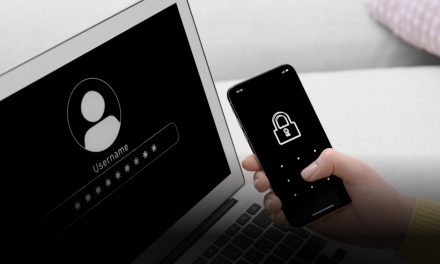
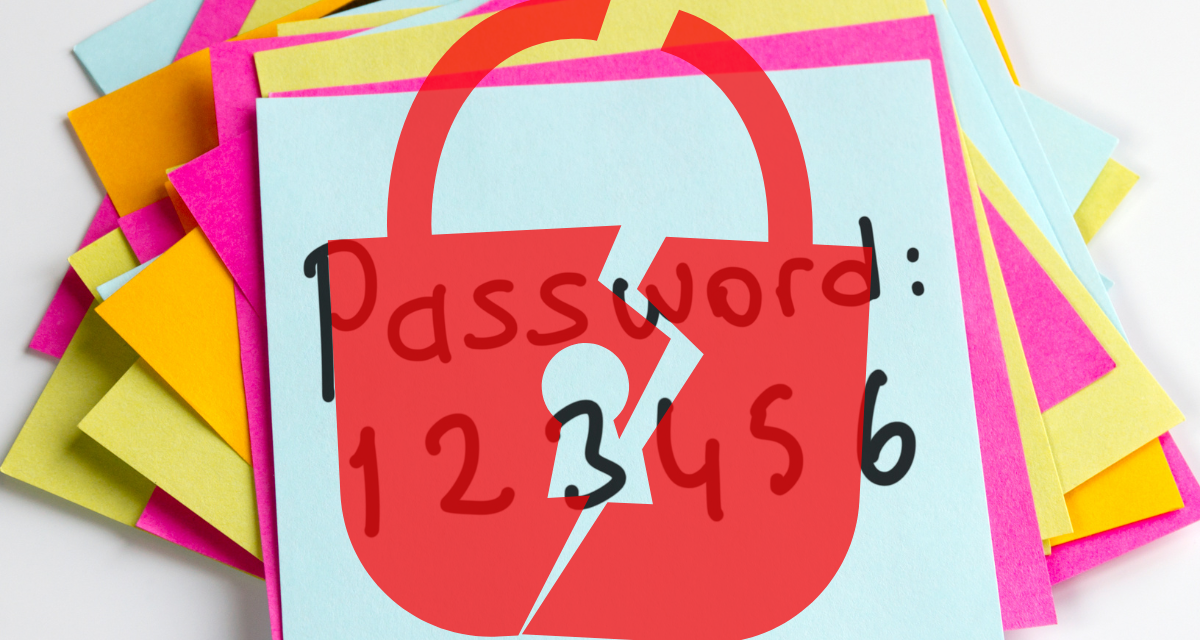
Weak, short, or predictable passwords are easily cracked; use strong, unique combinations and enable advanced authentication for better protection.

One of the biggest drivers of data breaches so far is the use of weak passwords.

According to an analysis of thousands of real-world entries across multiple leaked datasets, experts from Hostinger have identified the most basic password mistakes, and why users keep making them.

The first mistake is using short passwords, as 21.7% of the passwords analyzed were under eight characters: all of them were cracked instantly with the appropriate tools. While short passwords are quicker to type and easier to remember, they are also the first to fall to brute-force attacks. Solution: Make sure passwords are at least 12 characters long, ideally using a phrase or sentence that is unique and easy to recall.

Other basic password hygiene failures

The second mistake is using passwords that look unique but are simply just made from a mixture of predictable patterns that are easy to break. People choose familiar word-number combinations, thinking these are safer than generic passwords. However, passwords such as “mybluecare69” can still be broken. Solution: Use a mix of uppercase, lowercase, numbers, and special characters, and avoid common/predictable words or patterns, especially those linked to your personal data that cybercriminals can mine from data breaches.

The third password hygiene mistake is using long passwordsthat are nevertheless, weak. Incident data analyzed showed that even though some passwords were over 20 characters long, they had a 13% crack rate, making them nearly as easy to break as much shorter passwords. The reason was that people assume longer passwords are automatically stronger, but using repeated characters lowers security, such as a string of “aaaaaaa” or “123123” with the 20 characters. Solution: Avoid repetition. Variety in structure is just as important as overall length.

Finally, the data showed that a large portion of passwords being used still appear in the top 10m most leaked passwords. In the data analysis, 475 passwords matched high-frequency entries from global breach lists. People may not even be aware that their credentials have been compromised. Or, due to the need to change passwords regularly, they may resume the use of past passwords that had been deemed safe. Solution: use websites such as “Have I Been Pwned” to regularly check credentials, and avoid reusing any password that appears on a known breach list.

Beyond basic password hygiene

Other than the basic password hygiene fails uncovered by Hostinger, users need to keep apprised of the latest online identity authentication methods available, and use them for added protection. These include:

  1. Choosing passwordless and biometric login methods
  2. Use passphrases and passkeys where possible
  3. Leveraging an established password manager with an unbroken security record
  4. Enabling strong second-factor/multi-factor authentication such as app-based or hardware-based authentication, avoiding SMS-based authentication, which is vulnerable to social engineering
  5. Regularly reviewing privacy settings and keeping updated on any new identity authentication or protection features available on every platform being used
Share:

PreviousHow to outsmart filename masquerading: A practical guide to safer file handling
NextWhen ransomware attack rates drop, do not let down your guard

Related Posts

Cybersecurity is not just an IT problem anymore

Cybersecurity is not just an IT problem anymore

Wednesday, December 15, 2021

Networking and security partnership in the ‘work from anywhere’ era

Networking and security partnership in the ‘work from anywhere’ era

Thursday, July 8, 2021

The five commandments of 5G security

The five commandments of 5G security

Thursday, June 11, 2020

The faster your servers, the faster ransomware can encrypt your files: research

The faster your servers, the faster ransomware can encrypt your files: research

Tuesday, March 29, 2022

Leave a reply Cancel reply

You must be logged in to post a comment.

Voters-draw/RCA-Sponsors

Slide
Slide
Slide
Slide
Slide
Slide
Slide
Slide
Slide
Slide
Slide
Slide
Slide
Slide
previous arrow
next arrow

CybersecAsia Voting Placement

Gamification listing or Participate Now

PARTICIPATE NOW

Vote Now -Placement(Google Ads)

Top-Sidebar-banner

Whitepapers

  • Closing the Gap in Email Security:How To Stop The 7 Most SinisterAI-Powered Phishing Threats

    Closing the Gap in Email Security:How To Stop The 7 Most SinisterAI-Powered Phishing Threats

    Insider threats continue to be a major cybersecurity risk in 2024. Explore more insights on …Download Whitepaper
  • 2024 Insider Threat Report: Trends, Challenges, and Solutions

    2024 Insider Threat Report: Trends, Challenges, and Solutions

    Insider threats continue to be a major cybersecurity risk in 2024. Explore more insights on …Download Whitepaper
  • AI-Powered Cyber Ops: Redefining Cloud Security for 2025

    AI-Powered Cyber Ops: Redefining Cloud Security for 2025

    The future of cybersecurity is a perfect storm: AI-driven attacks, cloud expansion, and the convergence …Download Whitepaper
  • Data Management in the Age of Cloud and AI

    Data Management in the Age of Cloud and AI

    In today’s Asia Pacific business environment, organizations are leaning on hybrid multi-cloud infrastructures and advanced …Download Whitepaper

Middle-sidebar-banner

Case Studies

  • Cyber protection for medical clinics in Singapore

    Cyber protection for medical clinics in Singapore

    As Singapore’s healthcare sector becomes increasingly digital and interconnected, clinics are facing heightened cyber risks, …Read more
  • India’s WazirX strengthens governance and digital asset security

    India’s WazirX strengthens governance and digital asset security

    Revamping its custody infrastructure using multi‑party computation tools has improved operational resilience and institutional‑grade safeguardsRead more
  • Bangladesh LGED modernizes communication while addressing data security concerns

    Bangladesh LGED modernizes communication while addressing data security concerns

    To meet emerging data localization/privacy regulations, the government engineering agency deploys a secure, unified digital …Read more
  • What AI worries keep members of the Association of Certified Fraud Examiners sleepless?

    What AI worries keep members of the Association of Certified Fraud Examiners sleepless?

    This case study examines how many anti-fraud professionals reported feeling underprepared to counter rising AI-driven …Read more

Bottom sidebar

Other News

  • DoveRunner Expands Presence in Southeast Asia with New Office in Jakarta

    Thursday, February 26, 2026
    JAKARTA, Indonesia, Feb. 25, 2026 …Read More »
  • Proofpoint partners with Concentrix to strengthen human- and agent-centric cybersecurity across Asia Pacific

    Tuesday, February 24, 2026
    Partnership integrates Proofpoint’s collaboration and …Read More »
  • Indonesia’s MDI Ventures Doubles Down on Execution and Trust to Unlock Regional Portfolio Value

    Friday, February 20, 2026
    The Telkom-backed VC reinforces cross-sector …Read More »
  • Blackpanda Japan Announces Strategic Partnership with SoftBank to Strengthen Cyber Incident Response in Japan

    Wednesday, February 11, 2026
    SINGAPORE, Feb. 10, 2026 /PRNewswire/ …Read More »
  • Cohesity Collaborates with Google Cloud to Deliver Secure Sandbox Capabilities and Comprehensive Threat Insights Designed to Eliminate Hidden Malware

    Saturday, February 7, 2026
    Embedded Google Threat Intelligence capabilities, …Read More »
  • Our Brands
  • DigiconAsia
  • MartechAsia
  • Home
  • About Us
  • Contact Us
  • Sitemap
  • Privacy & Cookies
  • Terms of Use
  • Advertising & Reprint Policy
  • Media Kit
  • Subscribe
  • Manage Subscriptions
  • Newsletter

Copyright © 2026 CybersecAsia All Rights Reserved.