
Cybersecurity News in Asia

RECENT STORIES:

SEGA moves faster with flow-based network monitoring
Leveraging digital twins to combat rising AI-powered threats
Using AI coding tools may incur hidden technical debt: research
AI is reshaping cyber risk: Time to rethink cybersecurity regionally
Can cyber compliance stop being a cost — and start paying off?
Agentic AI emerge as enterprise insider threats predicted in 2026
LOGIN REGISTER
CybersecAsia
  • Features
    • Featured

      Leveraging digital twins to combat rising AI-powered threats

      Leveraging digital twins to combat rising AI-powered threats

      Thursday, January 8, 2026, 1:58 PM Asia/Singapore | Features
    • Featured

      Editor’s pick: Cybersecurity trends in 2026

      Editor's pick: Cybersecurity trends in 2026

      Wednesday, January 7, 2026, 10:36 AM Asia/Singapore | Cyberthreat Landscape, Features, Newsletter
    • Featured

      Exploding identity fraud and deepfakes challenge manual oversight of autonomous AI

      Exploding identity fraud and deepfakes challenge manual oversight of autonomous AI

      Tuesday, December 30, 2025, 9:27 AM Asia/Singapore | Features, Newsletter
  • Opinions
  • Tips
  • Whitepapers
  • Awards 2025
  • Directory
  • E-Learning

Select Page

Tips

Do not let hackers halt your plant: Checklists for reviewing OT cyber resilience

By CybersecAsia editors | Tuesday, May 13, 2025, 3:21 PM Asia/Singapore

Do not let hackers halt your plant: Checklists for reviewing OT cyber resilience

Amid intensifying AI-boosted threats, industrial enterprises can review the following checklists to strengthen cybersecurity, ensure business continuity, and maintain cyber resilience.

In an era where cyber threats are ever-evolving, industrial enterprises need to prioritize cyber resilience to safeguard their operational technology (OT), data and reputation.

They need to develop a culture in which cyber resilience is prioritized in key decisions made at the top. True security requires more than just a capable cybersecurity team. Leaders should actively engage with cybersecurity strategies, recognizing that it is a core business function just as vital as legal and financial issues.

One of the most critical aspects of cyber resilience is maintaining business continuity. The effects of a cyberattack can be felt far and wide such as power outages, safety incidents and environmental emergencies. However, organizations that prioritize cyber resilience can quickly recover from incidents, minimizing downtime and ensuring essential functions remain operational. How?

Tips for boosting industrial cyber resilience

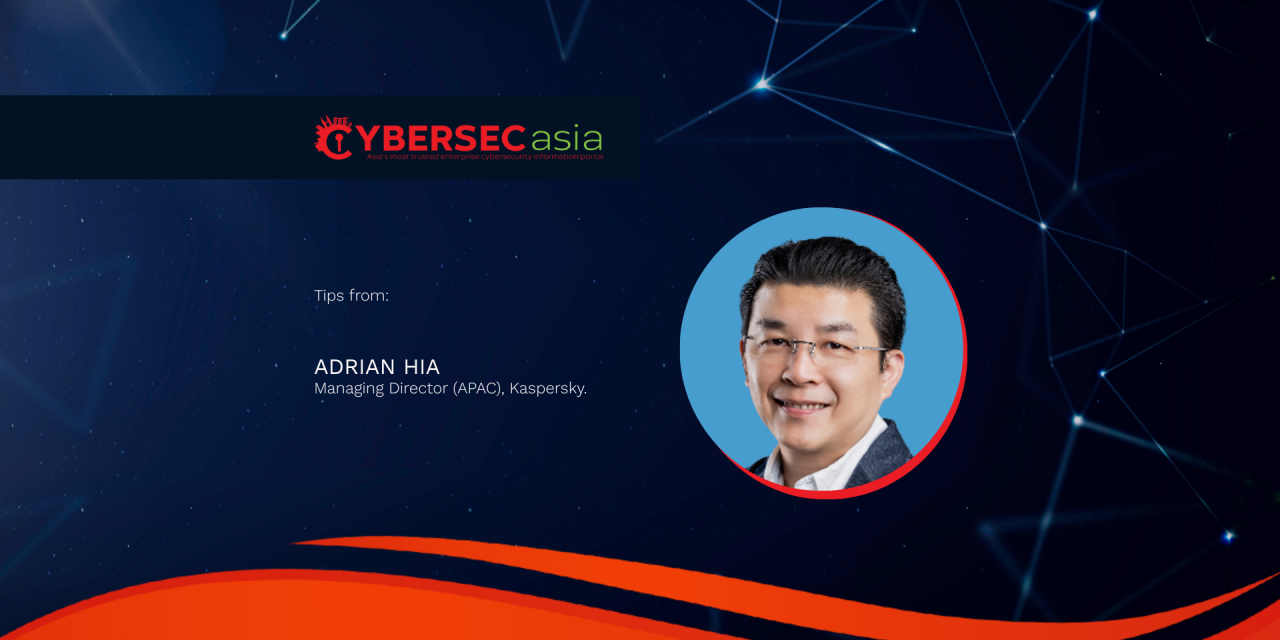
Proactive business continuity planning is key, as it enables companies to prepare for potential cyber threats and ensure that disruptions do not lead to prolonged or catastrophic consequences, according to Adrian Hia, Managing Director (APAC), Kaspersky.

Following are eight steps for boosting industrial cybersecurity and resilience, offered by Hia and his analysts:  

  1. Inventory: Asset management
    You cannot protect any part of your infrastructure you are not aware of. So, begin by building or updating your organization’s asset inventory. Account for systems, software, hardware, network segments, conduits, communication paths and devices to understand what must be secured. This comprehensive inventory process ensures all valuable assets are secured.
  2. Assess: Detailed risk assessment
    Conduct the assessment to understand the current risk levels within your organization, considering potential threat vectors and existing or planned countermeasures. This assessment helps prioritize investments and prevent potentially catastrophic disruptions.
  3. Secure: Essential security measures
    Implement essential security measures, such as endpoint protection, to safeguard operations. This involves creating security baselines aimed at maintaining and protecting operational technology system integrity while detecting, blocking and remediating cyber threats.
  4. Detect: Threat and anomaly detection
    Implement threat and anomaly detection to identify threats early ,and understand how attacks develop. This will enable quicker responses to avoid disruption, and continually strengthen your organization’s security posture.
  5. Audit: Security audits and compliance
    Conduct regular security audits and focus on compliance to build a realistic picture of your organizational cybersecurity. These systematic evaluations ensure alignment with criteria and benchmarks, improving adherence to best practices and resulting in robust systems.
  6. Enhance: Zones and conduits
    Enhance network architecture by organizing and protecting it through zones and conduits. Zones group networks, devices and services based on function and criticality, while conduits represent communication paths that unite zones or connect them to external networks.
  7. Monitor: Mature security operations
    Develop a mature Security Operations Center with proactive and contextual analysis capabilities to manage complex attacks. Continually evolve this capability with threat intelligence and incident response features to swiftly investigate, contain and mitigate threats.
  8. Prepare: Fault tolerance and readiness
    Guarantee fault tolerance by stress-testing your infrastructure through exercises that simulate large-scale cyberattacks. This preparation ensures that your industrial control systems can withstand and recover from cyber incidents without compromising operational continuity. People are an organization’s greatest asset, but they also a point of potential vulnerability. Relevant personnel should be trained on a regular basis.

Additional considerations

Other cybersecurity experts also remind organizations of the following key risks and mitigation measures:

Element to be addressedCriticality
Supply Chain & Third-Party RiskAttacks can enter via vendors or partners; so prioritize, manage and monitor third-party access tightly.
Secure-by-Design principleEmbedding security from the start reduces vulnerabilities in new systems
Physical security integrationPhysical breaches can enable cyberattacks; coordinate physical and digital controls
Password and credential managementWeak or default credentials are common attack vectors; enforce strong policies
Remote access securityRemote connections increase risk; use VPNs, MFA, and restrict access
Backup / recovery planningRegular, secure backups and tested recovery procedures ensure business continuity
Insider threat and privilege ControlEmployees can inadvertently or deliberately cause harm; apply least-privilege and monitor access
Patch- and vulnerability- managementUnpatched systems are vulnerable: schedule regular updates and vulnerability scans
Cybersecurity governanceClear roles, accountability, and oversight ensure sustained security improvements
ICS-specific monitoringUse tools tailored for industrial systems to detect process anomalies and threats

Implementing the basic and advanced steps outlined above can protect industrial organizations that have been lagging on the journey towards building a robust cybersecurity posture.​ The achieved boost in cyber resilience, however, should be maintained regularly. This is not an end-result, but rather, a continual process.

Share:

PreviousScammers are now hooking low-hanging bait with crypto malvertising
NextTaiPei-based Hong Tong Technology Acquires Initio’s Entire Encryption Division.

Related Posts

AI companies leaking sensitive information on GitHub

AI companies leaking sensitive information on GitHub

Wednesday, November 12, 2025

Five AI trends to watch in 2025

Five AI trends to watch in 2025

Wednesday, December 18, 2024

Can software developers trust automated code generation?

Can software developers trust automated code generation?

Wednesday, March 13, 2024

Five strategic insights on network security in 2021

Network security in 2021: Five strategic insights

Wednesday, April 28, 2021

Leave a reply Cancel reply

You must be logged in to post a comment.

Voters-draw/RCA-Sponsors

Slide
Slide
Slide
Slide
Slide
Slide
Slide
Slide
Slide
Slide
Slide
Slide
Slide
Slide
previous arrow
next arrow

CybersecAsia Voting Placement

Gamification listing or Participate Now

PARTICIPATE NOW

Vote Now -Placement(Google Ads)

Top-Sidebar-banner

Whitepapers

  • Closing the Gap in Email Security:How To Stop The 7 Most SinisterAI-Powered Phishing Threats

    Closing the Gap in Email Security:How To Stop The 7 Most SinisterAI-Powered Phishing Threats

    Insider threats continue to be a major cybersecurity risk in 2024. Explore more insights on …Download Whitepaper
  • 2024 Insider Threat Report: Trends, Challenges, and Solutions

    2024 Insider Threat Report: Trends, Challenges, and Solutions

    Insider threats continue to be a major cybersecurity risk in 2024. Explore more insights on …Download Whitepaper
  • AI-Powered Cyber Ops: Redefining Cloud Security for 2025

    AI-Powered Cyber Ops: Redefining Cloud Security for 2025

    The future of cybersecurity is a perfect storm: AI-driven attacks, cloud expansion, and the convergence …Download Whitepaper
  • Data Management in the Age of Cloud and AI

    Data Management in the Age of Cloud and AI

    In today’s Asia Pacific business environment, organizations are leaning on hybrid multi-cloud infrastructures and advanced …Download Whitepaper

Middle-sidebar-banner

Case Studies

  • Bangladesh LGED modernizes communication while addressing data security concerns

    Bangladesh LGED modernizes communication while addressing data security concerns

    To meet emerging data localization/privacy regulations, the government engineering agency deploys a secure, unified digital …Read more
  • What AI worries keeps members of the Association of Certified Fraud Examiners sleepless?

    What AI worries keeps members of the Association of Certified Fraud Examiners sleepless?

    This case study examines how many anti-fraud professionals reported feeling underprepared to counter rising AI-driven …Read more
  • Meeting the business resilience challenges of digital transformation

    Meeting the business resilience challenges of digital transformation

    Data proves to be key to driving secure and sustainable digital transformation in Southeast Asia.Read more
  • Upgrading biometric authentication system protects customers in the Philippines: UnionDigital Bank

    Upgrading biometric authentication system protects customers in the Philippines: UnionDigital Bank

    An improved dual-liveness biometric framework can counter more deepfake threats, ensure compliance, and protect underbanked …Read more

Bottom sidebar

Other News

  • CYFIRMA’s 2025 Impact Recap Showcases DeCYFIR, Preemptive External Threat Landscape Management Platform, Delivering Measurable Global Defense Against Emerging Threats

    Tuesday, December 30, 2025
    SINGAPORE and TOKYO, Dec. 29, …Read More »
  • Taoping Announces Transformational Growth Milestones: New Corporate Headquarters and US$2 Million Smart Infrastructure Contracts

    Monday, December 29, 2025
    TIANJIN, China, Dec. 29, 2025 …Read More »
  • SAESOL Tech to Unveil Next-Generation V2X Security Technology Protecting Vulnerable Road Users at CES 2026

    Tuesday, December 23, 2025
    First public showcase of “S2X …Read More »
  • Fescaro makes strong Kosdaq debut, eyes global auto cybersecurity

    Friday, December 19, 2025
    SUWON, South Korea, Dec. 19, …Read More »
  • CYFIRMA Announces DeCYFIR 4.0: Industry-Leading AI Platform Engineered for Preemptive Protection Against Future Threats

    Friday, December 19, 2025
    Revolutionary 9 Pillar AI Architecture …Read More »
  • Our Brands
  • DigiconAsia
  • MartechAsia
  • Home
  • About Us
  • Contact Us
  • Sitemap
  • Privacy & Cookies
  • Terms of Use
  • Advertising & Reprint Policy
  • Media Kit
  • Subscribe
  • Manage Subscriptions
  • Newsletter

Copyright © 2026 CybersecAsia All Rights Reserved.