
Cybersecurity News in Asia

RECENT STORIES:

SEGA moves faster with flow-based network monitoring
Asia’s AI security race demands unified, responsible deployment fragme...
International cyber operation disrupts malware infrastructure linked t...
DJI Enterprise Advances Industry with New Framework for Dock as First ...
Multi-supply-chain breach disclosed, involving customer design and per...
Ransomware emerges as the costliest cyber insurance claim component: a...
LOGIN REGISTER
CybersecAsia
  • Features
    • Featured

      S E Asia governments targeted by cyber-espionage group

      S E Asia governments targeted by cyber-espionage group

      Tuesday, June 23, 2026, 8:00 AM Asia/Singapore | Features
    • Featured

      Rethinking network and infrastructure design for resilience

      Rethinking network and infrastructure design for resilience

      Thursday, June 18, 2026, 2:17 PM Asia/Singapore | Features
    • Featured

      Bringing cybercriminals to justice in APAC

      Bringing cybercriminals to justice in APAC

      Thursday, June 11, 2026, 10:30 AM Asia/Singapore | Features
  • Opinions
  • Tips
  • Whitepapers
  • AWARDS 2026
  • Directory
  • E-Learning

Select Page

Tips

Asia’s AI security race demands unified, responsible deployment fragmented data/tool sprawl

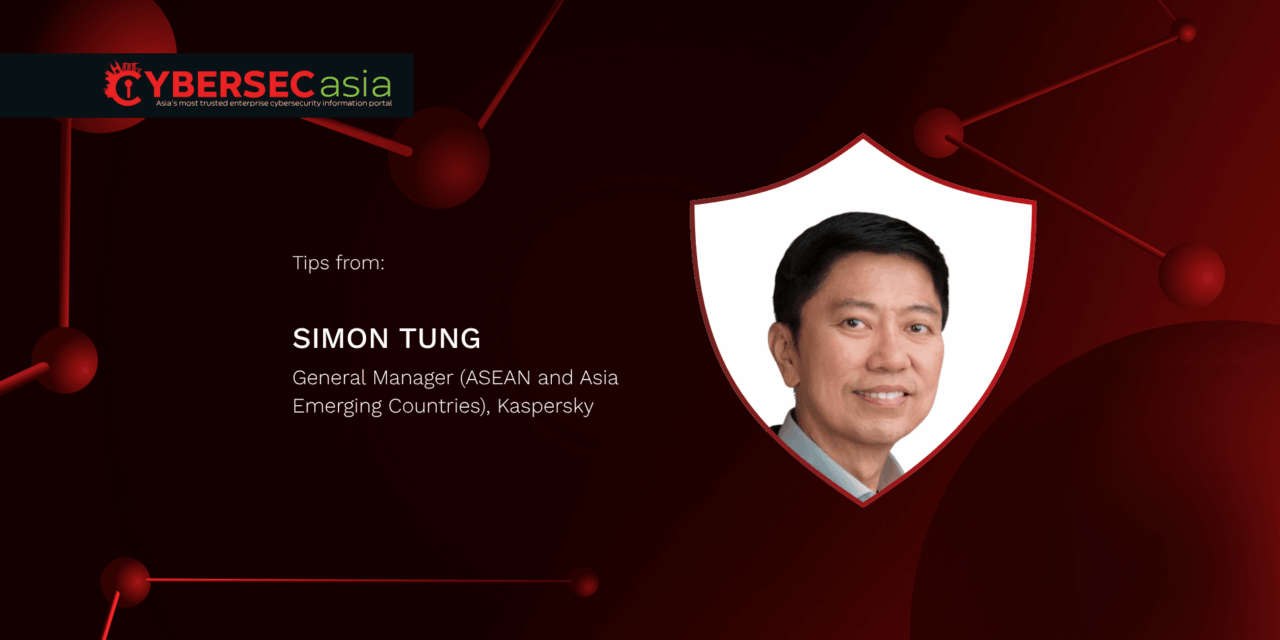
By Simon Tung, General Manager (ASEAN and Asia Emerging Countries), Kaspersky | Friday, June 26, 2026, 2:49 PM Asia/Singapore

Asia’s AI security race demands unified, responsible deployment fragmented data/tool sprawl

As AI becomes useful to both defenders and attackers, organizations using it for security need unified, well-governed, responsible deployment.

Today, almost every AI-driven capability available to cybersecurity providers is also available (or adaptable) to cyberattackers and state-sponsored threat actors. In fact, the adoption of AI by cybercriminals is becoming more systematic.

Attackers are integrating generative AI across the attack chain: automating the creation of phishing lures, generating malicious code, improving payload evasiveness and making social engineering more convincing at scale. What previously required skilled human operators can now be replicated more quickly and at lower cost, across every industry.

The common thread across these threat scenarios is speed and scale. AI helps threat actors compress the time between reconnaissance and compromise; between identifying a target and deploying a convincing lure; and between creating a payload and adapting it to evade detection.

For defenders, the response time advantage that once existed is eroding.

AI implementation challenges

Many of the larger enterprises across APAC that are planning to establish or expand a security operations center in the next two years expect to incorporate AI. However, they also face a distinct set of organizational and technical challenges when integrating this technology into their security infrastructure.

Approaching these challenges without a clear framework risks compounding the problems AI is meant to solve:

  • Data quality and telemetry coverage matter first. AI detection and correlation are only as effective as the data they operate on. Fragmented architectures with siloed data sources produce inconsistent telemetry that limits AI effectiveness. Organizations should prioritize centralized data collection across endpoints, identity, cloud and network before AI-driven correlation can deliver meaningful results.
  • Skill gaps and change management remain another issue. AI tools that require deep technical configuration may widen rather than narrow capability gaps in under-resourced teams. The most operationally effective AI implementations are those that embed intelligence directly into analyst workflows.
  • Responsible AI governance should also be part of the plan. As AI becomes embedded in security operations, enterprises need governance frameworks that cover model accountability, internal oversight and regulatory alignment. Any AI rollout should be tied to internal policies that define acceptable use, review processes and escalation paths.

Practical steps for proactive AI defenses

  • Fragmented data limits AI effectiveness. Consolidate telemetry into a unified platform before layering AI capabilities.
  • Evaluate AI security tools based on workflow integration, not feature count. The measure is analyst time saved, not capabilities listed.
  • Prioritize platforms where AI capabilities are built-in rather than bolted-on, to minimize integration overhead and reduce total cost of ownership.
  • Establish internal AI governance standards that align with emerging regulatory requirements and vendor accountability frameworks.
  • Run phased deployments with measurable outcome baselines to validate AI impact before full-scale rollout.

Building a resilient AI strategy

For regional enterprise security leaders, implementing AI to deliver genuine operational benefit rather than added complexity will rest on solid end-to-end integration. Markets such as Singapore have moved quickly on AI adoption, but the same environment is also seeing more AI-enabled cyber threats, while employers continue to face technical gaps that can impede business operations.

As such, the goal is to embed AI into security operations in ways that improve detection, speed up response and reduce analyst workload.

That means building unified workflows, setting clear governance controls and measuring whether AI actually lowers risk rather than adding another layer of complexity.

Editor’s note: Platformization can improve visibility and response, but may harbor potential for lock-in and other architectural risks. For organizations that for various reasons prefer to keep a best-of-breed stack instead of platform consolidation, alternatives would be ensuring strong telemetry integration, clear governance and tightly scoped AI use cases, consistent with secure AI deployment and oversight guidance.


Share:

PreviousInternational cyber operation disrupts malware infrastructure linked to global cybercrime supply chains

Related Posts

The Triple Threat: Cyber, AI, and Quantum

The Triple Threat: Cyber, AI, and Quantum

Thursday, October 17, 2024

Is your EDR solution holistic or myopic?

Is your EDR solution holistic or myopic?

Friday, June 10, 2022

Getting to know the common types of identity and banking fraud tactics

Getting to know the common types of identity and banking fraud tactics

Friday, February 21, 2025

The worst data breaches of 2018

The worst data breaches of 2018

Friday, July 12, 2019

Leave a reply Cancel reply

You must be logged in to post a comment.

Voters-draw/RCA-Sponsors

Slide
Slide
Slide
Slide
Slide
Slide
Slide
Slide
Slide
Slide
Slide
Slide
Slide
Slide
previous arrow
next arrow

CybersecAsia Voting Placement

Gamification listing or Participate Now

PARTICIPATE NOW

Vote Now -Placement(Google Ads)

Top-Sidebar-banner

Whitepapers

  • Closing the Gap in Email Security:How To Stop The 7 Most SinisterAI-Powered Phishing Threats

    Closing the Gap in Email Security:How To Stop The 7 Most SinisterAI-Powered Phishing Threats

    Insider threats continue to be a major cybersecurity risk in 2024. Explore more insights on …Download Whitepaper
  • 2024 Insider Threat Report: Trends, Challenges, and Solutions

    2024 Insider Threat Report: Trends, Challenges, and Solutions

    Insider threats continue to be a major cybersecurity risk in 2024. Explore more insights on …Download Whitepaper
  • AI-Powered Cyber Ops: Redefining Cloud Security for 2025

    AI-Powered Cyber Ops: Redefining Cloud Security for 2025

    The future of cybersecurity is a perfect storm: AI-driven attacks, cloud expansion, and the convergence …Download Whitepaper
  • Data Management in the Age of Cloud and AI

    Data Management in the Age of Cloud and AI

    In today’s Asia Pacific business environment, organizations are leaning on hybrid multi-cloud infrastructures and advanced …Download Whitepaper

Middle-sidebar-banner

Case Studies

  • How a Vietnamese D2C retailer built its own secure digital infrastructure

    How a Vietnamese D2C retailer built its own secure digital infrastructure

    Would your organization build your own digital infrastructure – including AI governance and cybersecurity – …Read more
  • Cyber protection for medical clinics in Singapore

    Cyber protection for medical clinics in Singapore

    As Singapore’s healthcare sector becomes increasingly digital and interconnected, clinics are facing heightened cyber risks, …Read more
  • India’s WazirX strengthens governance and digital asset security

    India’s WazirX strengthens governance and digital asset security

    Revamping its custody infrastructure using multi‑party computation tools has improved operational resilience and institutional‑grade safeguardsRead more
  • Bangladesh LGED modernizes communication while addressing data security concerns

    Bangladesh LGED modernizes communication while addressing data security concerns

    To meet emerging data localization/privacy regulations, the government engineering agency deploys a secure, unified digital …Read more

Bottom sidebar

Other News

  • DJI Enterprise Advances Industry with New Framework for Dock as First Responder (DFR) Deployments

    Thursday, June 25, 2026
    New White Paper Outlines Best …Read More »
  • At VivaTech 2026, Taiwan-Based MaiAgent Says Enterprises Should Stop Building RAG and AI Agent Systems From Scratch

    Friday, June 19, 2026
    TAIPEI and PARIS, June 19, …Read More »
  • How large-scale AI drives the evolution of video encoding to intelligent understanding

    Thursday, June 18, 2026
    HANGZHOU, China, June 18, 2026 …Read More »
  • Crisis24 Opens Global Maritime Operations Center in Manila to Power Intelligence, Consulting and Crisis Response Services

    Thursday, June 18, 2026
    New 24/7 operations center anchors …Read More »
  • Gambit Cyber Announces Strategic Partnership with BitCyber to Advance AI-Native and Risk-Centric Continuous Threat Exposure Management Across Singapore, ASEAN and Hong Kong

    Wednesday, June 17, 2026
    Strategic partnership brings Continuous Threat …Read More »
  • Our Brands
  • DigiconAsia
  • MartechAsia
  • Home
  • About Us
  • Contact Us
  • Sitemap
  • Privacy & Cookies
  • Terms of Use
  • Advertising & Reprint Policy
  • Media Kit
  • Subscribe
  • Manage Subscriptions
  • Newsletter

Copyright © 2026 CybersecAsia All Rights Reserved.