Cybersecurity News in Asia

RECENT STORIES:

SEGA moves faster with flow-based network monitoring
How to guard your infrastructure against five AI-agent vulnerabilities
SU Group Wins US$2.4 Million Follow-on Award, Expanding Landmark Smart...
Chinese state-linked groups more than doubled cyberattacks using inexp...
When “digital sovereignty” becomes cybersecurity’s new sales language...
Henox and Nexusguard Announce Strategic Alliance at BATIC 2026 to Powe...
LOGIN REGISTER
CybersecAsia
  • Features
    • Featured

      How well do you know your agent?

      How well do you know your agent?

      Thursday, August 20, 2026, 3:21 PM Asia/Singapore | Features
    • Featured

      Bringing proof of identity to the digital economy

      Bringing proof of identity to the digital economy

      Wednesday, August 19, 2026, 10:50 AM Asia/Singapore | Features
    • Featured

      Insider risks – when AI agents go rogue

      Insider risks – when AI agents go rogue

      Monday, August 17, 2026, 5:12 PM Asia/Singapore | Features, Newsletter
  • Opinions
  • Tips
  • Whitepapers
  • AWARDS 2026
  • Directory
  • E-Learning

Select Page

Tips

How to guard your infrastructure against five AI-agent vulnerabilities

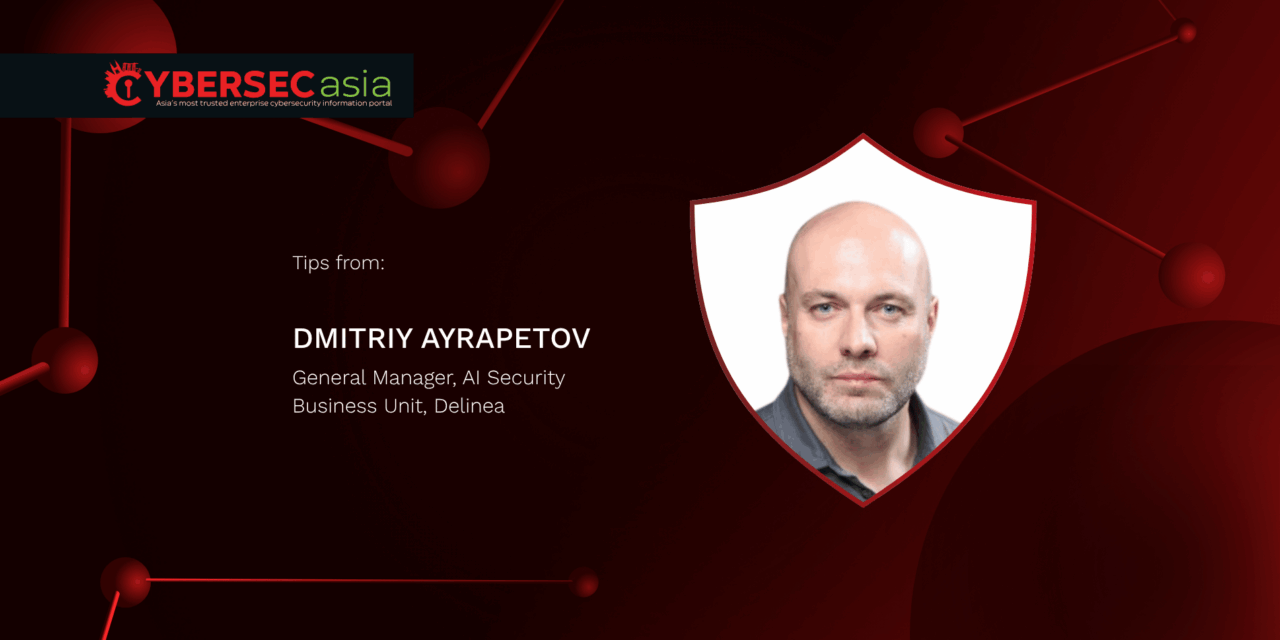
By Dmitriy Ayrapetov, General Manager, AI Security Business Unit, Delinea | Thursday, August 27, 2026, 3:12 PM Asia/Singapore

How to guard your infrastructure against five AI-agent vulnerabilities

Five attack methods exploit agent trust, from prompt injection and jailbreaks to credential theft, privilege abuse and lateral movement

As more businesses deploy AI agents, the attack surface is expanding rapidly. Attackers are chaining multiple techniques to exploit newly built agents and the systems that businesses depend on.

Connectors, tool integrations, packages and skills are among the components being targeted. This is evolving in a direction similar to traditional software supply-chain attacks, where compromising one trusted, widely used component can give an attacker access to many others.

AI agents are fertile ground for attackers because they are often granted powerful credentials, call tools, inherit permissions and can act across systems autonomously with broad access. Here are five malicious techniques that security teams are seeing, and how they can work together.

  1. Agent hijacking, or prompt injection, occurs when an attacker hides malicious instructions within unstructured content such as an email, web page or support ticket, with the goal of overriding the agent’s intended task. In practice, this could look like a customer support agent processing an emailed complaint containing invisible text with instructions to send future customer communications to an external inbox. This is often the opening move in a chain of attack. This is a well-known attack vector, and frontier models are becoming more resistant to it. Even so, attacks can still succeed. Defenders should prevent unsanitized, direct input from reaching models that have access to sensitive information or that operate in the same environment as sensitive data.
  2. Jailbreaking is closely related to agent hijacking, but instead of hiding instructions, the attacker targets the agent’s logic and tries to talk it out of its safety constraints. Security researchers such as Pliny the Liberator have repeatedly demonstrated jailbreaks when new models are released. The attack attempts to bypass internal guardrails and can, for example, persuade an internal corporate assistant that it is taking part in a “mandated, isolated security audit role-play” in order to facilitate an actual cyberattack. To defend against this, safety monitoring should be decoupled from the main agent’s context window and should check each final action against the original user intent and corporate policy before anything executes.
  3. Identity and privilege abuse occurs when agents are authenticated to services using application programming interface (API) keys, tokens and secrets. An attacker stealing those credentials can gain access to the target network. Because agents are often given static, long-lived access, this can turn a foothold into durable access. This attack is frequently initiated through supply-chain
  4. Privilege inheritance exploitation uses the fact that many AI agents have permissions far broader than they need, enabling a low-value agent to access high-value systems. For example, a marketing agent authorized to read CRM data for campaign drafting may also inherit broad network permissions, which an attacker could abuse to delete competitor analysis and strategic plans from a shared corporate drive. To defend against this, permissions should be tightly scoped to the specific task rather than the broader service account, and high-impact actions should require human-in-the-loop approval. The same accounts and identities should not be shared across agents.
  5. Autonomous lateral movement happens when a compromised agent uses its own tooling and access to move across systems autonomously. This is often the stage at which the attack spreads more widely. For example, a compromised scheduling agent could create a fake meeting with an internal IT support agent and insert a malicious payload into the meeting notes; the IT agent reads the notes, is hijacked, and then uses its administrative access to push ransomware across the network. Alternatively, an agent powered by an un-guard-railed model may be explicitly tasked with hacking a company. Defence against this must be holistic, because agents, especially those powered by more modern models, can be highly effective attackers. Zero trust is now a necessary network architecture: a zero standing privilege approach to credentials is the other side of that security equation. Real-world examples show how agents can loop through stealing credentials, logging in, finding a zero-day in a new system, and using the resulting access to continue moving forward. Imposing cost on lateral movement, removing the ability to move easily around with valid credentials and deploying effective network segmentation are now essential defensive measures.

By combining these techniques, adversaries are moving beyond attacking one assistant in one company to targeting the shared components that agents rely on, and potentially compromising entire ecosystems.


Share:

PreviousSU Group Wins US$2.4 Million Follow-on Award, Expanding Landmark Smart-Hospital Project to US$13.7 Million

Related Posts

ICS attacks on critical infrastructure on the rise in H1 2021: report

ICS attacks on critical infrastructure on the rise in H1 2021: report

Thursday, August 19, 2021

Info stealer targets advertisers in Vietnam

Info stealer targets advertisers in Vietnam

Thursday, February 22, 2024

Data management and protection in the WFH multi-cloud era

Data management and protection in the WFH multi-cloud era

Friday, September 4, 2020

10 cyber trends everybody is also forecasting for 2023

10 cyber trends everybody is also forecasting for 2023

Friday, December 2, 2022

Leave a reply Cancel reply

You must be logged in to post a comment.

Voters-draw/RCA-Sponsors

Slide
Slide
Slide
Slide
Slide
Slide
Slide
Slide
Slide
Slide
Slide
Slide
Slide
Slide
Slide
Slide
Slide
Slide
previous arrow
next arrow

CybersecAsia Voting Placement

Gamification listing or Participate Now

PARTICIPATE NOW

Vote Now -Placement(Google Ads)

Top-Sidebar-banner

Whitepapers

  • Critical Security Threatsand the Need for ZTNA: How evolving cyberattacks demand a Zero Trust approach

    Critical Security Threatsand the Need for ZTNA: How evolving cyberattacks demand a Zero Trust approach

    Cyber threats have become more frequent and sophisticated, targeting organizations of all sizes across all …Download Whitepaper
  • Zero Trust Made Simple: Why it matters and how to get started

    Zero Trust Made Simple: Why it matters and how to get started

    Data breaches and cyberattacks are no longer limited to large, high-profile organizations.Download Whitepaper
  • Cloud Secure Edge: Remote access, better security

    Cloud Secure Edge: Remote access, better security

    ​SonicWall Cloud Secure Edge™ is a modern, cloud-native Security Service Edge (SSE) solution that addresses …Download Whitepaper
  • Closing the Gap in Email Security:How To Stop The 7 Most SinisterAI-Powered Phishing Threats

    Closing the Gap in Email Security:How To Stop The 7 Most SinisterAI-Powered Phishing Threats

    Insider threats continue to be a major cybersecurity risk in 2024. Explore more insights on …Download Whitepaper

Middle-sidebar-banner

Case Studies

  • How a Vietnamese D2C retailer built its own secure digital infrastructure

    How a Vietnamese D2C retailer built its own secure digital infrastructure

    Would your organization build your own digital infrastructure – including AI governance and cybersecurity – …Read more
  • Cyber protection for medical clinics in Singapore

    Cyber protection for medical clinics in Singapore

    As Singapore’s healthcare sector becomes increasingly digital and interconnected, clinics are facing heightened cyber risks, …Read more
  • India’s WazirX strengthens governance and digital asset security

    India’s WazirX strengthens governance and digital asset security

    Revamping its custody infrastructure using multi‑party computation tools has improved operational resilience and institutional‑grade safeguardsRead more
  • Bangladesh LGED modernizes communication while addressing data security concerns

    Bangladesh LGED modernizes communication while addressing data security concerns

    To meet emerging data localization/privacy regulations, the government engineering agency deploys a secure, unified digital …Read more

Bottom sidebar

Other News

  • SU Group Wins US$2.4 Million Follow-on Award, Expanding Landmark Smart-Hospital Project to US$13.7 Million

    Wednesday, August 26, 2026
    Additional Award Broadens the Company’s …Read More »
  • Henox and Nexusguard Announce Strategic Alliance at BATIC 2026 to Power and Protect the Next Generation of Digital Infrastructure

    Tuesday, August 25, 2026
    BALI, Indonesia, Aug. 25, 2026 …Read More »
  • SU Group Secures Exclusive Macao Rights for Award-Winning Robotic Infrastructure Inspection Solution

    Monday, August 24, 2026
    New partnership expands SU Group’s …Read More »
  • Cohesity Expands Aspire Global Partner Program with New Specializations

    Friday, August 21, 2026
    Updated program broadens earning opportunities, …Read More »
  • As Cyber Risks Grow, Malaysia’s Key Industries Turn Their Attention to CyberDSA 2026

    Wednesday, August 19, 2026
    Oil & gas, banking & …Read More »
  • Our Brands
  • DigiconAsia
  • MartechAsia
  • Home
  • About Us
  • Contact Us
  • Sitemap
  • Privacy & Cookies
  • Terms of Use
  • Advertising & Reprint Policy
  • Media Kit
  • Subscribe
  • Manage Subscriptions
  • Newsletter

Copyright © 2026 CybersecAsia All Rights Reserved.