Cybersecurity News in Asia

RECENT STORIES:

SEGA moves faster with flow-based network monitoring
AI agent executes end-to-end ransomware attack via development platfor...
ICAC Commissioner attends first IAACA European regional anti-corruptio...
Research: Asian enterprises advancing AI without resilience strategies...
Penta Security Sets the Benchmark for Web Application Security, Earnin...
India bank domain registry exposed sensitive data in security lapse: e...
LOGIN REGISTER
CybersecAsia
  • Features
    • Featured

      S E Asia governments targeted by cyber-espionage group

      S E Asia governments targeted by cyber-espionage group

      Tuesday, June 23, 2026, 8:00 AM Asia/Singapore | Features
    • Featured

      Rethinking network and infrastructure design for resilience

      Rethinking network and infrastructure design for resilience

      Thursday, June 18, 2026, 2:17 PM Asia/Singapore | Features
    • Featured

      Bringing cybercriminals to justice in APAC

      Bringing cybercriminals to justice in APAC

      Thursday, June 11, 2026, 10:30 AM Asia/Singapore | Features
  • Opinions
  • Tips
  • Whitepapers
  • AWARDS 2026
  • Directory
  • E-Learning

Select Page

News

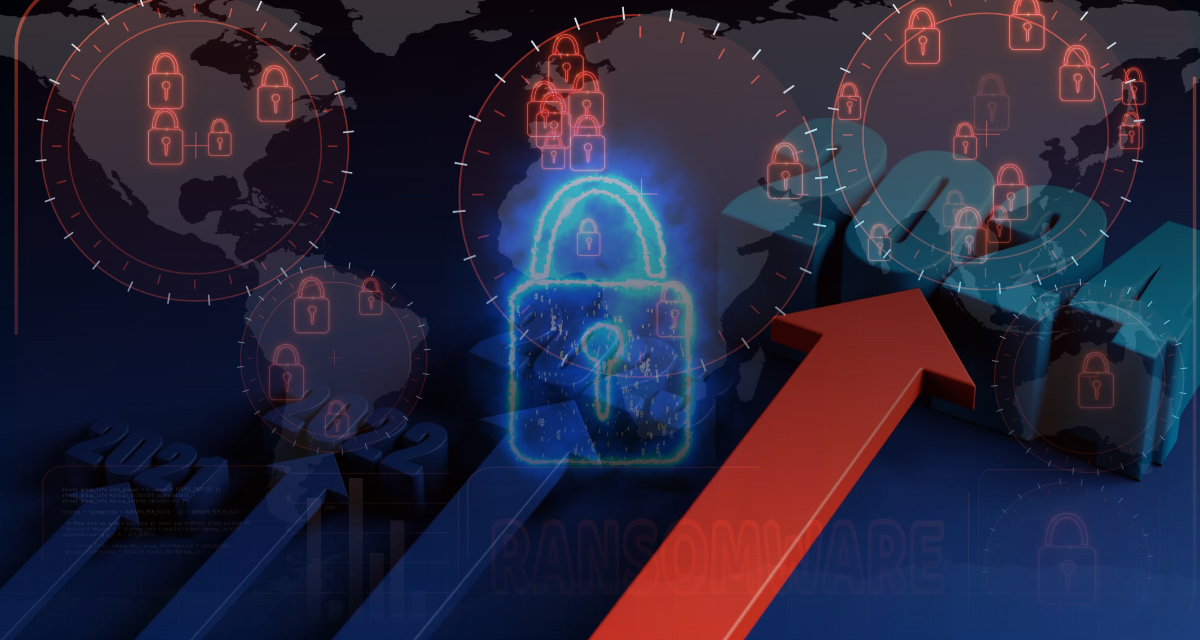
Survey finds 57% of respondents had experienced ransomware attacks in past year

By CybersecAsia editors | Tuesday, August 12, 2025, 3:49 PM Asia/Singapore

Survey finds 57% of respondents had experienced ransomware attacks in past year

2,000 IT and security decision-makers were polled to revealed ransomware attack rates, repeat victim impact, and data recovery challenges experienced.

Based on a April – May 2025 survey of 2,000 IT and security decision-makers* across North America, Europe, and Asia-Pacific on the experience and impact of ransomware incidents in the prior 12 months, a cybersecurity firm has shared some data trends findings on attack prevalence, patterns, and organizational responses  with the media.

First, 57% of surveyed organizations had indicated that they had experienced at least one successful ransomware attack in the past year. Of these, 38% had indicated being affected twice or more. Sector data showed that 67% of healthcare respondents and 65% of local government respondents had indicated being affected.

Second, 71% of respondents who had experienced an email breach in the same period had also indicated that they had been hit by ransomware.

Other findings

Third, 69% of respondents that were repeat victims had indicated that they were juggling too many different security tools, and 62% of these victims had indicated that their security tools could not integrate with one another. Also:

  • 32% of all ransomware victims in the survey had indicated that they had paid a ransom to recover or restore data. This proportion was 37% among those that had been affected twice or more. Within the Asia-Pacific data subset, 34% of respondents had indicated paying a ransom.
  • 34% of ransom-paying respondents had indicated that they did not recover all their data paying up. 65% of those affected had indicated that they had restored their data from backups.
  • 24% of ransomware incidents (according to activity-based responses, had involved data encryption; 27% involved data theft; and 29% involved installation of additional malicious payloads. Other cited attacker activities included infecting multiple endpoints (26%), lateral movement across networks (25%), embedding backdoors or persistence mechanisms (21%), wiping backups (19%), and deleting shadow copies of files (19%).
  • 27% of respondents that were victims had indicated that attackers had exposed or published stolen data. Pressure tactics reported by respondents included threats to partners, shareholders, or customers (22%), threats to alert authorities or the press (21%), and threats to staff (16%).
  • The most frequently cited business impact was brand and company reputation damage (41%), followed by downtime and operational disruption (38%), recovery costs (36%), and loss of sensitive data (34%). One in four respondents in the victims group had indicated losing existing customers (25%) and an equal proportion had indicated losing new business opportunities (25%).

According to Mark Lukie, Director of Solution Architects (Asia-Pacific), Barracuda, the firm that shared its survey findings, respondents in that region had indicated that “fragmented security environments and complex IT infrastructures” had contributed to “blind spots for attackers to exploit”. He also noted that organizations need to “prioritize visibility, integration, and proactive defense measures — including strong backup strategies.”

*senior IT and security decision‑makers in organizations with 50 to 2,000 employees spanning multiple industries in the U.S., UK, France, Germany, Austria, Switzerland, Belgium, the Netherlands, Luxembourg, Denmark, Finland, Norway, Sweden, Australia, India, and Japan. No other critical methodological details were supplied.

Share:

PreviousSurveyed IT professionals report 78% ransomware targeting: highest ransom payments paid by APAC
NextCritical zero-day exploits dormant WinRAR vulnerability to target global Windows systems

Related Posts

Watch out! Most Android apps vulnerable to the StrandHogg flaw

Watch out! Most Android apps vulnerable to the StrandHogg flaw

Wednesday, December 4, 2019

Three best practices for identifying security blind spots in OT/IT

Three best practices for identifying security blind spots in OT/IT

Tuesday, August 31, 2021

When we know remote-working puts corporate cybersecurity at risk …

When we know remote-working puts corporate cybersecurity at risk …

Friday, August 21, 2020

Low entry barriers give rise to Infostealing-as-a-Service groups

Low entry barriers give rise to Infostealing-as-a-Service groups

Monday, December 5, 2022

Leave a reply Cancel reply

You must be logged in to post a comment.

Voters-draw/RCA-Sponsors

Slide
Slide
Slide
Slide
Slide
Slide
Slide
Slide
Slide
Slide
Slide
Slide
Slide
Slide
previous arrow
next arrow

CybersecAsia Voting Placement

Gamification listing or Participate Now

PARTICIPATE NOW

Vote Now -Placement(Google Ads)

Top-Sidebar-banner

Whitepapers

  • Critical Security Threatsand the Need for ZTNA: How evolving cyberattacks demand a Zero Trust approach

    Critical Security Threatsand the Need for ZTNA: How evolving cyberattacks demand a Zero Trust approach

    Cyber threats have become more frequent and sophisticated, targeting organizations of all sizes across all …Download Whitepaper
  • Zero Trust Made Simple: Why it matters and how to get started

    Zero Trust Made Simple: Why it matters and how to get started

    Data breaches and cyberattacks are no longer limited to large, high-profile organizations.Download Whitepaper
  • Cloud Secure Edge: Remote access, better security

    Cloud Secure Edge: Remote access, better security

    ​SonicWall Cloud Secure Edge™ is a modern, cloud-native Security Service Edge (SSE) solution that addresses …Download Whitepaper
  • Closing the Gap in Email Security:How To Stop The 7 Most SinisterAI-Powered Phishing Threats

    Closing the Gap in Email Security:How To Stop The 7 Most SinisterAI-Powered Phishing Threats

    Insider threats continue to be a major cybersecurity risk in 2024. Explore more insights on …Download Whitepaper

Middle-sidebar-banner

Case Studies

  • How a Vietnamese D2C retailer built its own secure digital infrastructure

    How a Vietnamese D2C retailer built its own secure digital infrastructure

    Would your organization build your own digital infrastructure – including AI governance and cybersecurity – …Read more
  • Cyber protection for medical clinics in Singapore

    Cyber protection for medical clinics in Singapore

    As Singapore’s healthcare sector becomes increasingly digital and interconnected, clinics are facing heightened cyber risks, …Read more
  • India’s WazirX strengthens governance and digital asset security

    India’s WazirX strengthens governance and digital asset security

    Revamping its custody infrastructure using multi‑party computation tools has improved operational resilience and institutional‑grade safeguardsRead more
  • Bangladesh LGED modernizes communication while addressing data security concerns

    Bangladesh LGED modernizes communication while addressing data security concerns

    To meet emerging data localization/privacy regulations, the government engineering agency deploys a secure, unified digital …Read more

Bottom sidebar

Other News

  • ICAC Commissioner attends first IAACA European regional anti-corruption conference in Hungary

    Friday, July 3, 2026
    BUDAPEST, Hungary, July 2, 2026 …Read More »
  • Penta Security Sets the Benchmark for Web Application Security, Earning Frost & Sullivan’s 2026 South Korea Company of the Year Recognition

    Thursday, July 2, 2026
    By combining intelligent threat detection, …Read More »
  • SK shieldus Receives Frost & Sullivan’s 2026 APAC Customer Value Leadership Recognition for Excellence in Cybersecurity Services

    Monday, June 29, 2026
    The company is recognized for …Read More »
  • Global Tech Shift: Tune Talk Launches World’s First Network-Enforced Child Safety Mobile Plan, Bypassing App-Level Limitations

    Saturday, June 27, 2026
    PETALING JAYA, Malaysia, June 26, …Read More »
  • DJI Enterprise Advances Industry with New Framework for Dock as First Responder (DFR) Deployments

    Thursday, June 25, 2026
    New White Paper Outlines Best …Read More »
  • Our Brands
  • DigiconAsia
  • MartechAsia
  • Home
  • About Us
  • Contact Us
  • Sitemap
  • Privacy & Cookies
  • Terms of Use
  • Advertising & Reprint Policy
  • Media Kit
  • Subscribe
  • Manage Subscriptions
  • Newsletter

Copyright © 2026 CybersecAsia All Rights Reserved.