
Cybersecurity News in Asia

RECENT STORIES:

SEGA moves faster with flow-based network monitoring
Three strategies for closing the gap between backup and real recovery ...
CVSS 9.6 vulnerabilities in two major PDF tools exploited since late 2...
Q-Day is coming. Are you ready?
How lean defence teams turn endpoint insights into measurable risk red...
Is your “perfect match” an AI? 
LOGIN REGISTER
CybersecAsia
  • Features
    • Featured

      Q-Day is coming. Are you ready?

      Q-Day is coming. Are you ready?

      Tuesday, April 14, 2026, 12:40 PM Asia/Singapore | Features
    • Featured

      How lean defence teams turn endpoint insights into measurable risk reduction

      How lean defence teams turn endpoint insights into measurable risk reduction

      Monday, April 13, 2026, 3:15 PM Asia/Singapore | Features
    • Featured

      Physical and digital security converge in APAC

      Physical and digital security converge in APAC

      Monday, April 6, 2026, 2:22 PM Asia/Singapore | Features
  • Opinions
  • Tips
  • Whitepapers
  • Awards 2025
  • Directory
  • E-Learning

Select Page

News

Even phishing is now becoming a commoditized tool for fraudsters: threat report

By CybersecAsia editors | Friday, March 28, 2025, 2:34 PM Asia/Singapore

Even phishing is now becoming a commoditized tool for fraudsters: threat report

In one cybersecurity firm’s Jan/Feb 2025 incidence metrics, attacks originating from Phishing-as-a-Service threat groups had surged in its global user base

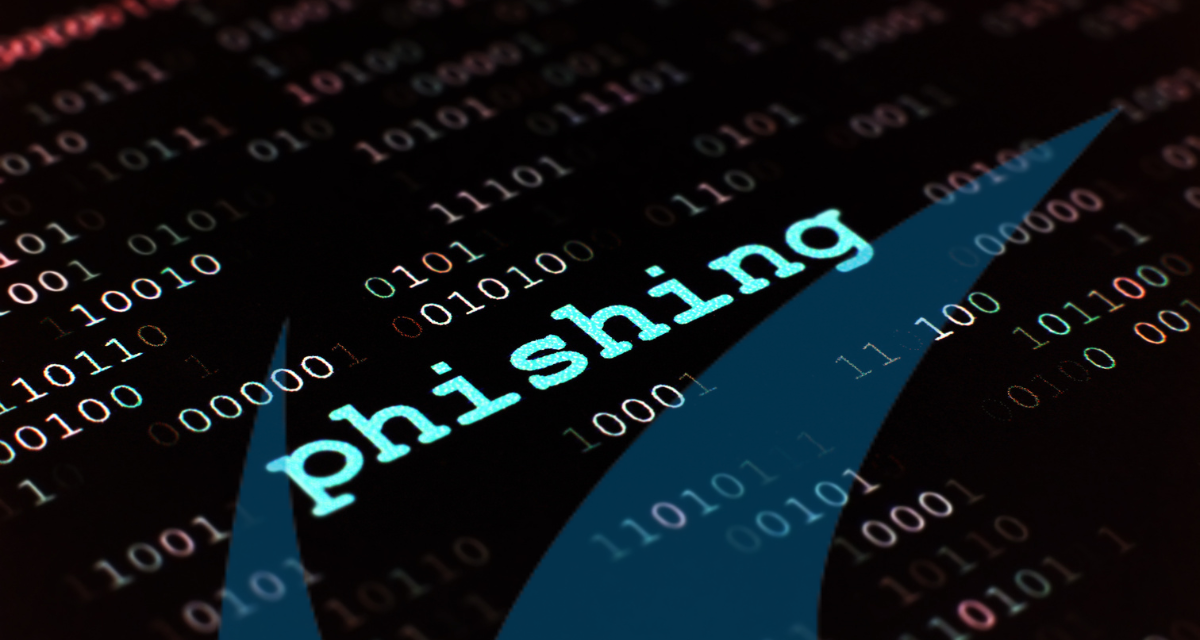
In the first few months of 2025, a cybersecurity firm had registered a massive spike in Phishing-as-a-service (PhaaS) attacks targeting its protection ecosystem around the world.

Amid the more-than-a-million attacks detected, three PhaaS groups were the most prominent: Tycoon 2FA (89%), EvilProxy (8%), and Sneaky 2FA (3%).

According to Saravanan Mohankumar, Threat Analyst, Barracuda, the firm reporting the PhaaS trend in its user base: “The platforms that power PhaaS are increasingly complex and evasive, making phishing attacks both harder for traditional security tools to detect and more powerful in terms of the damage they can do. An advanced, multi-layered defence strategy with AI/ML enabled detection, combined with a strong security culture and consistent security access and authentication policies, can help to protect organizations and employees against (such) attacks.”

Here are the profiles of the three threat groups:

  1. Tycoon 2FA: rapid innovation in evasion tools

    Since its early visibility in January 2025, the threat group has continued to develop and enhance its evasive tactics, becoming even harder to detect:

    • The code script for credential theft and exfiltration is now encrypted and obfuscated using a substitution cypher, and sometimes an invisible character (known as a Hangul Filler).
    • The new and enhanced script can identify a victim’s browser type to help with attack customization and features links to the Telegram service that can be used to secretly send stolen data to attackers.
    • The script also enables parts of a web page to be updated independently of the rest of the page, and can include AES encryption to disguise credentials before exfiltrating them to a remote server. All this makes detection by security tools far more difficult.
  1. EvilProxy: a dangerously accessible tool

    This group’s attacks can be implemented with minimal technical expertise. It targets widely used services such as Microsoft 365, Google, and other cloud-based platforms, tricking victims into entering their credentials into seemingly legitimate login pages. The source code used by EvilProxy for its phishing webpage closely matches that of the original Microsoft login page. This makes it difficult to distinguish the malicious site from the original (legitimate) website.

      1. Sneaky 2FA: It fills-in the phishing form for victims

        This is a platform for Adversary-in-the-Middle attacks targeting Microsoft 365 accounts in search of credentials and access. Like Tycoon 2FA, it leverages the messaging platform Telegram. Sneaky 2FA checks to make sure the user is a legitimate target and not a security tool, bot or other adversary: if this is the case, the “victim” is redirected to a harmless site elsewhere, before pre-filling the fake phishing page with the victim’s email address by abusing Microsoft 365’s autograb functionality.

            According to Barracuda experts, people can spot PhaaS attacks from the above groups in the following instances, and avoid entering credentials into the phishing page:

            • A login page includes a “.ru” top-level domain (the last part of a URL), and the victim’s email ID is embedded in the phishing URL either in the form of plain text or Base64-encoded. This could indicate a Tycoon 2FA attack.
            • EvilProxy attacks are harder to detect because they use a random URL. However, check the Microsoft/Google login page URL to make sure it is legitimate and not spoofed. Another giveaway is unusual multi-factor authentication prompts that appear even when no login is actually being attempted.
            • Check if the webpage URL contains a 150 alphanumeric string followed by either /verify, /index, or /validate at the end of the URL. This is a clue to the presence of Sneaky 2FA.

    Share:

    PreviousGlobal Tech Visionaries and Industry Leaders to Discuss The Future of Tech at ATxEnterprise 2025
    NextLunit Announces Partnership with the National Cancer Institute to Advance AI-Powered Biomarker Research

    Related Posts

    Hackers exploiting vulnerabilities faster than organizations can patch

    Hackers exploiting vulnerabilities faster than organizations can patch

    Wednesday, March 5, 2025

    The AI paradox in cybersecurity

    The AI paradox in cybersecurity

    Wednesday, October 15, 2025

    US presidential election expected to be a tipping point of e-crime this year

    US presidential election expected to be a tipping point of e-crime this year

    Thursday, October 29, 2020

    Filipinos laud adoption of five-year national cybersecurity plan

    Filipinos laud adoption of five-year national cybersecurity plan

    Tuesday, April 16, 2024

    Leave a reply Cancel reply

    You must be logged in to post a comment.

    Voters-draw/RCA-Sponsors

    Slide
    Slide
    Slide
    Slide
    Slide
    Slide
    Slide
    Slide
    Slide
    Slide
    Slide
    Slide
    Slide
    Slide
    previous arrow
    next arrow

    CybersecAsia Voting Placement

    Gamification listing or Participate Now

    PARTICIPATE NOW

    Vote Now -Placement(Google Ads)

    Top-Sidebar-banner

    Whitepapers

    • Closing the Gap in Email Security:How To Stop The 7 Most SinisterAI-Powered Phishing Threats

      Closing the Gap in Email Security:How To Stop The 7 Most SinisterAI-Powered Phishing Threats

      Insider threats continue to be a major cybersecurity risk in 2024. Explore more insights on …Download Whitepaper
    • 2024 Insider Threat Report: Trends, Challenges, and Solutions

      2024 Insider Threat Report: Trends, Challenges, and Solutions

      Insider threats continue to be a major cybersecurity risk in 2024. Explore more insights on …Download Whitepaper
    • AI-Powered Cyber Ops: Redefining Cloud Security for 2025

      AI-Powered Cyber Ops: Redefining Cloud Security for 2025

      The future of cybersecurity is a perfect storm: AI-driven attacks, cloud expansion, and the convergence …Download Whitepaper
    • Data Management in the Age of Cloud and AI

      Data Management in the Age of Cloud and AI

      In today’s Asia Pacific business environment, organizations are leaning on hybrid multi-cloud infrastructures and advanced …Download Whitepaper

    Middle-sidebar-banner

    Case Studies

    • Cyber protection for medical clinics in Singapore

      Cyber protection for medical clinics in Singapore

      As Singapore’s healthcare sector becomes increasingly digital and interconnected, clinics are facing heightened cyber risks, …Read more
    • India’s WazirX strengthens governance and digital asset security

      India’s WazirX strengthens governance and digital asset security

      Revamping its custody infrastructure using multi‑party computation tools has improved operational resilience and institutional‑grade safeguardsRead more
    • Bangladesh LGED modernizes communication while addressing data security concerns

      Bangladesh LGED modernizes communication while addressing data security concerns

      To meet emerging data localization/privacy regulations, the government engineering agency deploys a secure, unified digital …Read more
    • What AI worries keep members of the Association of Certified Fraud Examiners sleepless?

      What AI worries keep members of the Association of Certified Fraud Examiners sleepless?

      This case study examines how many anti-fraud professionals reported feeling underprepared to counter rising AI-driven …Read more

    Bottom sidebar

    Other News

    • Hong Kong Anti-graft Watchdog: Clean Governance and Ethical Business is Key to Hong Kong’s Sustainable Business Development

      Thursday, April 9, 2026
      HONG KONG, April 9, 2026 …Read More »
    • Goodix Launches the World’s First eSE Solution Designed for AI Agents

      Thursday, April 9, 2026
      SHENZHEN, China, April 8, 2026 …Read More »
    • LRQA Amplifies Industrial and Cyber Resilience in APAC at CS4CA Summit 2026

      Thursday, April 9, 2026
      SINGAPORE, April 8, 2026 /PRNewswire/ …Read More »
    • MegazoneCloud Achieves Profitability Turnaround with $1.16 Billion Revenue in 2025

      Thursday, April 9, 2026
      Revenue grows 28% YoY… EBITDA …Read More »
    • Taoping Expands Smart Elevator Services Business with New Orders Exceeding US$3 Million

      Wednesday, April 8, 2026
      TIANJIN, China, April 8, 2026 …Read More »
    • Our Brands
    • DigiconAsia
    • MartechAsia
    • Home
    • About Us
    • Contact Us
    • Sitemap
    • Privacy & Cookies
    • Terms of Use
    • Advertising & Reprint Policy
    • Media Kit
    • Subscribe
    • Manage Subscriptions
    • Newsletter

    Copyright © 2026 CybersecAsia All Rights Reserved.