


Cybersecurity News in Asia

RECENT STORIES:

SEGA moves faster with flow-based network monitoring
As AI reshapes fraud prevention, human oversight remains essential
Infobip research reveals APAC businesses scaling AI-powered defenses t...
SPTel Receives Frost & Sullivan’s 2026 Singapore Company of ...
Critical RCE vulnerability discovered in open source content managemen...
Jailbroken AI deploys and migrates botnet infrastructure in six minute...
LOGIN REGISTER
CybersecAsia
  • Features
    • Featured

      S E Asia governments targeted by cyber-espionage group

      S E Asia governments targeted by cyber-espionage group

      Tuesday, June 23, 2026, 8:00 AM Asia/Singapore | Features
    • Featured

      Rethinking network and infrastructure design for resilience

      Rethinking network and infrastructure design for resilience

      Thursday, June 18, 2026, 2:17 PM Asia/Singapore | Features
    • Featured

      Bringing cybercriminals to justice in APAC

      Bringing cybercriminals to justice in APAC

      Thursday, June 11, 2026, 10:30 AM Asia/Singapore | Features
  • Opinions
  • Tips
  • Whitepapers
  • AWARDS 2026
  • Directory
  • E-Learning

Select Page

As AI reshapes fraud prevention, human oversight remains essential

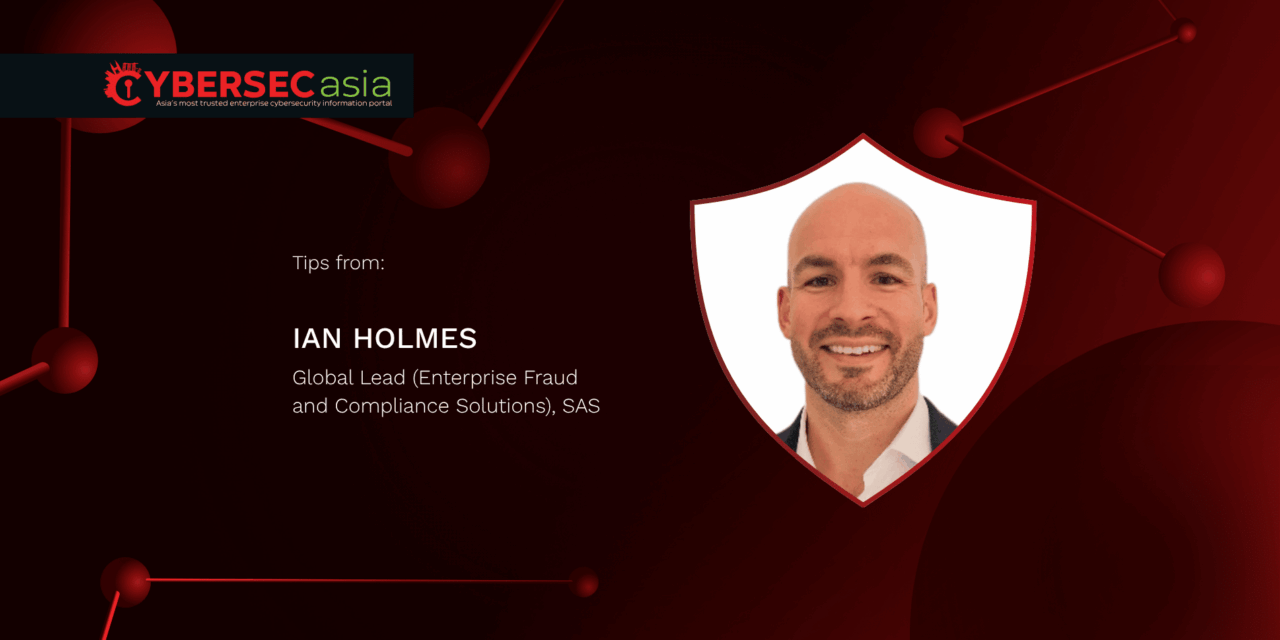
By Ian Holmes, Global Lead (Enterprise Fraud and Compliance Solutions), SAS | Tuesday, July 21, 2026, 3:25 PM Asia/Singapore

As AI reshapes fraud prevention, human oversight remains essential

Even when AI models are accurate, siloed teams, legacy systems, and false positives can weaken fraud defenses.

Today, it would be easy to assume that fighting financial crime should be becoming easier with generative AI.

However, with fraudsters also using AI to get ahead, so banks and other organizations often find themselves stuck between competing anxieties: on one side, technology teams worry that data cannot be integrated or made available quickly enough; on the other, customer-facing teams fear that overly aggressive controls will drive away customers through false positives.

As a result, many fraud systems are still designed around relatively simple models and rule thresholds. The real-world consequences are easy to see: customer service teams struggle to explain or justify automated decisions; alerts pile up faster than investigative teams can handle; false positives frustrate customers; and compliance teams risk missing signals in a glut of unsubstantiated alerts.

The fact is that systems can be technically accurate yet operationally fragile. That is more a failure of design than a gap in technology. Regulatory pressure is also building towards the responsible use of AI. Supervisors are making it clear that “black box” approaches will not be sufficient in high-stakes domains such as fraud and financial crime. Explainability, accountability and human oversight are becoming baseline expectations, not optional extras.

Siloed teams exacerbate the problem

In many organizations, ongoing silos between fraud, cyber and compliance teams remain one of the biggest problems. Compliance is still fragmented, with weak communication across onboarding, due diligence and transaction-monitoring teams, driving delays, errors and false positives.

These silos persist because teams are often stuck with legacy systems built for different purposes, with limited native integration. As a result, they have no choice but to lean on manual data-sharing or makeshift bridges between systems.

While siloed teams hold deep expertise in their own areas, they tend to struggle under pressure from multi-faceted risk exposures. It is difficult for specialists working in isolation to thwart complex, fast-evolving risks, especially as fraudsters quickly learn detection strategies and adapt their tactics to exploit blind spots.

Where human-first systems are enablers

In this environment, human judgment should not be seen as a bottleneck. AI is astoundingly good at spotting patterns and anomalies, and its insights are most valuable when humans can provide context, interpret intent and prioritize what really matters during the design and deployment of AI systems.

Fraud prevention is most effective when AI and humans with business context and risk expertise work together throughout the lifecycle — from model design and training data selection to alert triage and case management. That requires systems built to incorporate expert input, not exclude it. Instead of centering on any single solution, forward-leaning institutions are experimenting with platforms that surface clear, explainable insights rather than opaque scores; reduce noise for investigators by prioritizing risk; and support workflows that bring fraud, cyber and compliance teams together rather than keeping them in silos.

Instead of centering on any single solution, forward-leaning institutions are experimenting with platforms that surface clear, explainable insights rather than opaque scores; reduce noise for investigators by prioritizing risk; and support workflows that bring fraud, cyber and compliance teams together rather than keeping them in silos.

Here are some usable strategies to keep humans in the loop, optimally:

  • Build AI with human oversight from the start, not as an afterthought
  • Design controls to balance fraud prevention with customer experience
  • Prioritize explainability so investigators can understand why an alert was raised
  • Integrate fraud, cyber and compliance data to reduce blind spots
  • Replace manual bridges between systems with connected workflows
  • Triage alerts by risk and business impact, not just volume
  • Reduce false positives to ease investigator fatigue and customer frustration
  • Make escalation paths clear for complex or high-value cases
  • Test models against evolving fraud tactics, not just historical patterns
  • Include operational teams in model design, validation and tuning
  • Prepare for regulatory review by documenting decisions, overrides and outcomes

When machine speed meets human accountability, the ultimate payoff is business accountability resilience.


Share:

PreviousInfobip research reveals APAC businesses scaling AI-powered defenses to counter surge in automated fraud

Related Posts

Ransomware targeting SEA SMEs actually dropped in 2020: report

Ransomware targeting SEA SMEs actually dropped in 2020: report

Wednesday, April 21, 2021

APT group peddling fake AI-driven robotic dolls now linked to Iran

APT group peddling fake AI-driven robotic dolls now linked to Iran

Tuesday, August 23, 2022

Enterprise security camera firm lost control of its own 150,000 IP cameras

Enterprise security camera firm lost control of its own 150,000 IP cameras

Tuesday, April 6, 2021

Choosing the right path in your data management journey

Choosing the right path in your data management journey

Thursday, July 16, 2020

Leave a reply Cancel reply

You must be logged in to post a comment.

Voters-draw/RCA-Sponsors

Slide

CybersecAsia Voting Placement

Gamification listing or Participate Now

PARTICIPATE NOW

Vote Now -Placement(Google Ads)

Top-Sidebar-banner

Whitepapers

  • Critical Security Threatsand the Need for ZTNA: How evolving cyberattacks demand a Zero Trust approach

    Critical Security Threatsand the Need for ZTNA: How evolving cyberattacks demand a Zero Trust approach

    Cyber threats have become more frequent and sophisticated, targeting organizations of all sizes across all …Download Whitepaper
  • Zero Trust Made Simple: Why it matters and how to get started

    Zero Trust Made Simple: Why it matters and how to get started

    Data breaches and cyberattacks are no longer limited to large, high-profile organizations.Download Whitepaper
  • Cloud Secure Edge: Remote access, better security

    Cloud Secure Edge: Remote access, better security

    ​SonicWall Cloud Secure Edge™ is a modern, cloud-native Security Service Edge (SSE) solution that addresses …Download Whitepaper
  • Closing the Gap in Email Security:How To Stop The 7 Most SinisterAI-Powered Phishing Threats

    Closing the Gap in Email Security:How To Stop The 7 Most SinisterAI-Powered Phishing Threats

    Insider threats continue to be a major cybersecurity risk in 2024. Explore more insights on …Download Whitepaper

Middle-sidebar-banner

Case Studies

  • How a Vietnamese D2C retailer built its own secure digital infrastructure

    How a Vietnamese D2C retailer built its own secure digital infrastructure

    Would your organization build your own digital infrastructure – including AI governance and cybersecurity – …Read more
  • Cyber protection for medical clinics in Singapore

    Cyber protection for medical clinics in Singapore

    As Singapore’s healthcare sector becomes increasingly digital and interconnected, clinics are facing heightened cyber risks, …Read more
  • India’s WazirX strengthens governance and digital asset security

    India’s WazirX strengthens governance and digital asset security

    Revamping its custody infrastructure using multi‑party computation tools has improved operational resilience and institutional‑grade safeguardsRead more
  • Bangladesh LGED modernizes communication while addressing data security concerns

    Bangladesh LGED modernizes communication while addressing data security concerns

    To meet emerging data localization/privacy regulations, the government engineering agency deploys a secure, unified digital …Read more

Bottom sidebar

Other News

  • Infobip research reveals APAC businesses scaling AI-powered defenses to counter surge in automated fraud

    Tuesday, July 21, 2026
    Fraudsters are leveraging AI to …Read More »
  • SPTel Receives Frost & Sullivan’s 2026 Singapore Company of the Year Recognition for Leadership in Quantum-Safe Network Services

    Tuesday, July 21, 2026
    Recognized for pioneering commercial quantum-safe …Read More »
  • Singtel Receives Four Frost & Sullivan 2026 Recognitions for Leadership in Enterprise Connectivity, Cybersecurity, and Digital Transformation

    Sunday, July 19, 2026
    The recognitions highlight Singtel’s leadership …Read More »
  • CloudMile and Tookitaki Sign MoU to Strengthen AI-Driven Financial Crime Prevention in Malaysia

    Wednesday, July 15, 2026
    KUALA LUMPUR, Malaysia, July 15, …Read More »
  • VIDA Demonstrates How Passwordless Authentication Can Break the Scam Chain

    Monday, July 13, 2026
    KUALA LUMPUR, Malaysia, July 13, …Read More »
  • Our Brands
  • DigiconAsia
  • MartechAsia
  • Home
  • About Us
  • Contact Us
  • Sitemap
  • Privacy & Cookies
  • Terms of Use
  • Advertising & Reprint Policy
  • Media Kit
  • Subscribe
  • Manage Subscriptions
  • Newsletter

Copyright © 2026 CybersecAsia All Rights Reserved.