


Cybersecurity News in Asia

RECENT STORIES:

SEGA moves faster with flow-based network monitoring
Sparsa AI Launches Sovereign Enterprise AI Platform with Global Deploy...
Conifers AI Opens Singapore Data Region, Bringing Local Data Residency...
Finally taken down: Residential proxy network of at least 2m smart dev...
DXC Opens Flagship AI-first Customer Experience Center in Bengaluru
AI speeds threat discovery as coverage gaps persist: survey
LOGIN REGISTER
CybersecAsia
  • Features
    • Featured

      S E Asia governments targeted by cyber-espionage group

      S E Asia governments targeted by cyber-espionage group

      Tuesday, June 23, 2026, 8:00 AM Asia/Singapore | Features
    • Featured

      Rethinking network and infrastructure design for resilience

      Rethinking network and infrastructure design for resilience

      Thursday, June 18, 2026, 2:17 PM Asia/Singapore | Features
    • Featured

      Bringing cybercriminals to justice in APAC

      Bringing cybercriminals to justice in APAC

      Thursday, June 11, 2026, 10:30 AM Asia/Singapore | Features
  • Opinions
  • Tips
  • Whitepapers
  • AWARDS 2026
  • Directory
  • E-Learning

Select Page

News

Which four tech brands were most exploited in phishing and social media scams?

By CybersecAsia editors | Friday, May 8, 2026, 9:13 AM Asia/Singapore

Which four tech brands were most exploited in phishing and social media scams?

For Q1 2026, one cybersecurity firm’s user base metrics sieved out familiar brands that spell MAGA.

Based on its user base metrics for Q1 2026, a cybersecurity firm analyzed phishing activity trends and found that attackers continue to impersonate widely used digital services and established brands to leverage social engineering as a primary intrusion method.

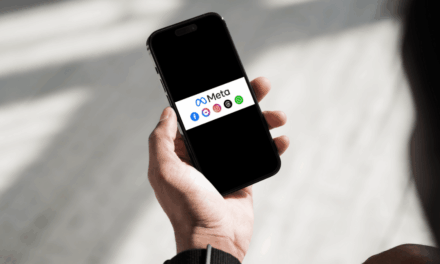
The data shows a high concentration of impersonation activity focused on a small number of widely used platforms. One major provider of enterprise and cloud services accounted for a high proportion of the observed phishing attempts in the data, followed by other prominent providers across consumer devices, search, e-commerce, and professional networking. Together, the four most frequently impersonated services represented nearly half of all recorded incidents: Microsoft (22%), Apple (11%), Google (9%), Amazon (7%).

By sector, technology services remained the most targeted, followed by social media platforms, alongside financial services.

Observed campaigns during the period of data analysis highlight common tactics.

  • One example involved a counterfeit login page hosted on a deceptive web address designed to resemble a legitimate authentication portal. The page prompted users to enter credentials through a simulated login flow that ultimately failed, suggesting credential harvesting rather than genuine access.
  • In another case, attackers created a fraudulent e-commerce site mimicking a gaming platform, advertising unrealistic discounts and requiring payment via bank transfer — an established indicator of fraud.
  • A separate campaign replicated a web-based messaging interface and used QR code prompts to trick users into linking their accounts to attacker-controlled sessions, potentially enabling unauthorized access without immediate detection.
  • Phishing was also used to distribute malware. A malicious website posing as a software download portal delivered a remote access tool, allowing attackers to take control of infected systems after installation.

The findings point to two primary risks: external impersonation targeting customers and partners, and internal exposure when employees engage with fraudulent communications.

Analysts from Check Point Research, the firm that shared its Q1 user ecosystem review, note that phishing remains effective because it exploits routine user behavior and trust in familiar digital services, rather than relying solely on technical vulnerabilities.


Share:

PreviousThe problem with CAPTCHAs – and the password perception gap
NextHackers leverage jailbroken AI to probe OT systems in Mexican Water Breach: report

Related Posts

Public service leaders must possess tech competencies to lead their nation

Public service leaders must possess tech competencies to lead their nation

Monday, June 28, 2021

APAC’s cyberthreat landscape in 2023: a vivid snapshot

APAC’s cyberthreat landscape in 2023: a vivid snapshot

Friday, March 15, 2024

Are your loyalty rewards programs being defrauded?

Are your loyalty rewards programs being defrauded?

Thursday, February 6, 2020

Hackers report security vulnerability to 77% of customers within 24 hours

Hackers report security vulnerability to 77% of customers within 24 hours

Monday, September 2, 2019

Leave a reply Cancel reply

You must be logged in to post a comment.

Voters-draw/RCA-Sponsors

Slide
Slide
Slide
Slide
Slide
Slide
Slide
Slide
Slide
Slide
Slide
Slide
Slide
Slide
previous arrow
next arrow

CybersecAsia Voting Placement

Gamification listing or Participate Now

PARTICIPATE NOW

Vote Now -Placement(Google Ads)

Top-Sidebar-banner

Whitepapers

  • Critical Security Threatsand the Need for ZTNA: How evolving cyberattacks demand a Zero Trust approach

    Critical Security Threatsand the Need for ZTNA: How evolving cyberattacks demand a Zero Trust approach

    Cyber threats have become more frequent and sophisticated, targeting organizations of all sizes across all …Download Whitepaper
  • Zero Trust Made Simple: Why it matters and how to get started

    Zero Trust Made Simple: Why it matters and how to get started

    Data breaches and cyberattacks are no longer limited to large, high-profile organizations.Download Whitepaper
  • Cloud Secure Edge: Remote access, better security

    Cloud Secure Edge: Remote access, better security

    ​SonicWall Cloud Secure Edge™ is a modern, cloud-native Security Service Edge (SSE) solution that addresses …Download Whitepaper
  • Closing the Gap in Email Security:How To Stop The 7 Most SinisterAI-Powered Phishing Threats

    Closing the Gap in Email Security:How To Stop The 7 Most SinisterAI-Powered Phishing Threats

    Insider threats continue to be a major cybersecurity risk in 2024. Explore more insights on …Download Whitepaper

Middle-sidebar-banner

Case Studies

  • How a Vietnamese D2C retailer built its own secure digital infrastructure

    How a Vietnamese D2C retailer built its own secure digital infrastructure

    Would your organization build your own digital infrastructure – including AI governance and cybersecurity – …Read more
  • Cyber protection for medical clinics in Singapore

    Cyber protection for medical clinics in Singapore

    As Singapore’s healthcare sector becomes increasingly digital and interconnected, clinics are facing heightened cyber risks, …Read more
  • India’s WazirX strengthens governance and digital asset security

    India’s WazirX strengthens governance and digital asset security

    Revamping its custody infrastructure using multi‑party computation tools has improved operational resilience and institutional‑grade safeguardsRead more
  • Bangladesh LGED modernizes communication while addressing data security concerns

    Bangladesh LGED modernizes communication while addressing data security concerns

    To meet emerging data localization/privacy regulations, the government engineering agency deploys a secure, unified digital …Read more

Bottom sidebar

Other News

  • Sparsa AI Launches Sovereign Enterprise AI Platform with Global Deployment at QNET

    Wednesday, July 8, 2026
    The Sparsa AI Enterprise Operating …Read More »
  • Conifers AI Opens Singapore Data Region, Bringing Local Data Residency to Asia-Pacific Security Teams

    Wednesday, July 8, 2026
    With data regions now spanning …Read More »
  • DXC Opens Flagship AI-first Customer Experience Center in Bengaluru

    Tuesday, July 7, 2026
    Strengthens DXC’s India presence with …Read More »
  • D-Link Brings Advanced AI Fall Detection and Privacy Protection to Home Elderly Care with the New DCS-8610 Wi-Fi Camera

    Monday, July 6, 2026
    Advanced technologies traditionally found in …Read More »
  • ICAC Commissioner attends first IAACA European regional anti-corruption conference in Hungary

    Friday, July 3, 2026
    BUDAPEST, Hungary, July 2, 2026 …Read More »
  • Our Brands
  • DigiconAsia
  • MartechAsia
  • Home
  • About Us
  • Contact Us
  • Sitemap
  • Privacy & Cookies
  • Terms of Use
  • Advertising & Reprint Policy
  • Media Kit
  • Subscribe
  • Manage Subscriptions
  • Newsletter

Copyright © 2026 CybersecAsia All Rights Reserved.