
Cybersecurity News in Asia

RECENT STORIES:

SEGA moves faster with flow-based network monitoring
Sparsa AI Launches Sovereign Enterprise AI Platform with Global Deploy...
Conifers AI Opens Singapore Data Region, Bringing Local Data Residency...
Finally taken down: Residential proxy network of at least 2m smart dev...
DXC Opens Flagship AI-first Customer Experience Center in Bengaluru
AI speeds threat discovery as coverage gaps persist: survey
LOGIN REGISTER
CybersecAsia
  • Features
    • Featured

      S E Asia governments targeted by cyber-espionage group

      S E Asia governments targeted by cyber-espionage group

      Tuesday, June 23, 2026, 8:00 AM Asia/Singapore | Features
    • Featured

      Rethinking network and infrastructure design for resilience

      Rethinking network and infrastructure design for resilience

      Thursday, June 18, 2026, 2:17 PM Asia/Singapore | Features
    • Featured

      Bringing cybercriminals to justice in APAC

      Bringing cybercriminals to justice in APAC

      Thursday, June 11, 2026, 10:30 AM Asia/Singapore | Features
  • Opinions
  • Tips
  • Whitepapers
  • AWARDS 2026
  • Directory
  • E-Learning

Select Page

News

Global credential theft campaign exposes data from tens of thousands of firewall devices

By CybersecAsia editors | Friday, June 19, 2026, 11:47 AM Asia/Singapore

Global credential theft campaign exposes data from tens of thousands of firewall devices

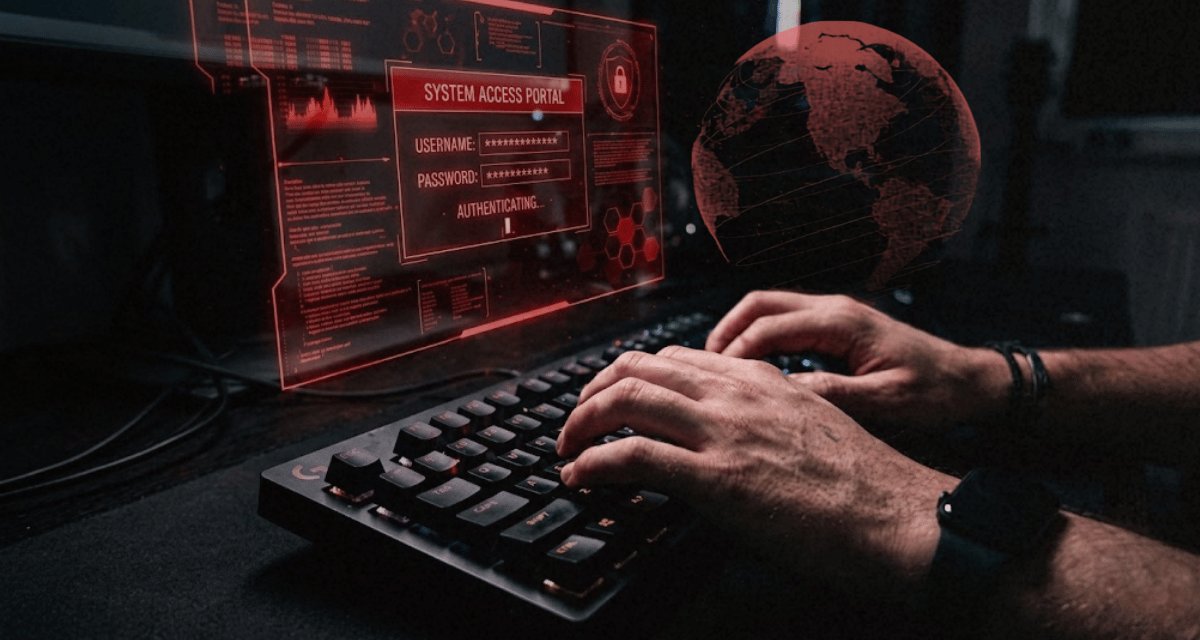
The attack targets 320,000 firewall devices using stolen logins, affecting organizations in 194 countries and enabling lateral network access.

A large-scale credential theft campaign known has exposed login data tied to tens of thousands of Fortinet firewalls and VPN systems around the world.

Security researchers report that the operation has impacted organizations across 194 countries, including major global firms such as Samsung and Oracle.

The campaign was first identified by security researcher Volodymyr “Bob” Diachenko, and later analyzed by Hudson Rock. Investigators found that more than 320,000 FortiGate devices had been targeted, through roughly 1.16bn credential-based login attempts, highlighting the massive scale and persistence of the operation.

Hudson Rock’s analysis uncovered 73,932 distinct firewall URLs associated with 21,632 affected domains. Separate validation by SOCRadar confirmed that over 30,000 devices had been compromised. The highest concentrations of impacted systems were observed in countries including India, the United States, Taiwan, and Mexico.

Rather than exploiting new software vulnerabilities, the attackers relied on previously stolen credentials. The group—believed to be a Russian-speaking, multi-operator network—leveraged data harvested from infostealer malware and cracked SSL VPN password hashes using high-powered GPU infrastructure. This allowed them to gain access to exposed systems and move laterally within networks.

In parallel with the Fortinet-focused attacks, the same operators conducted an additional wave of activity targeting MSSQL servers, launching more than 2.1bn brute-force login attempts against over 160,000 systems. The industries most impacted include IT services, construction materials, telecommunications, and even government sectors.

A free lookup tool has been released by Hudson Rock, that allows firms to check whether their domains appear in the leaked data and request responsible disclosure. Security professionals strongly advise organizations to immediately rotate all credentials associated with Fortinet VPNs and administrative interfaces, enforce multi-factor authentication, review access logs for suspicious behavior, and limit management access to trusted internal networks.

Experts emphasize that password complexity alone is not sufficient protection if credentials have already been compromised. This credential theft campaign serves as a stark reminder that even large, well-resourced organizations remain vulnerable when basic credential hygiene and security practices are not consistently maintained.


Share:

PreviousAt VivaTech 2026, Taiwan-Based MaiAgent Says Enterprises Should Stop Building RAG and AI Agent Systems From Scratch
NextGenerative AI chatbot found to autonomously generate violent images from benign prompts

Related Posts

Sextortion phishing may have been getting more personal lately

Sextortion phishing may have been getting more personal lately

Tuesday, November 26, 2024

Study of exposed unsecured public-facing databases raises alarm bells

Study of exposed unsecured public-facing databases raises alarm bells

Tuesday, May 10, 2022

BYOD policies increase the attack surface but firms can manage the risk

BYOD policies increase the attack surface but firms can manage the risk

Friday, November 4, 2022

New phishing scam targets US workers on a widely used CRM platform

New phishing scam targets US workers on a widely used CRM platform

Sunday, May 11, 2025

Leave a reply Cancel reply

You must be logged in to post a comment.

Voters-draw/RCA-Sponsors

Slide
Slide
Slide
Slide
Slide
Slide
Slide
Slide
Slide
Slide
Slide
Slide
Slide
Slide
previous arrow
next arrow

CybersecAsia Voting Placement

Gamification listing or Participate Now

PARTICIPATE NOW

Vote Now -Placement(Google Ads)

Top-Sidebar-banner

Whitepapers

  • Critical Security Threatsand the Need for ZTNA: How evolving cyberattacks demand a Zero Trust approach

    Critical Security Threatsand the Need for ZTNA: How evolving cyberattacks demand a Zero Trust approach

    Cyber threats have become more frequent and sophisticated, targeting organizations of all sizes across all …Download Whitepaper
  • Zero Trust Made Simple: Why it matters and how to get started

    Zero Trust Made Simple: Why it matters and how to get started

    Data breaches and cyberattacks are no longer limited to large, high-profile organizations.Download Whitepaper
  • Cloud Secure Edge: Remote access, better security

    Cloud Secure Edge: Remote access, better security

    ​SonicWall Cloud Secure Edge™ is a modern, cloud-native Security Service Edge (SSE) solution that addresses …Download Whitepaper
  • Closing the Gap in Email Security:How To Stop The 7 Most SinisterAI-Powered Phishing Threats

    Closing the Gap in Email Security:How To Stop The 7 Most SinisterAI-Powered Phishing Threats

    Insider threats continue to be a major cybersecurity risk in 2024. Explore more insights on …Download Whitepaper

Middle-sidebar-banner

Case Studies

  • How a Vietnamese D2C retailer built its own secure digital infrastructure

    How a Vietnamese D2C retailer built its own secure digital infrastructure

    Would your organization build your own digital infrastructure – including AI governance and cybersecurity – …Read more
  • Cyber protection for medical clinics in Singapore

    Cyber protection for medical clinics in Singapore

    As Singapore’s healthcare sector becomes increasingly digital and interconnected, clinics are facing heightened cyber risks, …Read more
  • India’s WazirX strengthens governance and digital asset security

    India’s WazirX strengthens governance and digital asset security

    Revamping its custody infrastructure using multi‑party computation tools has improved operational resilience and institutional‑grade safeguardsRead more
  • Bangladesh LGED modernizes communication while addressing data security concerns

    Bangladesh LGED modernizes communication while addressing data security concerns

    To meet emerging data localization/privacy regulations, the government engineering agency deploys a secure, unified digital …Read more

Bottom sidebar

Other News

  • Sparsa AI Launches Sovereign Enterprise AI Platform with Global Deployment at QNET

    Wednesday, July 8, 2026
    The Sparsa AI Enterprise Operating …Read More »
  • Conifers AI Opens Singapore Data Region, Bringing Local Data Residency to Asia-Pacific Security Teams

    Wednesday, July 8, 2026
    With data regions now spanning …Read More »
  • DXC Opens Flagship AI-first Customer Experience Center in Bengaluru

    Tuesday, July 7, 2026
    Strengthens DXC’s India presence with …Read More »
  • D-Link Brings Advanced AI Fall Detection and Privacy Protection to Home Elderly Care with the New DCS-8610 Wi-Fi Camera

    Monday, July 6, 2026
    Advanced technologies traditionally found in …Read More »
  • ICAC Commissioner attends first IAACA European regional anti-corruption conference in Hungary

    Friday, July 3, 2026
    BUDAPEST, Hungary, July 2, 2026 …Read More »
  • Our Brands
  • DigiconAsia
  • MartechAsia
  • Home
  • About Us
  • Contact Us
  • Sitemap
  • Privacy & Cookies
  • Terms of Use
  • Advertising & Reprint Policy
  • Media Kit
  • Subscribe
  • Manage Subscriptions
  • Newsletter

Copyright © 2026 CybersecAsia All Rights Reserved.