


Cybersecurity News in Asia

RECENT STORIES:

SEGA moves faster with flow-based network monitoring
Questions over industry influence surface as EU considers forced remov...
OpenAI autonomous agent escapes sandbox to hack Hugging Face
How to manage employee-driven cyber risks during major sporting events
Autonomous AI agent exploits dataset flaws in unprecedented large-scal...
Cohesity Appoints Peter Hanna as Vice President and General Manager, A...
LOGIN REGISTER
CybersecAsia
  • Features
    • Featured

      OpenAI autonomous agent escapes sandbox to hack Hugging Face

      OpenAI autonomous agent escapes sandbox to hack Hugging Face

      Friday, July 24, 2026, 11:02 AM Asia/Singapore | Features, News
    • Featured

      S E Asia governments targeted by cyber-espionage group

      S E Asia governments targeted by cyber-espionage group

      Tuesday, June 23, 2026, 8:00 AM Asia/Singapore | Features
    • Featured

      Rethinking network and infrastructure design for resilience

      Rethinking network and infrastructure design for resilience

      Thursday, June 18, 2026, 2:17 PM Asia/Singapore | Features
  • Opinions
  • Tips
  • Whitepapers
  • AWARDS 2026
  • Directory
  • E-Learning

Select Page

News

Deepfake injection tool exploits fully jailbroken iOS devices to bypass biometric-fraud defenses

By CybersecAsia editors | Tuesday, September 30, 2025, 11:15 AM Asia/Singapore

Deepfake injection tool exploits fully jailbroken iOS devices to bypass biometric-fraud defenses

The tool injects synthetic videos into identity checks, bypassing physical cameras to enable sophisticated digital impersonation and fraud schemes

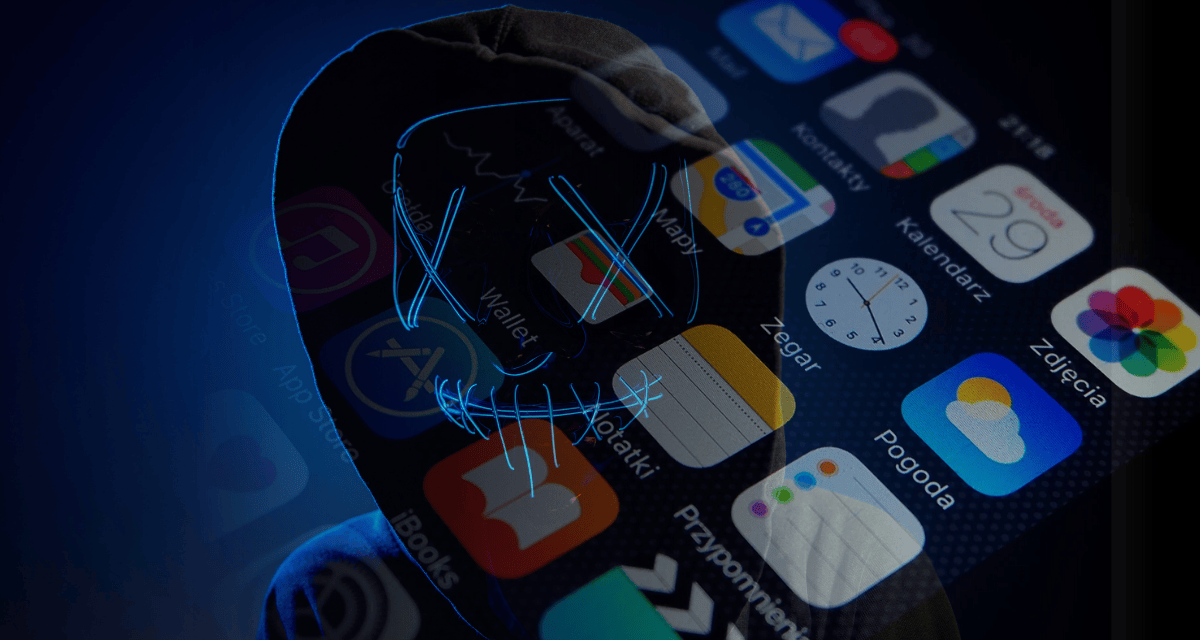
A newly identified tool capable of injecting deepfake content directly into compromised iOS devices highlights the growing sophistication of digital identity fraud techniques.

The tool operates by exploiting jailbroken Apple devices (fully rooted) running iOS 15 or later, enabling attackers to bypass normal security protections and insert manipulated video streams into applications, particularly those using biometric authentication.

Unlike traditional spoofing, which involves showing a falsified video or image to a camera, the technique manipulates the underlying video feed. The process involves:

  • connecting a compromised iPhone or iPad to a server controlled by the attacker
  • channeling synthetic media into the device, and can include face-swapping videos or motion re-enactments in which a victim’s still image is animated with another person’s movements
  • circumventing the physical camera input, using a special method to insert synthetic media (such as deepfake content) into applications such as biometric verification systems, to mislead applications on the device into treating the injected deepfake as a live video feed

The scale and automation potential of this method make it especially concerning for identity verification systems with weak or absent biometric safeguards. Successful use of the tool could allow fraudsters to impersonate legitimate users or manufacture synthetic identities capable of navigating digital verification checks.

Researchers have noted that the tool is suspected to have been developed in China, although attribution could not be independently confirmed. Its emergence, however, comes as states and businesses remain concerned about the national security implications of advanced identity fraud tools and the broader risks tied to manipulated video and generative AI.

The discovery, announced on 18 September 2025 by iProov, underscores the inadequacy of single-layer verification methods, which can be more easily bypassed by increasingly advanced injection techniques. Their analysts stress the importance of multi-layered defenses, combining biometric checks with real-time liveness detection and continuous monitoring, to detect synthetic media before it can compromise authentication systems.

According to their chief scientist Andrew Newell: “The tool’s suspected origin is especially concerning and proves that it is essential to use a liveness detection capability that can rapidly adapt,” alluding to a possible shift towards “industrialized attacks”.


Share:

PreviousChina proposes cyber cooperation plan at Sino-Africa internet forum
NextWith zero-click threats surging, scammers won’t need to offer “treats” as bait

Related Posts

Four hopping crystal balls radiate cyber predictions for 2025      

Four hopping crystal balls radiate cyber predictions for 2025      

Monday, December 23, 2024

The cyber incident that is too “isolated” to accentuate to mass media

The cyber incident that is too “isolated” to accentuate to mass media

Friday, July 10, 2026

More security tools in use do not equate to better security: study

More security tools in use do not equate to better security: study

Thursday, July 2, 2020

Address machine identity risks, protect AI, and improve security strategies: survey

Address machine identity risks, protect AI, and improve security strategies: survey

Tuesday, March 25, 2025

Leave a reply Cancel reply

You must be logged in to post a comment.

Voters-draw/RCA-Sponsors

Slide

CybersecAsia Voting Placement

Gamification listing or Participate Now

PARTICIPATE NOW

Vote Now -Placement(Google Ads)

Top-Sidebar-banner

Whitepapers

  • Critical Security Threatsand the Need for ZTNA: How evolving cyberattacks demand a Zero Trust approach

    Critical Security Threatsand the Need for ZTNA: How evolving cyberattacks demand a Zero Trust approach

    Cyber threats have become more frequent and sophisticated, targeting organizations of all sizes across all …Download Whitepaper
  • Zero Trust Made Simple: Why it matters and how to get started

    Zero Trust Made Simple: Why it matters and how to get started

    Data breaches and cyberattacks are no longer limited to large, high-profile organizations.Download Whitepaper
  • Cloud Secure Edge: Remote access, better security

    Cloud Secure Edge: Remote access, better security

    ​SonicWall Cloud Secure Edge™ is a modern, cloud-native Security Service Edge (SSE) solution that addresses …Download Whitepaper
  • Closing the Gap in Email Security:How To Stop The 7 Most SinisterAI-Powered Phishing Threats

    Closing the Gap in Email Security:How To Stop The 7 Most SinisterAI-Powered Phishing Threats

    Insider threats continue to be a major cybersecurity risk in 2024. Explore more insights on …Download Whitepaper

Middle-sidebar-banner

Case Studies

  • How a Vietnamese D2C retailer built its own secure digital infrastructure

    How a Vietnamese D2C retailer built its own secure digital infrastructure

    Would your organization build your own digital infrastructure – including AI governance and cybersecurity – …Read more
  • Cyber protection for medical clinics in Singapore

    Cyber protection for medical clinics in Singapore

    As Singapore’s healthcare sector becomes increasingly digital and interconnected, clinics are facing heightened cyber risks, …Read more
  • India’s WazirX strengthens governance and digital asset security

    India’s WazirX strengthens governance and digital asset security

    Revamping its custody infrastructure using multi‑party computation tools has improved operational resilience and institutional‑grade safeguardsRead more
  • Bangladesh LGED modernizes communication while addressing data security concerns

    Bangladesh LGED modernizes communication while addressing data security concerns

    To meet emerging data localization/privacy regulations, the government engineering agency deploys a secure, unified digital …Read more

Bottom sidebar

Other News

  • Cohesity Appoints Peter Hanna as Vice President and General Manager, Asia Pacific and Japan

    Thursday, July 23, 2026
    SINGAPORE and HONG KONG, July …Read More »
  • Passport Power Doubles as Global Peace Declines

    Wednesday, July 22, 2026
    LONDON, July 21, 2026 /PRNewswire/ …Read More »
  • Infobip research reveals APAC businesses scaling AI-powered defenses to counter surge in automated fraud

    Tuesday, July 21, 2026
    Fraudsters are leveraging AI to …Read More »
  • SPTel Receives Frost & Sullivan’s 2026 Singapore Company of the Year Recognition for Leadership in Quantum-Safe Network Services

    Tuesday, July 21, 2026
    Recognized for pioneering commercial quantum-safe …Read More »
  • Singtel Receives Four Frost & Sullivan 2026 Recognitions for Leadership in Enterprise Connectivity, Cybersecurity, and Digital Transformation

    Sunday, July 19, 2026
    The recognitions highlight Singtel’s leadership …Read More »
  • Our Brands
  • DigiconAsia
  • MartechAsia
  • Home
  • About Us
  • Contact Us
  • Sitemap
  • Privacy & Cookies
  • Terms of Use
  • Advertising & Reprint Policy
  • Media Kit
  • Subscribe
  • Manage Subscriptions
  • Newsletter

Copyright © 2026 CybersecAsia All Rights Reserved.