


Cybersecurity News in Asia

RECENT STORIES:

SEGA moves faster with flow-based network monitoring
Tencent Cloud Cube Sandbox Goes Fully Open-Source, with Five Major Bre...
Sparrow to Demonstrate AI-Driven Security and SBOM Management at Black...
Relativity to Establish Singapore Entity, Expanding APAC Footprint
Cohesity Appoints Nigel Lee as Technical Sales Leader, Asia Pacific an...
Akuvox Launches AKClaw Panel: The World’s First Indoor Monitor O...
LOGIN REGISTER
CybersecAsia
  • Features
    • Featured

      How AI is supercharging insider threats

      How AI is supercharging insider threats

      Wednesday, April 15, 2026, 12:29 PM Asia/Singapore | Features
    • Featured

      Q-Day is coming. Are you ready?

      Q-Day is coming. Are you ready?

      Tuesday, April 14, 2026, 12:40 PM Asia/Singapore | Features
    • Featured

      How lean defence teams turn endpoint insights into measurable risk reduction

      How lean defence teams turn endpoint insights into measurable risk reduction

      Monday, April 13, 2026, 3:15 PM Asia/Singapore | Features
  • Opinions
  • Tips
  • Whitepapers
  • Awards 2025
  • Directory
  • E-Learning

Select Page

News

AI chatbots create strong‑looking passwords that are weak and predictable: report

By CybersecAsia editors | Friday, February 20, 2026, 11:42 AM Asia/Singapore

AI chatbots create strong‑looking passwords that are weak and predictable: report

Validated security tests show AI‑generated passphrases follow certain patterns that can be cracked quickly, prompting calls to audit and rotate them.

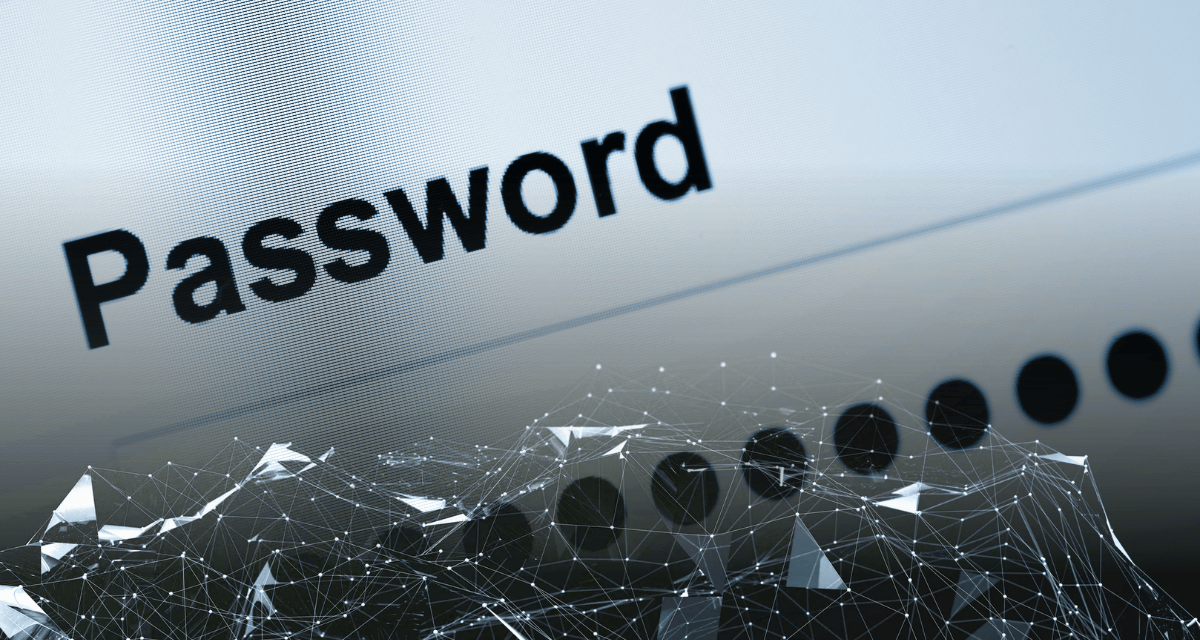
Generative AI tools are turning out to be surprisingly bad at creating strong passwords, with security researchers warning that chatbots such as Claude, ChatGPT, and Gemini often produce “strong‑looking” passphrases that are actually predictable and crackable in hours, according to a report by The Register.

The findings come from AI‑security firm Irregular, which tested several large‑language‑model (LLM) systems and concluded that LLM‑generated passwords are “fundamentally weak” and should not be trusted for sensitive accounts.

In the test, Claude, OpenAI’s GPT‑5.2, and Google’s Gemini 3 Flash were prompted to generate 16‑character passwords mixing uppercase and lowercase letters, numbers, and special characters. The resulting strings appeared complex and were often rated “strong” by online password‑strength checkers, some of which estimated cracking times of centuries on standard hardware.

In reality, password complexity checkers do not account for the common patterns the models repeatedly use. When Claude Opus 4.6 was tasked to produce passwords in 50 separate sessions, only 30 were unique, with 20 duplicates — including 18 identical strings — and most starting and ending with the same characters. None of the 50 passwords contained repeating characters, a sign they were not truly random. Similar patterns showed up across GPT‑5.2 and Gemini 3 Flash outputs, and even in passwords “written” on a Post‑It note by Google’s Nano Banana Pro image‑generation model.

The firm then used Shannon entropy calculations, and estimated that 16‑character LLM‑generated passwords had roughly 20–27 bits of entropy, far below the 98–120 bits expected for truly random strings of the same length. The team argues that such low entropy means an attacker who understands the models’ patterns could brute‑force these passwords in a matter of hours, even on older hardware.

Many of the AI-generated common character sequences appear in open‑source code and documentation on platforms such as GitHub, suggesting developers have already baked LLM‑generated passwords into real projects. Irregular urges organizations to audit and rotate any passwords created with LLMs, and warns that the broader problem may extend beyond passwords, as AI‑assisted coding and “vibe coding” become more widespread.

Share:

PreviousIndonesia’s MDI Ventures Doubles Down on Execution and Trust to Unlock Regional Portfolio Value
NextAI‑augmented hackers target firewalls worldwide using exposed interfaces and weak credentials

Related Posts

Time to bust some myths about securing digital identities in APAC

Time to bust some myths about securing digital identities in APAC

Wednesday, October 5, 2022

Rise in state-sponsored cyber-attacks across APAC

Rise in state-sponsored cyber-attacks across APAC

Wednesday, July 30, 2025

In Turkey, your fingers’ veins can now be used as your biometric identity

In Turkey, your fingers’ veins can now be used as your biometric identity

Wednesday, October 7, 2020

Snap poll of APAC bank executives highlights concern over scams and mule accounts at industry event

Snap poll of APAC bank executives highlights concern over scams and mule accounts at industry event

Tuesday, July 29, 2025

Leave a reply Cancel reply

You must be logged in to post a comment.

Voters-draw/RCA-Sponsors

Slide
Slide
Slide
Slide
Slide
Slide
Slide
Slide
Slide
Slide
Slide
Slide
Slide
Slide
previous arrow
next arrow

CybersecAsia Voting Placement

Gamification listing or Participate Now

PARTICIPATE NOW

Vote Now -Placement(Google Ads)

Top-Sidebar-banner

Whitepapers

  • Closing the Gap in Email Security:How To Stop The 7 Most SinisterAI-Powered Phishing Threats

    Closing the Gap in Email Security:How To Stop The 7 Most SinisterAI-Powered Phishing Threats

    Insider threats continue to be a major cybersecurity risk in 2024. Explore more insights on …Download Whitepaper
  • 2024 Insider Threat Report: Trends, Challenges, and Solutions

    2024 Insider Threat Report: Trends, Challenges, and Solutions

    Insider threats continue to be a major cybersecurity risk in 2024. Explore more insights on …Download Whitepaper
  • AI-Powered Cyber Ops: Redefining Cloud Security for 2025

    AI-Powered Cyber Ops: Redefining Cloud Security for 2025

    The future of cybersecurity is a perfect storm: AI-driven attacks, cloud expansion, and the convergence …Download Whitepaper
  • Data Management in the Age of Cloud and AI

    Data Management in the Age of Cloud and AI

    In today’s Asia Pacific business environment, organizations are leaning on hybrid multi-cloud infrastructures and advanced …Download Whitepaper

Middle-sidebar-banner

Case Studies

  • Cyber protection for medical clinics in Singapore

    Cyber protection for medical clinics in Singapore

    As Singapore’s healthcare sector becomes increasingly digital and interconnected, clinics are facing heightened cyber risks, …Read more
  • India’s WazirX strengthens governance and digital asset security

    India’s WazirX strengthens governance and digital asset security

    Revamping its custody infrastructure using multi‑party computation tools has improved operational resilience and institutional‑grade safeguardsRead more
  • Bangladesh LGED modernizes communication while addressing data security concerns

    Bangladesh LGED modernizes communication while addressing data security concerns

    To meet emerging data localization/privacy regulations, the government engineering agency deploys a secure, unified digital …Read more
  • What AI worries keep members of the Association of Certified Fraud Examiners sleepless?

    What AI worries keep members of the Association of Certified Fraud Examiners sleepless?

    This case study examines how many anti-fraud professionals reported feeling underprepared to counter rising AI-driven …Read more

Bottom sidebar

Other News

  • Tencent Cloud Cube Sandbox Goes Fully Open-Source, with Five Major Breakthroughs Enabling Large-Scale Agent Deployment

    Thursday, April 23, 2026
    Tencent Cloud’s Cube Sandbox goes …Read More »
  • Sparrow to Demonstrate AI-Driven Security and SBOM Management at Black Hat Asia 2026

    Wednesday, April 22, 2026
    SINGAPORE, April 21, 2026 /PRNewswire/ …Read More »
  • Relativity to Establish Singapore Entity, Expanding APAC Footprint

    Wednesday, April 22, 2026
    News Summary:  Relativity plans to …Read More »
  • Cohesity Appoints Nigel Lee as Technical Sales Leader, Asia Pacific and Japan (APJ)

    Wednesday, April 22, 2026
    SINGAPORE, April 21, 2026 /PRNewswire/ …Read More »
  • Akuvox Launches AKClaw Panel: The World’s First Indoor Monitor Optimized for Native OpenClaw™ Execution

    Tuesday, April 21, 2026
    XIAMEN, China, April 21, 2026 …Read More »
  • Our Brands
  • DigiconAsia
  • MartechAsia
  • Home
  • About Us
  • Contact Us
  • Sitemap
  • Privacy & Cookies
  • Terms of Use
  • Advertising & Reprint Policy
  • Media Kit
  • Subscribe
  • Manage Subscriptions
  • Newsletter

Copyright © 2026 CybersecAsia All Rights Reserved.