
Cybersecurity News in Asia

RECENT STORIES:

SEGA moves faster with flow-based network monitoring
Five ways to limit AI-assistant data leaks
Chinese-speaking hacker exploits open source AI agents to hack 100 onl...
Frontier AI firm open-sources coding assistant after silent workspace ...
Consecutive series of agentic AI security breaches expose industry rea...
Cohesity Introduces Agent Resilience to Protect and Recover AI Agent I...
LOGIN REGISTER
CybersecAsia
  • Features
    • Featured

      Shadow AI Is the New Insider Threat

      Shadow AI Is the New Insider Threat

      Monday, September 21, 2026, 9:11 AM Asia/Singapore | Features, Newsletter, Sponsored, Tips
    • Featured

      Addressing the AI-driven vulnerability debt

      Addressing the AI-driven vulnerability debt

      Thursday, September 17, 2026, 10:03 AM Asia/Singapore | Features, Sponsored
    • Featured

      Cybercriminals zero In on APAC’s digital boom, SMBs in the crosshairs

      Cybercriminals zero In on APAC’s digital boom, SMBs in the crosshairs

      Monday, September 14, 2026, 2:30 PM Asia/Singapore | Features, Sponsored
  • Opinions
  • Tips
  • Whitepapers
  • AWARDS 2026
  • Directory
  • E-Learning

Select Page

Features

The latest threat to e-commerce

By Victor Ng | Tuesday, July 23, 2024, 9:06 AM Asia/Singapore

The latest threat to e-commerce

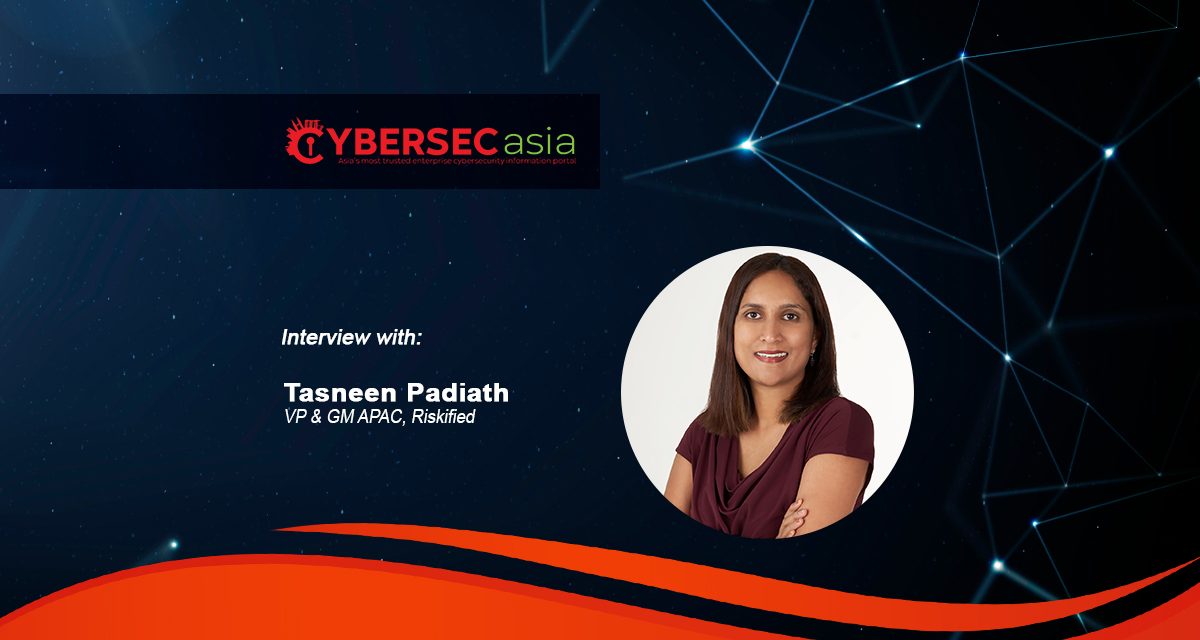
TP:  Retailers of all sizes are susceptible to policy abuse though the range and nature of the abuse may vary.

Policy abuse directly affects the business bottom line. Startlingly, studies have shown that 25% of total e-commerce revenue is spent on promotions, returns and refunds! In addition to making payouts for fraudulent claims, businesses waste time investigating and handling claims. Often, by the time the return is processed, the item can no longer be resold to another customer.

The scale of policy abuse is now pushing the merchants to reverse course and change their policies, which could eventually impact sales and their ability to attract new customers and create customer loyalty.

How can organizations balance customer service and customer acquisition priorities with fraud and risk management goals?

TP:  Today, merchants are stuck between a rock and a hard place. Over 90% of merchants rely on promotions, coupon codes and long return windows to attract and keep customers coming back. In a cut-throat retail environment, merchants feel they must continue to offer lenient return policies and promotions to retain customers and stay competitive.

However, policy abuse has made these policies a liability causing significant losses, akin to death by a thousand cuts.

To balance customer acquisition and retention priorities with fraud and risk management, it’s important for retailers to take a holistic and flexible approach. They must customize their customer engagement and policy strategies to align with each market’s unique characteristics, leveraging deep insights and localized tactics.

Additionally, they need to bolster their defenses with sophisticated fraud prevention systems capable of tackling the issue in real-time.

What can organizations do to combat policy abuse? What is the role of AI in combating policy abuse?

TP:  AI and machine learning solutions help make the claims review process less manual and prevent customer representatives from becoming overwhelmed with trying to validate the customer and their history.

Using AI and machine learning, retailers are able to analyze account and transaction data to understand where each instance of abuse originates. Then they can scrutinize customer behavior patterns and highlight only suspicious claims for review, helping to curb abuse while enhancing the customer experience.

Merchants can also enhance their approach to tackling policy abuse by leveraging machine learning clustering technology, which allows them to consider any additional accounts that are connected to a given customer. This helps merchants tackle fraud that arises from the same customer opening multiple accounts, for instance, to use a promotional code more than once.

With advanced AI-driven identity resolution merchants can use a large graph of data and examine dozens of attributes ranging from keyboard language to product type. Also, from the vast range of data merchants can triangulate signals, see relationships among shady transactions, and identify who is behind abusive transactions and what level of risk they pose.

How do you see policy abuse (and mitigation strategies to tackle it) evolve in the future?

TP:  Fraudsters will continue to evolve their policy abuse tactics and retailers must always stay one step ahead. In the future, we are likely to see professional fraudsters leverage more AI and automation to scale their fraudulent activities. Retailers must take steps now to be prepared to fight back and realize their full e-commerce potential.

For instance, Ring (by Amazon) used Riskified’s vast data intelligence to gain clarity into the thousands of cookies, emails, and phone numbers scammers were using to obscure their identities and commit wide-scale fraud. They were able to determine that just 600 individuals were responsible for over US$4m in abuse each year, with some committing as much as $150K annually!

Using Riskified’s Policy Protect automation with Identity Explore technology gave Ring real-time insight that empowered the team to decline orders at checkout that would have led to fraudulent returns. In just seven months, Ring’s fraud team was able to decline $4M+ in abusive returns that would otherwise have represented pure loss.

Pages: 1 2

Share:

PreviousCybercriminals have their eyes on compromising software patches now
NextRecovering from the BSOD outage of 19 July amid chaos, phishing scams

Related Posts

When failure is not an option

When failure is not an option

Monday, October 6, 2025

Vietnam’s low cybersecurity awareness is a way of life, but there is hope

Vietnam’s low cybersecurity awareness is a way of life, but there is hope

Friday, December 9, 2022

Rethinking cybersecurity with digital identity and zero trust

Rethinking cybersecurity with digital identity and zero trust

Thursday, November 26, 2020

The AI paradox in cybersecurity

The AI paradox in cybersecurity

Wednesday, October 15, 2025

Leave a reply Cancel reply

You must be logged in to post a comment.

Voters-draw/RCA-Sponsors

Slide
Slide
Slide
Slide
Slide
Slide
Slide
Slide
Slide
Slide
Slide
Slide
Slide
Slide
Slide
Slide
Slide
Slide
Slide
previous arrow
next arrow

CybersecAsia Voting Placement

Gamification listing or Participate Now

LEARN MORE

Vote Now -Placement(Google Ads)

Top-Sidebar-banner

Whitepapers

  • Critical Security Threatsand the Need for ZTNA: How evolving cyberattacks demand a Zero Trust approach

    Critical Security Threatsand the Need for ZTNA: How evolving cyberattacks demand a Zero Trust approach

    Cyber threats have become more frequent and sophisticated, targeting organizations of all sizes across all …Download Whitepaper
  • Zero Trust Made Simple: Why it matters and how to get started

    Zero Trust Made Simple: Why it matters and how to get started

    Data breaches and cyberattacks are no longer limited to large, high-profile organizations.Download Whitepaper
  • Cloud Secure Edge: Remote access, better security

    Cloud Secure Edge: Remote access, better security

    ​SonicWall Cloud Secure Edge™ is a modern, cloud-native Security Service Edge (SSE) solution that addresses …Download Whitepaper
  • Closing the Gap in Email Security:How To Stop The 7 Most SinisterAI-Powered Phishing Threats

    Closing the Gap in Email Security:How To Stop The 7 Most SinisterAI-Powered Phishing Threats

    Insider threats continue to be a major cybersecurity risk in 2024. Explore more insights on …Download Whitepaper

Middle-sidebar-banner

Case Studies

  • How a Vietnamese D2C retailer built its own secure digital infrastructure

    How a Vietnamese D2C retailer built its own secure digital infrastructure

    Would your organization build your own digital infrastructure – including AI governance and cybersecurity – …Read more
  • Cyber protection for medical clinics in Singapore

    Cyber protection for medical clinics in Singapore

    As Singapore’s healthcare sector becomes increasingly digital and interconnected, clinics are facing heightened cyber risks, …Read more
  • India’s WazirX strengthens governance and digital asset security

    India’s WazirX strengthens governance and digital asset security

    Revamping its custody infrastructure using multi‑party computation tools has improved operational resilience and institutional‑grade safeguardsRead more
  • Bangladesh LGED modernizes communication while addressing data security concerns

    Bangladesh LGED modernizes communication while addressing data security concerns

    To meet emerging data localization/privacy regulations, the government engineering agency deploys a secure, unified digital …Read more

Bottom sidebar

Other News

  • Cohesity Introduces Agent Resilience to Protect and Recover AI Agent Infrastructure

    Tuesday, September 22, 2026
    Cohesity Agent Resilience launches with …Read More »
  • LRQA Named ‘Best in Critical Infrastructure Protection’ at CybersecAsia Readers’ Choice Awards 2026

    Monday, September 21, 2026
    Prestigious regional recognition highlights LRQA’s …Read More »
  • Cyble and Cyber Security Council of UAE Sign MOU to Strengthen National Threat Intelligence Capabilities

    Thursday, September 17, 2026
    ABU DHABI, UAE, Sept. 17, …Read More »
  • Cohesity Research Finds Most Cyber Recovery Plans Are Built for the Wrong Outcome

    Thursday, September 17, 2026
    78% organizations prioritize restoring systems …Read More »
  • SU Group Secures Exclusive Distribution Rights for Portable X-Ray System in Hong Kong and Macau

    Tuesday, September 15, 2026
    Second International Distribution Deal of …Read More »
  • Our Brands
  • DigiconAsia
  • MartechAsia
  • Home
  • About Us
  • Contact Us
  • Sitemap
  • Privacy & Cookies
  • Terms of Use
  • Advertising & Reprint Policy
  • Media Kit
  • Subscribe
  • Manage Subscriptions
  • Newsletter

Copyright © 2026 CybersecAsia All Rights Reserved.