
Cybersecurity News in Asia

RECENT STORIES:

SEGA moves faster with flow-based network monitoring
EU age-verification app exposed as vulnerable within minutes after lau...
Akuvox X910 Claims Red Dot Award 2026: the World’s First AI-powe...
Exein establishes APAC headquarters and Taipei office
DNS‑record analysis shows uneven DMARC enforcement among FIFA World Cu...
Highlights of Asia’s 2026 premier integrated security event
LOGIN REGISTER
CybersecAsia
  • Features
    • Featured

      How AI is supercharging insider threats

      How AI is supercharging insider threats

      Wednesday, April 15, 2026, 12:29 PM Asia/Singapore | Features
    • Featured

      Q-Day is coming. Are you ready?

      Q-Day is coming. Are you ready?

      Tuesday, April 14, 2026, 12:40 PM Asia/Singapore | Features
    • Featured

      How lean defence teams turn endpoint insights into measurable risk reduction

      How lean defence teams turn endpoint insights into measurable risk reduction

      Monday, April 13, 2026, 3:15 PM Asia/Singapore | Features
  • Opinions
  • Tips
  • Whitepapers
  • Awards 2025
  • Directory
  • E-Learning

Select Page

Features

Not another story on AI vs AI! The human twist to phishing’s rising impact

By Chokkapan S| IMAWS | Wednesday, March 26, 2025, 3:38 PM Asia/Singapore

Not another story on AI vs AI! The human twist to phishing’s rising impact

Despite increasingly sophisticated phishing threats, some boardrooms prioritize bottom lines, pressure IT teams to downplay incidents, and make CISOs squirm helplessly

The global cybersecurity landscape is more volatile than ever, with organizations facing an onslaught of increasingly sophisticated cyber threats.

The challenge is further compounded  by budget cuts and regulatory complexities, thereby straining security postures. 

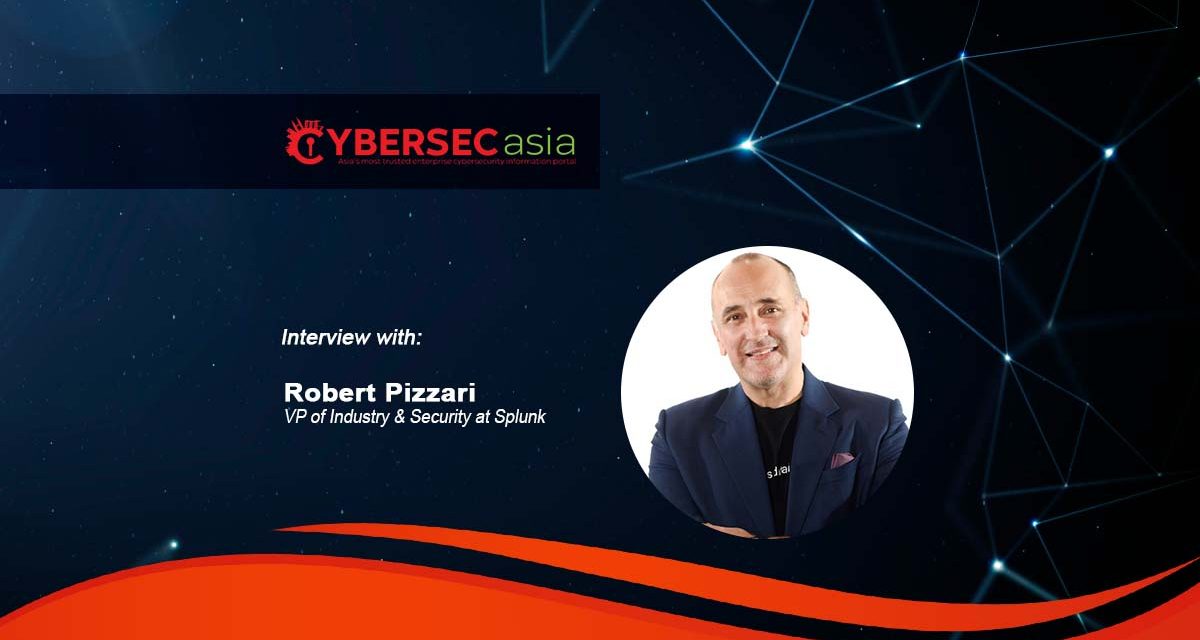
So, what are the most pressing cyber threats organizations face today? Robert Pizzari, Group Vice-President, Strategic Advisory (APAC), Splunk, shared with CybersecAsia.net his professional insights.

CybersecAsia: What is the most prevalent attack vectors organizations face today?

Robert Pizzari (RP): Phishing remains the most prevalent cybersecurity threat today, due to the democratization of generative AI (GenAI). Attackers now use GenAI to create highly convincing phishing emails, automate malware delivery and evade detection, rendering traditional defenses less effective.

Despite widespread awareness efforts, phishing persists because it exploits human vulnerabilities, bypassing even the most advanced security tools. The need for seamless transactions often leads to weaker security controls as well as creates entry points for attackers.

Phishing has evolved into a cornerstone of the cybercrime economy, often serving as the first step in larger attacks such as ransomware, business email compromise and credential theft.

CybersecAsia: When a board of directors typically prioritizes business growth over security, how can their CISO effectively communicate the critical importance of security investments to them? In case of budget cuts, what are the critical cybersecurity areas most severely impacted?

To secure board buy-in, CISOs must position cybersecurity as a business enabler — much more than a mere technical necessity. Aligning strategies with revenue protection and operational resilience is crucial. Also:

  • A compelling argument would be the financial impact of downtime — CISOs need to start framing cyber risks in business terms — lost revenue, service-level-agreement fines and regulatory penalties — to highlight how security safeguards business continuity, brand trust and compliance.
  • Using visual tools such as compliance dashboards and financial metrics can help translate technical risks into clear business impacts. By speaking the board’s language and linking security to financial performance, CISOs can strengthen their case for investment and secure the resources needed to protect their businesses.

In the event of budget cuts, prioritization is key. CISOs should focus on high-impact areas, such as identity and access management, threat detection and incident response, to strengthen their cybersecurity posture. Delaying upgrades in these areas leaves organizations vulnerable, as attackers exploit outdated systems and weak access controls.

Adopting cost-efficient security strategies, including AI-driven automation, tools consolidation and ongoing security training, are also important amid budget pressures. While underinvestment increases cyber risks, it also strains teams. In our experience, teams have cited burnout and staff attrition, worsening the cybersecurity talent crunch. The financial toll is equally severe. In addition to ransomware demands, organizations foot hidden costs — reputational damage, customer churn and regulatory fines — which can have long-term consequences.

This is where AI-powered security operations can ease the burden of managing large volumes of alerts, as well as prevent analyst fatigue and improve decision-making. Context-rich alerts and automated recommendations help teams focus on real threats and respond with greater speed and accuracy.

CybersecAsia: With increasing regulatory complexities and the rising trend of CISOs being held personally liable, how should organizations approach compliance to avoid legal and reputational risks?

Pages: 1 2

Share:

PreviousVIVOTEK Celebrates 25th Anniversary, Partnering with the World to Shape a Smarter and More Sustainable Future for Security
NextWith AI supercharging phishing attacks, what is the weakest link?

Related Posts

Mounting cyberattacks and disruptive events affecting 84% of organizations: APJ survey

Mounting cyberattacks and disruptive events affecting 84% of organizations: APJ survey

Thursday, April 2, 2020

Cyber-threats: How prepared are APAC organizations?

Cyber-threats: How prepared are APAC organizations?

Monday, October 11, 2021

Are fatigued IT teams and WFH employees putting their employers at risk?

Are fatigued IT teams and WFH employees putting their employers at risk?

Wednesday, August 4, 2021

Are legacy banks equal to neobanks in application development security?

Are legacy banks equal to neobanks in application development security?

Tuesday, September 14, 2021

Leave a reply Cancel reply

You must be logged in to post a comment.

Voters-draw/RCA-Sponsors

Slide
Slide
Slide
Slide
Slide
Slide
Slide
Slide
Slide
Slide
Slide
Slide
Slide
Slide
previous arrow
next arrow

CybersecAsia Voting Placement

Gamification listing or Participate Now

PARTICIPATE NOW

Vote Now -Placement(Google Ads)

Top-Sidebar-banner

Whitepapers

  • Closing the Gap in Email Security:How To Stop The 7 Most SinisterAI-Powered Phishing Threats

    Closing the Gap in Email Security:How To Stop The 7 Most SinisterAI-Powered Phishing Threats

    Insider threats continue to be a major cybersecurity risk in 2024. Explore more insights on …Download Whitepaper
  • 2024 Insider Threat Report: Trends, Challenges, and Solutions

    2024 Insider Threat Report: Trends, Challenges, and Solutions

    Insider threats continue to be a major cybersecurity risk in 2024. Explore more insights on …Download Whitepaper
  • AI-Powered Cyber Ops: Redefining Cloud Security for 2025

    AI-Powered Cyber Ops: Redefining Cloud Security for 2025

    The future of cybersecurity is a perfect storm: AI-driven attacks, cloud expansion, and the convergence …Download Whitepaper
  • Data Management in the Age of Cloud and AI

    Data Management in the Age of Cloud and AI

    In today’s Asia Pacific business environment, organizations are leaning on hybrid multi-cloud infrastructures and advanced …Download Whitepaper

Middle-sidebar-banner

Case Studies

  • Cyber protection for medical clinics in Singapore

    Cyber protection for medical clinics in Singapore

    As Singapore’s healthcare sector becomes increasingly digital and interconnected, clinics are facing heightened cyber risks, …Read more
  • India’s WazirX strengthens governance and digital asset security

    India’s WazirX strengthens governance and digital asset security

    Revamping its custody infrastructure using multi‑party computation tools has improved operational resilience and institutional‑grade safeguardsRead more
  • Bangladesh LGED modernizes communication while addressing data security concerns

    Bangladesh LGED modernizes communication while addressing data security concerns

    To meet emerging data localization/privacy regulations, the government engineering agency deploys a secure, unified digital …Read more
  • What AI worries keep members of the Association of Certified Fraud Examiners sleepless?

    What AI worries keep members of the Association of Certified Fraud Examiners sleepless?

    This case study examines how many anti-fraud professionals reported feeling underprepared to counter rising AI-driven …Read more

Bottom sidebar

Other News

  • Akuvox X910 Claims Red Dot Award 2026: the World’s First AI-powered Parcel Detection Smart Intercom Revolutionizes Luxury Home Access

    Saturday, April 18, 2026
    XIAMEN, China, April 17, 2026 …Read More »
  • Exein establishes APAC headquarters and Taipei office

    Saturday, April 18, 2026
    Partnering with Taiwan’s ecosystem to …Read More »
  • Tsingke Unveils ‘Zero-Contact’ Gene Synthesis to Safeguard Core Genetic Sequences

    Wednesday, April 15, 2026
    BEIJING, April 15, 2026 /PRNewswire/ …Read More »
  • NEC Asia Pacific to Showcase Trusted Public Safety and Digital Identity Innovations at Milipol TechX 2026

    Wednesday, April 15, 2026
    SINGAPORE, April 14, 2026 /PRNewswire/ …Read More »
  • Sprinto Expands to Australia with New Data Center to Power Localized, Audit-Ready Compliance

    Wednesday, April 15, 2026
    Sprinto combines local infrastructure with …Read More »
  • Our Brands
  • DigiconAsia
  • MartechAsia
  • Home
  • About Us
  • Contact Us
  • Sitemap
  • Privacy & Cookies
  • Terms of Use
  • Advertising & Reprint Policy
  • Media Kit
  • Subscribe
  • Manage Subscriptions
  • Newsletter

Copyright © 2026 CybersecAsia All Rights Reserved.