
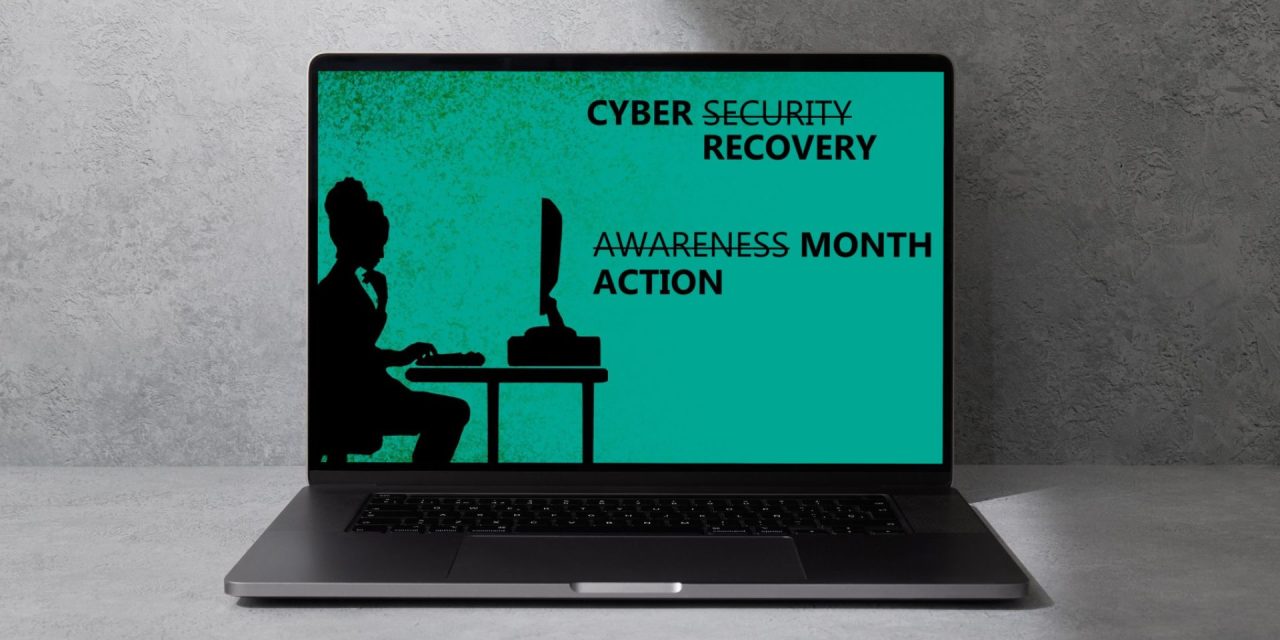
October marks Cybersecurity Awareness Month, and experts share how things have changed, and what we should do to protect against cyberthreats. Perhaps it’s time to change the name of this cause too?
Keeper Security’s 2024 Insight Report found that 67% of respondents felt their companies struggled to combat phishing attacks – making the best practices in combatting phishing increasingly critical in today’s cyberthreat landscape.
The report also found that 84% of respondents thought phishing and smishing have become more difficult to detect with the rise in popularity of AI-powered tools, with 42% identifying AI-powered phishing as their top concern when it comes to AI security.
Geoffrey Coley, Regional CTO, Asia Pacific, Veritas Technologies, believes that cybersecurity is a noble but outdated cause.
“Cybersecurity Awareness Month has served us well for two decades, but cybersecurity is no longer enough,” said Coley. “In a world where over a billion malicious programs exist, cyberattacks like ransomware occur every 39 seconds and dark AI helps malware evade detection, October really should be ‘Cyber Recovery Awareness Month.’ While cybersecurity focuses on keeping bad actors out – an increasingly impossible task – cyber recovery adds a critical layer. You still do everything you can to prevent a breach, but also plan for and prepare to recover when the worst happens, because it will.”
Or perhaps it should be renamed Cybersecurity Action Month.
“Since the inception of Cybersecurity Awareness Month two decades ago, we’ve witnessed a surge in cyber-attacks and the emergence of new and evolving threats. It’s become increasingly clear that awareness alone is not enough; we must take action,” said Darren Guccione, CEO and Co-founder, Keeper Security.
Act now
With the majority of breaches stemming from human error, Guccione believes it’s time to move from awareness to action when it comes to phishing awareness and security training. By remaining vigilant against phishing scams, organizations and individuals can significantly reduce their exposure to cyberthreats.
He said: “By training employees to recognize and respond to phishing simulations, organizations empower their frontline defenders to question unusual requests and report suspicious activity promptly, strengthening their overall security posture and reducing the risk of damaging and costly attacks.”
Sumit Bansal, VP, Asia Pacific and Japan, BlueVoyant, commented: “This Cyber Security Awareness month, all businesses and individuals are encouraged to take action to protect their devices and stay safe online. The cyber agencies in the US and Australia have outlined steps such as using MFA, using strong and unique passwords and greater awareness of phishing, all of which are great foundational, basic hygiene steps to improve your overall security against the most common threats.”
Coley emphasized the high stakes involved when it comes to data security – spanning from data loss, to operational disruptions, to hefty fines and loss of trust – and some steps organizations should take:
“The average cost of a data breach has reached an all-time high of $4.45 million and more than a third of organizations don’t even have complete cyber recovery plans in place. Worryingly, up to 20% of data may be unrecoverable after a breach. This reality highlights the urgent need to shift our focus from mere cybersecurity to comprehensive cyber recovery awareness. Embracing this shift is an important step in helping these organizations and everyone else survive today’s dangerous threat landscape.
“To effectively implement this transition, it’s crucial to identify which data is most critical and requires the strongest protection. Next, proactively managing and mitigating cyber risk is vital. This involves connecting key people, processes, and technology to mitigate the impact of a cyberattack. Finally, rigorous testing and refinement of cyber recovery protocols will ensure a swift and efficient response to cyberthreats.”
Holistic approach
By adopting a holistic approach that integrates both cybersecurity and cyber recovery, organizations can better ensure resilience against the growing tide of cyberthreats.
This includes ensuring protection and mitigation for the extended digital supply chain. Sumit advised: “Beyond the basics, it is critically important that companies understand their extended digital supply chain, or the suppliers, vendors, and other third-parties that have direct or indirect access to their network. Organizations need to know who they are connected to and what access these third parties have. If a third party gets breached, this breach can then compromise the main organization and result in data loss, ransomware, or business interruption.”
He added: “As organizations look to mature their supply chain risk defenses in the next year and beyond, they need to actively work with their suppliers to mitigate risk, regularly monitor and measure their third-party cyber risk posture and ensuring they educate top-down, from senior management to employees across all business units about the risks of inaction.”
To achieve this, organizations should first have documented and enforceable policies such as a written information security plan and incident response plan that are socialized and tested throughout the company and accompanied by regular, all-hands security training. “While we cannot expect the number of supply chain cyber-attacks to decrease, we can hope that faster identification and remediation helps to soften their impact.”
Individuals have a key role to play in this holistic approach. Zak Menegazzi, Cybersecurity Specialist, ANZ, Armis, shared: “The spotlight on individual responsibility in cybersecurity this month is encouraging and helps to address the expanding attack surface created by the ever-increasing number of devices, which in turn introduces a multitude of potential vulnerabilities. In fact, research from Armis revealed that tablets, media players, personal computers and mobile phones were among the top 10 device types with the highest number of attack attempts.”
Besides adopting MFA and strengthening passwords, Menegazzi stressed that ongoing security updates and patching discovered weaknesses are equally vital.
“Consumers must also be educated on the threats posed by their devices through lax security protocols, standardized product class passwords and insecure use,” he said. “Each unsecured device adds another layer to the expanding attack surface. Businesses too are under threat, as devices move between personal and corporate environments, potentially encountering unsecure networks.”
AI-powered proactivity
To achieve true resilience, we need a proactive approach that includes comprehensive identification and real-time monitoring of all connected devices, along with the ability to identify and swiftly mitigate vulnerabilities across the entire attack surface.
“Just like you can’t fix a problem you don’t know exists, you can’t protect assets you can’t see,” said Menegazzi. “The first step is achieving complete attack surface visibility. This means identifying all connected devices, including known and unknown physical and virtual assets, that are connected to the network.”
While eliminating all risks is impossible, prioritization and continuous monitoring are crucial. “By investing in real-time asset intelligence, vulnerability analysis, AI-powered threat detection and remediation, organizations can proactively mitigate and manage their cyber risk exposure.”
Furthermore, organizations must consider cyber exposure as a top priority. “This means using AI-powered platforms to help see, protect and manage all their assets in real time against potential threats,” concluded Menegazzi.