
Cybersecurity News in Asia

RECENT STORIES:

SEGA moves faster with flow-based network monitoring
Sparsa AI Launches Sovereign Enterprise AI Platform with Global Deploy...
Conifers AI Opens Singapore Data Region, Bringing Local Data Residency...
Finally taken down: Residential proxy network of at least 2m smart dev...
DXC Opens Flagship AI-first Customer Experience Center in Bengaluru
AI speeds threat discovery as coverage gaps persist: survey
LOGIN REGISTER
CybersecAsia
  • Features
    • Featured

      S E Asia governments targeted by cyber-espionage group

      S E Asia governments targeted by cyber-espionage group

      Tuesday, June 23, 2026, 8:00 AM Asia/Singapore | Features
    • Featured

      Rethinking network and infrastructure design for resilience

      Rethinking network and infrastructure design for resilience

      Thursday, June 18, 2026, 2:17 PM Asia/Singapore | Features
    • Featured

      Bringing cybercriminals to justice in APAC

      Bringing cybercriminals to justice in APAC

      Thursday, June 11, 2026, 10:30 AM Asia/Singapore | Features
  • Opinions
  • Tips
  • Whitepapers
  • AWARDS 2026
  • Directory
  • E-Learning

Select Page

Features

Exploding identity fraud and deepfakes challenge manual oversight of autonomous AI

By Balasubramanian Swaminathan, IMAWS | Tuesday, December 30, 2025, 9:27 AM Asia/Singapore

Exploding identity fraud and deepfakes challenge manual oversight of autonomous AI

Industry leaders and practitioners gathered at the Splunk .conf25 conference to discuss — among other key issues — agentic AI verification and ethical frameworks amid rising threats.

How can organizations verify if their AI agents are hallucinating, or falling under the control of bad actors or insiders? In an era of exploding identity fraud and deepfake phishing, can manual oversight keep pace with machine-scale threats?

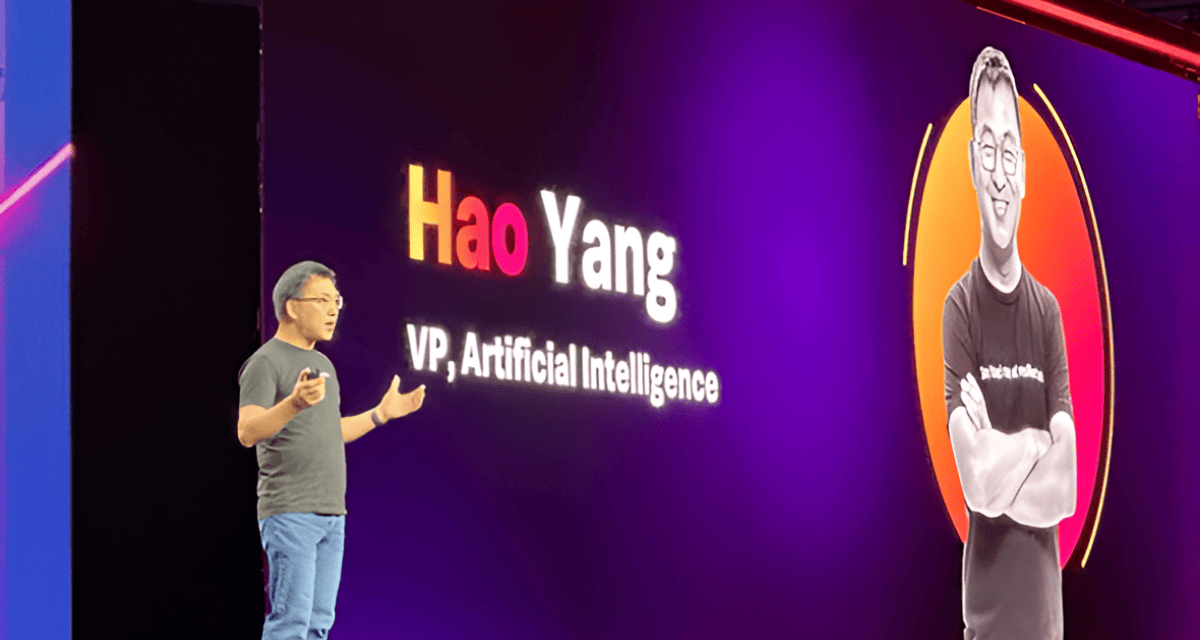
At the Splunk .conf25 event, CybersecAsia.net interviewed Hao Yang, Vice President, Artificial Intelligence, Splunk, about the mounting pressure on many organizations to deploy AI agents, chatbots and applications, as well as how they are wrestling with verifying autonomous AI agents to ensure resilience against fraud and deepfake-driven attacks.

Operational efficiency and ethical AI frameworks
In the interview, Hao Yang highlighted the core challenge: Ensuring accurate, high-quality outputs without errors or manipulation.

He noted: “We deploy applications. How do we know if they are doing what they are supposed to, and not being controlled by bad actors?” This extends to operational efficiency, where firms seek to empower analysts. “Customers want to be more efficient and allow analysts to do more,” Yang explained. “That is the biggest trend among IT leaders right now.”

Drawing from interactions with global customers, Hao Yang revealed: “Whenever I talk to customers, the first question is on agentic AI and how it will work in their domains,” he said. Large corporations are investing heavily to reshape operations through AI, and seeking help to build resilience for AI infrastructure and AI-driven system oversight. His advice? Use a dual approach to digital resilience:

  1. Fortify all systems for AI
  2. Use AI to detect anomalies

Financial firms, for instance — including community banks expanding collaboratively — rely on such tools for comprehensive monitoring, Hao Yang noted, pointing to longstanding AI use in payments, credit, and insurance. “These industries have used AI for years, but with regulations ensuring ethical application.”

The next growth phase for the industry hinges on ethical frameworks that enforce explainable decisions, from credit approvals to fraud detection, amid regulatory scrutiny.

Transparency is critical under mandates like those in the US and key financial markets in Asia Pacific, where banks must explain credit denials in plain language, not opaque algorithms. “It has to be human-understandable, not just pointing to the algorithm,” Yang said. This enforces accountability, curbing bias in high-stake decisions.

Citing some of his own firm’s case studies in APAC, he asserted that cloud migration with hybrid visibility (i.e. full visibility into both cloud and on-premise resources) enable clients to manage their hybrid operational environment more easily.

Three pain points

One area of concern was cross-border fraud, which overwhelms manual detection due to data volume. How can fintechs tackle the problem? “Manual efforts cannot catch it all,” Yang observed. Machine learning enables real-time pattern analysis and remediation.

Next, security leaders are increasingly facing AI-amplified threats such as deepfake account takeovers. Hao Yang cited a Hong Kong bank incident where fraudsters had mimicked a Chief Financial Officer convincingly in a Zoom call. “Phishing has become way more dangerous with AI, including deep fakes,” he warned. “CISOs must double-check suspicious activity using network signals like source IP.”

Finally, there was the problem with training gig workers in handling sensitive data. This group of employees usually lack data-literacy skills. To this, Hao Yang suggested: “These folks are typically not tech savvy, so you have to make things simple for them, because if you require them to do a lot of steps and processes, these folks may not be able to (cope). You ideally want to make them have basically zero efforts, zero computer and they don’t need to do anything. AI has to play a huge role there making the experience smooth among the gig workers.”

On a concluding note, Hao Yang noted the increase in the number of “Chief AI Officers” in various organizations. As fintech organizations expand their digital footprints and confront sophisticated threats, the question, Yang implied, is no longer whether AI will shape the future of finance — but how responsibly and intelligently it will be governed.


Share:

PreviousCYFIRMA’s 2025 Impact Recap Showcases DeCYFIR, Preemptive External Threat Landscape Management Platform, Delivering Measurable Global Defense Against Emerging Threats
NextEditor’s pick: Cybersecurity trends in 2026

Related Posts

Pit your wits in the first ever FIDO global developer challenge

Pit your wits in the first ever FIDO global developer challenge

Wednesday, June 16, 2021

Cyber protection for medical clinics in Singapore

Cyber protection for medical clinics in Singapore

Monday, March 2, 2026

APAC’s biggest application security challenges

APAC’s biggest application security challenges

Thursday, May 20, 2021

Google tightens Android sideloading

Google tightens Android sideloading

Tuesday, September 2, 2025

Leave a reply Cancel reply

You must be logged in to post a comment.

Voters-draw/RCA-Sponsors

Slide
Slide
Slide
Slide
Slide
Slide
Slide
Slide
Slide
Slide
Slide
Slide
Slide
Slide
previous arrow
next arrow

CybersecAsia Voting Placement

Gamification listing or Participate Now

PARTICIPATE NOW

Vote Now -Placement(Google Ads)

Top-Sidebar-banner

Whitepapers

  • Critical Security Threatsand the Need for ZTNA: How evolving cyberattacks demand a Zero Trust approach

    Critical Security Threatsand the Need for ZTNA: How evolving cyberattacks demand a Zero Trust approach

    Cyber threats have become more frequent and sophisticated, targeting organizations of all sizes across all …Download Whitepaper
  • Zero Trust Made Simple: Why it matters and how to get started

    Zero Trust Made Simple: Why it matters and how to get started

    Data breaches and cyberattacks are no longer limited to large, high-profile organizations.Download Whitepaper
  • Cloud Secure Edge: Remote access, better security

    Cloud Secure Edge: Remote access, better security

    ​SonicWall Cloud Secure Edge™ is a modern, cloud-native Security Service Edge (SSE) solution that addresses …Download Whitepaper
  • Closing the Gap in Email Security:How To Stop The 7 Most SinisterAI-Powered Phishing Threats

    Closing the Gap in Email Security:How To Stop The 7 Most SinisterAI-Powered Phishing Threats

    Insider threats continue to be a major cybersecurity risk in 2024. Explore more insights on …Download Whitepaper

Middle-sidebar-banner

Case Studies

  • How a Vietnamese D2C retailer built its own secure digital infrastructure

    How a Vietnamese D2C retailer built its own secure digital infrastructure

    Would your organization build your own digital infrastructure – including AI governance and cybersecurity – …Read more
  • Cyber protection for medical clinics in Singapore

    Cyber protection for medical clinics in Singapore

    As Singapore’s healthcare sector becomes increasingly digital and interconnected, clinics are facing heightened cyber risks, …Read more
  • India’s WazirX strengthens governance and digital asset security

    India’s WazirX strengthens governance and digital asset security

    Revamping its custody infrastructure using multi‑party computation tools has improved operational resilience and institutional‑grade safeguardsRead more
  • Bangladesh LGED modernizes communication while addressing data security concerns

    Bangladesh LGED modernizes communication while addressing data security concerns

    To meet emerging data localization/privacy regulations, the government engineering agency deploys a secure, unified digital …Read more

Bottom sidebar

Other News

  • Sparsa AI Launches Sovereign Enterprise AI Platform with Global Deployment at QNET

    Wednesday, July 8, 2026
    The Sparsa AI Enterprise Operating …Read More »
  • Conifers AI Opens Singapore Data Region, Bringing Local Data Residency to Asia-Pacific Security Teams

    Wednesday, July 8, 2026
    With data regions now spanning …Read More »
  • DXC Opens Flagship AI-first Customer Experience Center in Bengaluru

    Tuesday, July 7, 2026
    Strengthens DXC’s India presence with …Read More »
  • D-Link Brings Advanced AI Fall Detection and Privacy Protection to Home Elderly Care with the New DCS-8610 Wi-Fi Camera

    Monday, July 6, 2026
    Advanced technologies traditionally found in …Read More »
  • ICAC Commissioner attends first IAACA European regional anti-corruption conference in Hungary

    Friday, July 3, 2026
    BUDAPEST, Hungary, July 2, 2026 …Read More »
  • Our Brands
  • DigiconAsia
  • MartechAsia
  • Home
  • About Us
  • Contact Us
  • Sitemap
  • Privacy & Cookies
  • Terms of Use
  • Advertising & Reprint Policy
  • Media Kit
  • Subscribe
  • Manage Subscriptions
  • Newsletter

Copyright © 2026 CybersecAsia All Rights Reserved.