
Cybersecurity News in Asia

RECENT STORIES:

SEGA moves faster with flow-based network monitoring
Emerging third-party cyber risks via agentic AI
Fraud Syndicates Now Operate Like Businesses: VIDA Urges Malaysian CIS...
Baseus Security Brings Kickstarter Success X1 Pro Smart AI Dual-Tracki...
SECOM Singapore Receives Frost & Sullivan’s 2025 Singapore C...
India’s WazirX strengthens governance and digital asset security
LOGIN REGISTER
CybersecAsia
  • Features
    • Featured

      Emerging third-party cyber risks via agentic AI

      Emerging third-party cyber risks via agentic AI

      Tuesday, February 3, 2026, 10:22 AM Asia/Singapore | Features
    • Featured

      Rethinking customer identity for financial cybersecurity

      Rethinking customer identity for financial cybersecurity

      Tuesday, January 27, 2026, 4:13 PM Asia/Singapore | Features
    • Featured

      How AI is supercharging state-sponsored threat actors in Asia Pacific

      How AI is supercharging state-sponsored threat actors in Asia Pacific

      Wednesday, January 14, 2026, 4:06 PM Asia/Singapore | Features
  • Opinions
  • Tips
  • Whitepapers
  • Awards 2025
  • Directory
  • E-Learning

Select Page

Features

Emerging third-party cyber risks via agentic AI

By Victor Ng | Tuesday, February 3, 2026, 10:22 AM Asia/Singapore

Emerging third-party cyber risks via agentic AI

As organizations accelerated AI adoption in 2025, a new and underappreciated category of third-party risk has emerged: agentic AI.

Unlike traditional third-party vendor risks centered on shared credentials or software vulnerabilities, agentic AI represents autonomous, credentialed AI agents that interact with and execute tasks across enterprise systems without human intervention or explicit permission.

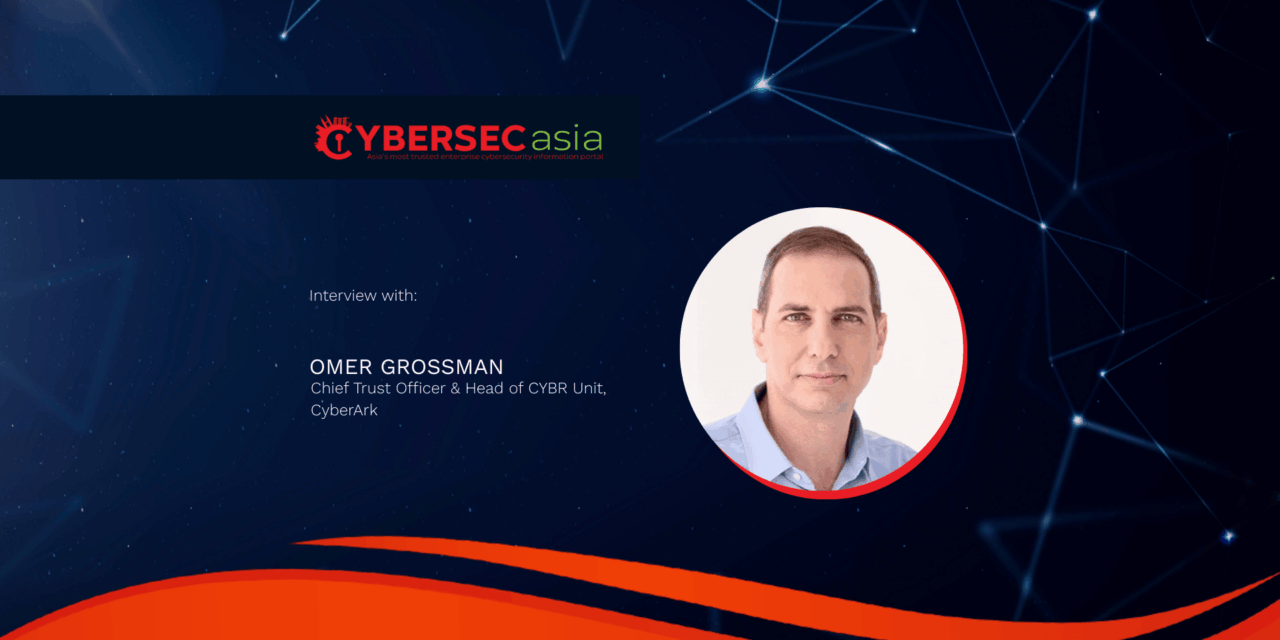
Omer Grossman, CIO, CyberArk, revealed that while 72% of employees now use AI tools, 59% of organizations lack identity management protocols for these autonomous AI agents.

This gap exposes enterprises to unwitting insider threats and dynamic security risks as these AI agents perform critical actions — ranging from updating sensitive customer data, dispatching emails, to provisioning cloud resources — entirely on their own.

CybersecAsia gained more insights for 2026 from Grossman in this interview:

What unique risks do autonomous AI agents introduce to an organization?

Grossman: The world is moving beyond predefined automation to an autonomous, undeterministic decision-making. Artificial intelligence (AI) agents are executing tasks and making decisions at machine speed. That is why trust models require a rethink before these agents become too deeply embedded.

Beyond the traditional human and machine identities, agents are a new type of entity – acting like humans, at the speed and scale of machines. As such, we need to address them differently.

From our observation, three unique risks stand out. The first is unsupervised decision-making, something that enterprises are not accustomed to since governance structures are built on accountability. Autonomous agents work beyond these boundaries, making decisions at machine speed that can propagate bias. Without clear oversight, small errors can scale into systemic failures.

The second unique risk relates to privilege escalation and credential misuse. AI agents often operate with high privileges but with less transparency. If an agent is compromised, its wide access can amplify the blast radius of an attack. Agent behavior is not deterministic, and this makes traditional access control insufficient.

The third unique risk is auditing, as agents can trigger unexpected outcomes that are hard to trace or explain. Imagine a chain of AI agents performing cross-platform tasks. One misinterprets an instruction, and suddenly, sensitive data is at risk.

Humans make mistakes too, but in those cases, the cause can be traced and remediated through established change management. With autonomous agents, observability and accountability become far more complex.

Organizations need new ways to validate, monitor, and trust AI agents because the systems used to secure automation will not be enough to secure autonomy.

How does the credentialed nature of agentic AI change the way third-party risk should be managed, particularly when it comes to privileged access and identity governance?

Grossman: What we are observing now is something deeper and more complex. Every major Software-as-a-Service (SaaS) platform today integrates AI agents. Salesforce uses them for customer relationship management (CRM) productivity and ServiceNow uses them for analytics and automation.

Though these agents deliver value, they also introduce a new visibility gap. The average CISO or CIO may not know precisely what agents can access. Within Salesforce, for example, only a few administrators typically have full data access. What happens then when an AI agent, deployed and managed by Salesforce, is granted system-level permissions that were not explicitly approved? There was one case where a vendor-deployed AI agent came with hard-coded credentials that bypassed standard onboard authentication checks.

If a vendor’s internal AI service is built on another company’s foundation model like Llama, DeepSeek, or GPT, then that provider becomes your fourth party, and this can go on until the nth party. 

If that model uses training data or software components from open-source repositories, you are indirectly exposed to potential vulnerabilities all the way upstream.

This supply chain risk can propagate into the algorithmic layer itself. As an industry, we strengthened SaaS Security Posture Management (SSPM) and enforced least privilege on third-party integrations. In response, attackers moved upstream to target fourth parties (like in the case of Salesloft-Drift where the attackers targeted the Salesforce integration and from there hundreds of enterprises were compromised).

Organizations must evolve from securing visible third-party systems to managing invisible algorithmic dependencies. Dynamic privilege enforcement and cross-vendor visibility must become standard practice. Zero Trust for AI ensures this by assuming that even trusted partners’ autonomous systems could be compromised. And the least privilege principle still holds.


Pages: 1 2

Share:

PreviousFraud Syndicates Now Operate Like Businesses: VIDA Urges Malaysian CISOs to Rethink AI-Era Defense

Related Posts

Massive surge in cyberthreats in H1 2020 foreshadow worse threats to come

Massive surge in cyberthreats in H1 2020 foreshadow worse threats to come

Thursday, September 17, 2020

Tackling the real security issues we face today

Tackling the real security issues we face today

Thursday, December 9, 2021

Building trust in a world of AI and quantum technologies

Building trust in a world of AI and quantum technologies

Monday, June 12, 2023

Not another story on AI vs AI! The human twist to phishing’s rising impact

Not another story on AI vs AI! The human twist to phishing’s rising impact

Wednesday, March 26, 2025

Leave a reply Cancel reply

You must be logged in to post a comment.

Voters-draw/RCA-Sponsors

Slide
Slide
Slide
Slide
Slide
Slide
Slide
Slide
Slide
Slide
Slide
Slide
Slide
Slide
previous arrow
next arrow

CybersecAsia Voting Placement

Gamification listing or Participate Now

PARTICIPATE NOW

Vote Now -Placement(Google Ads)

Top-Sidebar-banner

Whitepapers

  • Closing the Gap in Email Security:How To Stop The 7 Most SinisterAI-Powered Phishing Threats

    Closing the Gap in Email Security:How To Stop The 7 Most SinisterAI-Powered Phishing Threats

    Insider threats continue to be a major cybersecurity risk in 2024. Explore more insights on …Download Whitepaper
  • 2024 Insider Threat Report: Trends, Challenges, and Solutions

    2024 Insider Threat Report: Trends, Challenges, and Solutions

    Insider threats continue to be a major cybersecurity risk in 2024. Explore more insights on …Download Whitepaper
  • AI-Powered Cyber Ops: Redefining Cloud Security for 2025

    AI-Powered Cyber Ops: Redefining Cloud Security for 2025

    The future of cybersecurity is a perfect storm: AI-driven attacks, cloud expansion, and the convergence …Download Whitepaper
  • Data Management in the Age of Cloud and AI

    Data Management in the Age of Cloud and AI

    In today’s Asia Pacific business environment, organizations are leaning on hybrid multi-cloud infrastructures and advanced …Download Whitepaper

Middle-sidebar-banner

Case Studies

  • India’s WazirX strengthens governance and digital asset security

    India’s WazirX strengthens governance and digital asset security

    Revamping its custody infrastructure using multi‑party computation tools has improved operational resilience and institutional‑grade safeguardsRead more
  • Bangladesh LGED modernizes communication while addressing data security concerns

    Bangladesh LGED modernizes communication while addressing data security concerns

    To meet emerging data localization/privacy regulations, the government engineering agency deploys a secure, unified digital …Read more
  • What AI worries keep members of the Association of Certified Fraud Examiners sleepless?

    What AI worries keep members of the Association of Certified Fraud Examiners sleepless?

    This case study examines how many anti-fraud professionals reported feeling underprepared to counter rising AI-driven …Read more
  • Meeting the business resilience challenges of digital transformation

    Meeting the business resilience challenges of digital transformation

    Data proves to be key to driving secure and sustainable digital transformation in Southeast Asia.Read more

Bottom sidebar

Other News

  • Fraud Syndicates Now Operate Like Businesses: VIDA Urges Malaysian CISOs to Rethink AI-Era Defense

    Tuesday, February 3, 2026
    KUALA LUMPUR, Malaysia, Feb. 2, …Read More »
  • Baseus Security Brings Kickstarter Success X1 Pro Smart AI Dual-Tracking Security Camera to Amazon

    Tuesday, February 3, 2026
    SHENZHEN, China, Feb. 3, 2026 …Read More »
  • SECOM Singapore Receives Frost & Sullivan’s 2025 Singapore Customer Value Leadership Recognition in the Integrated Security Services Industry

    Monday, February 2, 2026
    The company is recognized for …Read More »
  • BIGO Ads Enhances IAA Traffic Quality and Transparency Through Deepened Partnership with Pixalate

    Friday, January 30, 2026
    SINGAPORE, Jan. 30, 2026 /PRNewswire/ …Read More »
  • Hikvision earns ISO/IEC 29147 and ISO/IEC 30111 certification for vulnerability management

    Friday, January 30, 2026
    HANGZHOU, China, Jan. 30, 2026 …Read More »
  • Our Brands
  • DigiconAsia
  • MartechAsia
  • Home
  • About Us
  • Contact Us
  • Sitemap
  • Privacy & Cookies
  • Terms of Use
  • Advertising & Reprint Policy
  • Media Kit
  • Subscribe
  • Manage Subscriptions
  • Newsletter

Copyright © 2026 CybersecAsia All Rights Reserved.