
Cybersecurity News in Asia

RECENT STORIES:

SEGA moves faster with flow-based network monitoring
Hackers leverage jailbroken AI to probe OT systems in Mexican Water Br...
Which four tech brands were most exploited in phishing and social medi...
The problem with CAPTCHAs – and the password perception gap
VIVOTEK AI Solutions Enhance Efficiency at Traffic Hubs in Norway
Report: more than half of APAC organizations experienced AI-related in...
LOGIN REGISTER
CybersecAsia
  • Features
    • Featured

      The problem with CAPTCHAs – and the password perception gap

      The problem with CAPTCHAs - and the password perception gap

      Thursday, May 7, 2026, 11:14 AM Asia/Singapore | Features
    • Featured

      How AI is supercharging insider threats

      How AI is supercharging insider threats

      Wednesday, April 15, 2026, 12:29 PM Asia/Singapore | Features
    • Featured

      Q-Day is coming. Are you ready?

      Q-Day is coming. Are you ready?

      Tuesday, April 14, 2026, 12:40 PM Asia/Singapore | Features
  • Opinions
  • Tips
  • Whitepapers
  • Directory
  • E-Learning

Select Page

Features

Rethinking customer identity for financial cybersecurity

By Victor Ng | Tuesday, January 27, 2026, 4:13 PM Asia/Singapore

Rethinking customer identity for financial cybersecurity

What should banks in Asia Pacific pay attention to this year to protect themselves and their customers?

Financial institutions face an average of $6.08M per breach, 22% above the global average. What should banks and financial institutions do to protect themselves and their customers?

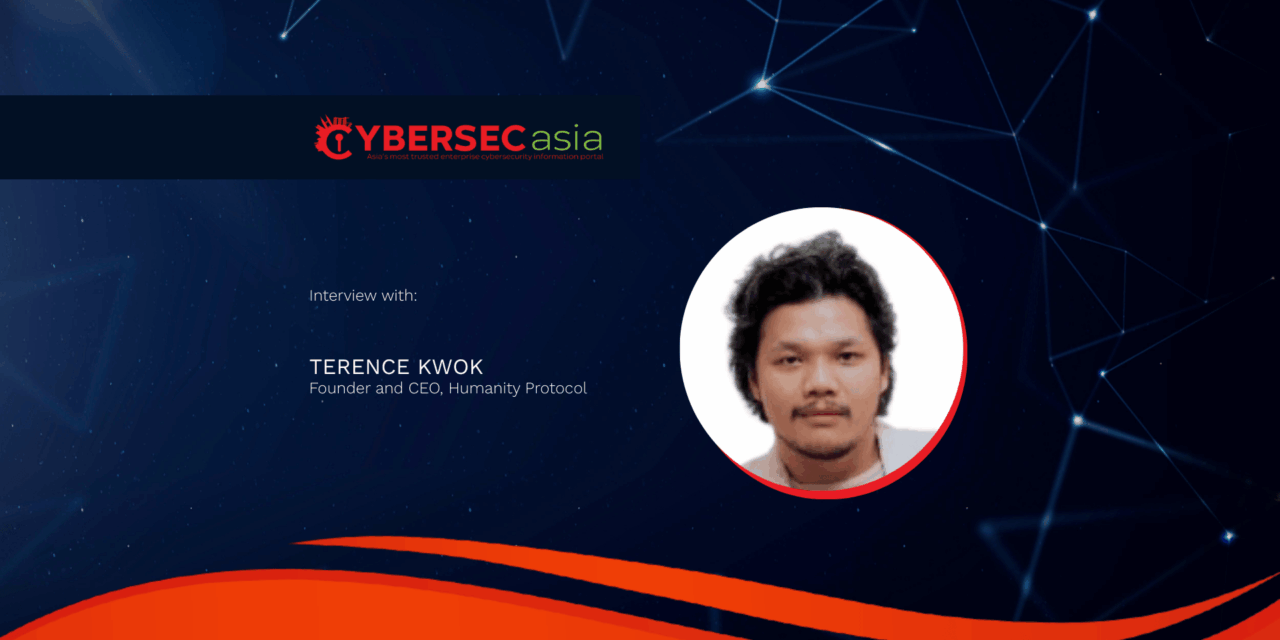
We find out more from Terence Kwok, Founder and CEO, Humanity Protocol, on how banks can materially reduce this exposure by rethinking customer identity.

Why are traditional KYC processes and centralized data stores still the weakest link for banks?

Kwok: Traditionally, KYC processes require banks to collect, duplicate, and store large volumes of sensitive identity data. This creates centralised repositories that remain attractive targets long after onboarding is complete. These data stores contain static information such as passports, ID documents, and proof of address, which attackers can easily monetise through identity theft or the creation of synthetic identities.

The issue is structural. Even when security controls improve, the underlying model still forces institutions to hold data that is no longer operationally necessary but still carries significant long-term liability. IBM’s recent breach analysis shows that most financial-sector breach impact comes from data at rest rather than data in transit. This exposes a fundamental mismatch. Verification is a single event, yet the associated custodial responsibility persists indefinitely.

As digital channels expand, centralised data stores become harder to secure and more costly to maintain. Banks inherit long-term risk simply by holding information that attackers actively seek. The system meets compliance requirements, but it enlarges the threat surface at the same time.

How does removing high-value data “honeypots” change the economics of a potential breach?

Kwok: When storage of sensitive information is eliminated, the financial and operational consequences of a breach change significantly. Breaches involving personal data trigger a long and expensive chain of remediation activities that include regulatory reporting, customer notification, identity restoration support, and reputational management. These costs often extend for years.

If verification is achieved through cryptographic proofs rather than stored documents, attackers have very little to gain. There are no passport scans, utility bills, or identification records to extract. Cyberattackers rely on concentrated, easily monetisable data sets. When those data sets no longer exist, the potential reward falls sharply.

This changes the nature of incidents. Breaches become operational disruptions rather than large-scale data exposure events. Institutions focus on restoring systems, not mitigating identity compromise. The overall cost profile becomes more predictable and far less severe. By removing high-value honeypots, organisations significantly reduce the economic incentive for attackers.

How can decentralized, privacy-preserving identity fit within today’s regulatory expectations for AML and KYC?

Kwok: Decentralized, privacy-preserving identity models can meet AML and KYC requirements by providing the assurance and auditability regulators expect without requiring institutions to store excess personal data. Regulators care about whether an institution can prove that a customer meets specific criteria. They do not require organisations to hold more information than is necessary to demonstrate compliance.

Using cryptographic verification methods such as or zkTLS (zero-knowledge transport layer security), institutions can validate attributes such as account ownership or eligibility against sanctions lists without accessing or storing the underlying documents. These verification steps can be logged, audited and reproduced, which preserves regulatory integrity.

This approach also aligns with a broader shift toward data minimisation in frameworks such as GDPR, MAS guidelines, PDPA, and new requirements across the Middle East and Asia Pacific. Many regulators are now encouraging institutions to reduce the amount of identity data they retain, as unnecessary storage is increasingly viewed as a security and compliance risk.

In practical terms, privacy-preserving identity models do not reduce oversight. They strengthen it by allowing institutions to verify what is required while avoiding the long-term custodial obligations that create unnecessary risk.

Share:

PreviousScammers abuse popular collaboration tools to send phishing emails
NextRegASK Achieves ISO 27701 Privacy Certification, Strengthening Verifiable Trust in the AI Era

Related Posts

Unlocking cybersecurity’s hidden defenders to preempt cyber vulnerabilities

Unlocking cybersecurity’s hidden defenders to preempt cyber vulnerabilities

Saturday, November 22, 2025

Passwords: tips for today, predictions for tomorrow

Passwords: tips for today, predictions for tomorrow

Wednesday, May 5, 2021

Year-end online flash sales events – Gearing up for cybersecurity

Year-end online flash sales events – Gearing up for cybersecurity

Friday, October 16, 2020

Deepfake technology and other innovations in cyberthreats

Deepfake technology and other innovations in cyberthreats

Tuesday, December 3, 2024

Leave a reply Cancel reply

You must be logged in to post a comment.

Voters-draw/RCA-Sponsors

Slide
Slide
Slide
Slide
Slide
Slide
Slide
Slide
Slide
Slide
Slide
Slide
Slide
Slide
previous arrow
next arrow

CybersecAsia Voting Placement

Gamification listing or Participate Now

PARTICIPATE NOW

Vote Now -Placement(Google Ads)

Top-Sidebar-banner

Whitepapers

  • Closing the Gap in Email Security:How To Stop The 7 Most SinisterAI-Powered Phishing Threats

    Closing the Gap in Email Security:How To Stop The 7 Most SinisterAI-Powered Phishing Threats

    Insider threats continue to be a major cybersecurity risk in 2024. Explore more insights on …Download Whitepaper
  • 2024 Insider Threat Report: Trends, Challenges, and Solutions

    2024 Insider Threat Report: Trends, Challenges, and Solutions

    Insider threats continue to be a major cybersecurity risk in 2024. Explore more insights on …Download Whitepaper
  • AI-Powered Cyber Ops: Redefining Cloud Security for 2025

    AI-Powered Cyber Ops: Redefining Cloud Security for 2025

    The future of cybersecurity is a perfect storm: AI-driven attacks, cloud expansion, and the convergence …Download Whitepaper
  • Data Management in the Age of Cloud and AI

    Data Management in the Age of Cloud and AI

    In today’s Asia Pacific business environment, organizations are leaning on hybrid multi-cloud infrastructures and advanced …Download Whitepaper

Middle-sidebar-banner

Case Studies

  • Cyber protection for medical clinics in Singapore

    Cyber protection for medical clinics in Singapore

    As Singapore’s healthcare sector becomes increasingly digital and interconnected, clinics are facing heightened cyber risks, …Read more
  • India’s WazirX strengthens governance and digital asset security

    India’s WazirX strengthens governance and digital asset security

    Revamping its custody infrastructure using multi‑party computation tools has improved operational resilience and institutional‑grade safeguardsRead more
  • Bangladesh LGED modernizes communication while addressing data security concerns

    Bangladesh LGED modernizes communication while addressing data security concerns

    To meet emerging data localization/privacy regulations, the government engineering agency deploys a secure, unified digital …Read more
  • What AI worries keep members of the Association of Certified Fraud Examiners sleepless?

    What AI worries keep members of the Association of Certified Fraud Examiners sleepless?

    This case study examines how many anti-fraud professionals reported feeling underprepared to counter rising AI-driven …Read more

Bottom sidebar

Other News

  • VIVOTEK AI Solutions Enhance Efficiency at Traffic Hubs in Norway

    Wednesday, May 6, 2026
    TAIPEI, May 6, 2026 /PRNewswire/ …Read More »
  • Taoping Reports Fiscal Year 2025 Results

    Thursday, April 30, 2026
    Strategic Transformation Drives Platform Expansion, …Read More »
  • DESILO Launches World’s First Fully Homomorphic Encryption Library Integrating 5th-Generation FHE Scheme ‘GL’, Accelerating the Era of Private AI

    Tuesday, April 28, 2026
    SEOUL, South Korea, April 28, …Read More »
  • Tencent Cloud Cube Sandbox Goes Fully Open-Source, with Five Major Breakthroughs Enabling Large-Scale Agent Deployment

    Thursday, April 23, 2026
    Tencent Cloud’s Cube Sandbox goes …Read More »
  • Sparrow to Demonstrate AI-Driven Security and SBOM Management at Black Hat Asia 2026

    Wednesday, April 22, 2026
    SINGAPORE, April 21, 2026 /PRNewswire/ …Read More »
  • Our Brands
  • DigiconAsia
  • MartechAsia
  • Home
  • About Us
  • Contact Us
  • Sitemap
  • Privacy & Cookies
  • Terms of Use
  • Advertising & Reprint Policy
  • Media Kit
  • Subscribe
  • Manage Subscriptions
  • Newsletter

Copyright © 2026 CybersecAsia All Rights Reserved.