Cybersecurity News in Asia

RECENT STORIES:

SEGA moves faster with flow-based network monitoring
Scammers abuse popular collaboration tools to send phishing emails
The State of PKI Security in 2026
Malicious AI extensions steal data from hordes of VS Code developers
ASEAN cloud security grapples with fragmentation, routing risks and la...
Ransomware Leak Exposes Millions of Customer Emails and Personal Detai...
LOGIN REGISTER
CybersecAsia
  • Features
    • Featured

      How AI is supercharging state-sponsored threat actors in Asia Pacific

      How AI is supercharging state-sponsored threat actors in Asia Pacific

      Wednesday, January 14, 2026, 4:06 PM Asia/Singapore | Features
    • Featured

      Leveraging digital twins to combat rising AI-powered threats

      Leveraging digital twins to combat rising AI-powered threats

      Thursday, January 8, 2026, 1:58 PM Asia/Singapore | Features
    • Featured

      Editor’s pick: Cybersecurity trends in 2026

      Editor's pick: Cybersecurity trends in 2026

      Wednesday, January 7, 2026, 10:36 AM Asia/Singapore | Cyberthreat Landscape, Features, Newsletter
  • Opinions
  • Tips
  • Whitepapers
  • Awards 2025
  • Directory
  • E-Learning

Select Page

Tips

Tackling next year’s enterprise cyber resilience trends: five strategic priorities for CISOs

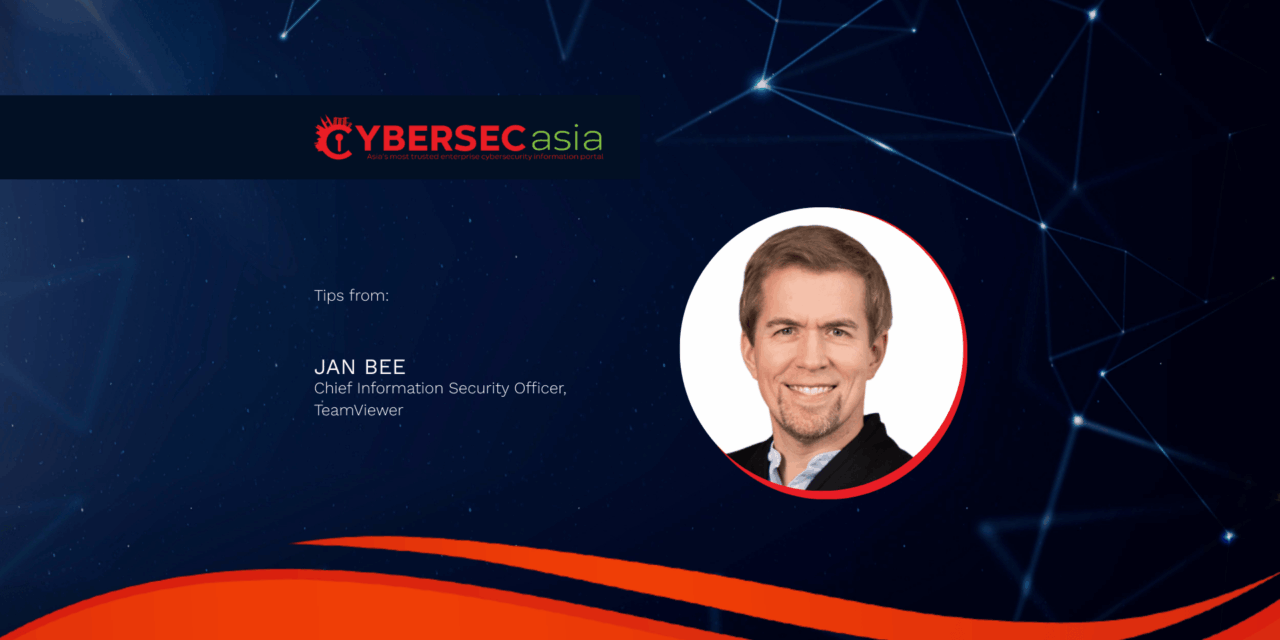
By Jan Bee, Chief Information Security Officer, TeamViewer | Wednesday, December 10, 2025, 12:27 PM Asia/Singapore

Tackling next year’s enterprise cyber resilience trends: five strategic priorities for CISOs

With the five strategies listed below, CISOs can strengthen enterprise resilience, enhance threat response, and secure identity and SaaS ecosystems effectively.

By 2026, cyber resilience will likely evolve into a core business competency, requiring alignment between boards and IT leaders to translate technical threats into financial, reputational, and operational impacts.

Security visibility will surpass prevention as a key resilience metric, emphasizing rapid detection in expanding cloud and SaaS environments.

Third-party SaaS supply chains will emerge as primary attack vectors, with adversaries using AI to exploit vulnerabilities across supplier networks, while identity replaces the network perimeter as the main security boundary through comprehensive SSO implementation.

Five trends and strategies for CISOs
Based on the predicted trends, CISOs can keep a watch for the following five strategies we propose for enhancing enterprise cyber resilience:

  1. Align governance for resilience
    Boards and CISOs can collaborate by developing a shared language that links threat intelligence to tangible business outcomes, such as financial losses or operational disruptions from incidents. Governance alignment complements technical controls, as maturity models like CIS Controls emphasize organizational buy-in for effective resilience. Formal plans with executive involvement can, according to some case studies, reduce breach lifecycles by up to 27% and response times by 30%.
  2. Prioritize cyber threat detection speed
    Security programs measure success through visibility metrics like mean time to detect (MTTD) and respond (MTTR), critical in cloud-expanded environments where prevention alone fails. Agentic AI and SaaS interconnections demand sub-minute detection capabilities, as 2025 data suggests that in some cases, 70% of breaches involve multi-stage persistence missed by traditional tools. Faster visibility can enable containment before lateral movement, outperforming heavily fortified but reactive setups.​
  3. Secure SaaS ecosystems
    Conduct application inventories to identify third- and fourth-party software-as-a-service (SaaS) usage, then apply baseline controls like API monitoring and vendor risk assessments per frameworks such as NIST SP 800-161. This year saw supply chain incidents double, underscoring the need for rapid posture improvements. Systematic securing — starting with high-risk tools — mitigates AI-accelerated exploitation across networks.​
  4. Establish identity foundations
    Position identity management as the Zero Trust cornerstone, mandating SSO federation across all enterprise apps to eliminate perimeter reliance. CIS Benchmarks recommend end-to-end controls, including just-in-time access and visibility into connector identities (e.g., names, affiliations) for audit trails. Implementation gaps persist in 40% of enterprises, but full rollout can reduce unauthorized access by up to 80%, according to adoption benchmarks.​
  5. Transition from passwords
    Adopt passwordless methods including passkeys, device-bound platform authentication, and biometrics on managed endpoints. Frameworks such as NIST SP 800-63B prioritize phishing-resistant authenticators over complex passwords. Passwordless implementations reduce password-related helpdesk tickets by up to 90%, align with Cyber Essentials mandates —emphasizing passkeys, and possibly achieve 36% enrollment on eligible accounts in early enterprise use.

Share:

PreviousWeb browsers that rank lowest for privacy protection
NextCybersecurity predictions for 2026 start here

Related Posts

Unmanaged open source security: the risks are out there

Unmanaged open source security: the risks are out there

Monday, January 4, 2021

You’ve Got Spam Mail: APAC accounts for 1/4 of global malicious emails in 2022

You’ve Got Spam Mail: APAC accounts for 1/4 of global malicious emails in 2022

Wednesday, September 7, 2022

International ‘scamming-as-a-service’ affiliate scheme expands to South-east Asia

International ‘scamming-as-a-service’ affiliate scheme expands to South-east Asia

Friday, August 12, 2022

Vendor of private healthcare group in Singapore suffers data breach

Vendor of private healthcare group in Singapore suffers data breach

Thursday, October 28, 2021

Leave a reply Cancel reply

You must be logged in to post a comment.

Voters-draw/RCA-Sponsors

Slide
Slide
Slide
Slide
Slide
Slide
Slide
Slide
Slide
Slide
Slide
Slide
Slide
Slide
previous arrow
next arrow

CybersecAsia Voting Placement

Gamification listing or Participate Now

PARTICIPATE NOW

Vote Now -Placement(Google Ads)

Top-Sidebar-banner

Whitepapers

  • Closing the Gap in Email Security:How To Stop The 7 Most SinisterAI-Powered Phishing Threats

    Closing the Gap in Email Security:How To Stop The 7 Most SinisterAI-Powered Phishing Threats

    Insider threats continue to be a major cybersecurity risk in 2024. Explore more insights on …Download Whitepaper
  • 2024 Insider Threat Report: Trends, Challenges, and Solutions

    2024 Insider Threat Report: Trends, Challenges, and Solutions

    Insider threats continue to be a major cybersecurity risk in 2024. Explore more insights on …Download Whitepaper
  • AI-Powered Cyber Ops: Redefining Cloud Security for 2025

    AI-Powered Cyber Ops: Redefining Cloud Security for 2025

    The future of cybersecurity is a perfect storm: AI-driven attacks, cloud expansion, and the convergence …Download Whitepaper
  • Data Management in the Age of Cloud and AI

    Data Management in the Age of Cloud and AI

    In today’s Asia Pacific business environment, organizations are leaning on hybrid multi-cloud infrastructures and advanced …Download Whitepaper

Middle-sidebar-banner

Case Studies

  • Bangladesh LGED modernizes communication while addressing data security concerns

    Bangladesh LGED modernizes communication while addressing data security concerns

    To meet emerging data localization/privacy regulations, the government engineering agency deploys a secure, unified digital …Read more
  • What AI worries keep members of the Association of Certified Fraud Examiners sleepless?

    What AI worries keep members of the Association of Certified Fraud Examiners sleepless?

    This case study examines how many anti-fraud professionals reported feeling underprepared to counter rising AI-driven …Read more
  • Meeting the business resilience challenges of digital transformation

    Meeting the business resilience challenges of digital transformation

    Data proves to be key to driving secure and sustainable digital transformation in Southeast Asia.Read more
  • Upgrading biometric authentication system protects customers in the Philippines: UnionDigital Bank

    Upgrading biometric authentication system protects customers in the Philippines: UnionDigital Bank

    An improved dual-liveness biometric framework can counter more deepfake threats, ensure compliance, and protect underbanked …Read more

Bottom sidebar

Other News

  • NopalCyber Named a Top 250 Global MSSP for Second Consecutive Year

    Wednesday, January 21, 2026
    HYDERABAD, India, Jan. 20, 2026 …Read More »
  • RSUPPORT Validates Top-Tier Security with ISO/IEC 27001 and 27017 Certifications

    Monday, January 19, 2026
    Asia’s No.1 Remote Solutions Provider …Read More »
  • Black Box Names Sameer Batra as Chief Business Officer to accelerate International Markets Growth

    Wednesday, January 14, 2026
    New leader to drive customer …Read More »
  • Advantech Partners with MediaTek to Achieve IEC 62443-4-2 Certification for Their First Arm-Based Industrial SBC

    Wednesday, January 14, 2026
    TAIPEI, Jan. 6, 2026 /PRNewswire/ …Read More »
  • VIVOTEK Chroma24 AI Cameras Unveil Night in True Color

    Tuesday, January 13, 2026
    Securing Critical Sites 24/7 with …Read More »
  • Our Brands
  • DigiconAsia
  • MartechAsia
  • Home
  • About Us
  • Contact Us
  • Sitemap
  • Privacy & Cookies
  • Terms of Use
  • Advertising & Reprint Policy
  • Media Kit
  • Subscribe
  • Manage Subscriptions
  • Newsletter

Copyright © 2026 CybersecAsia All Rights Reserved.