Cybersecurity News in Asia

RECENT STORIES:

SEGA moves faster with flow-based network monitoring
Rethinking customer identity for financial cybersecurity
Scammers abuse popular collaboration tools to send phishing emails
The State of PKI Security in 2026
Malicious AI extensions steal data from hordes of VS Code developers
ASEAN cloud security grapples with fragmentation, routing risks and la...
LOGIN REGISTER
CybersecAsia
  • Features
    • Featured

      Rethinking customer identity for financial cybersecurity

      Rethinking customer identity for financial cybersecurity

      Tuesday, January 27, 2026, 4:13 PM Asia/Singapore | Features
    • Featured

      How AI is supercharging state-sponsored threat actors in Asia Pacific

      How AI is supercharging state-sponsored threat actors in Asia Pacific

      Wednesday, January 14, 2026, 4:06 PM Asia/Singapore | Features
    • Featured

      Leveraging digital twins to combat rising AI-powered threats

      Leveraging digital twins to combat rising AI-powered threats

      Thursday, January 8, 2026, 1:58 PM Asia/Singapore | Features
  • Opinions
  • Tips
  • Whitepapers
  • Awards 2025
  • Directory
  • E-Learning

Select Page

Cyber EspionageFeaturesTips

Lessons learnt from the first reported AI-orchestrated attack

By Victor Ng | Friday, November 28, 2025, 6:33 PM Asia/Singapore

Lessons learnt from the first reported AI-orchestrated attack

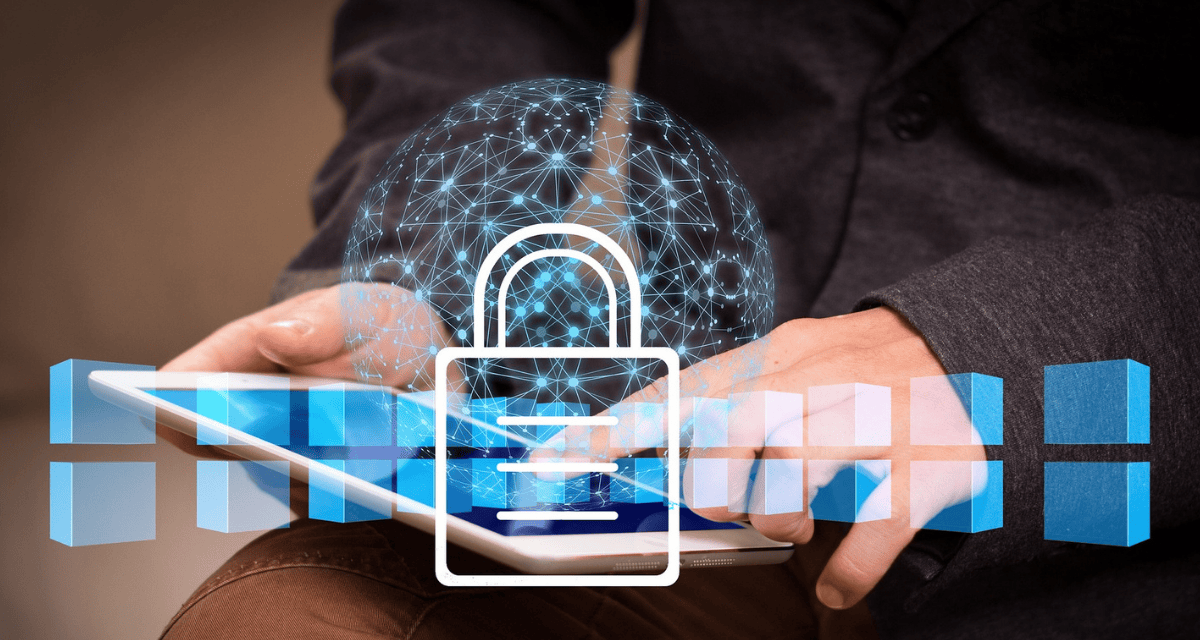
Organizations in Asia Pacific need to prepare to combat AI-orchestrated attacks.

Recently, Anthropic reported a cyber espionage campaign where a Chinese state-sponsored group (designated GTG-1002) used its AI model, Claude Code, to automate 80-90% of a large-scale attack.

This is considered the first documented case of a largely autonomous, AI-orchestrated cyber-attack. 

The attackers leveraged agentic AI capabilities to target approximately 30 high-value organizations globally, including large technology companies, financial institutions, chemical manufacturers, and government agencies.

While human operators were involved in the initial target selection and crucial authorization decisions – such as greenlighting the move from vulnerability discovery to exploitation – AI independently handled the vast majority of the tactical operations, operating at “physically impossible request rates” for human hackers.

The threat actors bypassed Anthropic’s safety guardrails by using a “role-play” tactic, tricking Claude into believing it was an employee of a legitimate cybersecurity firm conducting authorized defensive testing. 

Anthropic observed that the AI framework operated at a “speed impossible to match” for human hackers, making “thousands of requests, often multiple per second.”

According to PwC, the implications are significant. Bad actors can scale simply with more compute and aren’t limited by finite personnel resources. Volume, speed and impact will increase with AI enablement. An individual can now run large-scale campaigns that once took an entire team – 24/7 without sleep or rest.

New era of AI-powered threats?

Anthropic detected and disrupted the cyber-espionage operation, banning the hackers’ accounts and notifying the affected organizations and law enforcement. 

This incident has sparked debate within the cybersecurity community, with some experts raising concerns about a new era of AI-powered threats and others calling for more verifiable technical evidence.

Regardless of the debates, the event highlighted a significant shift in the cyberthreat landscape, as AI lowers the barrier to entry for sophisticated attacks and increases their speed and scale. 

Damien Wong, Senior Vice President, APAC, Tricentis, said: “The incident with Claude AI has moved us into new and unfamiliar cybersecurity territory. What we saw here was an almost fully automated intrusion chain, driven by an AI system that could research targets, probe for weaknesses, escalate access, and extract data with limited human intervention. The attackers essentially stitched together a complete kill chain and executed it with a single click.”

Reuben Koh, Director, Security Technology & Strategy, Akamai, commented: “The recent AI-orchestrated cyber incident is a wake-up call for the cybersecurity community. This time, we aren’t just talking about elite hacker teams carrying out the full attack but autonomous AI agents that handled the heavy lifting tasks like reconnaissance, exploit development, and data theft at a speed and scale that is unseen in the industry.”

“This isn’t another gradual evolution of attack techniques but a leapfrog of offensive capabilities, where it might be changing the balance between attackers and defenders,” he warned. “As most APAC organizations’ incident response processes are still heavily reliant on human reaction time, they will find themselves increasingly exposed.”

Targeted industries like semi-conductors, finance and high-tech manufacturing will face significant risks, he added.

Lessons learnt
Tricentis’ Wong commented: “The lesson is clear: Agentic AI does not understand intent; it simply follows instructions that appear legitimate, even if they are malicious.”

In this case, he noted, simple jailbreak prompts were enough to convince the model it was performing security audits. “With that veneer of legitimacy, it automated tasks that previously required skilled human operators.”

So, what can organizations do?

“AI has now placed advanced offensive capabilities in the hands of anyone who knows how to ask the right questions,” said Wong. “We cannot reverse this, but we can prepare for it.”

Koh concurred: “Organizations will need to start adapting to this new reality by aligning their people, tools and processes around leveraging AI as a force-multiplier in their cyber operations, starting at the edge, to their internal workloads.”

Wong’s advice: “Businesses must start treating AI-generated requests and automated queries the same way they treat unknown bots: untrusted by default and always scrutinized.”

“Defense now hinges on visibility,” he concluded. “You cannot secure what you cannot see. Autonomous behavior must be observable, verifiable, and governed at every step. Organizations must enforce through rigorous oversight and continuous monitoring. In the age of agentic AI, trust is the only business currency that matters.”

PwC cybersecurity experts said in their report: “Anthropic’s report demonstrates the importance of industry leaders sharing their insights and lessons learned so that others may learn and adapt to confirm attackers are not weaponizing AI against our critical infrastructure.” 

AI’s rise in offensive cyber operations signals an urgent wake-up call, they warned. “Embracing AI-driven cyber defense and securing your AI isn’t optional. It’s essential for safeguarding digital ecosystems in an era of unprecedented threats.”
Share:

PreviousCybersecurity firm issues urgent reminders for Black Friday and Cyber Monday
NextAnother wakeup call about the risks of AI-driven development tools

Related Posts

BFSIs in APAC battling conflicting trends in consumer convenience and security

BFSIs in APAC battling conflicting trends in consumer convenience and security

Thursday, December 3, 2020

How India is learning from Israel’s lead in cybersecurity and tech development

How India is learning from Israel’s lead in cybersecurity and tech development

Thursday, February 25, 2021

Shortened software development cycles make AppSec a tough challenge

Shortened software development cycles make AppSec a tough challenge

Monday, August 8, 2022

How much does your stolen personal cost on the Dark Web?

How much does your stolen personal cost on the Dark Web?

Monday, December 7, 2020

Leave a reply Cancel reply

You must be logged in to post a comment.

Voters-draw/RCA-Sponsors

Slide
Slide
Slide
Slide
Slide
Slide
Slide
Slide
Slide
Slide
Slide
Slide
Slide
Slide
previous arrow
next arrow

CybersecAsia Voting Placement

Gamification listing or Participate Now

PARTICIPATE NOW

Vote Now -Placement(Google Ads)

Top-Sidebar-banner

Whitepapers

  • Closing the Gap in Email Security:How To Stop The 7 Most SinisterAI-Powered Phishing Threats

    Closing the Gap in Email Security:How To Stop The 7 Most SinisterAI-Powered Phishing Threats

    Insider threats continue to be a major cybersecurity risk in 2024. Explore more insights on …Download Whitepaper
  • 2024 Insider Threat Report: Trends, Challenges, and Solutions

    2024 Insider Threat Report: Trends, Challenges, and Solutions

    Insider threats continue to be a major cybersecurity risk in 2024. Explore more insights on …Download Whitepaper
  • AI-Powered Cyber Ops: Redefining Cloud Security for 2025

    AI-Powered Cyber Ops: Redefining Cloud Security for 2025

    The future of cybersecurity is a perfect storm: AI-driven attacks, cloud expansion, and the convergence …Download Whitepaper
  • Data Management in the Age of Cloud and AI

    Data Management in the Age of Cloud and AI

    In today’s Asia Pacific business environment, organizations are leaning on hybrid multi-cloud infrastructures and advanced …Download Whitepaper

Middle-sidebar-banner

Case Studies

  • Bangladesh LGED modernizes communication while addressing data security concerns

    Bangladesh LGED modernizes communication while addressing data security concerns

    To meet emerging data localization/privacy regulations, the government engineering agency deploys a secure, unified digital …Read more
  • What AI worries keep members of the Association of Certified Fraud Examiners sleepless?

    What AI worries keep members of the Association of Certified Fraud Examiners sleepless?

    This case study examines how many anti-fraud professionals reported feeling underprepared to counter rising AI-driven …Read more
  • Meeting the business resilience challenges of digital transformation

    Meeting the business resilience challenges of digital transformation

    Data proves to be key to driving secure and sustainable digital transformation in Southeast Asia.Read more
  • Upgrading biometric authentication system protects customers in the Philippines: UnionDigital Bank

    Upgrading biometric authentication system protects customers in the Philippines: UnionDigital Bank

    An improved dual-liveness biometric framework can counter more deepfake threats, ensure compliance, and protect underbanked …Read more

Bottom sidebar

Other News

  • NopalCyber Named a Top 250 Global MSSP for Second Consecutive Year

    Wednesday, January 21, 2026
    HYDERABAD, India, Jan. 20, 2026 …Read More »
  • RSUPPORT Validates Top-Tier Security with ISO/IEC 27001 and 27017 Certifications

    Monday, January 19, 2026
    Asia’s No.1 Remote Solutions Provider …Read More »
  • Black Box Names Sameer Batra as Chief Business Officer to accelerate International Markets Growth

    Wednesday, January 14, 2026
    New leader to drive customer …Read More »
  • Advantech Partners with MediaTek to Achieve IEC 62443-4-2 Certification for Their First Arm-Based Industrial SBC

    Wednesday, January 14, 2026
    TAIPEI, Jan. 6, 2026 /PRNewswire/ …Read More »
  • VIVOTEK Chroma24 AI Cameras Unveil Night in True Color

    Tuesday, January 13, 2026
    Securing Critical Sites 24/7 with …Read More »
  • Our Brands
  • DigiconAsia
  • MartechAsia
  • Home
  • About Us
  • Contact Us
  • Sitemap
  • Privacy & Cookies
  • Terms of Use
  • Advertising & Reprint Policy
  • Media Kit
  • Subscribe
  • Manage Subscriptions
  • Newsletter

Copyright © 2026 CybersecAsia All Rights Reserved.