
Cybersecurity News in Asia

RECENT STORIES:

SEGA moves faster with flow-based network monitoring
CVSS 9.6 vulnerabilities in two major PDF tools exploited since late 2...
Q-Day is coming. Are you ready?
How lean defence teams turn endpoint insights into measurable risk red...
Is your “perfect match” an AI? 
Financial-services data analysis highlights GenAI risks and Shadow AI ...
LOGIN REGISTER
CybersecAsia
  • Features
    • Featured

      Q-Day is coming. Are you ready?

      Q-Day is coming. Are you ready?

      Tuesday, April 14, 2026, 12:40 PM Asia/Singapore | Features
    • Featured

      How lean defence teams turn endpoint insights into measurable risk reduction

      How lean defence teams turn endpoint insights into measurable risk reduction

      Monday, April 13, 2026, 3:15 PM Asia/Singapore | Features
    • Featured

      Physical and digital security converge in APAC

      Physical and digital security converge in APAC

      Monday, April 6, 2026, 2:22 PM Asia/Singapore | Features
  • Opinions
  • Tips
  • Whitepapers
  • Awards 2025
  • Directory
  • E-Learning

Select Page

Tips

Securing autonomous AI systems requires proactive, multi-layered cybersecurity strategies

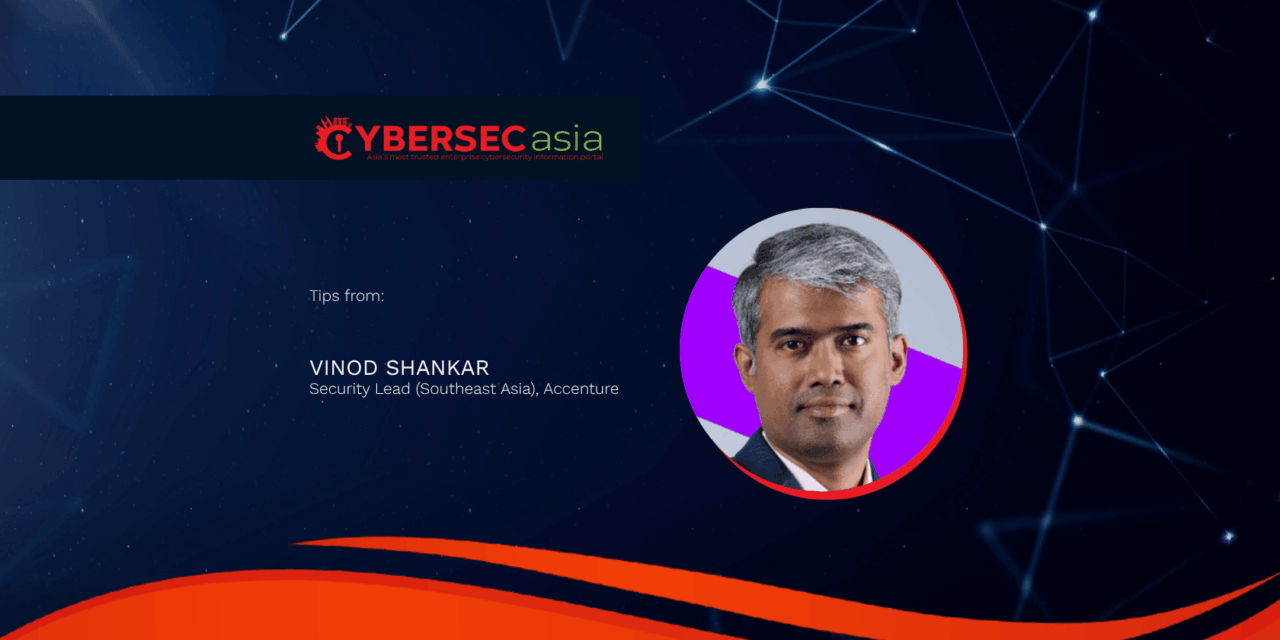
By Vinod Shankar, Security Lead (Southeast Asia), Accenture | Wednesday, November 5, 2025, 11:12 AM Asia/Singapore

Securing autonomous AI systems requires proactive, multi-layered cybersecurity strategies

Organizations adopting autonomous AI solutions bear a critical responsibility to prevent heightened cyber risks across both digital and physical domains. How?

As autonomous AI systems advance in adaptivity and personalization, so does the surface area for threats. Ensuring the trustworthiness of these AI systems hinges on conditioning their exposure and compelling organizations to ensure cybersecurity capabilities keep pace.

To that end, organizations will need to move swiftly beyond traditional, static security to intention-based, AI-powered systems with cognitive architectures.

The intended outcome is to enable real-time threat detection and automated response that secures both the digital and physical domains of AI systems, while ensuring talent is able to get their mindset reorganized around how best to wield AI tools. How?

Protecting AI interactions
By prioritizing cybersecurity alongside the development of unique AI experiences, organizations can both differentiate themselves and foster a trusted and secure environment for their customers engaging with AI.

A solid framework for vigilance over autonomous AI would look like this:

  • It demands rigorous protection of the data used to train and personalize AI models against breaches and unauthorized access. This is because, as AI experiences become more complex, the risk of AI-driven phishing attacks and other forms of social engineering increases.
  • AI systems themselves must be designed with security in mind, incorporating regular updates with strong authentication as well as encryption protocols to safeguard customer interactions and data.
  • Generalist autonomous robots offer exciting possibilities, but also significant challenges, due to their adaptation and ability to collaborate with humans. Hence, such autonomous robots must be protected against adversarial attacks that could corrupt its learning process or exploit software vulnerabilities. Additionally, seamless interaction between robots and warehouse staff requires robust authentication and authorization mechanisms, ensuring only trusted entities engage with these physical machines. This requires a robust framework encompassing regular security audits, continuous monitoring, and secure communication protocols.
  • For complex, dynamic multi-agent systems, rapid incident response is vital. This requires skilled employees to secure individual AI agents, control their interactions, and manage real-time threat detection and automated response mechanisms to maintain system integrity. All these efforts collectively depend on a workforce with the right expertise and continuous development. However, this remains constrained by the lack of expertise in this area.
  • At the end of the day, the powerful idea of equipping every employee with a digital sidekick requires thorough training for staff to recognize and report suspicious activities. Concurrently, organizations need to establish robust, well-defined incident response mechanisms for AI-related security events. Note: The global shortage of cyber skills gaps highlights a shared vulnerability, posing a significant challenge for securing AI development and deployment that needs to addressed by governments and industry simultaneously.

Next steps needed
By following these above mandates, organizations can improve the security and resilience of their autonomous AI systems from current and emerging threats, to build trusted AI experiences that protect both customers and operational integrity.

However, this process is by no means a one-off regime. Going forward, safeguarding autonomous AI systems requires organizations to adopt and maintain a continual proactive and comprehensive approach. This means rigorously securing digital conversations, protecting physical AI in real-world operations, and addressing the human talent and skill gap for these AI security demands.

Possessing the right technology and frameworks is just the first step. The boundary-less, rapidly evolving nature of AI-powered cybersecurity threats means time is of the essence: every moment an organization delays action, its risk exposure increases, compounding the eventual impact on security and reputation.


Share:

PreviousPhishing in new waters
NextUnderstanding cyber resilience in the AI age: a primer on ensuring business continuity

Related Posts

Did powerful botnets, geopolitical tensions increase DDoS attacks in Q3 2024?

Did powerful botnets, geopolitical tensions increase DDoS attacks in Q3 2024?

Monday, October 28, 2024

Snap poll of APAC bank executives highlights concern over scams and mule accounts at industry event

Snap poll of APAC bank executives highlights concern over scams and mule accounts at industry event

Tuesday, July 29, 2025

Cybercrooks ditched low-hanging fruit in 2021: report

Cybercrooks ditched low-hanging fruit in 2021: report

Friday, February 25, 2022

Deepfake job applicant nearly fools AI‑security CEO in hiring interview

Deepfake job applicant nearly fools AI‑security CEO in hiring interview

Thursday, February 5, 2026

Leave a reply Cancel reply

You must be logged in to post a comment.

Voters-draw/RCA-Sponsors

Slide
Slide
Slide
Slide
Slide
Slide
Slide
Slide
Slide
Slide
Slide
Slide
Slide
Slide
previous arrow
next arrow

CybersecAsia Voting Placement

Gamification listing or Participate Now

PARTICIPATE NOW

Vote Now -Placement(Google Ads)

Top-Sidebar-banner

Whitepapers

  • Closing the Gap in Email Security:How To Stop The 7 Most SinisterAI-Powered Phishing Threats

    Closing the Gap in Email Security:How To Stop The 7 Most SinisterAI-Powered Phishing Threats

    Insider threats continue to be a major cybersecurity risk in 2024. Explore more insights on …Download Whitepaper
  • 2024 Insider Threat Report: Trends, Challenges, and Solutions

    2024 Insider Threat Report: Trends, Challenges, and Solutions

    Insider threats continue to be a major cybersecurity risk in 2024. Explore more insights on …Download Whitepaper
  • AI-Powered Cyber Ops: Redefining Cloud Security for 2025

    AI-Powered Cyber Ops: Redefining Cloud Security for 2025

    The future of cybersecurity is a perfect storm: AI-driven attacks, cloud expansion, and the convergence …Download Whitepaper
  • Data Management in the Age of Cloud and AI

    Data Management in the Age of Cloud and AI

    In today’s Asia Pacific business environment, organizations are leaning on hybrid multi-cloud infrastructures and advanced …Download Whitepaper

Middle-sidebar-banner

Case Studies

  • Cyber protection for medical clinics in Singapore

    Cyber protection for medical clinics in Singapore

    As Singapore’s healthcare sector becomes increasingly digital and interconnected, clinics are facing heightened cyber risks, …Read more
  • India’s WazirX strengthens governance and digital asset security

    India’s WazirX strengthens governance and digital asset security

    Revamping its custody infrastructure using multi‑party computation tools has improved operational resilience and institutional‑grade safeguardsRead more
  • Bangladesh LGED modernizes communication while addressing data security concerns

    Bangladesh LGED modernizes communication while addressing data security concerns

    To meet emerging data localization/privacy regulations, the government engineering agency deploys a secure, unified digital …Read more
  • What AI worries keep members of the Association of Certified Fraud Examiners sleepless?

    What AI worries keep members of the Association of Certified Fraud Examiners sleepless?

    This case study examines how many anti-fraud professionals reported feeling underprepared to counter rising AI-driven …Read more

Bottom sidebar

Other News

  • Hong Kong Anti-graft Watchdog: Clean Governance and Ethical Business is Key to Hong Kong’s Sustainable Business Development

    Thursday, April 9, 2026
    HONG KONG, April 9, 2026 …Read More »
  • Goodix Launches the World’s First eSE Solution Designed for AI Agents

    Thursday, April 9, 2026
    SHENZHEN, China, April 8, 2026 …Read More »
  • LRQA Amplifies Industrial and Cyber Resilience in APAC at CS4CA Summit 2026

    Thursday, April 9, 2026
    SINGAPORE, April 8, 2026 /PRNewswire/ …Read More »
  • MegazoneCloud Achieves Profitability Turnaround with $1.16 Billion Revenue in 2025

    Thursday, April 9, 2026
    Revenue grows 28% YoY… EBITDA …Read More »
  • Taoping Expands Smart Elevator Services Business with New Orders Exceeding US$3 Million

    Wednesday, April 8, 2026
    TIANJIN, China, April 8, 2026 …Read More »
  • Our Brands
  • DigiconAsia
  • MartechAsia
  • Home
  • About Us
  • Contact Us
  • Sitemap
  • Privacy & Cookies
  • Terms of Use
  • Advertising & Reprint Policy
  • Media Kit
  • Subscribe
  • Manage Subscriptions
  • Newsletter

Copyright © 2026 CybersecAsia All Rights Reserved.