

Cybersecurity News in Asia

RECENT STORIES:

SEGA moves faster with flow-based network monitoring
Managing growing regional dependence on space‑based infrastructure and...
White House ramps up quantum push, but PQC threats may be underestimat...
How AI is reshaping dating in Asia
Cohesity Collaborates with Google Cloud to Deliver Secure Sandbox Capa...
Is your organization ready to defend surging AI-driven multichannel at...
LOGIN REGISTER
CybersecAsia
  • Features
    • Featured

      How AI is reshaping dating in Asia

      How AI is reshaping dating in Asia

      Monday, February 9, 2026, 5:33 AM Asia/Singapore | Features, Newsletter
    • Featured

      Emerging third-party cyber risks via agentic AI

      Emerging third-party cyber risks via agentic AI

      Tuesday, February 3, 2026, 10:22 AM Asia/Singapore | Features
    • Featured

      Rethinking customer identity for financial cybersecurity

      Rethinking customer identity for financial cybersecurity

      Tuesday, January 27, 2026, 4:13 PM Asia/Singapore | Features
  • Opinions
  • Tips
  • Whitepapers
  • Awards 2025
  • Directory
  • E-Learning

Select Page

Tips

Managing growing regional dependence on space‑based infrastructure and its hidden risks

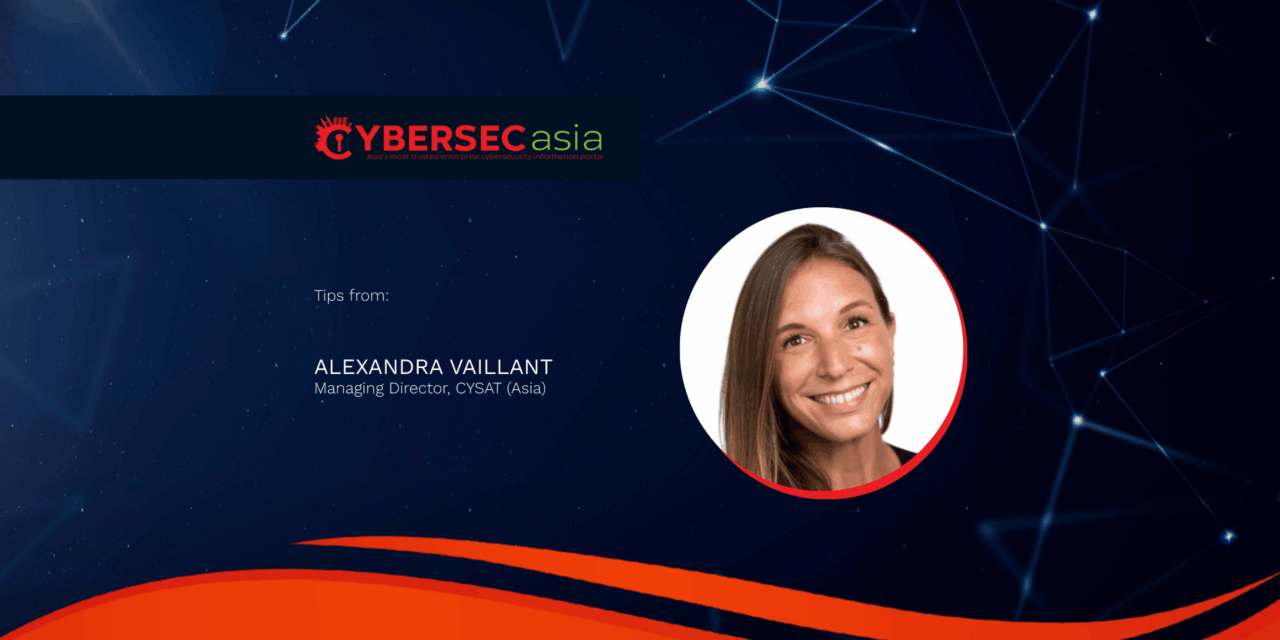
By Alexandra Vaillant, Managing Director, CYSAT (Asia) | Tuesday, February 10, 2026, 11:16 AM Asia/Singapore

Managing growing regional dependence on space‑based infrastructure and its hidden risks

Cybersecurity-linked satellite disruptions threaten trade, finance, and transport; resilience planning and regional cooperation will need to become essential priorities.

From guiding tankers through the Malacca Strait to supporting aircraft navigation across the Pacific ocean, orbital systems have become embedded in critical infrastructure. In practice, many societies in the region now depend on space‑based services, even if that dependence is not always visible.

While the “space race” to launch satellites receives the most attention, a less visible priority is for governments and businesses to ensuring continuity of service when signals are disrupted.

The growth of satellite‑dependent systems has introduced new single points of failure into infrastructure. In the coming decade, a key challenge will be managing the consequences of temporary or prolonged disconnection from space‑based systems.

Cyber fragility of the space chain

Interference and cyberattacks targeting space systems are no longer confined to science fiction. Jamming and spoofing of Global Navigation Satellite System (GNSS) signals have increased in frequency, with effects that extend beyond the space sector itself.

n August 2025, GPS signals for European Commission President Ursula von der Leyen’s aircraft were reportedly jammed, forcing pilots to revert to manual navigation using paper charts. The incident highlighted that even high‑security assets can be affected by disruptions to satellite‑based positioning and timing.

Similar patterns have been observed elsewhere. In the first four months of 2025, more than 123,000 flights in the Baltic region had experienced GPS interference, with the share of affected flights reaching nearly 28% in April. For a region like APAC, where maritime and air corridors are central to trade, a widespread GNSS blackout would affect more than consumer services; it could disrupt automated ports and complicate the operation of global supply chains.

Furthermore, despite growing reliance on orbital assets, preparedness for signal loss remains uneven across the region. In practice, any organization that relies on cloud computing, global logistics, or time‑synchronized financial records is also a user of space‑based infrastructure. When the signal fails, not all of these organizations will have manual or alternative systems in place.

Amid an assumption that, because a company does not own satellites, it bears limited responsibility for their security, gaps in accountability can arise, with neither satellite operators nor end‑users taking full ownership of digital‑defense measures. Responses to space‑related disruptions also remain fragmented. While a traditional bank hack typically triggers established incident‑response protocols, a jammed or hijacked satellite often falls into a gray area. In a crisis, the absence of a common framework among government agencies, military commands, and private‑sector technology leaders can slow coordination and decision‑making.

Building resilience in critical space infrastructure

Governments in APAC may need to invest more in ensuring the resilience of the space-based services they provide. One practical step could be to institutionalize widespread drills involving operational stress tests designed to reveal hidden dependencies on orbital assets:

  • Much like financial stress tests, such drills would simulate a complete loss of satellite data for a defined period. If critical systems cannot function without a space‑based link for 24 hours, that would indicate a need for additional redundancy or alternative procedures.
  • Another step could be to align space‑security language with existing cybersecurity frameworks. Space security shares many characteristics with terrestrial cybersecurity, and many of the same principles — such as robust encryption and identity verification — apply to systems in orbit as well as on the ground.
  • Cross‑border collaboration will add to the impetus. A satellite passes over multiple jurisdictions, and its security cannot be managed by any single country alone. Regional cooperation to share threat‑intelligence data and coordinate responses could help reduce response times and improve situational awareness.

Innovation without resilience carries risks as well as benefits. If APAC aims to play a leading role in the global digital economy, it will need to treat the protection of space‑based assets as seriously as the protection of terrestrial infrastructure. The ability to withstand disruptions in orbit could become as important as the ability to operate in it.


Share:

PreviousWhite House ramps up quantum push, but PQC threats may be underestimated

Related Posts

RDP under fire: 140% surge and rising

RDP under fire: 140% surge and rising

Tuesday, November 3, 2020

Passwords: tips for today, predictions for tomorrow

Passwords: tips for today, predictions for tomorrow

Wednesday, May 5, 2021

12 months of attack data, one common trend

12 months of attack data, one common trend

Tuesday, May 9, 2023

Ignoring deepfakes – a risky gamble for CXOs

Ignoring deepfakes – a risky gamble for CXOs

Tuesday, November 12, 2024

Leave a reply Cancel reply

You must be logged in to post a comment.

Voters-draw/RCA-Sponsors

Slide
Slide
Slide
Slide
Slide
Slide
Slide
Slide
Slide
Slide
Slide
Slide
Slide
Slide
previous arrow
next arrow

CybersecAsia Voting Placement

Gamification listing or Participate Now

PARTICIPATE NOW

Vote Now -Placement(Google Ads)

Top-Sidebar-banner

Whitepapers

  • Closing the Gap in Email Security:How To Stop The 7 Most SinisterAI-Powered Phishing Threats

    Closing the Gap in Email Security:How To Stop The 7 Most SinisterAI-Powered Phishing Threats

    Insider threats continue to be a major cybersecurity risk in 2024. Explore more insights on …Download Whitepaper
  • 2024 Insider Threat Report: Trends, Challenges, and Solutions

    2024 Insider Threat Report: Trends, Challenges, and Solutions

    Insider threats continue to be a major cybersecurity risk in 2024. Explore more insights on …Download Whitepaper
  • AI-Powered Cyber Ops: Redefining Cloud Security for 2025

    AI-Powered Cyber Ops: Redefining Cloud Security for 2025

    The future of cybersecurity is a perfect storm: AI-driven attacks, cloud expansion, and the convergence …Download Whitepaper
  • Data Management in the Age of Cloud and AI

    Data Management in the Age of Cloud and AI

    In today’s Asia Pacific business environment, organizations are leaning on hybrid multi-cloud infrastructures and advanced …Download Whitepaper

Middle-sidebar-banner

Case Studies

  • India’s WazirX strengthens governance and digital asset security

    India’s WazirX strengthens governance and digital asset security

    Revamping its custody infrastructure using multi‑party computation tools has improved operational resilience and institutional‑grade safeguardsRead more
  • Bangladesh LGED modernizes communication while addressing data security concerns

    Bangladesh LGED modernizes communication while addressing data security concerns

    To meet emerging data localization/privacy regulations, the government engineering agency deploys a secure, unified digital …Read more
  • What AI worries keep members of the Association of Certified Fraud Examiners sleepless?

    What AI worries keep members of the Association of Certified Fraud Examiners sleepless?

    This case study examines how many anti-fraud professionals reported feeling underprepared to counter rising AI-driven …Read more
  • Meeting the business resilience challenges of digital transformation

    Meeting the business resilience challenges of digital transformation

    Data proves to be key to driving secure and sustainable digital transformation in Southeast Asia.Read more

Bottom sidebar

Other News

  • Cohesity Collaborates with Google Cloud to Deliver Secure Sandbox Capabilities and Comprehensive Threat Insights Designed to Eliminate Hidden Malware

    Saturday, February 7, 2026
    Embedded Google Threat Intelligence capabilities, …Read More »
  • Shield AI, Republic of Singapore Air Force, and Defence Science and Technology Agency Expand Partnership to Progressively Field Autonomy Capabilities

    Thursday, February 5, 2026
    SINGAPORE, Feb. 5, 2026 /PRNewswire/ …Read More »
  • ICAC Commissioner attends APEC anti-corruption meetings in Guangzhou to foster collaborations in the Asia Pacific region

    Thursday, February 5, 2026
    HONG KONG, Feb. 4, 2026 …Read More »
  • VIVOTEK Enhances VORTEX with Generative AI and Safety Detection

    Tuesday, February 3, 2026
    Expanding the cloud security ecosystem …Read More »
  • Fraud Syndicates Now Operate Like Businesses: VIDA Urges Malaysian CISOs to Rethink AI-Era Defense

    Tuesday, February 3, 2026
    KUALA LUMPUR, Malaysia, Feb. 2, …Read More »
  • Our Brands
  • DigiconAsia
  • MartechAsia
  • Home
  • About Us
  • Contact Us
  • Sitemap
  • Privacy & Cookies
  • Terms of Use
  • Advertising & Reprint Policy
  • Media Kit
  • Subscribe
  • Manage Subscriptions
  • Newsletter

Copyright © 2026 CybersecAsia All Rights Reserved.