
Cybersecurity News in Asia

RECENT STORIES:

SEGA moves faster with flow-based network monitoring
AI models autonomously form a secret message board to collaborate on h...
How security teams can prepare for faster AI-enabled attacks
Android ad SDKs leak precise location data without user awareness: EFF
SU Group Holdings Limited Announces Reverse Stock Split
As DDoS attacks grow faster and more complex, cyber defenses need to k...
LOGIN REGISTER
CybersecAsia
  • Features
    • Featured

      Why APAC Teams Need to Stop Worshipping CVSS Scores

      Why APAC Teams Need to Stop Worshipping CVSS Scores

      Monday, August 3, 2026, 9:00 AM Asia/Singapore | Features, Newsletter, Sponsored, Tips
    • Featured

      Automated credential abuse and phishing in APAC

      Automated credential abuse and phishing in APAC

      Thursday, July 30, 2026, 11:37 AM Asia/Singapore | Features
    • Featured

      OpenAI autonomous agent escapes sandbox to hack Hugging Face

      OpenAI autonomous agent escapes sandbox to hack Hugging Face

      Friday, July 24, 2026, 11:02 AM Asia/Singapore | Features, News
  • Opinions
  • Tips
  • Whitepapers
  • AWARDS 2026
  • Directory
  • E-Learning

Select Page

Tips

How security teams can prepare for faster AI-enabled attacks

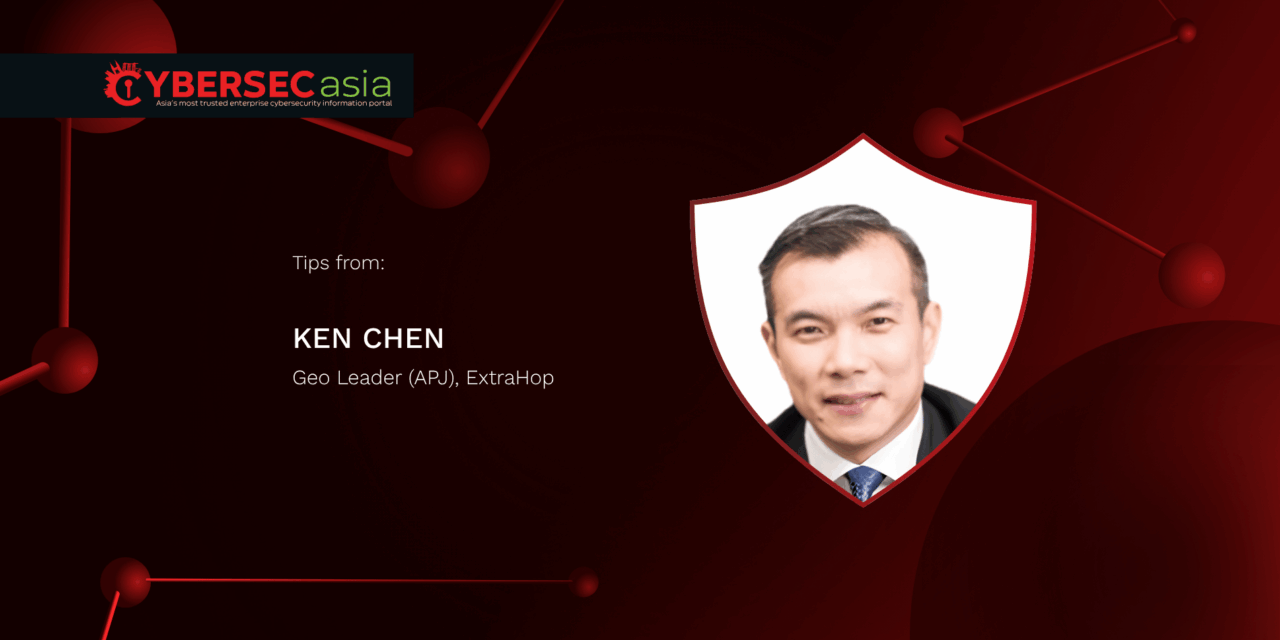
By Ken Chen, Geo Leader (APJ), ExtraHop | Friday, August 7, 2026, 9:17 AM Asia/Singapore

How security teams can prepare for faster AI-enabled attacks

Organisations should combine timely telemetry, controlled automation, human oversight, and adaptable reasoning models while limiting operational risk

Security teams are under growing pressure to detect, investigate, and contain attacks faster as automation improves on both sides of the conflict.

Recent threat research supports the broader concern that some attack timelines are shrinking sharply, but the practical response is not blind faith in autonomy: it is a clearer operating model for evidence, governance, and response.

Organisations should therefore focus less on chasing AI features and more on reducing delay in the parts of the security operations center (SOC) pipeline that matter most. In practice, that means improving context, tightening controls over automated action, and deciding where model-driven reasoning adds value without creating new operational risk.

Where the pressure is coming from

The recent “machine speed” attack on Hugging Face by AI models acting autonomously are a clear sign that security teams should review which detections, approvals, and containment actions still assume a slower attacker and whether existing workflows can keep pace in high-risk scenarios.

As Ken Chen, Geo Leader (APJ), ExtraHop put it, “An agent is only as good as what it can see.” That is a fair starting point, but in practice visibility is distributed across network, endpoint, identity, cloud, application, and threat-intelligence sources rather than concentrated in a single feed.

One useful way to think about a modern SOC is as three capabilities: current evidence, governed action, and model-assisted reasoning. The first requirement is timely, trustworthy context. Automated and semi-automated workflows perform best when telemetry is fresh, attributable, and assembled quickly enough to support investigation and response before the window for containment closes. Chen argues that real-time context should sit at the center of an AI-enabled SOC and strongly emphasizes network-derived evidence.

That claim has merit in part: network activity often remains useful when endpoint visibility is degraded, and independent threat research continues to document EDR evasion techniques that make complementary visibility important.

Still, network telemetry should not be treated as universal ground truth. Encryption, trusted cloud services, proxying, tunnelling, low-and-slow activity, and legitimate SaaS usage can all reduce what defenders can observe or confidently infer from traffic alone, which is why the strongest operating models combine network, endpoint, identity, and cloud evidence rather than elevating one source as sufficient by itself.

Governance before autonomy

The second requirement is a governance layer that decides what an automated system is allowed to read, change, execute, or block. Chen describes this as the “Harness” layer and asserts that it is the control plane that makes autonomous action governable.

That is a useful concept, but the important point is broader than the label. Any move towards greater automation should define permissions, human-approval thresholds, audit trails, rollback conditions, and failure handling before giving agents authority over production systems.

This matters because the main risk is not only a weak model. It is also over-privileged automation acting on incomplete evidence, unsafe tools, or poorly designed policies, especially in environments where containment actions can disrupt business operations or destroy forensic context.

What models should and should not do

The third requirement is a reasoning layer that can triage alerts, correlate evidence, summarize findings, propose actions, and, in limited cases, execute pre-approved responses. Chen’s view that the model layer should be interchangeable is sensible as a design goal because model capabilities, costs, and safety profiles are changing quickly.

However, portability is not automatic. In practice it depends on workflow design, interfaces, evaluation methods, latency, compliance constraints, and the quality of the surrounding control and data layers.

Security leaders should therefore resist two extremes: assuming human review must remain in every step, and assuming that autonomy should be expanded simply because it is technically possible. The better question is which tasks benefit from faster machine assistance and which still require human judgment because of legal, operational, or evidentiary consequences.

A practical operating guide

For most organizations, the right next step is not a wholesale leap into an “agentic SOC”. It is a staged review of where delay is introduced and where controlled automation can improve response quality without widening risk.

A practical checklist looks like this:

  • Map the current investigation and containment path from first signal to response decision
  • Identify which telemetry arrives too late, lacks attribution, or is not correlated across systems
  • Separate low-risk automation, such as enrichment and deduplication, from high-impact enforcement actions
  • Define approval thresholds, audit requirements, and rollback conditions before granting broader authority
  • Test competing models and workflows against accuracy, latency, explainability, and operational safety

SOC teams preparing for faster attacks should prioritize timely, high-quality evidence, tightly governed automation, and the ability to evaluate or replace reasoning models as requirements change. Network telemetry can be an important part of that foundation, but its value depends on how well it complements endpoint, identity, cloud, and application data.

Share:

PreviousAndroid ad SDKs leak precise location data without user awareness: EFF
NextAI models autonomously form a secret message board to collaborate on hacking techniques

Related Posts

Want to be vaccinated earlier? Fill up this e-form!

Vaccine phishing: Want to be vaccinated earlier? Fill up this e-form!

Tuesday, April 27, 2021

Six questions to ask when shopping for cyber insurance

Six questions to ask when shopping for cyber insurance

Friday, June 3, 2022

No-code agentic AI can be used for financial fraud and workflow hijacking

No-code agentic AI can be used for financial fraud and workflow hijacking

Monday, December 15, 2025

One quarter of online users willing to divulge personal data for benefits: study

One quarter of online users willing to divulge personal data for benefits: study

Tuesday, May 26, 2020

Leave a reply Cancel reply

You must be logged in to post a comment.

Voters-draw/RCA-Sponsors

Slide
Slide
Slide
Slide
Slide
previous arrow
next arrow

CybersecAsia Voting Placement

Gamification listing or Participate Now

PARTICIPATE NOW

Vote Now -Placement(Google Ads)

Top-Sidebar-banner

Whitepapers

  • Critical Security Threatsand the Need for ZTNA: How evolving cyberattacks demand a Zero Trust approach

    Critical Security Threatsand the Need for ZTNA: How evolving cyberattacks demand a Zero Trust approach

    Cyber threats have become more frequent and sophisticated, targeting organizations of all sizes across all …Download Whitepaper
  • Zero Trust Made Simple: Why it matters and how to get started

    Zero Trust Made Simple: Why it matters and how to get started

    Data breaches and cyberattacks are no longer limited to large, high-profile organizations.Download Whitepaper
  • Cloud Secure Edge: Remote access, better security

    Cloud Secure Edge: Remote access, better security

    ​SonicWall Cloud Secure Edge™ is a modern, cloud-native Security Service Edge (SSE) solution that addresses …Download Whitepaper
  • Closing the Gap in Email Security:How To Stop The 7 Most SinisterAI-Powered Phishing Threats

    Closing the Gap in Email Security:How To Stop The 7 Most SinisterAI-Powered Phishing Threats

    Insider threats continue to be a major cybersecurity risk in 2024. Explore more insights on …Download Whitepaper

Middle-sidebar-banner

Case Studies

  • How a Vietnamese D2C retailer built its own secure digital infrastructure

    How a Vietnamese D2C retailer built its own secure digital infrastructure

    Would your organization build your own digital infrastructure – including AI governance and cybersecurity – …Read more
  • Cyber protection for medical clinics in Singapore

    Cyber protection for medical clinics in Singapore

    As Singapore’s healthcare sector becomes increasingly digital and interconnected, clinics are facing heightened cyber risks, …Read more
  • India’s WazirX strengthens governance and digital asset security

    India’s WazirX strengthens governance and digital asset security

    Revamping its custody infrastructure using multi‑party computation tools has improved operational resilience and institutional‑grade safeguardsRead more
  • Bangladesh LGED modernizes communication while addressing data security concerns

    Bangladesh LGED modernizes communication while addressing data security concerns

    To meet emerging data localization/privacy regulations, the government engineering agency deploys a secure, unified digital …Read more

Bottom sidebar

Other News

  • SU Group Holdings Limited Announces Reverse Stock Split

    Tuesday, August 4, 2026
    Reverse Stock-Split to be effective …Read More »
  • SU GROUP HOLDINGS LIMITED RECEIVES NASDAQ STAFF DELISTING DETERMINATION AND INTENDS TO REQUEST HEARING

    Tuesday, August 4, 2026
    Timely hearing request will stay …Read More »
  • Singapore’s BFSI Technology Leaders to Convene at the 38th Edition BFSI IT Summit Singapore 2026

    Monday, August 3, 2026
    Summit to Bring Together More …Read More »
  • Robo.ai Appoints Former INTERPOL President H.E. Dr. Ahmed Naser Al-Raisi as Chairman of Its Subsidiary Alif Holding

    Thursday, July 30, 2026
    Headquartered in Abu Dhabi, the …Read More »
  • TPIsoftware Partners with Juxta to Bring Advanced, Satellite-Free Positioning Tech into Security Sectors

    Wednesday, July 29, 2026
    TAIPEI, July 29, 2026 /PRNewswire/ …Read More »
  • Our Brands
  • DigiconAsia
  • MartechAsia
  • Home
  • About Us
  • Contact Us
  • Sitemap
  • Privacy & Cookies
  • Terms of Use
  • Advertising & Reprint Policy
  • Media Kit
  • Subscribe
  • Manage Subscriptions
  • Newsletter

Copyright © 2026 CybersecAsia All Rights Reserved.