
Cybersecurity News in Asia

RECENT STORIES:

SEGA moves faster with flow-based network monitoring
Is password-stealer malware still a corporate concern?
LRQA Calls for Stronger AI Governance and Cyber Resilience Frameworks ...
The days of multi-factor authentication SMS alerts are numbered
Is secure issuance a solved problem, or is the debate more complex?
Android 17 Beta Now Available for vivo X300 Pro and iQOO 15
LOGIN REGISTER
CybersecAsia
  • Features
    • Featured

      Is secure issuance a solved problem, or is the debate more complex?

      Is secure issuance a solved problem, or is the debate more complex?

      Thursday, May 21, 2026, 3:11 PM Asia/Singapore | Features
    • Featured

      Cyber risk, fraud, and CX: Why banks can’t treat them separately anymore

      Cyber risk, fraud, and CX: Why banks can’t treat them separately anymore

      Wednesday, May 20, 2026, 9:34 AM Asia/Singapore | Features
    • Featured

      How a Vietnamese D2C retailer built its own secure digital infrastructure

      How a Vietnamese D2C retailer built its own secure digital infrastructure

      Monday, May 18, 2026, 2:21 PM Asia/Singapore | Case Study, Features
  • Opinions
  • Tips
  • Whitepapers
  • AWARDS 2026
  • Directory
  • E-Learning

Select Page

Tips

Cyber education in schools: The overlooked frontline of national security

By Balasubramanian Swaminathan, IMAWS | Thursday, October 2, 2025, 3:57 PM Asia/Singapore

Cyber education in schools: The overlooked frontline of national security

Governments can rewrite cyber risk narratives by turning primary schools into cost-effective incubators of resilient, skilled defenders and AI-resilient workforces.

In today’s digital age, children and teenagers spend considerable time online — whether on social media platforms, streaming services, or multiplayer gaming. Although these activities offer connectivity and entertainment, they also expose young users to cybersecurity risks such as phishing, malware, identity theft, and privacy invasions.

With such digital natives already exposed to the entire spectrum of digital benefits and risks, would it be appropriate for them to be formally schooled about cybersecurity from the outset?

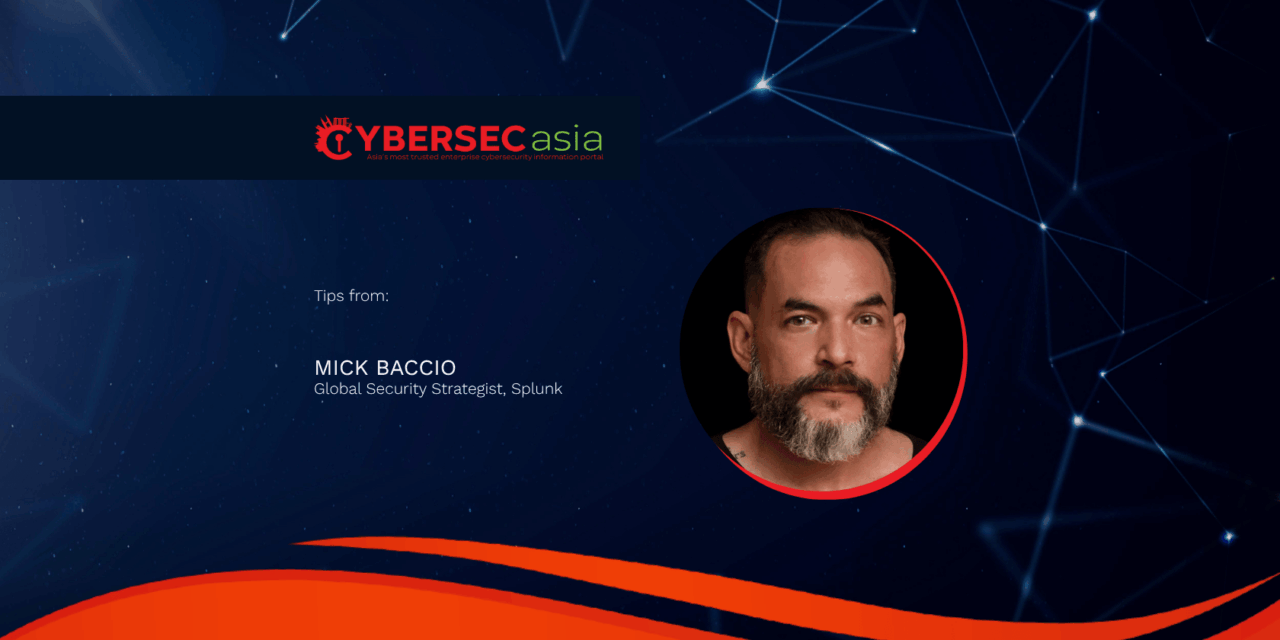
The CybersecAsia.net team recently interviewed Mick Baccio, Global Security Strategist, Splunk, who took the opportunity to share his thoughts and ideas on why cybersecurity education in schools is a vital long-term strategy that governments should urgently adopt to strengthen national defenses.

Inculcating lifelong cyber awareness

Baccio stressed that early education on digital safety is essential, highlighting that the way young people consume and interact with information today is vastly different from that of the previous generations, making tailored cybersecurity education critical.

He advocates introducing cybersecurity concepts starting in primary school:

  • Students can begin with simple yet powerful lessons such as creating strong, unique passwords, enabling multi-factor authentication (MFA) on their accounts, recognizing suspicious emails or messages, and understanding how to protect their personal data.
  • By instilling these habits early, educators can train children to form a security-conscious mindset that they carry into adulthood, potentially spreading the benefits to their families and communities.

Comparing the cultivation of  good cyber hygiene to adopting a healthy lifestyle, Baccio noted: “You start eating better at home. You start working out. The same applies for a good cyber life.” Just as repeated healthy choices build physical resilience, consistent cybersecurity practices create digital resilience.

Once cybersecurity habits become second nature, the young digerati are much harder targets for cybercriminals.

Reinforcing cyber-awareness at the national level
In addition to integrating cybersecurity awareness into early educational curriculums, governments can reinforce the training by supporting year-round national cyber literacy campaigns. This is a proactive approach that addresses vulnerabilities at the root: by empowering the population with knowledge and practical skills from an early age.

Baccio cited some public-awareness initiatives by National Cybersecurity Alliance in the USA. “The theme is to be more secure online and to be stronger online. For example, educating citizens on basic aspects like using multi-factor authentication and strong password hygiene would make individuals phishing resistant. In the long term there would be no more account take over or at least it would be reduced drastically.”

Addressing human capital and resource constraints

While the urgency for cybersecurity talent pools is universal, governments worldwide face varying budget constraints and resource challenges. Baccio likened cybersecurity investment to personal health: “You’re supposed to drink water, eat green, exercise — if you don’t, your body reflects that,” he said. “Similarly, neglecting core cybersecurity basics leaves systems exposed and vulnerable to attack.”

So, governments can prioritize affordable, high-impact practices first — such as enforcing MFA usage, regularly patching software and operating systems, and segmenting networks to limit potential breaches — before investing in highly specialized or expensive solutions. These foundational measures are proven, accessible, and form the backbone of any strong security posture, he said.

Investing in human capital is equally important. An educated population trained in cybersecurity fundamentals reduces preventable security incidents and lessens government response burdens. “An educated population means fewer basic errors that lead to large-scale compromises. The long-term benefits include lower incident costs, reduced downtime, and enhanced public trust in digital government services.”

Recognizing that one size does not fit all, Baccio is urging governments to build flexible strategies tailored to their maturity level and local conditions. “The basics are the same everywhere,” he observed, “but after that, each environment requires customized solutions that best fit their threat landscape and operational needs.”

Technical defenses benefit from cyber-educated workers

Among the many cyber threats governments face, Baccio singles out ransomware as a particularly insidious and underestimated scourge. Often dismissed as a typical business email compromise, ransomware generates billions in fraudulent payments annually and disrupts critical services worldwide — from local governments to healthcare providers, Baccio said.

The ever-growing ransomware landscape demands a comprehensive approach rooted in both technology and human cyber awareness. Baccio emphasized that technical defenses such as regular data backups, network segmentation, and detection systems must be paired with extensive user education to recognize suspicious activity and avoid falling victim. This cyber education, when started from early schooling years, will prepare people even more effectively. More broadly, Baccio stressed that no cyber threat should be ignored or deprioritized. Every attack vector — from phishing to insider threats — poses risks that compound the overall threat landscape.

Governments need to adopt multi-layered defense strategies supported by an informed populace to effectively safeguard digital infrastructure. Education, he argued, is the first line of defense and the foundation upon which technical defenses rely. “Empowered citizens make stronger governments. By embedding cybersecurity knowledge deeply into societies starting from school curriculums, governments take an important step toward a safer digital future.”

Share:

PreviousInterpol’s Africa-wide cybercrime crackdown nets 260 sextortion, romance scam suspects
NextHOSTWAY gains 73% operational efficiency for private cloud operations  

Related Posts

Is bot interference eroding customer experiences and trust levels? Take a PoW approach

Is bot interference eroding customer experiences and trust levels? Take a PoW approach

Tuesday, March 24, 2026

Sprucing up cyber resilience in the financial services industry: four focal points

Sprucing up cyber resilience in the financial services industry: four focal points

Tuesday, March 19, 2024

How to get everyone in the organization to be a risk management stakeholder

How to get everyone in the organization to be a risk management stakeholder

Monday, January 31, 2022

Glad to resume business travel? Stay cyber safe with these tips

Glad to resume business travel? Stay cyber safe with these tips

Friday, November 26, 2021

Leave a reply Cancel reply

You must be logged in to post a comment.

Voters-draw/RCA-Sponsors

Slide
Slide
Slide
Slide
Slide
Slide
Slide
Slide
Slide
Slide
Slide
Slide
Slide
Slide
previous arrow
next arrow

CybersecAsia Voting Placement

Gamification listing or Participate Now

PARTICIPATE NOW

Vote Now -Placement(Google Ads)

Top-Sidebar-banner

Whitepapers

  • Closing the Gap in Email Security:How To Stop The 7 Most SinisterAI-Powered Phishing Threats

    Closing the Gap in Email Security:How To Stop The 7 Most SinisterAI-Powered Phishing Threats

    Insider threats continue to be a major cybersecurity risk in 2024. Explore more insights on …Download Whitepaper
  • 2024 Insider Threat Report: Trends, Challenges, and Solutions

    2024 Insider Threat Report: Trends, Challenges, and Solutions

    Insider threats continue to be a major cybersecurity risk in 2024. Explore more insights on …Download Whitepaper
  • AI-Powered Cyber Ops: Redefining Cloud Security for 2025

    AI-Powered Cyber Ops: Redefining Cloud Security for 2025

    The future of cybersecurity is a perfect storm: AI-driven attacks, cloud expansion, and the convergence …Download Whitepaper
  • Data Management in the Age of Cloud and AI

    Data Management in the Age of Cloud and AI

    In today’s Asia Pacific business environment, organizations are leaning on hybrid multi-cloud infrastructures and advanced …Download Whitepaper

Middle-sidebar-banner

Case Studies

  • How a Vietnamese D2C retailer built its own secure digital infrastructure

    How a Vietnamese D2C retailer built its own secure digital infrastructure

    Would your organization build your own digital infrastructure – including AI governance and cybersecurity – …Read more
  • Cyber protection for medical clinics in Singapore

    Cyber protection for medical clinics in Singapore

    As Singapore’s healthcare sector becomes increasingly digital and interconnected, clinics are facing heightened cyber risks, …Read more
  • India’s WazirX strengthens governance and digital asset security

    India’s WazirX strengthens governance and digital asset security

    Revamping its custody infrastructure using multi‑party computation tools has improved operational resilience and institutional‑grade safeguardsRead more
  • Bangladesh LGED modernizes communication while addressing data security concerns

    Bangladesh LGED modernizes communication while addressing data security concerns

    To meet emerging data localization/privacy regulations, the government engineering agency deploys a secure, unified digital …Read more

Bottom sidebar

Other News

  • LRQA Calls for Stronger AI Governance and Cyber Resilience Frameworks at CyberSecMY 2026

    Saturday, May 23, 2026
    KUALA LUMPUR, Malaysia, May 22, …Read More »
  • Android 17 Beta Now Available for vivo X300 Pro and iQOO 15

    Thursday, May 21, 2026
    SHENZHEN, China, May 20, 2026 …Read More »
  • SU Group Wins New Government Contract; Continues Expansion

    Wednesday, May 20, 2026
    HONG KONG, May 20, 2026 …Read More »
  • Why AI Still Needs the Hacker’s Mind: DEVCORE Pwns Four Microsoft Products to Win Pwn2Own Berlin 2026

    Wednesday, May 20, 2026
    TAIPEI, May 20, 2026 /PRNewswire/ …Read More »
  • Aitech Awarded $63M Contract for Avionics Computing Solutions to Power India’s Light Combat Helicopter Program

    Wednesday, May 20, 2026
    Hindustan Aeronautics Limited Selected Aitech …Read More »
  • Our Brands
  • DigiconAsia
  • MartechAsia
  • Home
  • About Us
  • Contact Us
  • Sitemap
  • Privacy & Cookies
  • Terms of Use
  • Advertising & Reprint Policy
  • Media Kit
  • Subscribe
  • Manage Subscriptions
  • Newsletter

Copyright © 2026 CybersecAsia All Rights Reserved.