


Cybersecurity News in Asia

RECENT STORIES:

SEGA moves faster with flow-based network monitoring
Akuvox X910 Claims Red Dot Award 2026: the World’s First AI-powe...
Exein establishes APAC headquarters and Taipei office
DNS‑record analysis shows uneven DMARC enforcement among FIFA World Cu...
Highlights of Asia’s 2026 premier integrated security event
Study: Cyber resilience in APAC foundational but not future-ready
LOGIN REGISTER
CybersecAsia
  • Features
    • Featured

      How AI is supercharging insider threats

      How AI is supercharging insider threats

      Wednesday, April 15, 2026, 12:29 PM Asia/Singapore | Features
    • Featured

      Q-Day is coming. Are you ready?

      Q-Day is coming. Are you ready?

      Tuesday, April 14, 2026, 12:40 PM Asia/Singapore | Features
    • Featured

      How lean defence teams turn endpoint insights into measurable risk reduction

      How lean defence teams turn endpoint insights into measurable risk reduction

      Monday, April 13, 2026, 3:15 PM Asia/Singapore | Features
  • Opinions
  • Tips
  • Whitepapers
  • Awards 2025
  • Directory
  • E-Learning

Select Page

OpinionsTips

Unified Zero Trust is vital to plug IAM gaps and exploitable risks

By Apu Pavithran, founder and CEO, Hexnode | Tuesday, October 14, 2025, 11:58 AM Asia/Singapore

Unified Zero Trust is vital to plug IAM gaps and exploitable risks

Fragmented identity and access management tools and processes increase risk. Continuous, proof-driven security is the key to foiling attackers.

Traditionally, many enterprise security models have operated under the assumption that trust granted at one point would persist indefinitely. This “set-and-forget” approach treated identity and device checks as one-time verifications rather than dynamic conditions requiring continuous reassessment.

Modern threats such as phishing, credential theft, and ransomware thrive precisely because implicit trust allows them to gain a foothold. These threats, called initial attack vectors, are hardly edge cases. They inflict substantial damage, costing businesses millions on average with every successful breach.

The static model of granting trust creates a dangerous asymmetry: it forces defenders to protect an ever-expanding array of entry points, while an attacker only needs to find one trusted but vulnerable path. Once inside, the advantage tilts dramatically in the attackers’ favor, allowing them to operate under the cloak of legitimate activity.

Controlling lingering trust with Zero Trust

Ransomware tactics have expanded, increasingly leveraging unmanaged or non-compliant devices as entry points. Such devices often lie in the blind spots of IT oversight, creating unmonitored edges for attackers to enter corporate environments. This risk intensifies if enterprise security teams lack continuous visibility over their data assets.

It is not just devices that expand the attack surface. A prime driver of modern breaches is credential theft rather than rare technical vulnerabilities. This trend confirms a critical weakness where attackers no longer need to “break in” when they can simply “log in”. With that, the burden rests on enterprises to ensure that no form of access leads to undetected persistence.

In principle, the Zero Trust model addresses these challenges by requiring every access request to be continuously validated. However, this becomes a tall order to practice in today’s workforce, where employees connect from a distributed mix of remote locations and networks.

Securing this distributed reality demands that every login be assessed against a mosaic of “signals” such as password posture and other contextual factors. However, if this approach is managed through multiple, separate vendors, these checks do not always align.

Disparate tools often lack the cross-platform cohesion needed for true continuous validation. Any disjointed approach to Zero Trust can create uneven layers of oversight, leaving blind spots where attackers can thrive. This complexity is further compounded by the elusive nature of shadow IT.

So, is there something about Zero Trust approach that can be improved? Enterprises do not need another tool, but a way to bring this fragmented environment under a single framework of control.


Unifying the elements of IAM

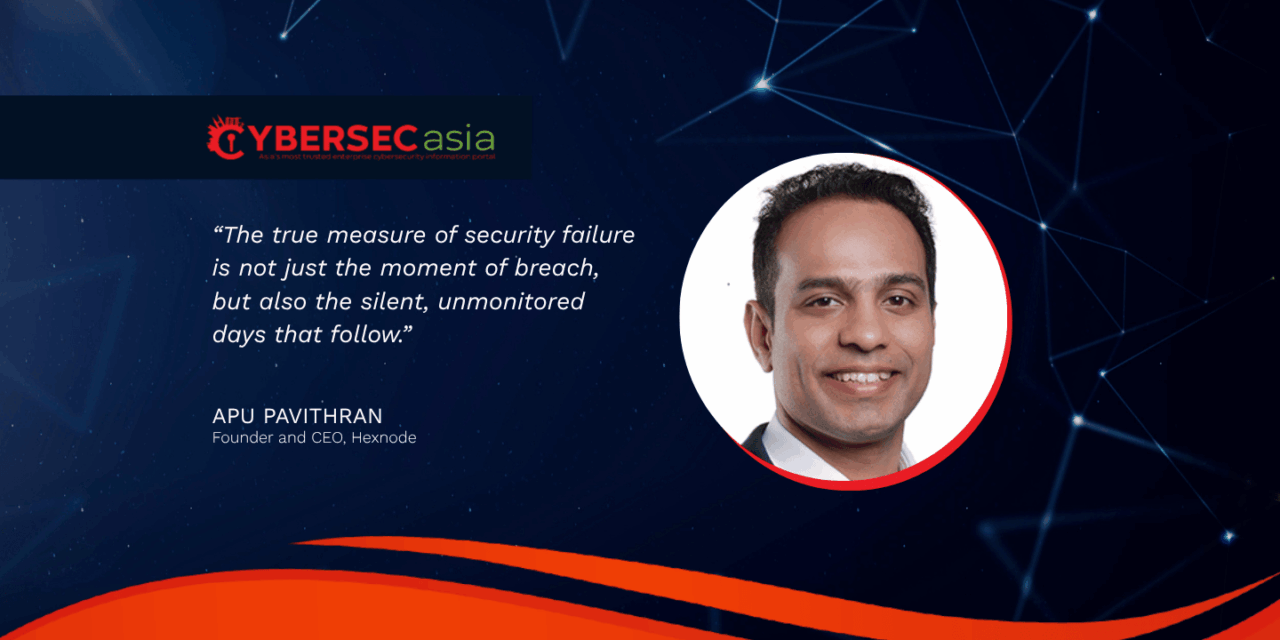
The core of zero trust is not the elimination of trust itself but the demand that trust always be proven. That proof must be continuous, because attackers thrive not at the moment of login but in the hours that follow if sessions are left unmonitored.

As such, organizations need to maintain vigilance that extends beyond authentication, into the entire connection lifecycle:

  • Multi-factor authentication is often the first layer added in this model. However, even this is not invulnerable. Threat actors have learned to bypass MFA by overwhelming users with endless prompts, a technique called “MFA fatigue”. This method has sometimes proved effective even against major organizations, highlighting how easily attackers can gain access.
  • The logical next step is to ensure that each access request is validated by more than just credentials. Identity providers help achieve this by validating access requests using multiple signals, such as IP address and location. This creates a richer, more accurate picture of whether access should be granted.
  • One possible weak link in the chain is when the processes are fragmented, as detailed in the previous section. This is where a unified device management approach can add critical depth to this process. It can extend validation within the identity provider by feeding in continuous endpoint-specific signals such as application compliance, encryption levels, and network context. With these additional layers, enterprises can make access decisions reflecting real-time health and security of each device.

When zero trust becomes proof-driven and unified, attackers are more likely to lose their most reliable path into the enterprise.


Share:

PreviousLRQA Strengthens Cyber Resilience Conversations at Cyber Security World Asia 2025
NextLLMs found highly vulnerable to data poisoning from just 250 malicious documents

Related Posts

Who needs Halloween when cybercriminals go Trick-or-Treating all year round?

Who needs Halloween when cybercriminals go Trick-or-Treating all year round?

Wednesday, November 2, 2022

APT group peddling fake AI-driven robotic dolls now linked to Iran

APT group peddling fake AI-driven robotic dolls now linked to Iran

Tuesday, August 23, 2022

Don’t fall for the tricks of the Covid-19 hacks-ploiters

Don’t fall for the tricks of the Covid-19 hacks-ploiters

Wednesday, March 11, 2020

‘Want to avoid Swiss Cheese cybersecurity? Heed Hammurabi’s Code!

‘Want to avoid Swiss Cheese cybersecurity? Heed Hammurabi’s Code!

Tuesday, June 17, 2025

Leave a reply Cancel reply

You must be logged in to post a comment.

Voters-draw/RCA-Sponsors

Slide
Slide
Slide
Slide
Slide
Slide
Slide
Slide
Slide
Slide
Slide
Slide
Slide
Slide
previous arrow
next arrow

CybersecAsia Voting Placement

Gamification listing or Participate Now

PARTICIPATE NOW

Vote Now -Placement(Google Ads)

Top-Sidebar-banner

Whitepapers

  • Closing the Gap in Email Security:How To Stop The 7 Most SinisterAI-Powered Phishing Threats

    Closing the Gap in Email Security:How To Stop The 7 Most SinisterAI-Powered Phishing Threats

    Insider threats continue to be a major cybersecurity risk in 2024. Explore more insights on …Download Whitepaper
  • 2024 Insider Threat Report: Trends, Challenges, and Solutions

    2024 Insider Threat Report: Trends, Challenges, and Solutions

    Insider threats continue to be a major cybersecurity risk in 2024. Explore more insights on …Download Whitepaper
  • AI-Powered Cyber Ops: Redefining Cloud Security for 2025

    AI-Powered Cyber Ops: Redefining Cloud Security for 2025

    The future of cybersecurity is a perfect storm: AI-driven attacks, cloud expansion, and the convergence …Download Whitepaper
  • Data Management in the Age of Cloud and AI

    Data Management in the Age of Cloud and AI

    In today’s Asia Pacific business environment, organizations are leaning on hybrid multi-cloud infrastructures and advanced …Download Whitepaper

Middle-sidebar-banner

Case Studies

  • Cyber protection for medical clinics in Singapore

    Cyber protection for medical clinics in Singapore

    As Singapore’s healthcare sector becomes increasingly digital and interconnected, clinics are facing heightened cyber risks, …Read more
  • India’s WazirX strengthens governance and digital asset security

    India’s WazirX strengthens governance and digital asset security

    Revamping its custody infrastructure using multi‑party computation tools has improved operational resilience and institutional‑grade safeguardsRead more
  • Bangladesh LGED modernizes communication while addressing data security concerns

    Bangladesh LGED modernizes communication while addressing data security concerns

    To meet emerging data localization/privacy regulations, the government engineering agency deploys a secure, unified digital …Read more
  • What AI worries keep members of the Association of Certified Fraud Examiners sleepless?

    What AI worries keep members of the Association of Certified Fraud Examiners sleepless?

    This case study examines how many anti-fraud professionals reported feeling underprepared to counter rising AI-driven …Read more

Bottom sidebar

Other News

  • Akuvox X910 Claims Red Dot Award 2026: the World’s First AI-powered Parcel Detection Smart Intercom Revolutionizes Luxury Home Access

    Saturday, April 18, 2026
    XIAMEN, China, April 17, 2026 …Read More »
  • Exein establishes APAC headquarters and Taipei office

    Saturday, April 18, 2026
    Partnering with Taiwan’s ecosystem to …Read More »
  • Tsingke Unveils ‘Zero-Contact’ Gene Synthesis to Safeguard Core Genetic Sequences

    Wednesday, April 15, 2026
    BEIJING, April 15, 2026 /PRNewswire/ …Read More »
  • NEC Asia Pacific to Showcase Trusted Public Safety and Digital Identity Innovations at Milipol TechX 2026

    Wednesday, April 15, 2026
    SINGAPORE, April 14, 2026 /PRNewswire/ …Read More »
  • Sprinto Expands to Australia with New Data Center to Power Localized, Audit-Ready Compliance

    Wednesday, April 15, 2026
    Sprinto combines local infrastructure with …Read More »
  • Our Brands
  • DigiconAsia
  • MartechAsia
  • Home
  • About Us
  • Contact Us
  • Sitemap
  • Privacy & Cookies
  • Terms of Use
  • Advertising & Reprint Policy
  • Media Kit
  • Subscribe
  • Manage Subscriptions
  • Newsletter

Copyright © 2026 CybersecAsia All Rights Reserved.