

Cybersecurity News in Asia

RECENT STORIES:

SEGA moves faster with flow-based network monitoring
Tencent Cloud Unveils AI-Powered Gaming Solutions at GDC 2026, Transfo...
TXOne Networks Showcases TXOne Complete at S4x26, Advancing the Full O...
Global data theft campaign exploits misconfigured cloud portals to har...
When AI adoption outpaces security, organizations struggle for collect...
Dutch spy agencies warn of Russian hackers hijacking encrypted messagi...
LOGIN REGISTER
CybersecAsia
  • Features
    • Featured

      Beyond firewalls – addressing cybersecurity blind spots

      Beyond firewalls – addressing cybersecurity blind spots

      Monday, March 2, 2026, 10:24 AM Asia/Singapore | Features
    • Featured

      Where are financial fraud and AML regulations heading in S E Asia?

      Where are financial fraud and AML regulations heading in S E Asia?

      Tuesday, February 10, 2026, 2:44 PM Asia/Singapore | Features
    • Featured

      How AI is reshaping dating in Asia

      How AI is reshaping dating in Asia

      Monday, February 9, 2026, 5:33 AM Asia/Singapore | Features, Newsletter
  • Opinions
  • Tips
  • Whitepapers
  • Awards 2025
  • Directory
  • E-Learning

Select Page

Tips

Why human mistakes remain critical weak points amid the rise of AI-powered attacks

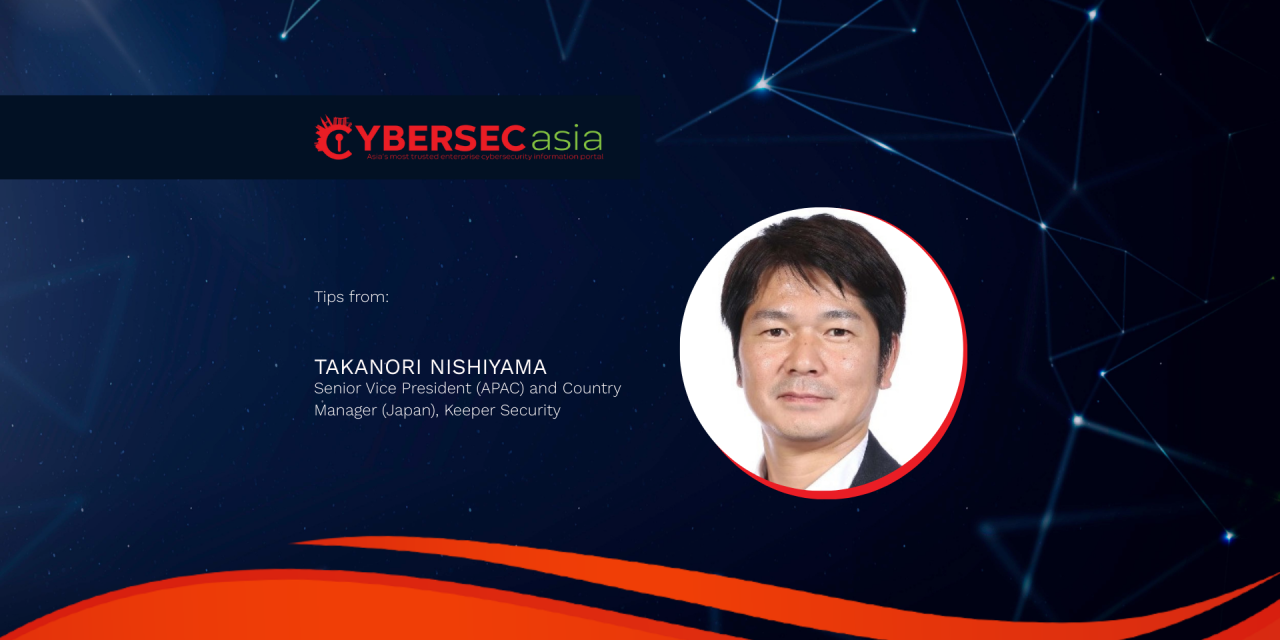
By Takanori Nishiyama, Senior Vice President (APAC) and Country Manager (Japan), Keeper Security | Tuesday, August 26, 2025, 10:01 PM Asia/Singapore

Why human mistakes remain critical weak points amid the rise of AI-powered attacks

Human behavior, not just technology gaps, continues to shape cybersecurity risks as AI-driven attacks grow more precise and pervasive.

Human behavior continues to be the single biggest cybersecurity vulnerability. Even as organizations adopt advanced technologies, credential reuse, weak passwords and phishing remain among cyber attackers’ most effective entry points.

In sectors such as manufacturing and public services, many systems still rely on traditional security models and outdated practices. Even with strong security investments, one click on a malicious link can lead to operational disruption, regulatory penalties and reputational damage.

In APAC — and particularly in Japan — these vulnerabilities intersect with complex supply chains, legacy systems and lagging cybersecurity education, making effective defenses more critical than ever.

Evolving threats: Humans and AI
AI-driven attacks are increasing in both scale and sophistication. Deepfakes and AI-generated phishing campaigns make scams more convincing, allowing attackers to operate at speeds no human team can match.

  • Credential theft remains a prime target because it grants direct access to sensitive systems. APAC’s complex supply chains — particularly in Japan’s automotive and semiconductor industries — are increasingly targeted by AI-powered social engineering, demonstrating that these threats are enterprise-wide rather than niche.
  • At the same time, defenders are also deploying AI. By assessing risk in real time based on behavior, device health and context, AI allows security teams, particularly those facing talent shortages in APAC, to scale defenses efficiently.
  • When paired with strict controls and human oversight, AI strengthens protection, reduces manual workload and improves resilience.

Done correctly, AI integration not only improves protection but also helps control costs, save time and maintain operational agility without compromising security.

Reducing human error in AI cybersecurity
Going forward, what can organizations do to boost AI-driven cybersecurity aside from just warning against risky habits? Answer: the latter must be completely avoided. How?

  • Moving beyond static credentials is one way forward. Passkeys and passwordless models reduce reliance on human memory and eliminate the repeated use of weak credentials.
  • Automation of credential rotation, strong session controls and least-privilege access designs minimize human error and operational burden.
  • Zero-trust frameworks can be used to remove the outdated perimeter model, creating an environment where no user, device or application is inherently trusted.

In Japan, cultural reluctance to adopt passwordless technology continues to slow progress, reinforcing the need to address both technical and human factors.

Most importantly, organizations need to foster a strong security culture where employee training and awareness programs are understood not simply as compliance requirements, but as resilience-building practices that protect entire supply chains.

Based on the above points, the path forward is clear: build a strong security culture that prioritizes human factors; deploy frictionless and automated defenses; and leverage AI effectively. The current problem of AI and cybersecurity is not humans versus machines: it is humans working alongside AI to close the gap between intent and execution.


Share:

PreviousFescaro joins Auto-ISAC as top-tier innovator partner
NextFrost & Sullivan Honors NEC’s Scalable and Automation-First Approach to Digital Workplace Management Services in Southeast Asia

Related Posts

COVID-19 pandemic drives up fraud costs in four APAC countries

COVID-19 pandemic drives up fraud costs in four APAC countries

Monday, July 12, 2021

Is your AI secretly sabotaging your organization?

Is your AI secretly sabotaging your organization?

Monday, December 1, 2025

Upticks in holiday e-shopping season cyberattacks vary with culture, events

Upticks in holiday e-shopping season cyberattacks vary with culture, events

Thursday, March 24, 2022

Balancing the promises and security threats of 5G and IoT

Balancing the promises and security threats of 5G and IoT

Wednesday, April 1, 2020

Leave a reply Cancel reply

You must be logged in to post a comment.

Voters-draw/RCA-Sponsors

Slide
Slide
Slide
Slide
Slide
Slide
Slide
Slide
Slide
Slide
Slide
Slide
Slide
Slide
previous arrow
next arrow

CybersecAsia Voting Placement

Gamification listing or Participate Now

PARTICIPATE NOW

Vote Now -Placement(Google Ads)

Top-Sidebar-banner

Whitepapers

  • Closing the Gap in Email Security:How To Stop The 7 Most SinisterAI-Powered Phishing Threats

    Closing the Gap in Email Security:How To Stop The 7 Most SinisterAI-Powered Phishing Threats

    Insider threats continue to be a major cybersecurity risk in 2024. Explore more insights on …Download Whitepaper
  • 2024 Insider Threat Report: Trends, Challenges, and Solutions

    2024 Insider Threat Report: Trends, Challenges, and Solutions

    Insider threats continue to be a major cybersecurity risk in 2024. Explore more insights on …Download Whitepaper
  • AI-Powered Cyber Ops: Redefining Cloud Security for 2025

    AI-Powered Cyber Ops: Redefining Cloud Security for 2025

    The future of cybersecurity is a perfect storm: AI-driven attacks, cloud expansion, and the convergence …Download Whitepaper
  • Data Management in the Age of Cloud and AI

    Data Management in the Age of Cloud and AI

    In today’s Asia Pacific business environment, organizations are leaning on hybrid multi-cloud infrastructures and advanced …Download Whitepaper

Middle-sidebar-banner

Case Studies

  • Cyber protection for medical clinics in Singapore

    Cyber protection for medical clinics in Singapore

    As Singapore’s healthcare sector becomes increasingly digital and interconnected, clinics are facing heightened cyber risks, …Read more
  • India’s WazirX strengthens governance and digital asset security

    India’s WazirX strengthens governance and digital asset security

    Revamping its custody infrastructure using multi‑party computation tools has improved operational resilience and institutional‑grade safeguardsRead more
  • Bangladesh LGED modernizes communication while addressing data security concerns

    Bangladesh LGED modernizes communication while addressing data security concerns

    To meet emerging data localization/privacy regulations, the government engineering agency deploys a secure, unified digital …Read more
  • What AI worries keep members of the Association of Certified Fraud Examiners sleepless?

    What AI worries keep members of the Association of Certified Fraud Examiners sleepless?

    This case study examines how many anti-fraud professionals reported feeling underprepared to counter rising AI-driven …Read more

Bottom sidebar

Other News

  • Tencent Cloud Unveils AI-Powered Gaming Solutions at GDC 2026, Transforming Connection, Creation, and Security for the Future of Games

    Friday, March 13, 2026
    The Latest GVoice Brings Revolutionary …Read More »
  • TXOne Networks Showcases TXOne Complete at S4x26, Advancing the Full OT Security Journey for Channel Partners

    Thursday, March 12, 2026
    The operations-first OT security partner …Read More »
  • Globe Teleservices Announces Partnership with Myanma Posts and Telecommunications to Enhance Secure Messaging and Customer Experience

    Thursday, March 12, 2026
    SINGAPORE, March 11, 2026 /PRNewswire/ …Read More »
  • Coremail Shares Insights on Strengthening Enterprise Email Security Amid Evolving Threats

    Thursday, March 12, 2026
    BANGKOK, March 11, 2026 /PRNewswire/ …Read More »
  • Cohesity Strengthens Data Protection and Security to Advance Enterprise AI Resilience

    Thursday, March 12, 2026
    SINGAPORE, March 11, 2026 /PRNewswire/ …Read More »
  • Our Brands
  • DigiconAsia
  • MartechAsia
  • Home
  • About Us
  • Contact Us
  • Sitemap
  • Privacy & Cookies
  • Terms of Use
  • Advertising & Reprint Policy
  • Media Kit
  • Subscribe
  • Manage Subscriptions
  • Newsletter

Copyright © 2026 CybersecAsia All Rights Reserved.